
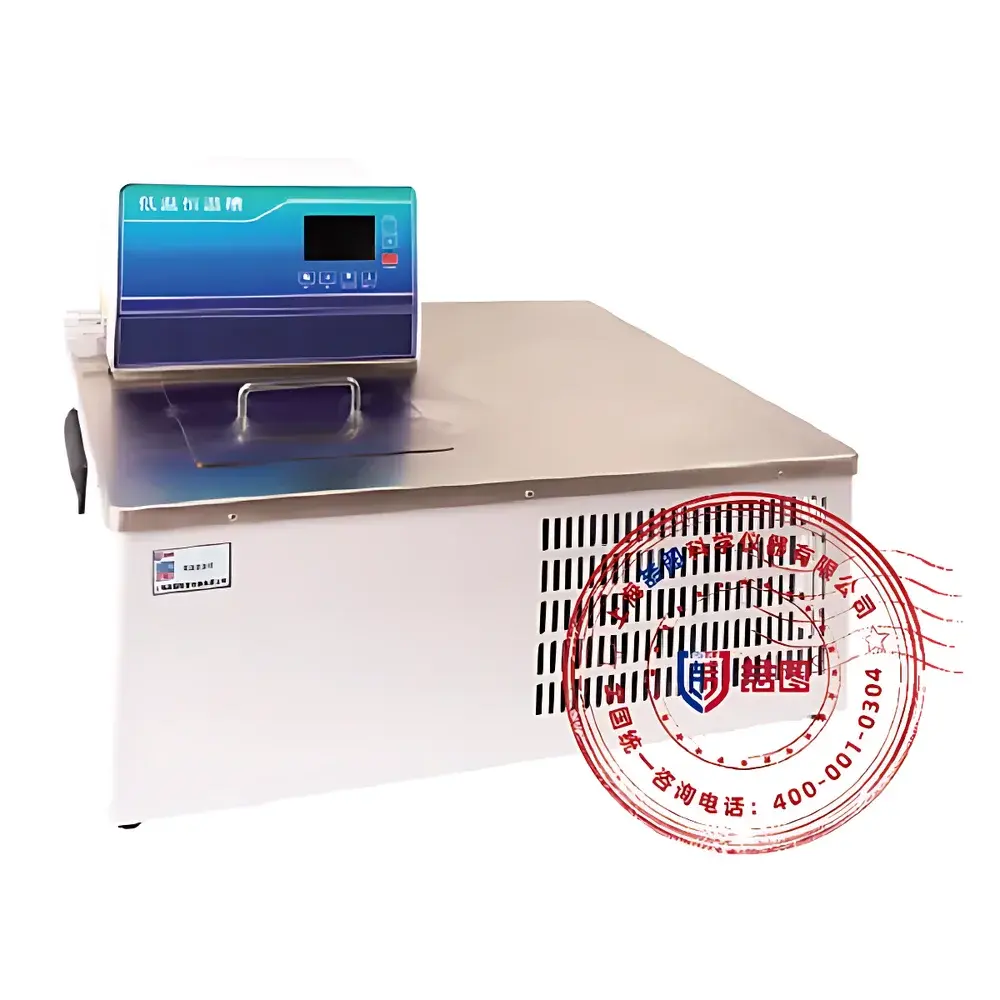
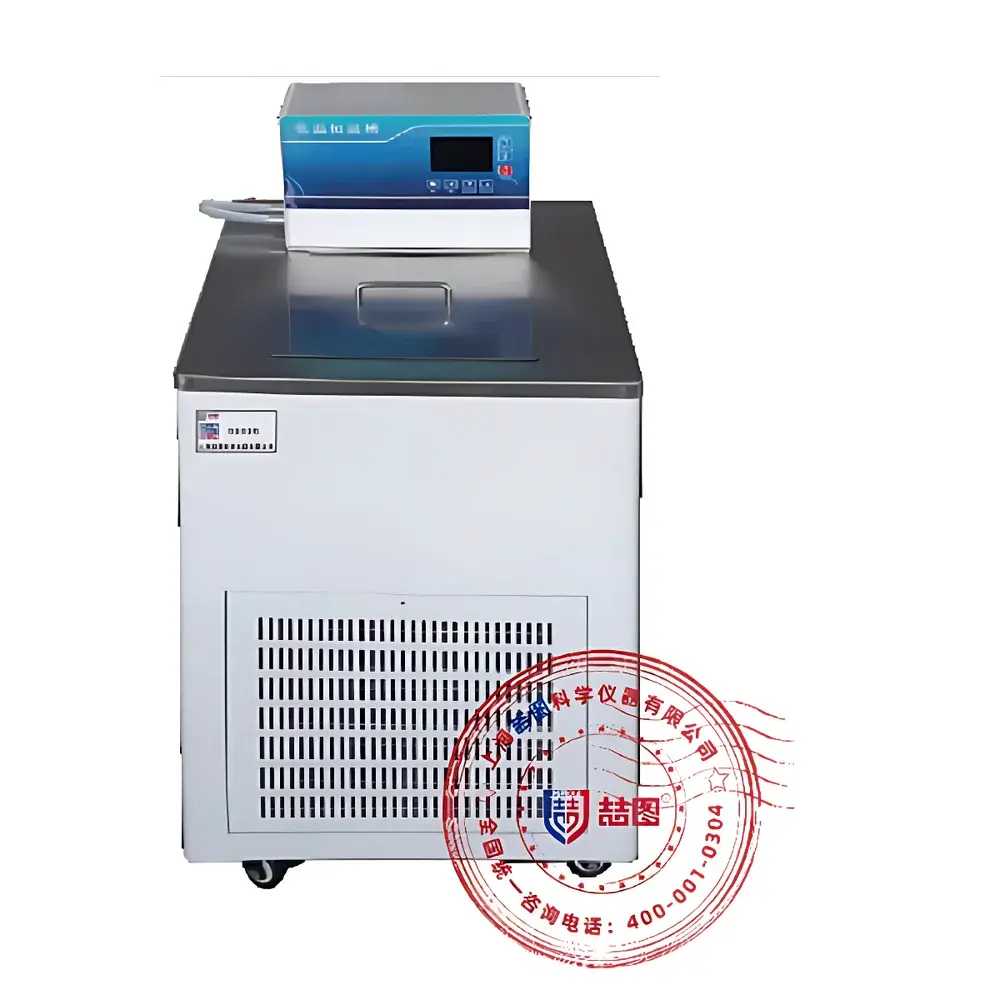
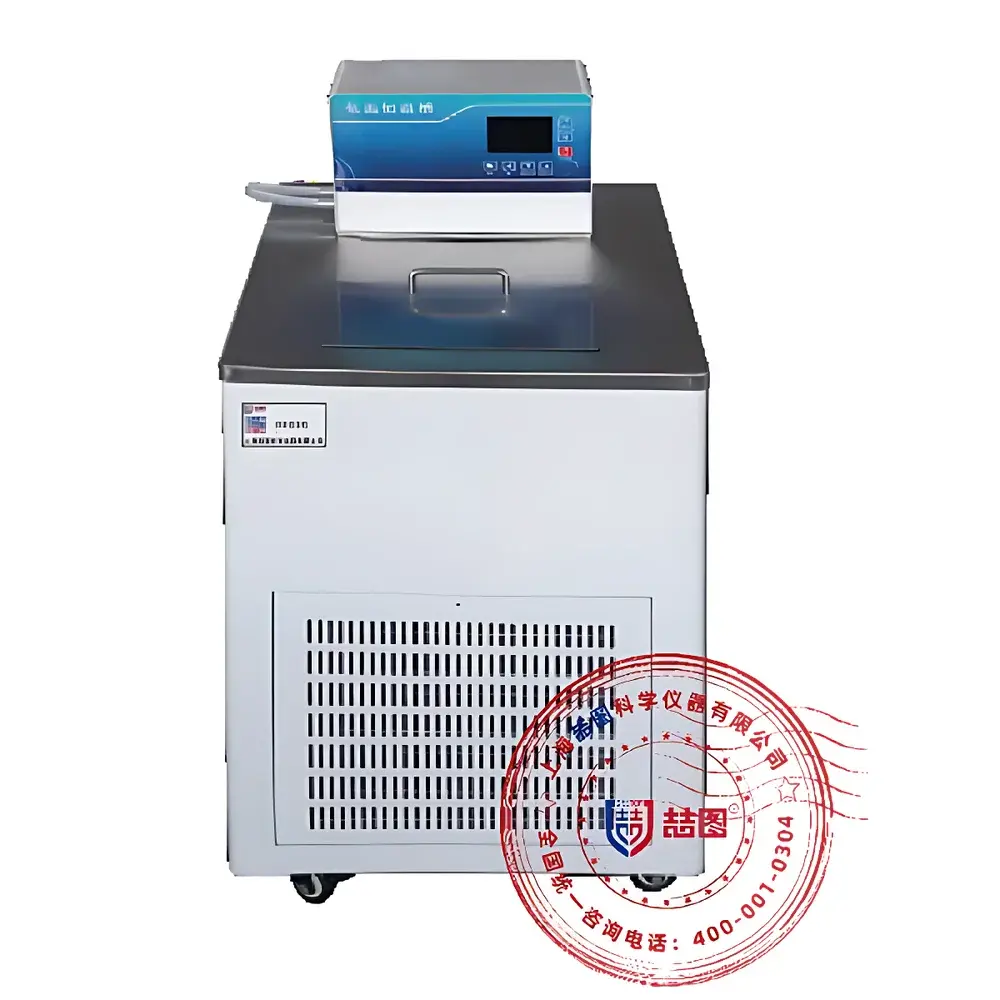
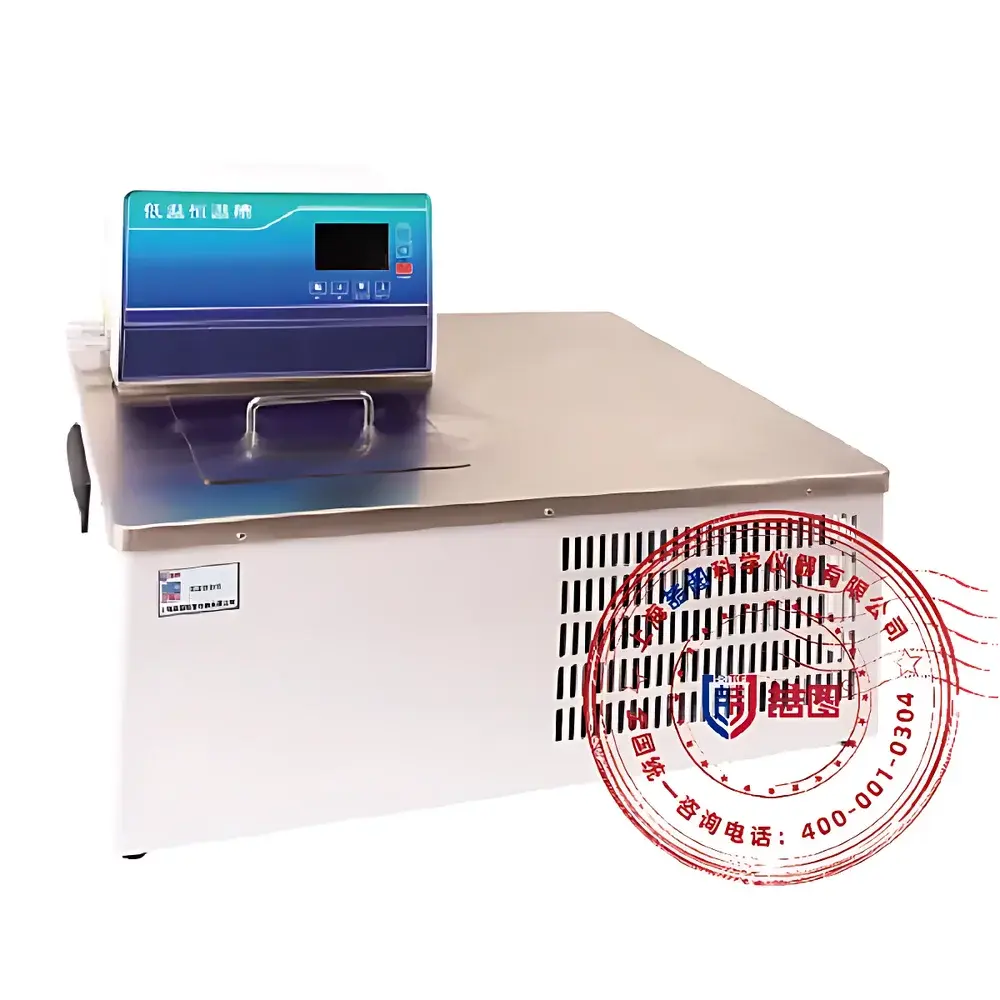
DRETOP FRC-30-80 Low-Temperature Constant-Temperature Bath
| Brand | DRETOP |
|---|---|
| Origin | Shanghai, China |
| Manufacturer Type | Direct Manufacturer |
| Product Category | Domestic |
| Model | FRC-30-80 |
| Instrument Type | Constant-Temperature Bath |
| Circulation Mode | Internal & External Circulation |
| Temperature Control | Refrigeration & Heating |
| Bath Volume | 30 L |
| Temperature Range | −80 °C to +100 °C |
| Temperature Stability | ±0.1 °C |
| Temperature Resolution | 0.1 °C |
| Power Supply | 220 V AC, 50 Hz |
| Pump Flow Rate | 35 L/min |
| Maximum Head | 4–6 m |
| Refrigeration Capacity at −80 °C | 4679 W |
Overview
The DRETOP FRC-30-80 Low-Temperature Constant-Temperature Bath is an engineered thermal management system designed for precision temperature control in laboratory-scale chemical synthesis, material characterization, and analytical instrumentation cooling applications. It operates on a closed-loop refrigeration-heating principle using a cascade compressor system combined with PID-controlled electric heating elements, enabling stable operation across an exceptionally wide thermal span—from cryogenic −80 °C up to +100 °C. Unlike standard water baths, the FRC-30-80 integrates dual-mode circulation (internal bath agitation and external fluid transfer via a high-head centrifugal pump), ensuring uniform thermal distribution both within the 30-liter stainless-steel reservoir and throughout externally connected apparatus—such as jacketed reactors, spectrometer cold traps, or electrophoresis units. Its thermally insulated housing, low-vibration motor design, and corrosion-resistant wetted materials (316L stainless steel bath chamber, fluoropolymer-coated pump components) support long-term reliability under repeated thermal cycling and aggressive solvent exposure.
Key Features
- Wide operational range of −80 °C to +100 °C, achieved via multi-stage cascade refrigeration architecture with R-404A/R-23 mixed-refrigerant circuitry
- Precision temperature stability of ±0.1 °C and resolution of 0.1 °C, maintained by platinum resistance thermometer (PT100) feedback and adaptive PID algorithm with auto-tuning capability
- Integrated magnetic stirrer located at the bath base, providing adjustable agitation (0–1200 rpm) to eliminate thermal stratification and ensure homogeneity during static or dynamic experiments
- Dual-circulation functionality: internal recirculation for bath uniformity; external circulation (35 L/min, 4–6 m head) for active cooling/heating of auxiliary equipment
- Standardized mounting rail and threaded rod interface (M6/M8) compatible with overhead stirrers, pH/temperature probes, condenser clamps, and peristaltic feed lines
- Optional secondary mechanical stirring kit available for synchronized agitation inside reaction vessels, minimizing radial temperature gradients in viscous or heterogeneous media
Sample Compatibility & Compliance
The FRC-30-80 accommodates a broad spectrum of heat-transfer media—including deionized water (5–80 °C), 15% glycerol–water mixtures (80–100 °C), and ethylene glycol/water or anhydrous ethanol solutions (−80 to 5 °C)—ensuring compatibility with GLP- and GMP-aligned workflows where solvent purity and thermal stability are critical. All wetted surfaces comply with ISO 8502-3 for extractable metal content and meet USP Class VI biocompatibility requirements for indirect contact with pharmaceutical intermediates. The unit conforms to IEC 61010-1:2010 for laboratory electrical safety and carries CE marking under the EU Machinery Directive 2006/42/EC. Optional audit-trail-enabled firmware supports 21 CFR Part 11-compliant electronic recordkeeping when integrated with validated LIMS platforms.
Software & Data Management
The embedded controller features a 5.7-inch TFT-LCD touchscreen interface with multilingual support (English, German, French, Japanese), real-time graphing of setpoint vs. actual temperature, and programmable ramp-soak profiles (up to 16 segments). Data logging is performed at user-selectable intervals (1 s to 60 min) and stored internally (≥100,000 records) or exported via USB 2.0 to CSV format. RS-485 Modbus RTU and optional Ethernet TCP/IP interfaces enable integration into centralized building management systems (BMS) or SCADA networks. For regulated environments, optional firmware upgrade provides electronic signature capture, user role-based access control (admin/operator/auditor), and immutable event logs meeting ALCOA+ principles (Attributable, Legible, Contemporaneous, Original, Accurate, Complete, Consistent, Enduring, Available).
Applications
- Temperature-controlled operation of glass-jacketed reactors (1–5 L scale) in synthetic organic chemistry and polymerization studies
- Cooling of high-power electron microscope components—including filament power supplies, CCD detectors, and cryo-stages—to suppress thermal drift and noise
- Thermal conditioning of analytical instruments: GC oven pre-chilling, HPLC column ovens, viscometers, and electrophoresis tanks
- Material testing under thermal stress: coefficient-of-expansion measurements, phase-transition analysis (DSC calibration verification), and low-temperature tensile specimen conditioning
- Clinical and life science support: hypothermic preservation of tissue samples, controlled-rate freezing of cell suspensions, and thermal validation of medical device sterilization cycles
- Industrial process simulation: semiconductor wafer chuck temperature profiling, laser diode thermal management, and vacuum pump oil cooling for diffusion/molecular pumps
FAQ
What heat-transfer fluids are recommended for operation below 0 °C?
Ethanol or ethylene glycol–water mixtures (e.g., 60:40 v/v) are preferred for −80 °C operation due to low pour point, minimal vapor pressure, and compatibility with stainless-steel and fluoropolymer components.
Is external circulation flow rate adjustable?
Yes—the pump speed is continuously variable via the front-panel interface or remote analog signal (0–10 VDC), allowing precise matching to pressure-drop requirements of connected equipment.
Can the unit maintain temperature stability during extended unattended operation?
Yes—equipped with redundant thermal cutouts, compressor discharge temperature monitoring, and automatic defrost sequencing, the system supports continuous 72-hour operation under validated protocols.
Does the magnetic stirrer function independently of the temperature control loop?
Yes—stirring speed and thermal setpoint are fully decoupled parameters, permitting independent optimization of mixing intensity and thermal profile.
What is the maximum allowable external load pressure drop for stable external circulation?
For rated 35 L/min flow at 4–6 m head, the system tolerates up to 1.2 bar (17 psi) differential pressure across external loops without compromising temperature stability or pump longevity.



