
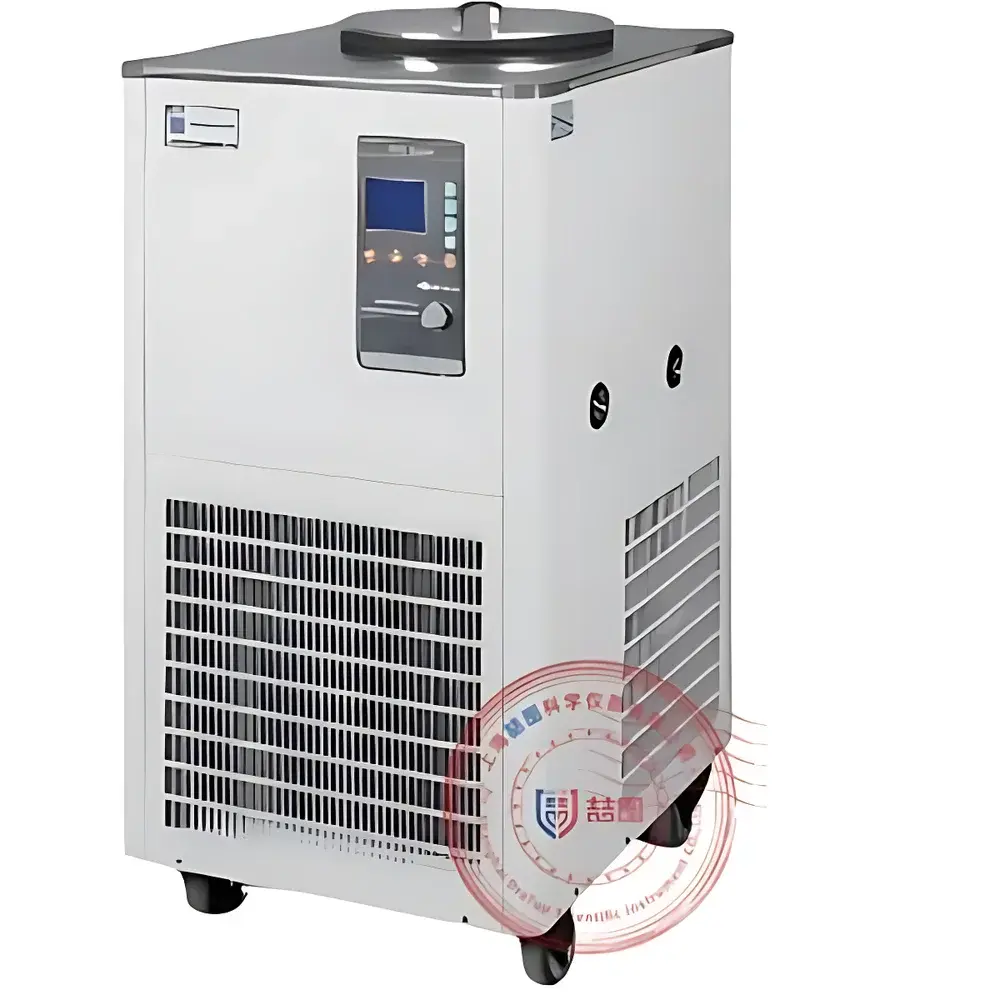
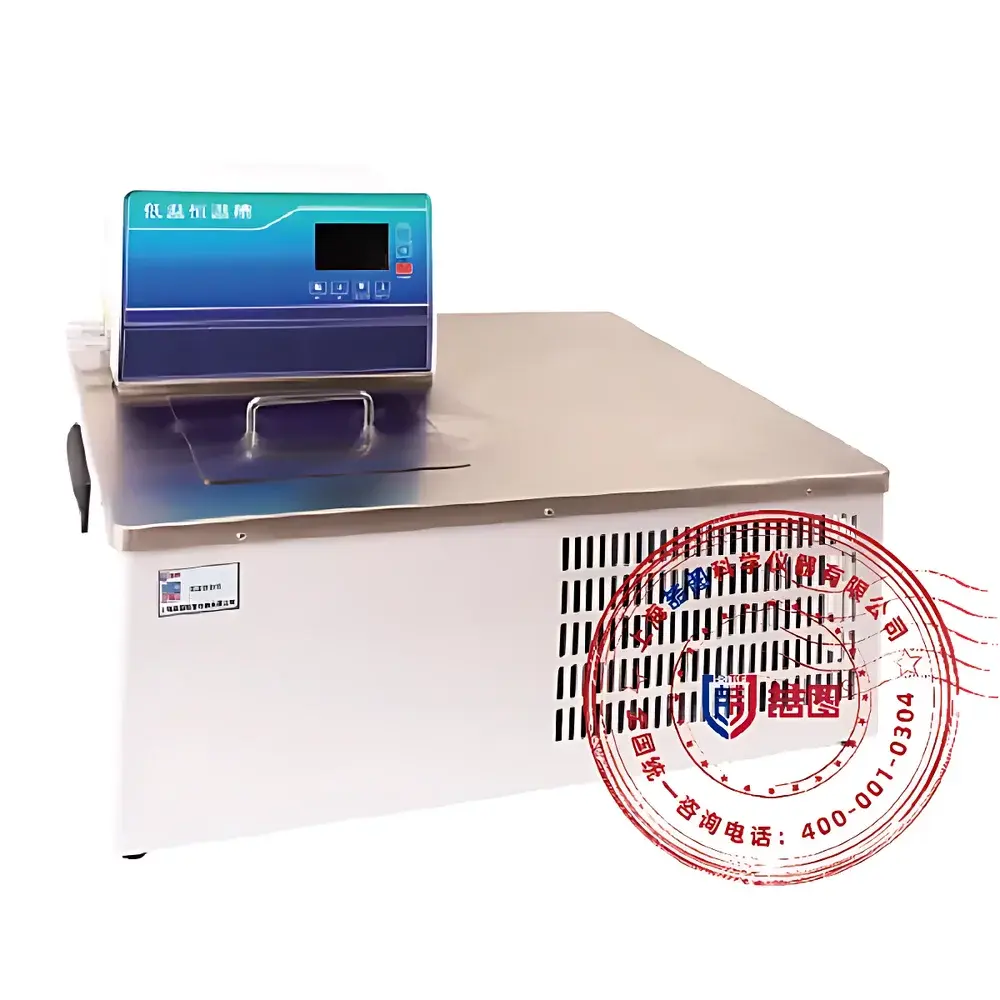
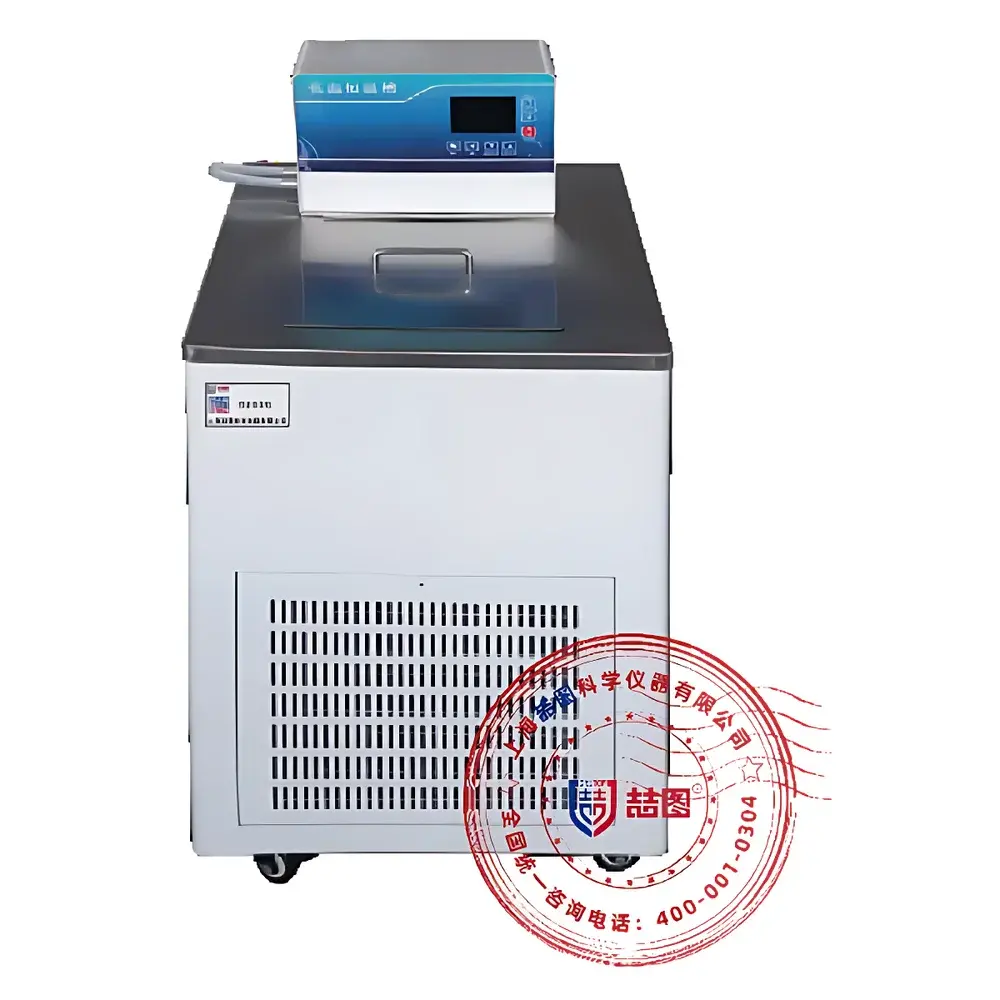
DRETOP FRC-50-120 Low-Temperature Constant-Temperature Bath
| Brand | DRETOP |
|---|---|
| Origin | Shanghai, China |
| Manufacturer Type | Direct Manufacturer |
| Country of Origin | China |
| Model | FRC-50-120 |
| Instrument Type | Constant-Temperature Bath |
| Circulation Mode | Internal & External Circulation |
| Temperature Control | Refrigeration & Heating |
| Bath Volume | 50 L |
| Temperature Range | −120 °C to +100 °C |
| Temperature Stability | ±0.1 °C |
| Temperature Resolution | 0.1 °C |
| Power Supply | 380 V AC, 50 Hz |
Overview
The DRETOP FRC-50-120 Low-Temperature Constant-Temperature Bath is an engineered thermal management system designed for precise, stable, and reproducible temperature control across extreme operational ranges—from cryogenic −120 °C to elevated +100 °C. Built upon a dual-mode refrigeration-heating architecture with cascade compressor technology, it delivers high thermal inertia resistance and rapid thermal response without compromising long-term stability. Its core function is to serve as a calibrated external heat exchange medium for jacketed reactors, analytical instrumentation, and precision equipment requiring active cooling or heating—enabling accurate simulation of process-relevant thermal conditions in R&D, QC, and production environments. Unlike passive water baths, the FRC-50-120 integrates forced circulation via a high-head, corrosion-resistant magnetic-drive pump, ensuring uniform thermal distribution throughout the 50 L working volume and consistent heat transfer to externally connected devices.
Key Features
- Wide operational range of −120 °C to +100 °C, validated per IEC 61000-4-30 for thermal stress testing and low-temperature material characterization
- High-precision digital PID controller paired with platinum RTD (PT100) sensor, delivering ±0.1 °C temperature stability and 0.1 °C resolution over full range
- Dual-circulation capability: internal recirculation maintains bath homogeneity; external port enables closed-loop connection to reactors, spectrometers, or electron microscope chillers
- Integrated magnetic stirrer at bath base ensures uniform fluid dynamics and minimizes thermal stratification—critical for kinetic studies and calibration traceability
- Stainless steel 316L tank with reinforced insulation and vacuum-jacketed lid design reduces ambient heat ingress and improves energy efficiency at sub-zero setpoints
- Modular mounting rail and standardized Ø360 mm opening accommodate top-mounted stirrers, pH/temperature probes, condensers, and custom fixtures per ISO/IEC 17025 laboratory infrastructure guidelines
Sample Compatibility & Compliance
The FRC-50-120 supports a broad spectrum of thermally sensitive applications requiring GLP/GMP-compliant thermal conditioning. Compatible working media include aqueous glycol solutions (for −110 °C to 5 °C), anhydrous ethanol (for −80 °C to 20 °C), and 15% glycerol-water mixtures (for 80–100 °C), all selected per ASTM D1177 and USP solvent compatibility standards. The unit complies with CE marking requirements (2014/30/EU EMC Directive and 2014/35/EU LVD), and its electrical architecture meets IEC 61010-1 safety specifications for laboratory equipment. Optional audit-trail-enabled firmware supports 21 CFR Part 11 compliance when integrated with validated LIMS or ELN platforms.
Software & Data Management
Equipped with RS485 Modbus RTU and optional Ethernet TCP/IP interface, the FRC-50-120 enables remote monitoring and parameter logging via third-party SCADA systems or DRETOP’s proprietary LabTempControl Suite (v3.2+). Real-time data—including setpoint, actual bath temperature, compressor status, pump flow rate, and error codes—is timestamped and exportable in CSV or XML format. Firmware supports configurable alarm thresholds, automatic shutdown on sensor fault or dry-run detection, and password-protected configuration modes aligned with ISO/IEC 17025 clause 7.7 on equipment control. Data integrity is preserved through non-volatile memory retention during power interruption.
Applications
- Temperature-controlled operation of glass-jacketed reactors (e.g., 1–5 L single/double-neck vessels) in synthetic organic chemistry and polymerization studies
- Cooling of high-power electron microscopy components—including field emission guns, CCD detectors, and cryo-transfer stages—to suppress thermal drift and improve signal-to-noise ratio
- Thermal conditioning of industrial equipment subsystems: laser diodes, RF amplifiers, vacuum pumps (diffusion, ion, turbomolecular), and MRI shimming coils
- Calibration of viscometers, densitometers, and refractometers per ASTM D445, D1250, and ISO 21348 protocols under stabilized thermal environments
- Controlled hypothermia simulation for biomedical device validation, including cold caps, therapeutic cooling blankets, and electrophoresis power supplies
- Material testing per ASTM D792, ISO 11357, and DIN 53445—covering coefficient of thermal expansion (CTE), glass transition (Tg), and low-temperature embrittlement analysis
FAQ
What coolant fluids are recommended for operation at −100 °C?
Anhydrous ethanol or specially formulated low-viscosity silicone-based heat transfer fluids rated for −120 °C service are recommended. Ethanol must be ≥99.9% purity to prevent freezing point elevation.
Does the unit support external temperature feedback control?
Yes—via optional PT100 input channel, enabling cascade control where the bath regulates based on sample temperature rather than bath setpoint.
Is the pump flow rate adjustable?
The magnetic-drive centrifugal pump offers fixed-speed operation optimized for 6–8 m head and 45 L/min flow; variable-frequency drive (VFD) integration is available as a factory-configured option.
Can this bath be used for GLP-regulated stability testing?
When operated with validated procedures, calibrated sensors, and enabled audit-trail firmware, the FRC-50-120 meets foundational requirements for Annex 11 and ICH Q5C thermal mapping protocols.
What maintenance intervals are specified for the cascade refrigeration system?
Compressor oil and filter replacement is required every 3,000 operating hours or biannually—whichever occurs first—per manufacturer service bulletin FRC-SVC-2023-04.



