

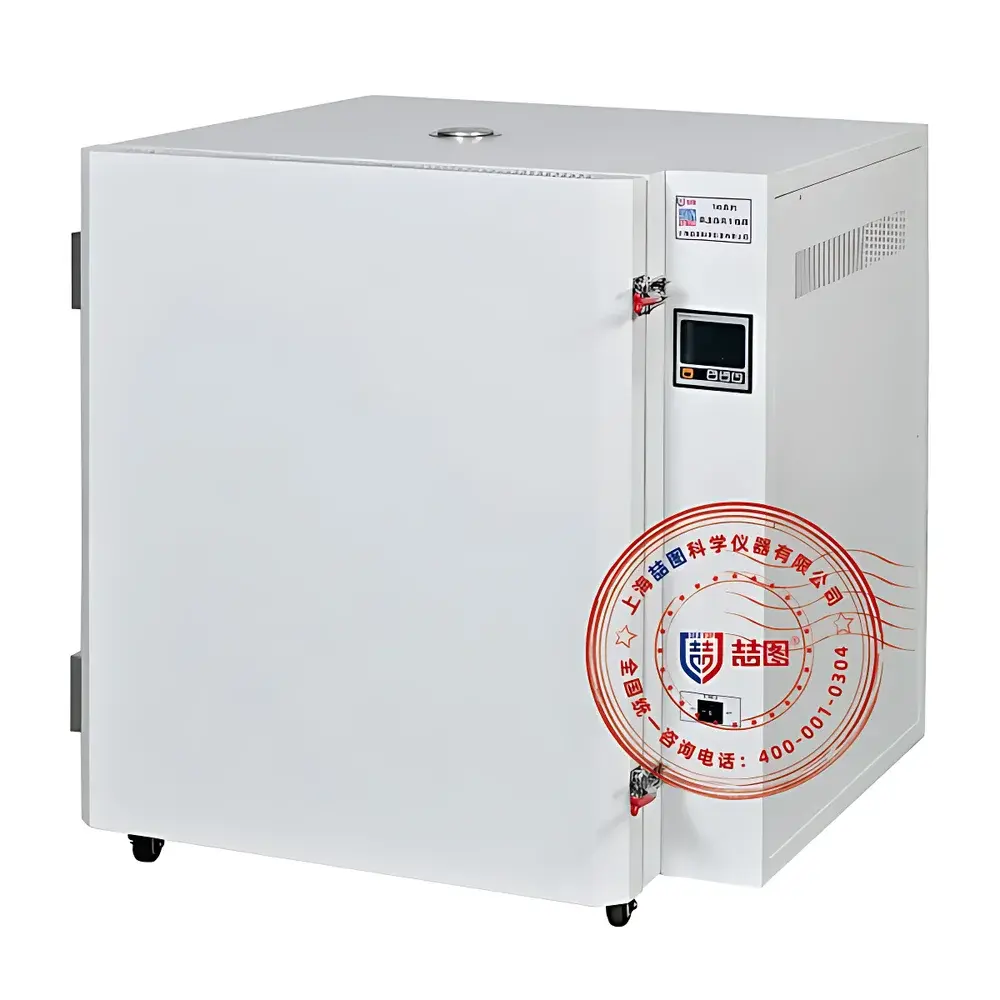
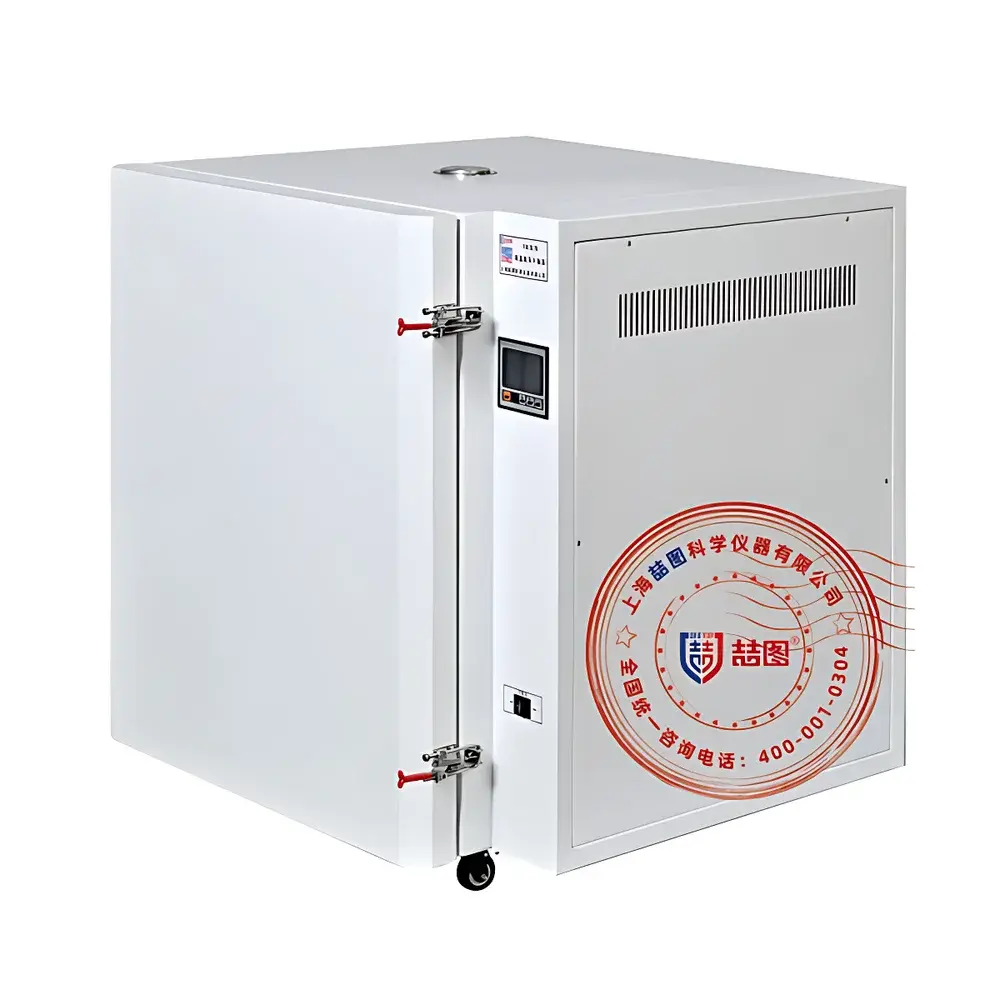
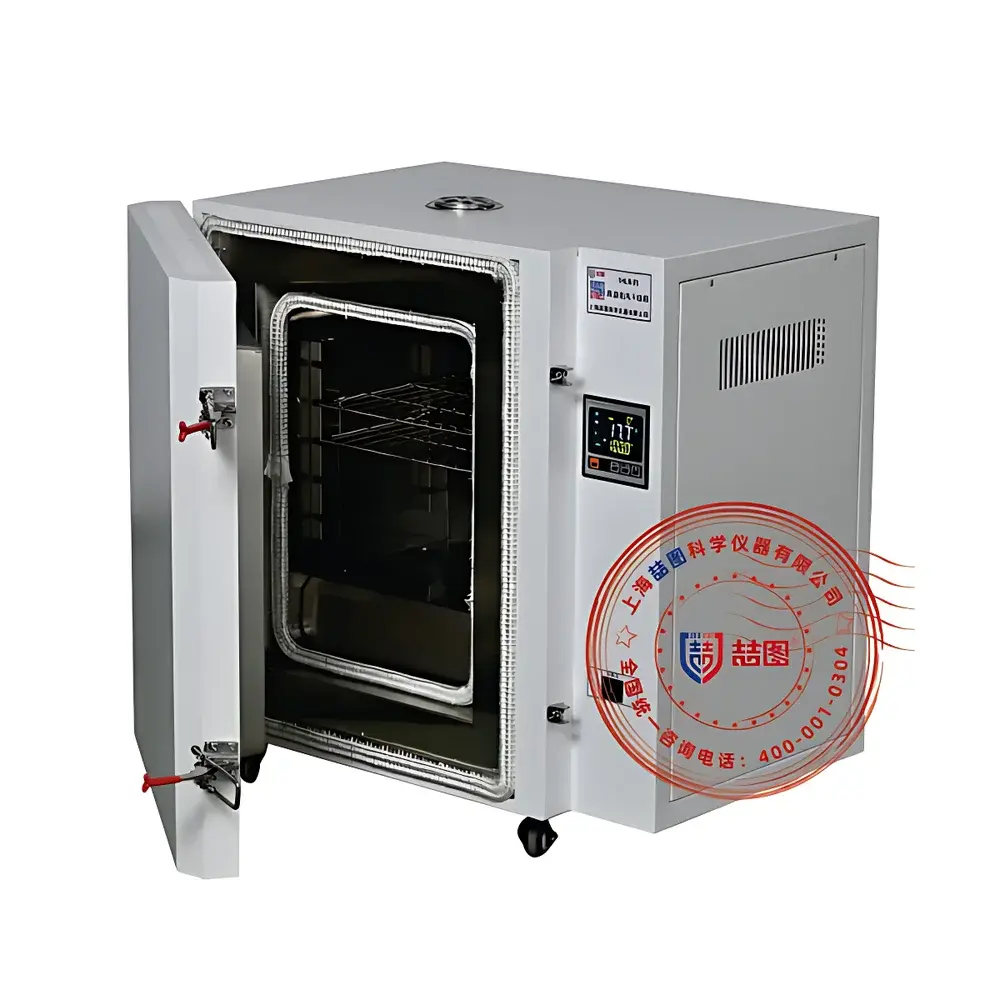
DRETOP G6-70P High-Temperature Forced-Air Drying Oven
| Brand | DRETOP |
|---|---|
| Origin | Shanghai, China |
| Manufacturer Type | Direct Manufacturer |
| Product Category | Domestic |
| Model | G6-70P |
| Instrument Type | High-Temperature Oven |
| Temperature Range | RT + 20°C to 600°C |
| Temperature Uniformity | Not specified (consult technical support) |
| Temperature Fluctuation | ±1°C |
| Temperature Resolution | 0.1°C |
| Control Range | RT + 20°C to 600°C |
| External Dimensions (W×D×H) | 770 × 580 × 800 mm |
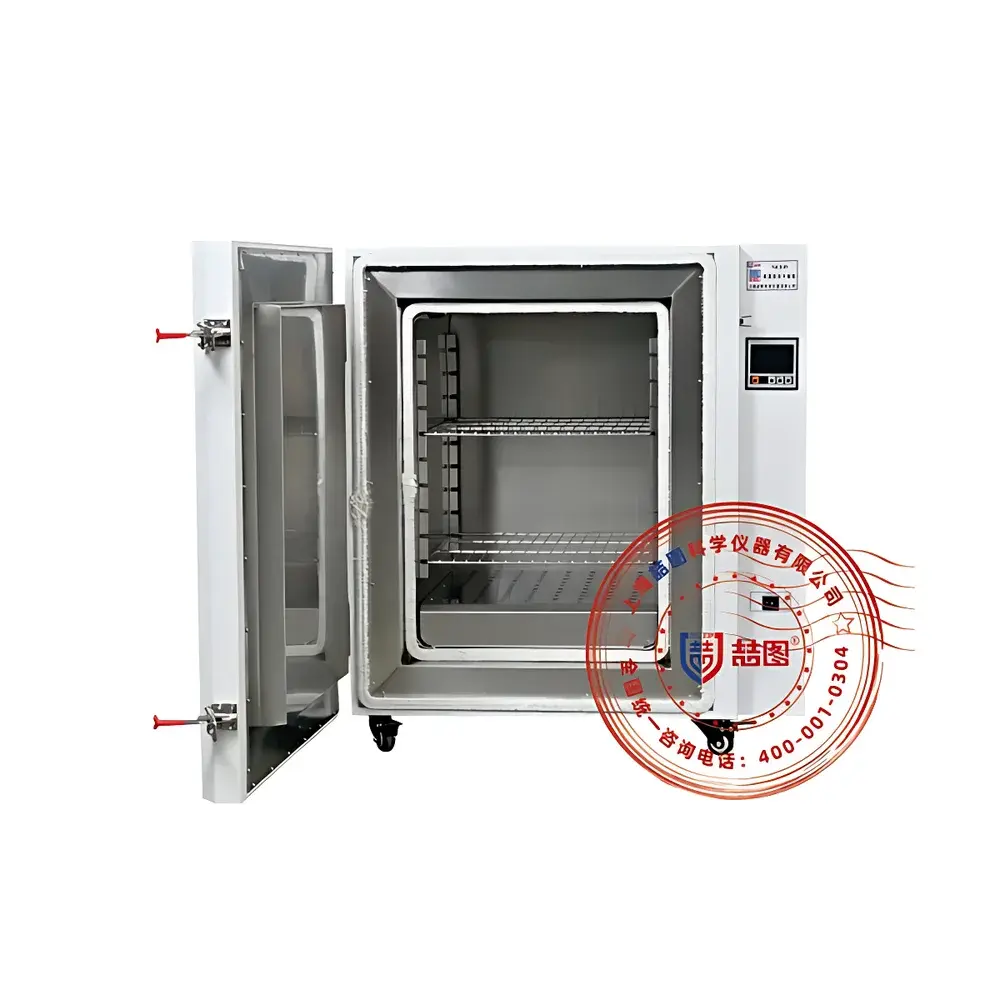
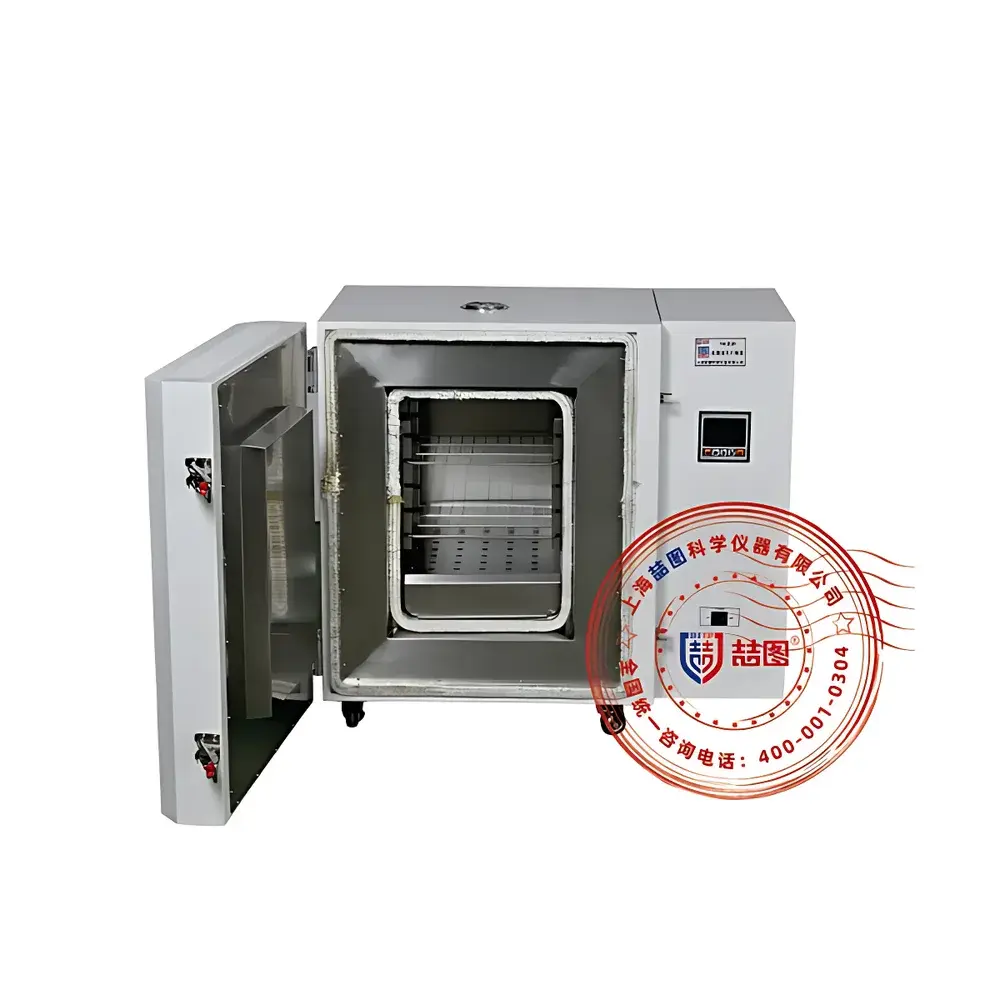
| Internal Chamber Dimensions (W×D×H) | 400 × 400 × 450 mm |
| Working Ambient Temperature | 0–45°C |
| Inner Chamber Material | Brushed Stainless Steel (SUS304) |
| Heating Method | Forced-Air Convection with Dual-Airflow Channels |
| Safety Protections | Overtemperature alarm, leakage current protection, short-circuit protection, overheat/overload protection, power-failure data retention |
| Insulation Material | Glass Fiber Wool |
| Sealing Material | High-Temperature Silicone Rubber Gasket |
| Power Supply | AC 220 V, 50 Hz |
| Rated Power | 5490 W |
| Standard Shelving | 2 Adjustable & Removable Stainless Steel Trays |
| Timer Range | 1–9999 minutes |
Overview
The DRETOP G6-70P High-Temperature Forced-Air Drying Oven is an industrial-grade thermal processing instrument engineered for precision temperature control and uniform heat distribution across demanding laboratory and pilot-scale applications. Utilizing a dual-channel forced-air convection system driven by a high-efficiency, low-noise centrifugal blower and stainless steel heating elements, the G6-70P achieves rapid thermal response and stable operation within its extended operating range of ambient +20°C to 600°C. Unlike natural convection ovens, this model relies on active airflow management—optimized via internal baffle design and rear-mounted air inlets—to minimize thermal stratification and ensure reproducible thermal exposure across the entire 70 L working chamber (400 × 400 × 450 mm). Its structural architecture conforms to standard laboratory safety and ergonomic expectations: front-loading door with robust metal latch mechanism, brushed stainless steel interior (SUS304), electrostatically coated carbon steel exterior, and high-density glass fiber insulation to reduce surface temperature and energy consumption. The oven is intended for non-vacuum, atmospheric-pressure thermal treatments including drying, baking, annealing, curing, and pre-conditioning of thermally stable samples.
Key Features
- Microprocessor-based PID temperature controller with K-type thermocouple input, offering ±1°C temperature fluctuation and 0.1°C resolution; includes deviation alarm, overshoot suppression, and auto-tuning capability.
- Intelligent LCD interface displaying real-time temperature, setpoint, timer status, and fault codes—enabling rapid diagnostics without external software.
- Dual independent airflow channels and directional venting ensure consistent thermal homogeneity; chamber geometry and fan placement are optimized per ISO 17025-relevant thermal mapping best practices.
- Two fully adjustable, removable stainless steel trays with tool-free height positioning; tray supports feature semi-circular recesses for easy cleaning and residue removal.
- Comprehensive safety architecture: redundant overtemperature cutoff (mechanical backup limiter optional), ground-fault circuit interruption, thermal fuse protection, and non-volatile memory for parameter retention after power loss.
- High-temperature silicone rubber door gasket (rated to 650°C) ensures long-term sealing integrity; reinforced door hinge and cam-lock latching system maintain compression force across thermal cycles.
Sample Compatibility & Compliance
The G6-70P accommodates solid, granular, or powdered specimens compatible with continuous exposure up to 600°C under ambient atmosphere. It is routinely deployed in materials science labs for ceramic sintering pre-bake steps, metallurgical sample conditioning, polymer crosslinking validation, and pharmaceutical excipient stability testing. While not certified for explosion-proof or Class I Div 1 environments, the unit meets general-purpose electrical safety requirements per IEC 61010-1 (2010) and EMC compliance per CISPR 11 Group 1, Class B. For regulated environments—such as GLP-compliant quality control labs—the optional RS485 interface supports integration into centralized monitoring systems with audit-trail-capable SCADA platforms. Optional independent mechanical temperature limiter satisfies secondary safety requirements outlined in USP and EU Annex 15 for thermal sterilization process qualification.
Software & Data Management
The base configuration operates via embedded firmware with no external PC dependency. Optional modules expand functionality: USB data export enables direct logging of time-temperature profiles to FAT32-formatted flash drives; RS485 Modbus RTU protocol allows bidirectional communication with LIMS or MES systems for automated batch record generation. An optional color touchscreen controller supports up to 30 programmable segments (ramp-soak-hold) with slope limiting and event-triggered outputs—suitable for ASTM E220 or ISO 11357 thermal ramp validation protocols. All data logging adheres to ALCOA+ principles when paired with compliant software: attributable, legible, contemporaneous, original, accurate, complete, consistent, enduring, and available per FDA 21 CFR Part 11 guidelines (with appropriate electronic signature implementation).
Applications
- Materials Research: Pre-sintering of oxide ceramics, stress-relief annealing of machined alloys, binder burnout in MIM feedstocks, and thermal aging of composites per ASTM D3045.
- Pharmaceutical & Biotech: Dry-heat depyrogenation of glass vials (validated per USP ), residual solvent removal from APIs, and stability-indicating assay preconditioning.
- Chemical Engineering: Catalyst activation, zeolite dehydration, and thermal gravimetric analysis (TGA) sample preparation where inert-atmosphere ovens are unavailable.
- Electronics Manufacturing: PCB board pre-baking prior to conformal coating, solder paste storage conditioning, and moisture-sensitive device desiccation per IPC/JEDEC J-STD-033.
- Food Science & Agriculture: Moisture content determination (AOAC 950.46), enzyme inactivation studies, and botanical extract concentration under controlled thermal load.
FAQ
What is the maximum continuous operating temperature of the G6-70P?
The G6-70P is rated for continuous operation at up to 600°C. Sustained use above 550°C may reduce heater lifespan and requires verification of sample outgassing compatibility.
Does the oven include validation documentation for IQ/OQ/PQ protocols?
Factory calibration certificates (traceable to NIST standards) are provided. Full qualification documentation—including sensor placement maps, thermal uniformity reports, and alarm response logs—must be generated onsite per user-defined SOPs.
Can the G6-70P be integrated into a building management system (BMS)?
Yes—via optional RS485 Modbus RTU output, enabling remote status monitoring, setpoint adjustment, and alarm relay signaling compatible with most industrial BMS platforms.
Is the interior chamber suitable for corrosive sample residues?
The brushed SUS304 stainless steel lining resists mild acidic and alkaline residues but is not resistant to halogenated or strong oxidizing agents; routine cleaning with non-chlorinated solvents is recommended.
What maintenance intervals are recommended for optimal performance?
Blower motor lubrication and filter inspection every 500 operational hours; thermocouple verification annually or per ISO/IEC 17025 internal calibration schedule; door gasket replacement every 2 years under daily use.



