
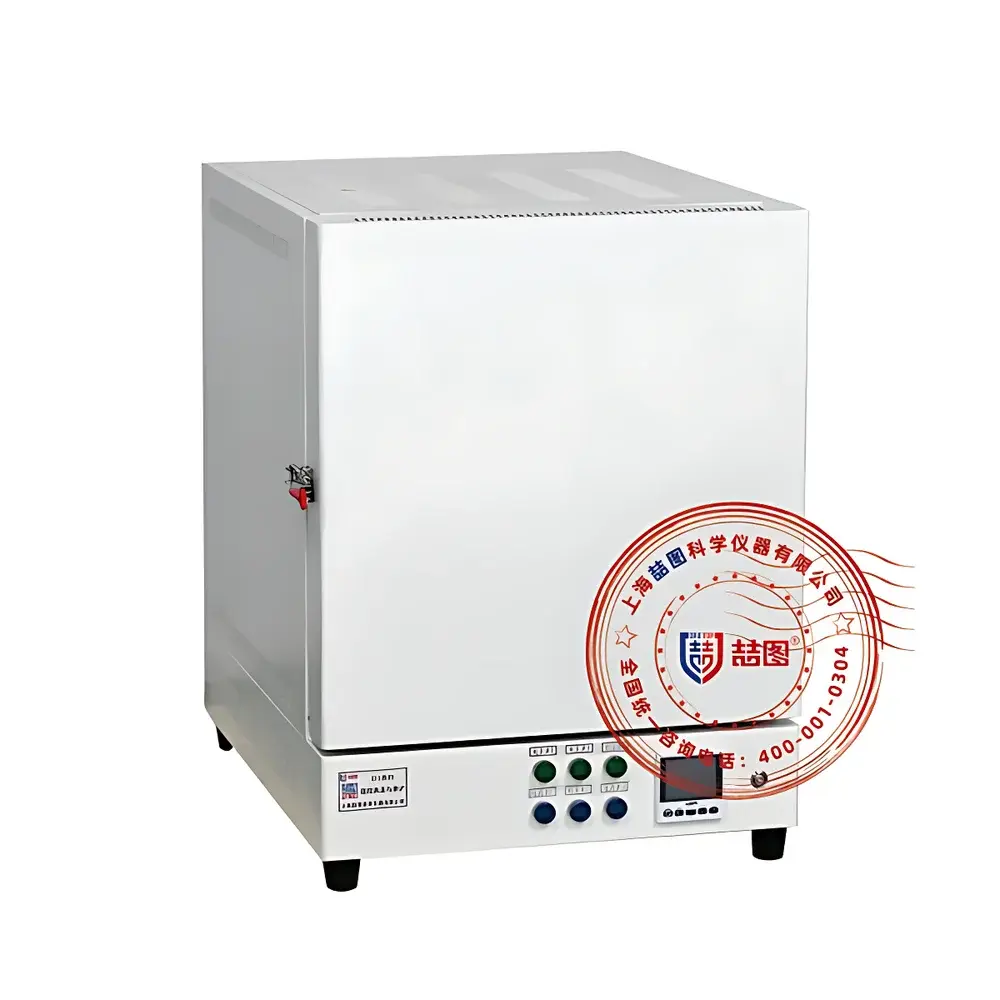
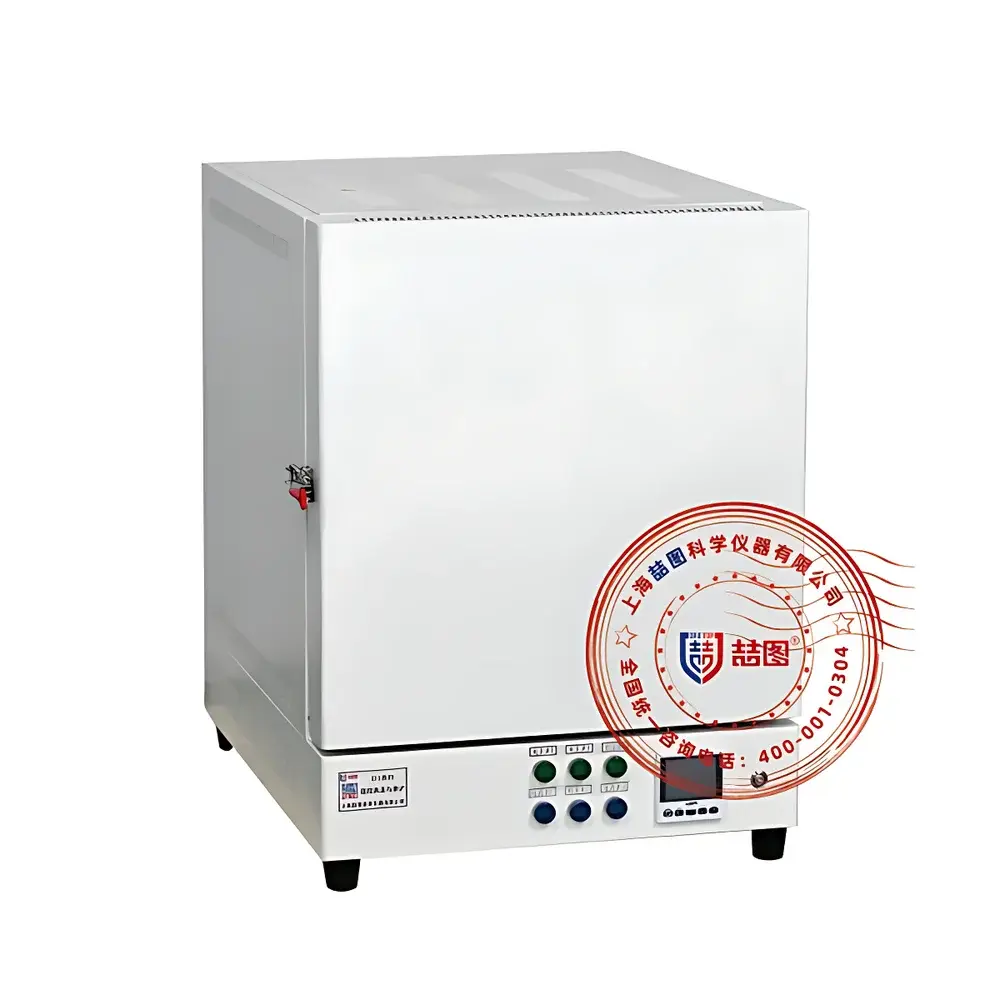
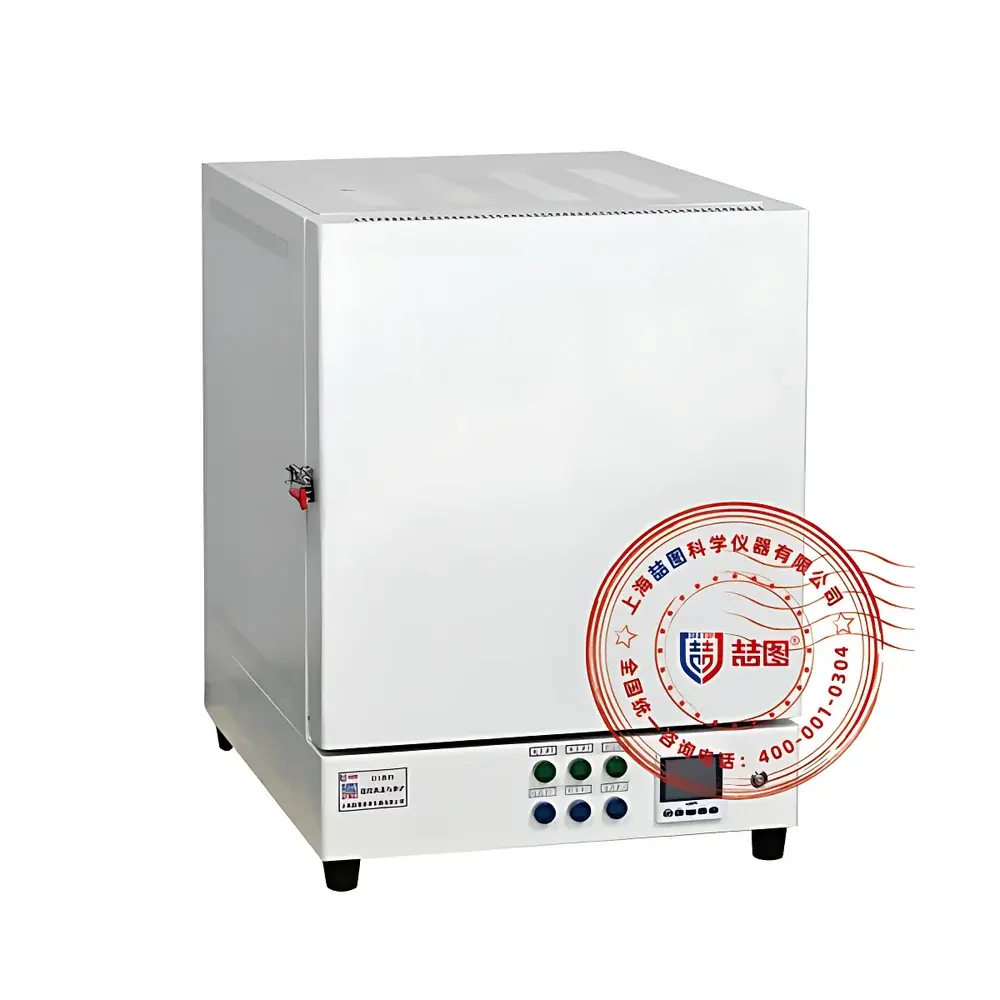
DRETOP GD10-30C Track-Mounted Carriage Muffle Furnace
| Brand | DRETOP |
|---|---|
| Origin | Shanghai, China |
| Manufacturer Type | Direct Manufacturer |
| Product Category | Domestic |
| Model | GD10-30C |
| Instrument Type | Box-Type Muffle Furnace |
| Max Temperature | 1000 °C |
| Temperature Control Accuracy | ±1 °C |
| Max Power | 10 kW |
| Heating Time to Max Temp | 45 min |
| Heating Element Material | High-Temperature Alloy |
| Internal Chamber Dimensions | 300 × 500 × 220 mm |
| Control System | Microcomputer-Based PID Controller |
| Nominal Volume | 30 L |
Overview
The DRETOP GD10-30C Track-Mounted Carriage Muffle Furnace is a high-performance, laboratory-grade box-type thermal processing system engineered for precise, repeatable, and safe high-temperature operations up to 1000 °C. Designed around a lightweight, low-thermal-mass ceramic fiber insulation architecture—replacing traditional refractory brick—this furnace delivers rapid thermal response, exceptional energy efficiency, and uniform temperature distribution across its 30 L working chamber. Its defining mechanical feature is the integrated track-mounted carriage system, enabling full-front access to the heated zone without manual handling of hot crucibles or samples. This configuration significantly enhances operational safety and throughput in applications requiring frequent sample loading/unloading, such as ashing, calcination, sintering, heat treatment, and thermal analysis workflows compliant with ASTM E1131, ISO 1171, USP , and GLP/GMP environments.
Key Features
- Track-mounted stainless steel carriage with precision linear rails and low-friction polymer rollers, supporting load capacities up to 15 kg while maintaining positional repeatability within ±0.5 mm;
- Ceramic fiber chamber lined with vacuum-formed micro-porous insulation boards (density: 220–240 kg/m³), achieving surface temperatures ≤45 °C at ambient conditions during operation at 1000 °C;
- Triple-wall heating configuration: high-resistivity Fe-Cr-Al alloy heating elements wound in helical geometry and embedded along left, right, and rear chamber walls for radial and axial thermal symmetry;
- Microprocessor-based PID controller with 30-segment programmable ramp/soak profiles, real-time deviation compensation, and auto-tuning functionality;
- Dual-stage overtemperature protection: primary limit set via PID loop; secondary independent mechanical cut-off at 1050 °C with non-resettable fuse;
- Integrated door interlock circuit that de-energizes all heating elements upon door opening, with automatic resumption only after full closure and system revalidation;
- Front-access cold-zone instrumentation panel housing voltage/current meters, RS485 communication port, and terminal blocks for optional inert gas purging (N₂, Ar) via externally regulated mass flow controller.
Sample Compatibility & Compliance
The GD10-30C accommodates standard crucibles (alumina, quartz, silicon carbide), ceramic boats, metal trays, and custom fixtures up to 280 mm wide × 480 mm deep × 200 mm tall. Its uniform ±2 °C temperature homogeneity (measured per ASTM C1040 at 900 °C, 3-hour soak) ensures reproducible material transformations critical for quantitative residue analysis, catalyst activation, and metallurgical phase studies. The furnace meets CE marking requirements under the EU Machinery Directive 2006/42/EC and Electromagnetic Compatibility Directive 2014/30/EU. Optional configurations support 21 CFR Part 11-compliant audit trails when paired with TC-series color touchscreen controllers and encrypted data logging firmware.
Software & Data Management
Standard control firmware supports real-time temperature logging at user-defined intervals (1–60 s), with data export via USB flash drive in CSV format. Optional TC-series color touchscreens (7″ TFT, 800 × 480 resolution) provide graphical trend visualization, multi-level password protection (operator/engineer/administrator), and built-in Ethernet interface for SCADA integration. All controllers maintain power-fail memory retention and resume pre-interruption profiles automatically upon restoration. Calibration traceability is maintained through NIST-traceable thermocouple inputs (Type K, Class 1) with dual-point verification prompts every 100 operational hours.
Applications
- Quantitative ash content determination per AOAC 942.05 and EPA Method 2540E;
- Pre-concentration and matrix removal in environmental soil/sediment analysis;
- Sintering of ferrites, lithium-ion cathode precursors (e.g., LiCoO₂), and oxide ceramics;
- Thermal annealing of thin-film substrates and semiconductor wafers prior to deposition;
- Heat treatment of tool steels, titanium alloys, and nickel-based superalloys per AMS 2750E pyrometry class requirements;
- Controlled oxidation studies for corrosion resistance evaluation (ASTM G174);
- Decomposition kinetics research using thermogravimetric coupling (requires external TGA interface).
FAQ
What is the maximum recommended continuous operating temperature?
The GD10-30C is rated for continuous operation at 1000 °C. Sustained use above this temperature voids warranty and risks irreversible degradation of ceramic fiber integrity.
Can inert atmosphere processing be implemented?
Yes—optional inert gas inlet ports (¼″ NPT) and exhaust chimney kits enable controlled purge cycles. Recommended gas flow rate: 0.5–2.0 L/min, with O₂ residual <50 ppm verified by inline oxygen sensor.
Is the carriage mechanism compatible with automated robotic loading systems?
The carriage features standardized M6 mounting holes and position feedback via Hall-effect sensors (available on Pro-series variants), facilitating integration with third-party gantry or SCARA robotic arms.
How is temperature uniformity validated during installation?
DRETOP provides a factory calibration certificate including 9-point uniformity mapping (per IEC 60068-3-5) at 500 °C and 900 °C. On-site verification requires a 9-thermocouple array and certified DAQ system.
What maintenance intervals are recommended for optimal performance?
Ceramic fiber integrity inspection every 500 operating hours; heating element resistance check every 1000 hours; door gasket replacement every 2 years or after 500 thermal cycles—whichever occurs first.



