
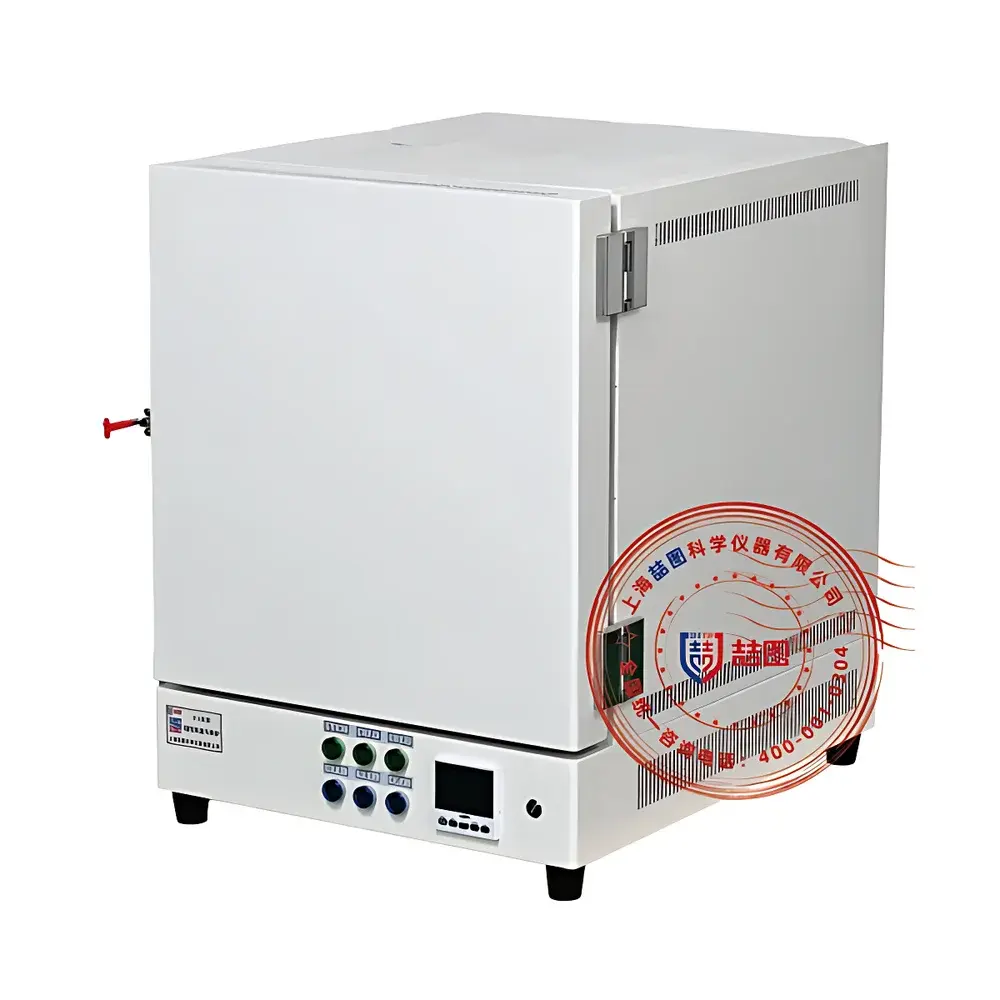
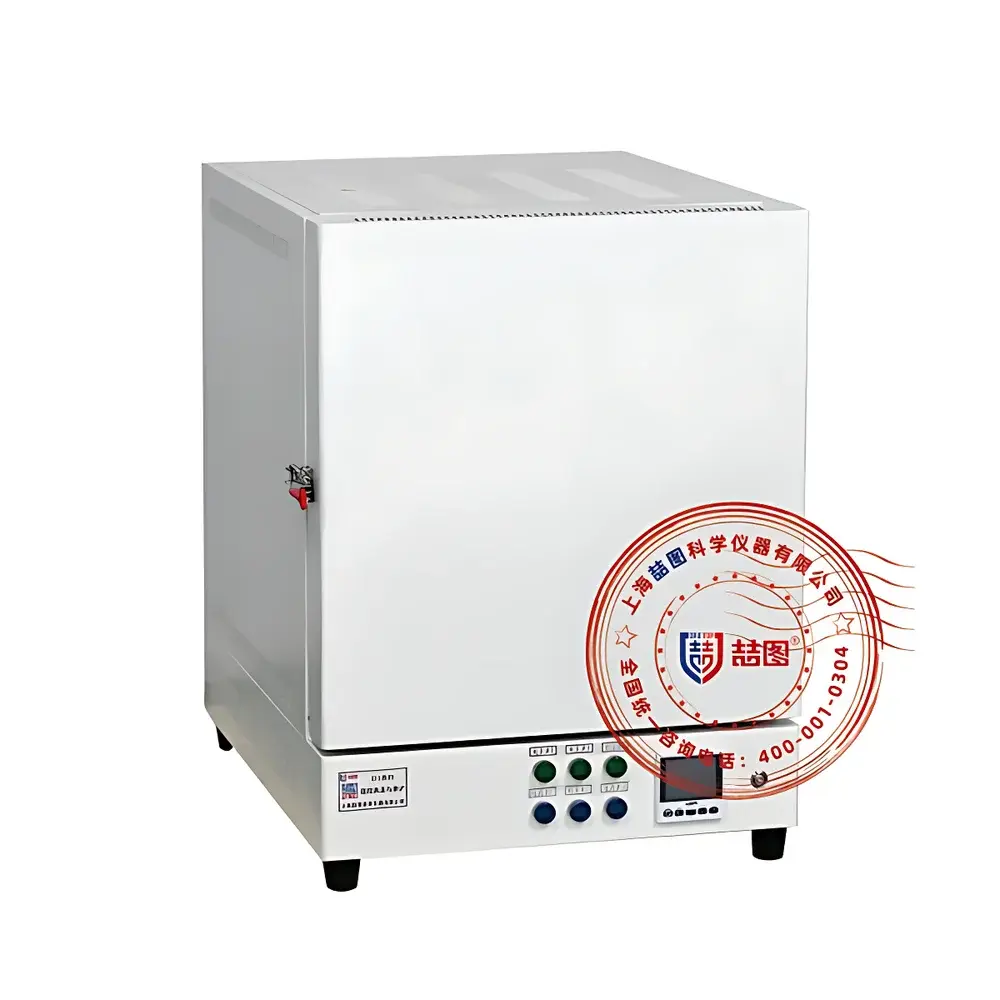
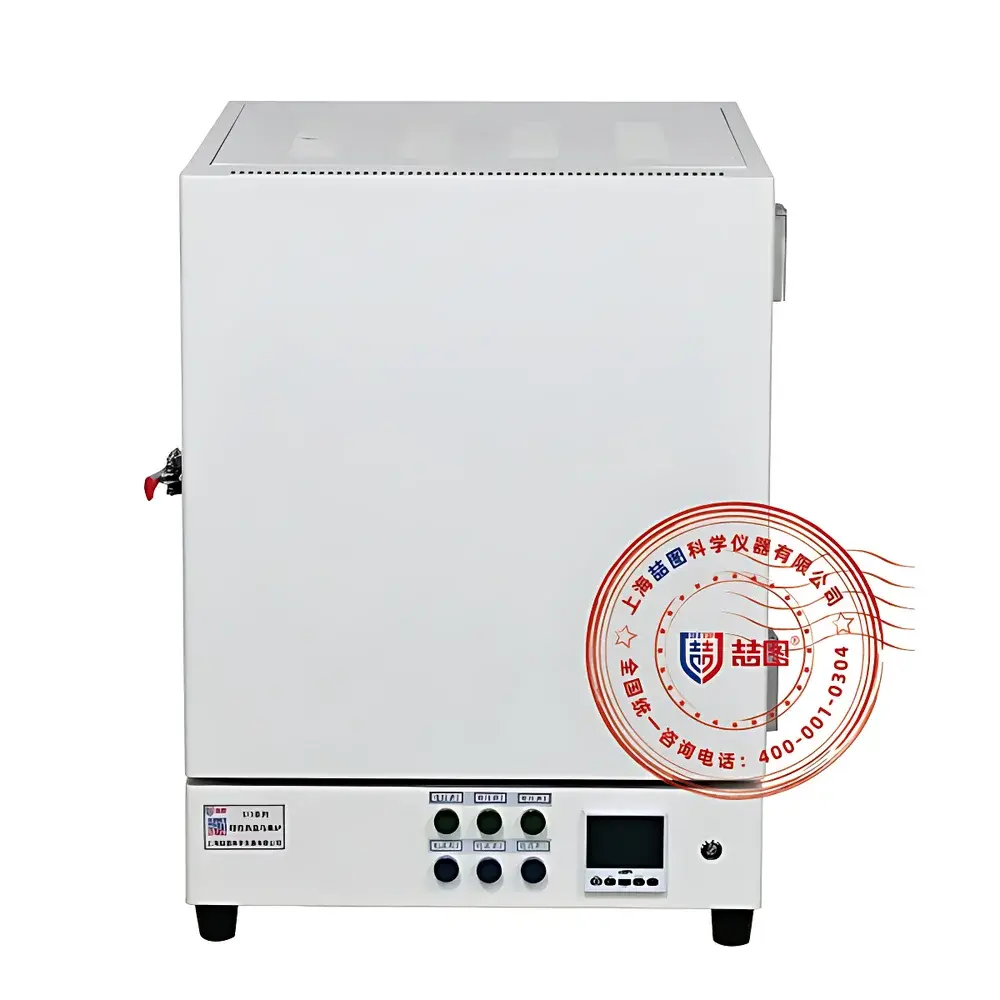
DRETOP GD12-36C Track-Mounted Carriage Muffle Furnace
| Brand | DRETOP |
|---|---|
| Origin | Shanghai, China |
| Manufacturer Type | Direct Manufacturer |
| Product Category | Domestic |
| Model | GD12-36C |
| Instrument Type | Box-Type Muffle Furnace |
| Maximum Temperature | 1200 °C |
| Temperature Control Accuracy | ±1 °C |
| Rated Power | 12 kW |
| Heating Rate to Max Temp | ≤60 min |
| Heating Method | High-Temperature Alloy Heating Elements |
| Internal Chamber Dimensions | 300 × 400 × 320 mm (W × D × H) |
| Control System | Programmable PID Controller (30-Stage Ramp/Soak) |
| Safety Features | Automatic Door-Interlocked Power Cut-off, Dual-Stage Over-Temperature Protection, Real-Time Voltage/Current Monitoring |
| Insulation Material | Vacuum-Microporous Ceramic Fiber Board |
| Heating Configuration | Triple-Wall Radiant Heating |
| Compliance | Designed for GLP-compliant thermal processing |
Overview
The DRETOP GD12-36C Track-Mounted Carriage Muffle Furnace is a high-performance, industrial-grade box-type furnace engineered for rapid, repeatable, and uniform thermal processing in research laboratories, materials science facilities, and quality control environments. Unlike conventional brick-lined or low-density fiber furnaces, the GD12-36C employs vacuum-microporous ceramic fiber insulation—reducing thermal mass while achieving exceptional heat retention and energy efficiency. Its triple-wall radiant heating architecture, using high-temperature alloy heating elements coiled along all three interior walls, ensures a highly homogeneous temperature field (±2 °C uniformity across the working zone at 1200 °C), critical for reproducible sintering, ashing, annealing, and calcination procedures. The track-mounted carriage system enables safe, ergonomic loading and unloading of heavy or multiple crucibles without direct exposure to radiant heat—minimizing operator risk and thermal shock to the chamber.
Key Features
- Triple-wall radiant heating configuration with high-temperature alloy elements embedded in ceramic fiber lining for rapid ramp rates (≤60 min to 1200 °C) and superior thermal uniformity.
- 30-stage programmable PID controller with ramp/soak capability, real-time curve display, and automatic termination upon completion of cycle.
- Door-interlocked safety circuit: power cuts instantly upon door opening; resumes automatically when closed—ensuring process integrity during mid-cycle sample access.
- Dual-level over-temperature protection: primary digital limit set via controller + independent mechanical backup relay with non-resettable fuse.
- Integrated voltage and current meters provide continuous electrical diagnostics—supporting predictive maintenance and compliance with IEC 61000-4-30 power quality monitoring requirements.
- Phosphate-conversion coated steel housing with high-temp epoxy powder coating resists oxidation and mechanical abrasion under repeated thermal cycling.
- Front-access ceramic fiber baffle minimizes heat loss at the chamber aperture, maintaining stable edge-zone temperatures during extended dwell periods.
Sample Compatibility & Compliance
The GD12-36C accommodates standard and custom crucibles (alumina, quartz, silicon carbide, platinum) up to Ø120 mm × 100 mm height within its 300 × 400 × 320 mm chamber. Its inert atmosphere compatibility—via optional inert gas inlet (N₂, Ar) and exhaust chimney—supports controlled-atmosphere applications including oxide reduction, carburization pre-treatment, and moisture-sensitive calcinations. The furnace meets structural and operational prerequisites for GLP and GMP thermal validation per FDA 21 CFR Part 11 (when paired with TC-series touchscreen and audit-trail-enabled software). It supports IQ/OQ documentation packages aligned with ASTM E2877-22 (Standard Guide for Validation of Thermal Processing Equipment) and ISO/IEC 17025 clause 6.4.3 (equipment suitability verification).
Software & Data Management
Equipped with the optional TC-series color touchscreen controller, the GD12-36C provides real-time temperature profiling, multi-user role-based access (engineer/operator/auditor), and encrypted data logging compliant with 21 CFR Part 11 Annex 11 requirements. Logged parameters include setpoint, actual temperature, power output %, door status, alarm events, and timestamped operator actions. Data export is supported via USB or RS485 Modbus RTU protocol for integration into LIMS or MES platforms. Optional micro-printer output delivers hard-copy cycle reports with digital signature fields for batch record linkage.
Applications
- High-temperature sintering of ceramics, ferrites, and advanced composites (e.g., ZrO₂, Si₃N₄, AlN).
- Residue ashing of pharmaceutical excipients and biological matrices per USP and AOAC 990.19.
- Thermal gravimetric analysis (TGA) sample pre-conditioning and reference material calibration.
- Heat treatment of metal alloys: solution annealing, stress relieving, and tempering of tool steels and superalloys.
- Nanopowder synthesis via thermal decomposition of precursors (e.g., nitrate-to-oxide conversion).
- Crucible conditioning and binder burnout prior to investment casting or hot-isostatic pressing.
FAQ
What is the maximum recommended load mass for stable temperature uniformity?
For optimal thermal homogeneity across the full 36 L chamber volume, the maximum recommended gross load—including crucibles, setters, and samples—is 8 kg. Exceeding this may extend stabilization time beyond ±1 °C tolerance at 1200 °C.
Can the GD12-36C operate under vacuum or reducing atmospheres?
The base model is rated for inert or ambient-air operation only. For vacuum (<10⁻² mbar) or H₂/N₂-H₂ mixtures, the optional sealed chamber variant (GD12-36C-VAC) with flanged viewport and gas-tight O-ring seal must be specified.
Is firmware upgrade support available post-purchase?
Yes—DRETOP provides free firmware updates via secure FTP portal for TC-series controllers, including enhanced alarm logic, expanded Modbus register mapping, and improved data compression algorithms.
How is traceability ensured during regulatory audits?
With TC-series controller and audit trail enabled, every parameter change, door event, and alarm activation is time-stamped, user-ID tagged, and cryptographically hashed—meeting ALCOA+ principles for data integrity as defined in WHO TRS 1025 Annex 11.
What maintenance intervals are recommended for long-term reliability?
Ceramic fiber integrity inspection every 500 operating hours; thermocouple calibration verification every 3 months or per SOP; heating element resistance measurement annually. Full preventive maintenance kits (gaskets, terminal blocks, fuses) are cataloged under part #GD-PMK-36C.



