
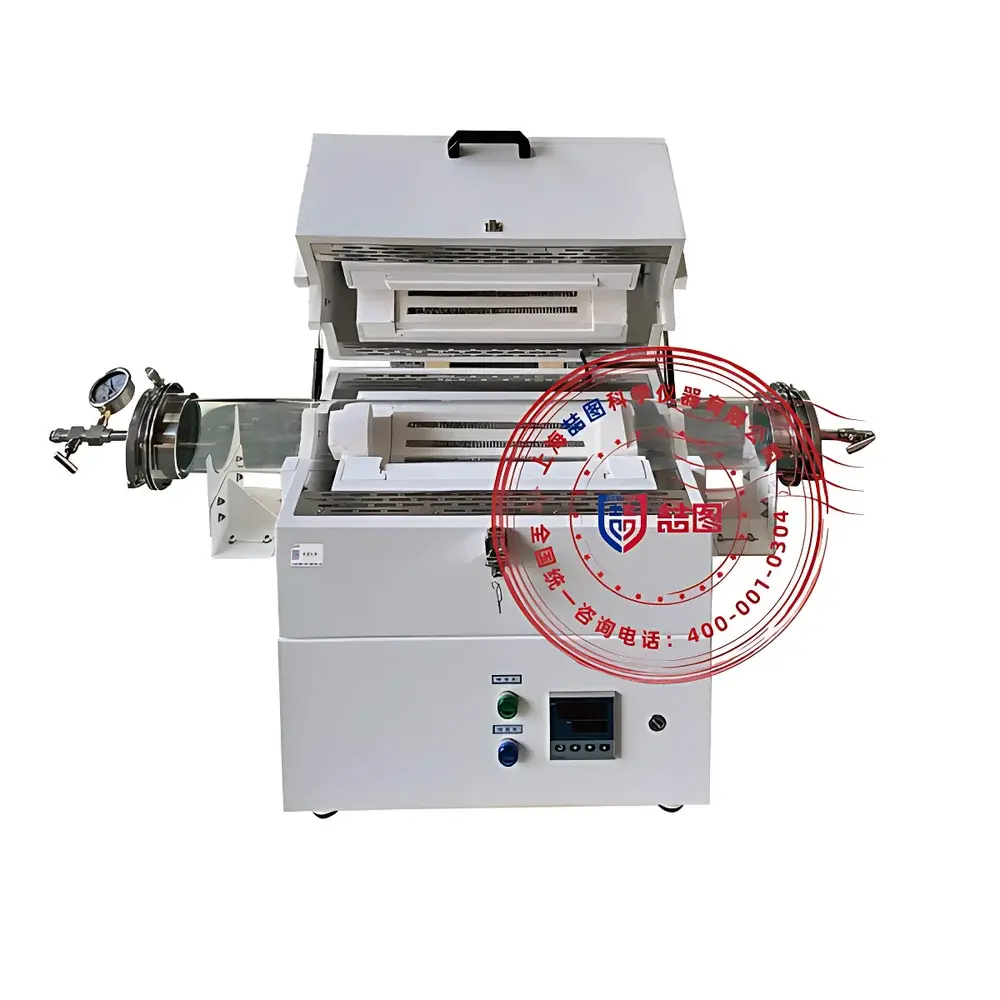
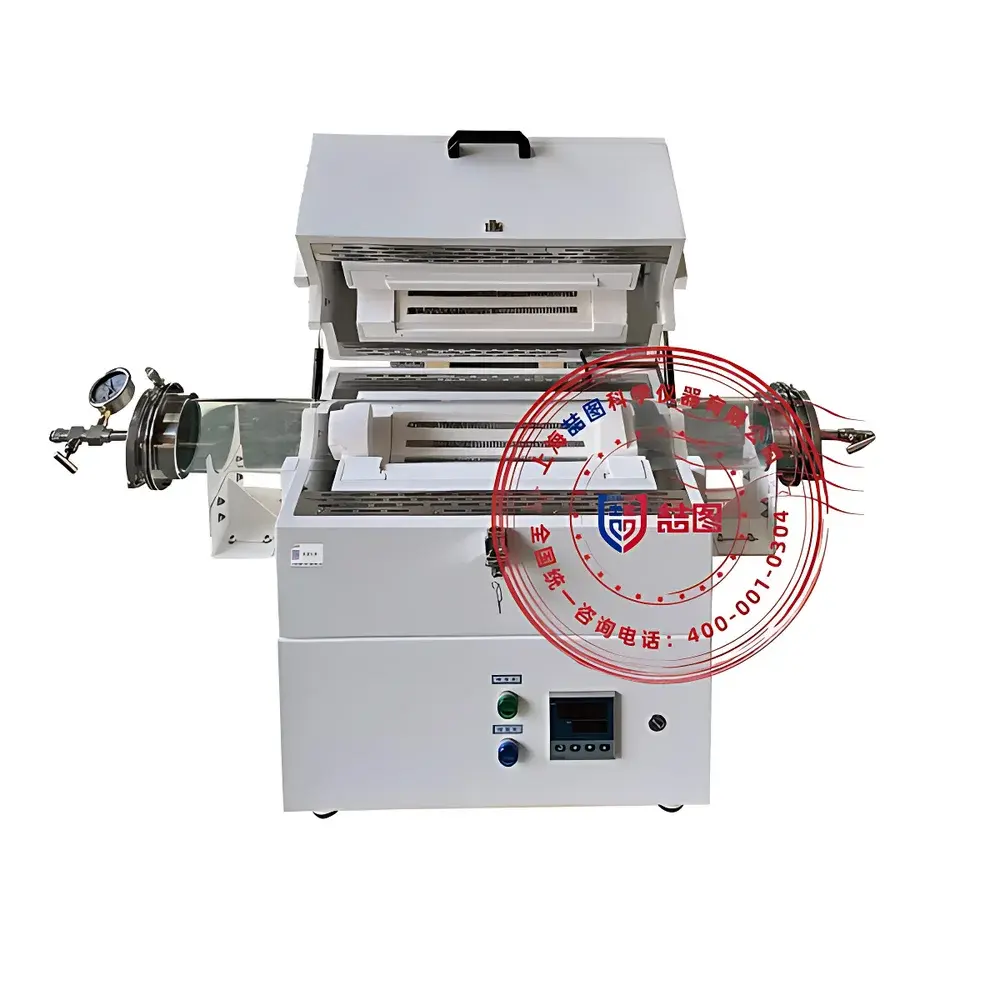
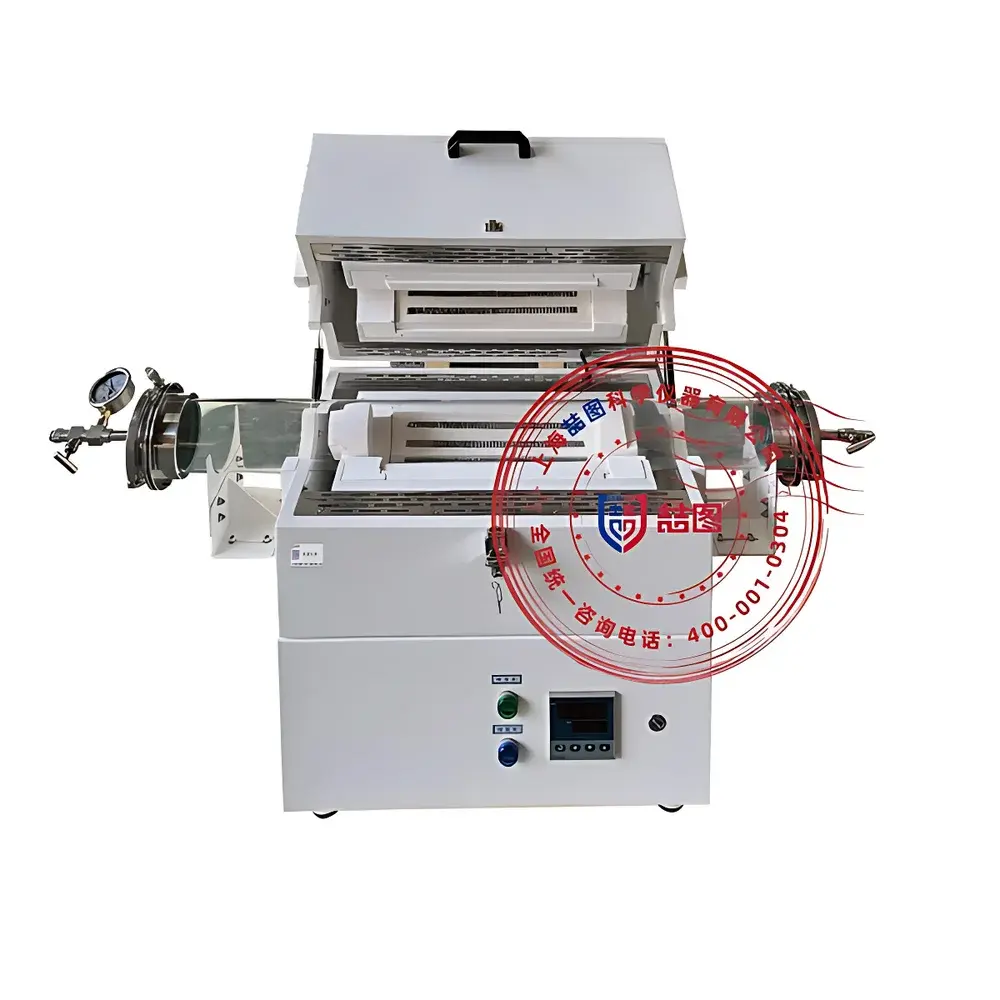
DRETOP GK12-0810AL Vertical Tube-Type Vacuum & Atmosphere Muffle Furnace
| Brand | DRETOP |
|---|---|
| Origin | Shanghai, China |
| Manufacturer Type | Direct Manufacturer |
| Instrument Type | Tube Furnace |
| Maximum Temperature | 1200 °C |
| Rated Power | 2 kW |
| Heating Rate to Max Temp | ~60 min |
| Heating Element | Nickel-Chromium Alloy |
| Internal Dimensions | 80 mm (ID) × 205 mm (L) |
| Control Mode | Programmable Temperature Controller |
| Tube Diameter | 80 mm |
| Vacuum Capability | Yes (with integrated vacuum flange interface) |
| Atmosphere Compatibility | N₂, Ar, H₂, forming gas, and other inert/reducing mixtures |
| Insulation Material | Polycrystalline Mullite Fiber |
| Safety Features | Over-Temperature Protection, Thermocouple Break Detection, Automatic Power Cut-off on Lid Opening |
Overview
The DRETOP GK12-0810AL is a vertically oriented, programmable tube furnace engineered for high-precision thermal processing under controlled vacuum or reactive/inert atmospheres. It operates on the principle of resistive heating via nickel-chromium alloy elements, delivering uniform axial temperature profiles within a high-purity quartz tube (80 mm inner diameter × 205 mm heated zone length). Designed for laboratory-scale synthesis, annealing, sintering, and heat treatment of advanced materials, the system integrates dual KF-25 stainless steel flanges with double O-ring compression sealing—enabling stable vacuum levels down to 10⁻² mbar (when paired with an external vacuum pump) and precise gas flow regulation via side-mounted inlet/outlet ports. Its vertical configuration minimizes floor footprint while facilitating gravity-assisted sample loading and in-situ gas purge efficiency—critical for oxide-sensitive processes such as Li-ion cathode material calcination, CVD precursor decomposition, or metal injection molding (MIM) debinding.
Key Features
- Vertical tube architecture with top-hinged lid and automatic power interlock: heating ceases immediately upon lid opening, complying with IEC 61000-4-11 safety standards for transient voltage immunity and operational fail-safes.
- Polycrystalline mullite fiber insulation: achieves ≤1.2 W/cm² surface temperature at 1200 °C, reducing energy consumption by >35% compared to traditional ceramic fiber alternatives while maintaining radial temperature uniformity of ±5 °C across the 205 mm hot zone.
- Programmable 30-segment temperature controller with ramp/soak capability: supports complex thermal profiles (e.g., multi-stage ramp-hold-cool cycles) required for phase transformation studies, crystallization kinetics, and thermal aging protocols per ASTM E1137/E1137M.
- High-integrity gas handling interface: dual KF-25 flanges with Viton® or Kalrez® seal options; side-mounted gas inlet/outlet ports compatible with mass flow controllers (MFCs) and pressure regulators for dynamic atmosphere control (N₂, Ar, H₂, NH₃, CO, or custom blends).
- Structural robustness: rigid stainless steel frame with reinforced quartz tube support cradle and integrated gas line stress-relief brackets—prevents mechanical strain-induced fracture during repeated thermal cycling.
Sample Compatibility & Compliance
The GK12-0810AL accommodates cylindrical or rod-shaped specimens up to 75 mm in length and 78 mm in outer diameter, suitable for powder compacts, thin films on substrates, wire segments, and ceramic green bodies. Its quartz tube (99.99% SiO₂ purity, OH⁻ content <10 ppm) exhibits exceptional chemical inertness toward halides, alkalis, and low-viscosity melts—making it ideal for semiconductor dopant diffusion, rare-earth phosphor synthesis, and battery electrode material optimization. The system meets fundamental design requirements of ISO/IEC 17025 for calibration traceability (temperature uniformity mapping per IEC 60584-2), and its programmable logic supports audit-ready operation logs aligned with FDA 21 CFR Part 11 electronic record integrity guidelines when interfaced with compliant data acquisition software.
Software & Data Management
While the standard unit features a built-in 3.5-inch TFT touchscreen controller with USB export for temperature profile logs (CSV format), optional Ethernet-enabled firmware enables remote monitoring and real-time data streaming via Modbus TCP or OPC UA protocols. Integrated timestamped event logging records all critical parameters—including setpoint deviations, alarm triggers (over-temperature, thermocouple break), and door-open events—supporting GLP/GMP documentation workflows. Data exports are compatible with MATLAB®, Python pandas, and JMP for statistical process control (SPC) analysis of thermal cycle reproducibility (Cp/Cpk ≥1.33 over 50 consecutive runs).
Applications
This furnace serves cross-disciplinary research and quality control applications including: thermal stabilization of Ni-rich layered oxides (NMC811, NCA); graphitization of carbon precursors for anodes; catalyst activation via H₂ reduction; solid-state reaction synthesis of MAX phases; vacuum-assisted densification of ZrO₂-based dental ceramics; rapid thermal processing (RTP) of perovskite thin films; and controlled atmosphere annealing of MEMS devices. Its compatibility with optional tilting mechanisms (±15°) further supports directional crystal growth and volatile byproduct evacuation in pyrolysis and carbothermic reduction experiments.
FAQ
What vacuum level can the GK12-0810AL achieve?
With a recommended two-stage rotary vane pump (e.g., Edwards RV8), typical base pressure is 1×10⁻² mbar; ultimate vacuum depends on pump selection, seal integrity, and outgassing rate of loaded samples.
Is the quartz tube replaceable, and what is its expected service life?
Yes—the tube is a consumable component. Under continuous operation at ≤1100 °C with proper thermal ramping (<10 °C/min), average lifespan exceeds 200 cycles; exposure to alkali vapors or rapid quenching reduces longevity.
Can this furnace be used for hydrogen atmosphere processing?
Yes—provided appropriate leak testing (helium mass spectrometry), explosion-proof gas handling accessories, and H₂-compatible seals (Kalrez® recommended above 400 °C) are employed per NFPA 55 and CGA G-5.5 guidelines.
Does the system include temperature uniformity certification?
A factory-generated temperature uniformity report (per IEC 60584-2, 5-point axial/radial mapping at 1000 °C) is available upon request; on-site validation using calibrated reference thermocouples is recommended for ISO 17025-accredited labs.
What maintenance intervals are recommended?
Visual inspection of seals and electrical connections every 50 operating hours; full thermocouple calibration and vacuum gauge verification every 6 months or 500 h—whichever occurs first.



