
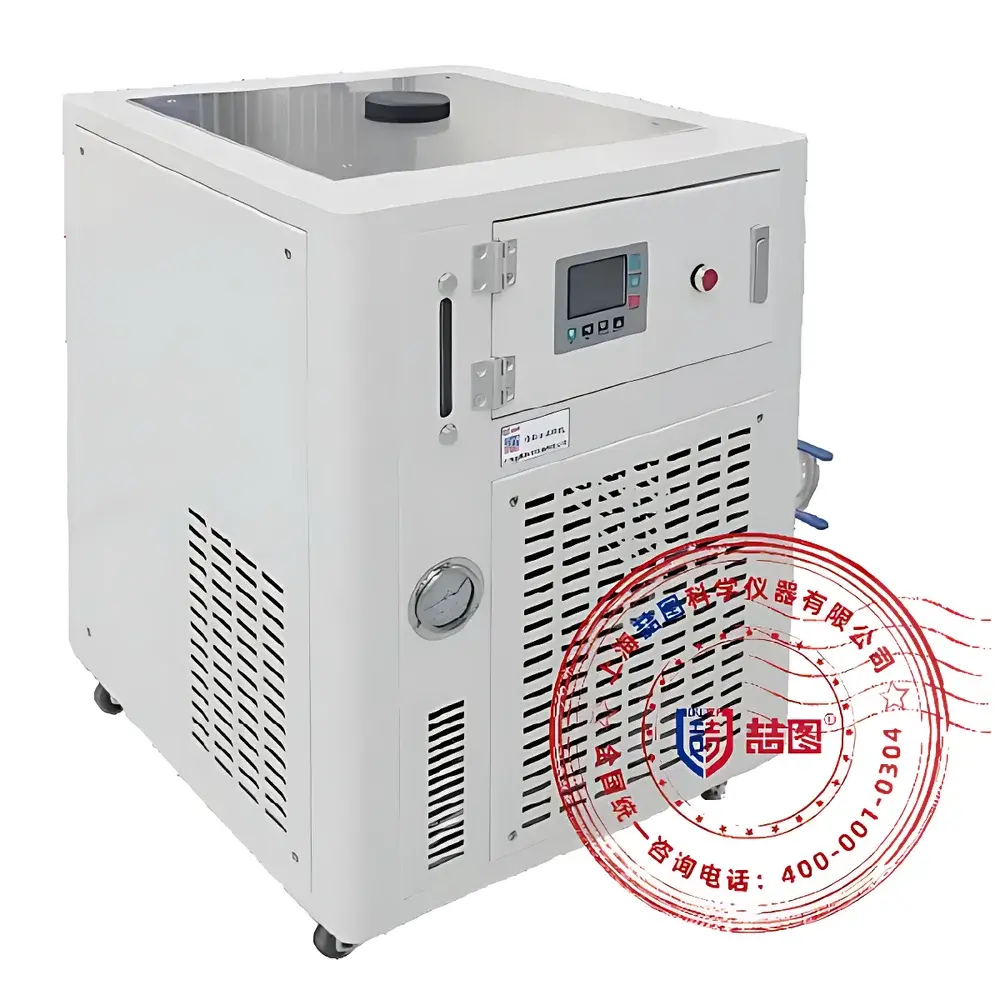
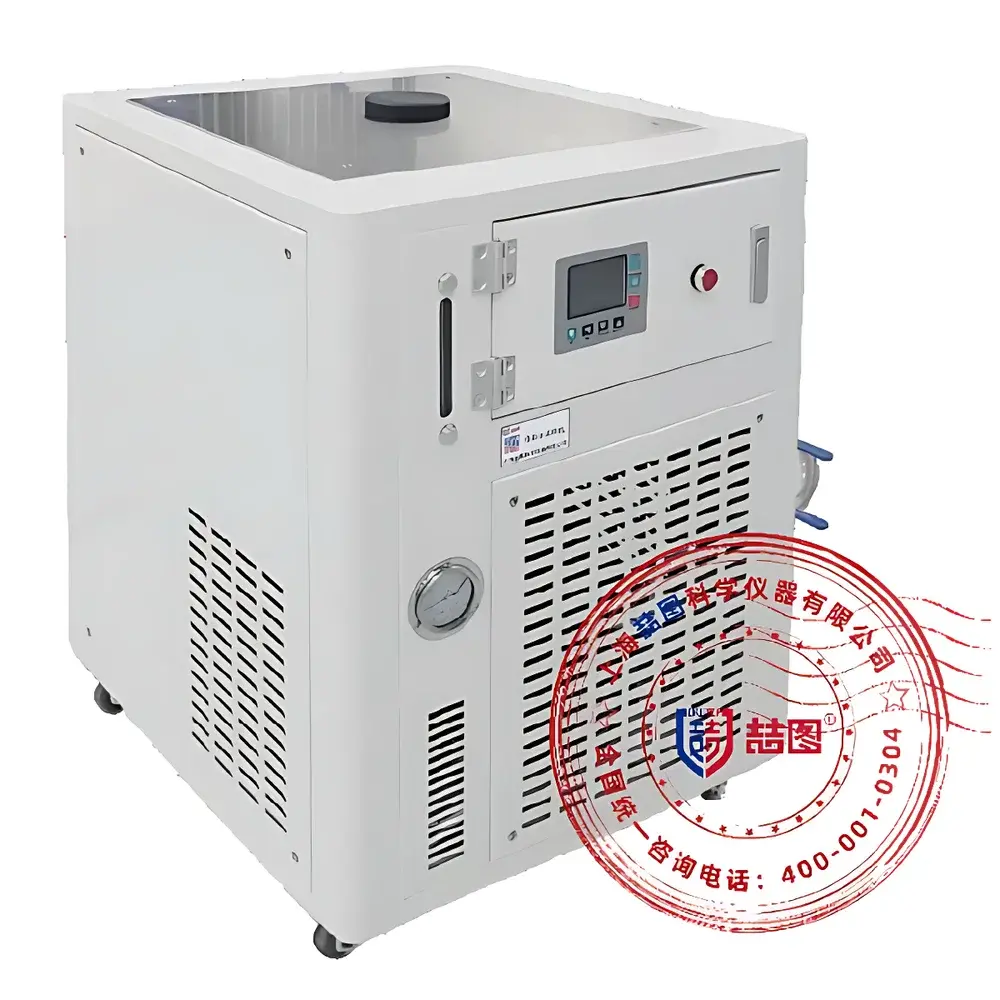
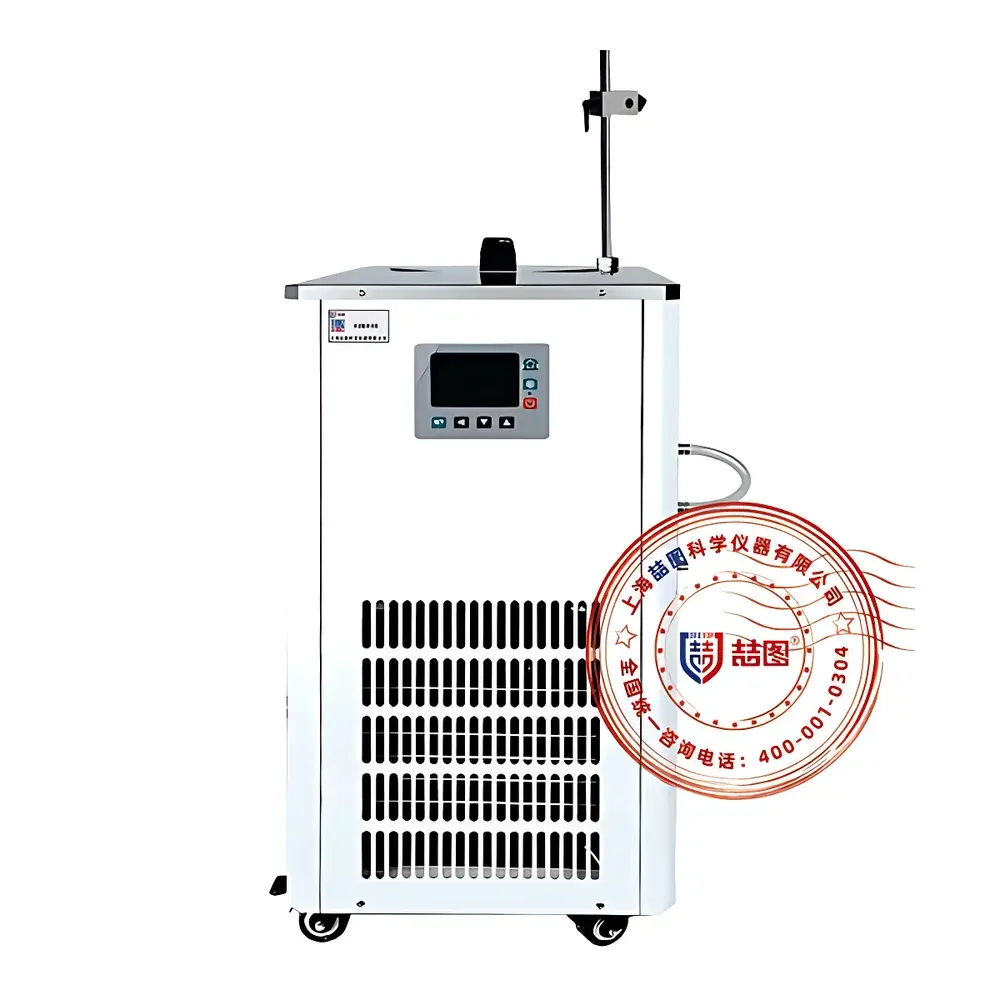
DRETOP LC1-10 Integrated Circulating Chiller
| Brand | DRETOP |
|---|---|
| Origin | Shanghai, China |
| Manufacturer Type | Direct Manufacturer |
| Regional Classification | Domestic (China) |
| Model | LC1-10 |
| Instrument Type | Integrated Unit |
| Cooling Method | Water-Cooled |
| Temperature Control Range | 5–100 °C |
| Refrigeration Capacity | 1 HP |
| Circulating Pump Pressure | 0–2 bar |
| Circulating Flow Rate | 0–30 L/min |
| Reservoir Volume | 10 L |
Overview
The DRETOP LC1-10 Integrated Circulating Chiller is a precision-engineered thermal management system designed for continuous, stable heat exchange in laboratory and industrial applications. It operates on a closed-loop refrigeration principle, combining vapor-compression cooling with electric resistance heating to deliver bidirectional temperature control across a wide operational range (5–100 °C). Unlike cryogenic chillers or low-temperature circulators, the LC1-10 is optimized for ambient-to-moderate-high temperature regulation—making it ideal for instrument cooling (e.g., ICP-OES spectrometers, laser diodes, vacuum pumps), reactor jacketing, and process stabilization where sub-zero performance is unnecessary. Its integrated architecture eliminates external condenser piping, reducing footprint and installation complexity while maintaining ISO 17025-aligned thermal stability (< ±0.3 °C typical fluctuation under steady-state load).
Key Features
- PID-based digital temperature controller with high-resolution Pt100 sensor feedback, enabling rapid response (< 30 s to 90% setpoint recovery) and long-term stability (±0.2 °C at 25 °C, full range ±0.5 °C).
- Hermetically sealed stainless-steel reservoir (AISI 304) and circulation loop, resistant to corrosion from deionized water, glycol/water mixtures, and mild aqueous buffers—ensuring media purity and extended service life.
- Low-heat-generation magnetic drive circulation pump (brushless DC motor), decoupled thermally from the fluid path to prevent self-heating artifacts and maintain bath uniformity.
- Dual-mode thermal actuation: variable-speed scroll compressor (inverter-driven) for efficient refrigeration; immersed tubular heater for precise, uniform warming—enabling programmable ramp/soak profiles.
- RS485 serial interface (Modbus RTU protocol) for integration into centralized lab automation systems; supports real-time monitoring, historical data logging (timestamped temperature/flow/pressure), and remote setpoint adjustment via PC or PLC.
- Comprehensive safety architecture: over-temperature, low-level, dry-run, pressure fault, and leakage detection with audible/visual alarms; automatic shutdown and non-volatile memory retention of last operating parameters after power interruption.
Sample Compatibility & Compliance
The LC1-10 circulates compatible heat-transfer fluids—including deionized water, 20–50% ethylene glycol/water blends, and low-conductivity synthetic oils—within fully enclosed, leak-tight stainless-steel tubing (φ10 mm OD, 316 SS optional). Its IP54-rated enclosure meets IEC 60529 for dust and splash resistance, supporting deployment in shared lab environments subject to routine cleaning and moderate humidity. The unit complies with GB/T 20621–2021 (Chinese national standard for laboratory chillers), EMC Directive 2014/30/EU, and Low Voltage Directive 2014/35/EU. While not certified to FDA 21 CFR Part 11 out-of-box, its audit-ready data logging (with user-defined password protection and event timestamps) facilitates validation under GLP and GMP frameworks when paired with compliant LIMS or ELN software.
Software & Data Management
Firmware includes embedded data historian capable of storing >10,000 timestamped records (temperature, flow rate, compressor status, alarm events) with configurable sampling intervals (1–300 s). Export is supported via CSV over USB or RS485; no proprietary drivers required. Optional DRETOP LabControl Suite (Windows-based) enables multi-unit fleet monitoring, custom PID tuning, graphical trend analysis, and PDF report generation—including calibration traceability metadata. All logged data retains immutable timestamps aligned to UTC, satisfying ALCOA+ principles for regulated environments requiring data integrity per Annex 11 and USP .
Applications
- Instrument cooling: Maintaining optimal operating temperatures for ICP spectrometers, HPLC column ovens, FTIR detectors, and RF plasma sources—preventing thermal drift and signal noise.
- Chemical synthesis support: Providing consistent jacket temperature for glass reactors (5–50 L capacity) during exothermic polymerizations or catalytic hydrogenations.
- Materials testing: Stabilizing test specimens during tensile, fatigue, or dielectric measurements across defined thermal plateaus (e.g., 40 °C/85% RH preconditioning per ASTM D618).
- Bio-pharma workflows: Controlling incubator jacket temperatures, cold-room air handler pre-cooling loops, and chromatography system heat exchangers in QC labs.
- Electronics R&D: Thermal cycling of semiconductor packaging substrates and LED array test fixtures within specified junction temperature windows.
FAQ
What is the minimum allowable coolant temperature for the LC1-10?
The unit is rated for a lower limit of 5 °C. Operation below this threshold risks evaporator icing and compressor damage; for sub-zero applications, consider DRETOP’s LX-series low-temperature circulators.
Can the LC1-10 be used with organic solvents like acetone or THF?
No. Only water-miscible, non-volatile, non-flammable coolants are approved (e.g., aqueous glycol, silicone oil above 50 cSt). Halogenated or low-boiling-point solvents may degrade seals and compromise safety.
Is external condenser water required for operation?
Yes—the LC1-10 is water-cooled and requires a continuous supply of clean, low-conductivity cooling water (15–30 °C inlet, ≤2 bar pressure, ≥1.5 m³/h flow) to reject condenser heat.
Does the unit support external temperature feedback control?
Yes—via optional PT100 input terminal, enabling cascade control using a remote process sensor (e.g., reactor vessel wall or effluent line), improving accuracy beyond bath-setpoint-only regulation.
What maintenance intervals are recommended?
Compressor oil inspection every 2,000 operating hours; glycol concentration check quarterly; reservoir descaling with citric acid solution annually (if using hard tap water); full system leak test and refrigerant charge verification every 3 years by certified technician.



