
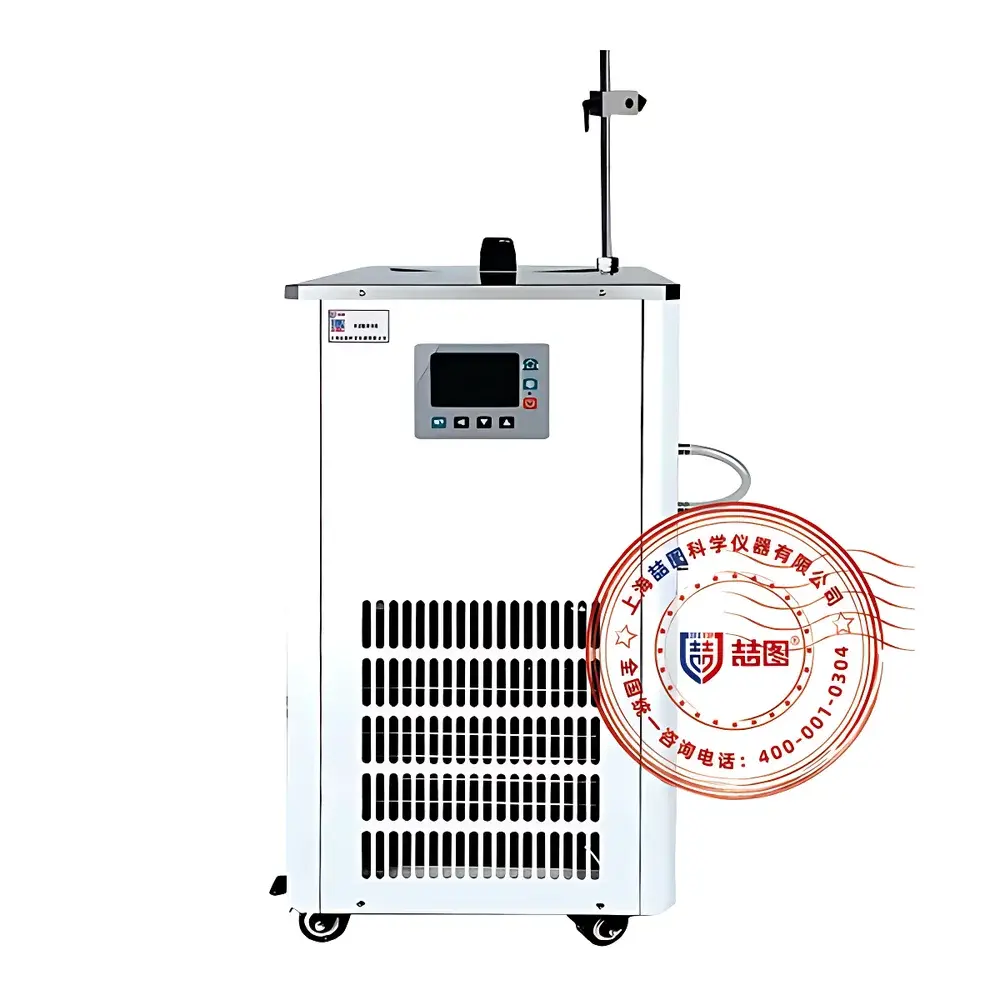
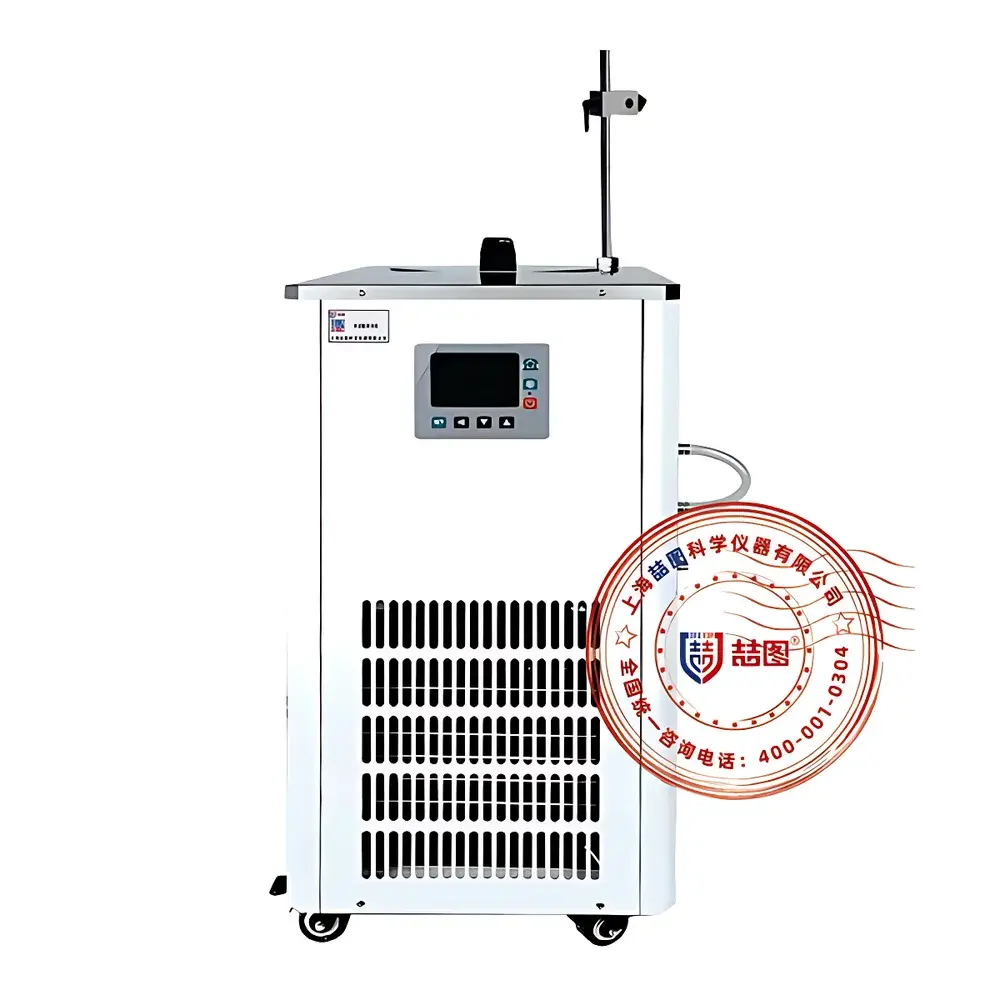
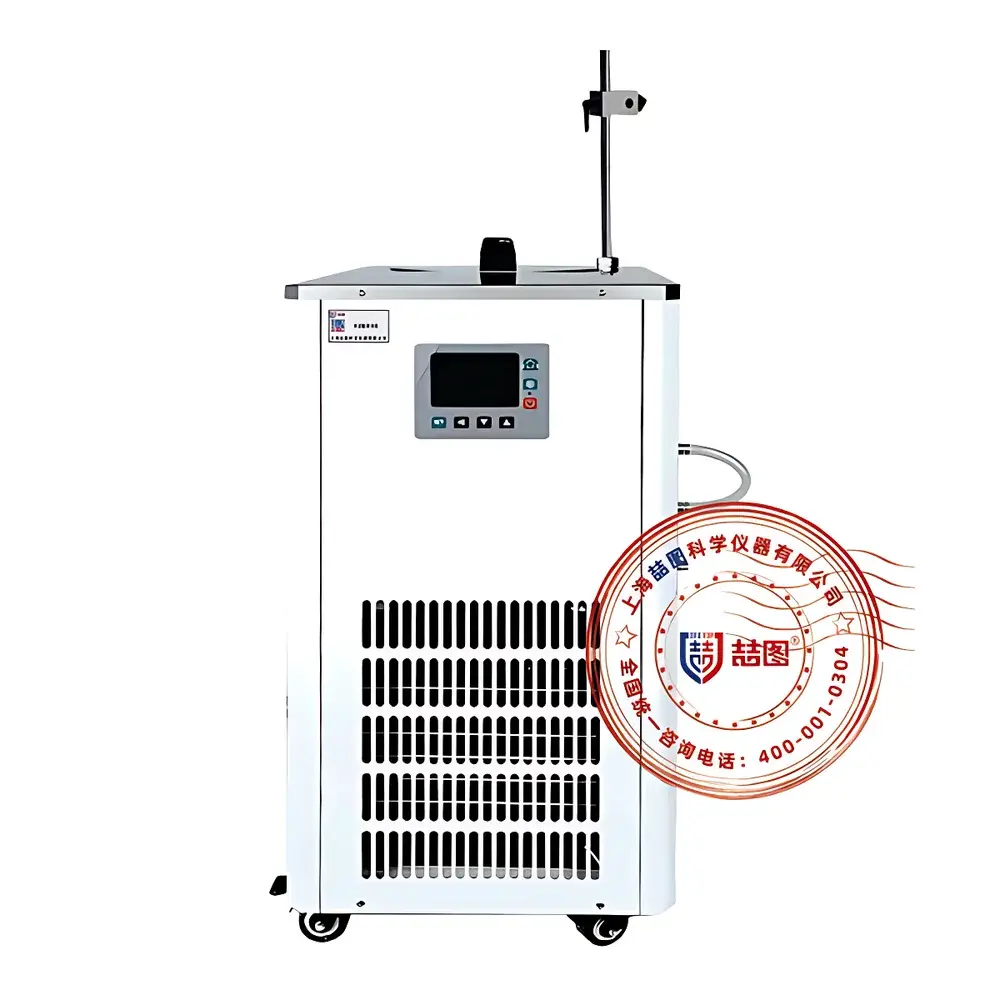
DRETOP LF5-10 Low-Temperature Reaction Bath with Magnetic Stirring
| Brand | DRETOP |
|---|---|
| Origin | Shanghai, China |
| Manufacturer Type | Direct Manufacturer |
| Product Type | Integrated Unit |
| Cooling Method | Water-Cooled |
| Temperature Control Range | −10 °C to 100 °C |
| Temperature Stability | Not specified (contact technical support) |
| Circulating Pump Flow Rate | 20 L/min |
| Reservoir Capacity | 5 L |
Overview
The DRETOP LF5-10 Low-Temperature Reaction Bath with Magnetic Stirring is an integrated laboratory temperature control system engineered for precision thermal management of chemical reactions, material testing, and biological sample conditioning. It operates on a closed-loop refrigeration principle combining vapor-compression cooling with resistive electric heating, enabling bidirectional temperature control across a wide operational span (−10 °C to 100 °C). Unlike standalone chillers or external circulation units, the LF5-10 integrates a stainless steel reaction bath, a built-in magnetic stirrer, and a high-efficiency circulation pump—eliminating the need for auxiliary jackets, external tubing, or secondary temperature transfer media. Its design follows thermodynamic best practices for uniform heat exchange: the bath’s low-thermal-mass stainless steel tank ensures rapid thermal response, while the submerged magnetic drive minimizes localized heating and maintains solution homogeneity during extended operation. This architecture supports applications requiring both precise setpoint maintenance and dynamic ramping profiles—critical in synthetic chemistry, cryobiology, and semiconductor process validation.
Key Features
- PID-based dual-mode temperature control: Combines proportional-integral-derivative algorithm with high-resolution platinum RTD sensors (Class A tolerance) for stable setpoint regulation and minimal overshoot during heating/cooling transitions.
- Integrated magnetic stirring system: Brushless DC motor drives a corrosion-resistant ceramic-coated stir bar via sealed magnetic coupling; speed adjustable from 0–1200 rpm with digital feedback and torque compensation across the full temperature range.
- Closed-loop circulation architecture: Stainless steel fluid path (AISI 304), hermetically sealed reservoir, and non-ferrous impeller prevent oxidation, contamination, and degradation of heat transfer fluids—including aqueous solutions, ethylene glycol/water mixtures, and silicone oils.
- Industrial-grade safety framework: Dual-level overtemperature cutoff, low-fluid-level detection, leak monitoring circuitry, short-circuit protection, and automatic power recovery after brownout events. Complies with IP54 ingress protection for lab environments with occasional solvent exposure.
- Modular expansion interface: RS485 serial port (Modbus RTU protocol) enables integration with LIMS, SCADA, or custom data acquisition systems for time-stamped temperature logging, alarm event tracking, and remote parameter adjustment.
Sample Compatibility & Compliance
The LF5-10 accommodates standard laboratory glassware up to Ø200 mm diameter (e.g., 500 mL round-bottom flasks, jacketed reactors, and cryogenic sample holders) via its 210 mm aperture and integrated support rod system. Its fluid compatibility extends to water, deionized water, 30–60% ethylene glycol solutions (for sub-zero operation), and low-volatility silicone oils (up to 100 °C). All wetted surfaces meet ASTM F838-22 standards for extractables in pharmaceutical contact materials. The unit is designed to support GLP-compliant workflows: audit-trail-capable software (via optional DRETOP LabControl Suite) records all user-initiated changes, calibration events, and thermal excursions in accordance with FDA 21 CFR Part 11 requirements. It satisfies ISO 17025 clause 5.4.2 for equipment suitability in accredited testing laboratories when operated within manufacturer-specified ambient conditions (15–30 °C, ≤80% RH).
Software & Data Management
DRETOP LabControl Suite (v3.2+, optional) provides validated temperature profiling, multi-segment ramp/soak programming, real-time graphing, and CSV export of time-series data at user-defined intervals (1 s to 60 min resolution). The software enforces role-based access control (administrator, operator, reviewer) and generates electronic signatures compliant with ALCOA+ principles. All logged parameters—including bath temperature, setpoint, stir speed, pump status, and fault codes—are timestamped with UTC synchronization and stored in encrypted SQLite databases with SHA-256 integrity verification. Raw data files are compatible with MATLAB, Python (pandas), and JMP for statistical process analysis and DOE correlation studies.
Applications
- Organic synthesis: Controlled Grignard reactions (−30 °C), lithiation protocols, and exothermic hydrogenations requiring simultaneous cooling and mechanical agitation.
- Biopharmaceutical stability testing: Long-term storage of monoclonal antibodies and mRNA-LNPs at defined sub-zero temperatures with continuous mixing to prevent phase separation.
- Materials science: Thermal cycling of perovskite precursors, polymerization kinetics studies under isothermal conditions, and cryo-TEM sample vitrification support.
- Instrument cooling: Secondary temperature regulation for HPLC column ovens, electrophoresis tanks, and laser diode mounts where direct immersion is impractical but thermal inertia must be minimized.
- Quality control labs: USP <797> compliant compounding environment simulation, dissolution apparatus temperature verification (USP <724>), and viscosity measurement standardization per ISO 3219.
FAQ
What heat transfer fluids are recommended for operation below 0 °C?
Ethylene glycol/water mixtures (30:70 to 50:50 v/v) are validated for −10 °C operation. For extended low-temperature use (≤−20 °C), consult DRETOP’s certified silicone oil compatibility matrix (Document REF-LF-FLUID-2024).
Can the LF5-10 maintain temperature stability during high-viscosity solvent circulation?
Yes—the 20 L/min pump delivers ≥0.4 bar pressure at 100 cP viscosity (measured with 40% glycerol/water at 25 °C), ensuring consistent flow through standard 6 mm ID PTFE tubing up to 5 m length.
Is external chiller water required for the water-cooled condenser?
Yes—a continuous supply of tap or deionized water (flow rate ≥1.5 L/min, inlet temperature ≤25 °C) is mandatory for rated cooling performance. Recirculating cooling towers are not supported.
Does the magnetic stirrer function reliably at −10 °C?
Yes—tested with 500 mL methanol/ethanol (1:1) at −10 °C; torque retention ≥92% of room-temperature specification per IEC 60034-30-1 efficiency class IE3.
What calibration documentation is supplied with the unit?
Each unit ships with NIST-traceable factory calibration certificate (temperature sensor and stir speed encoder), including as-found/as-left data, uncertainty budgets per GUM (JCGM 100:2008), and metrological traceability statement.



