
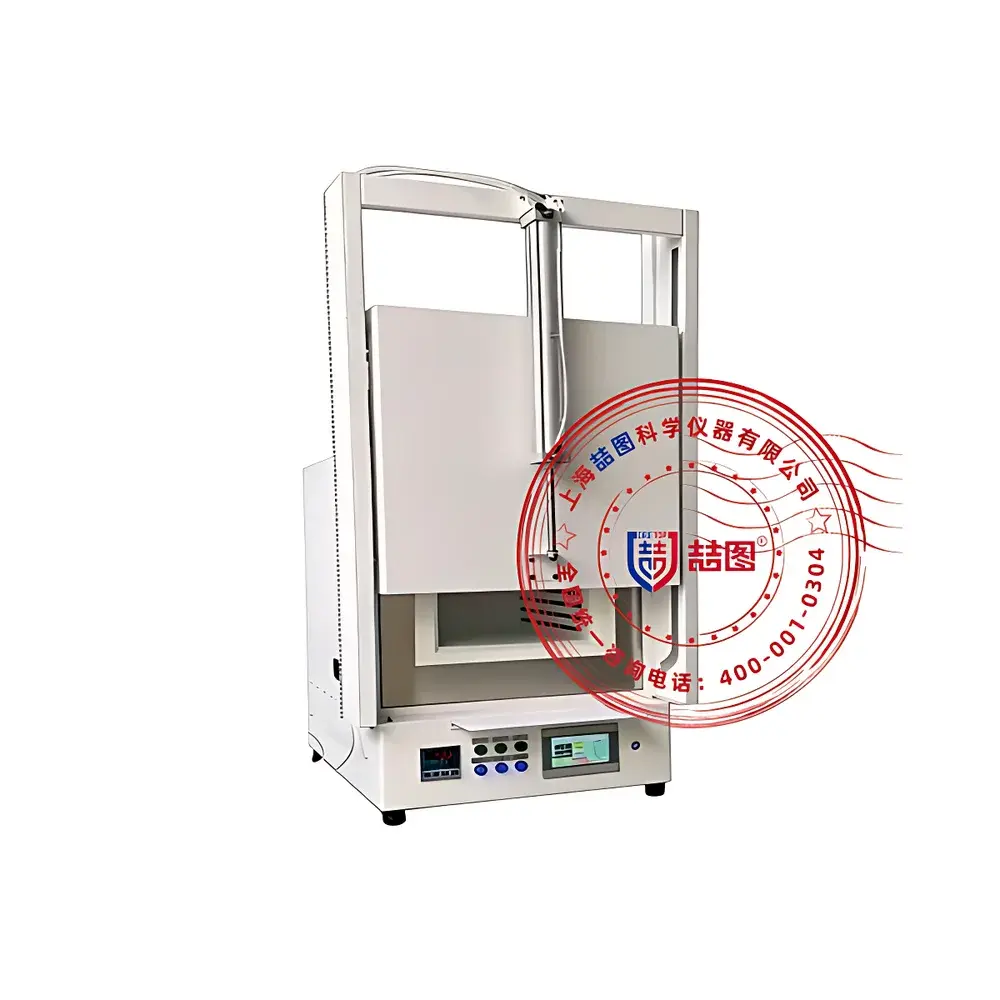
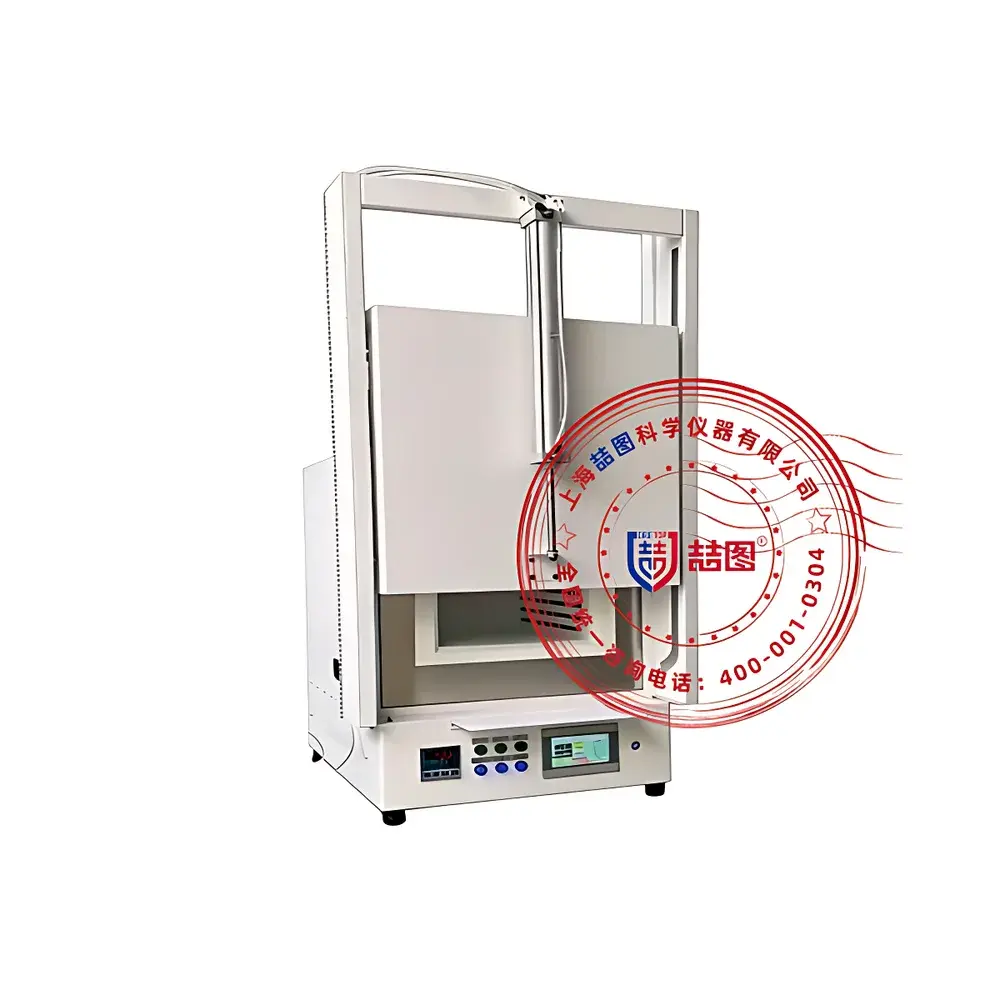
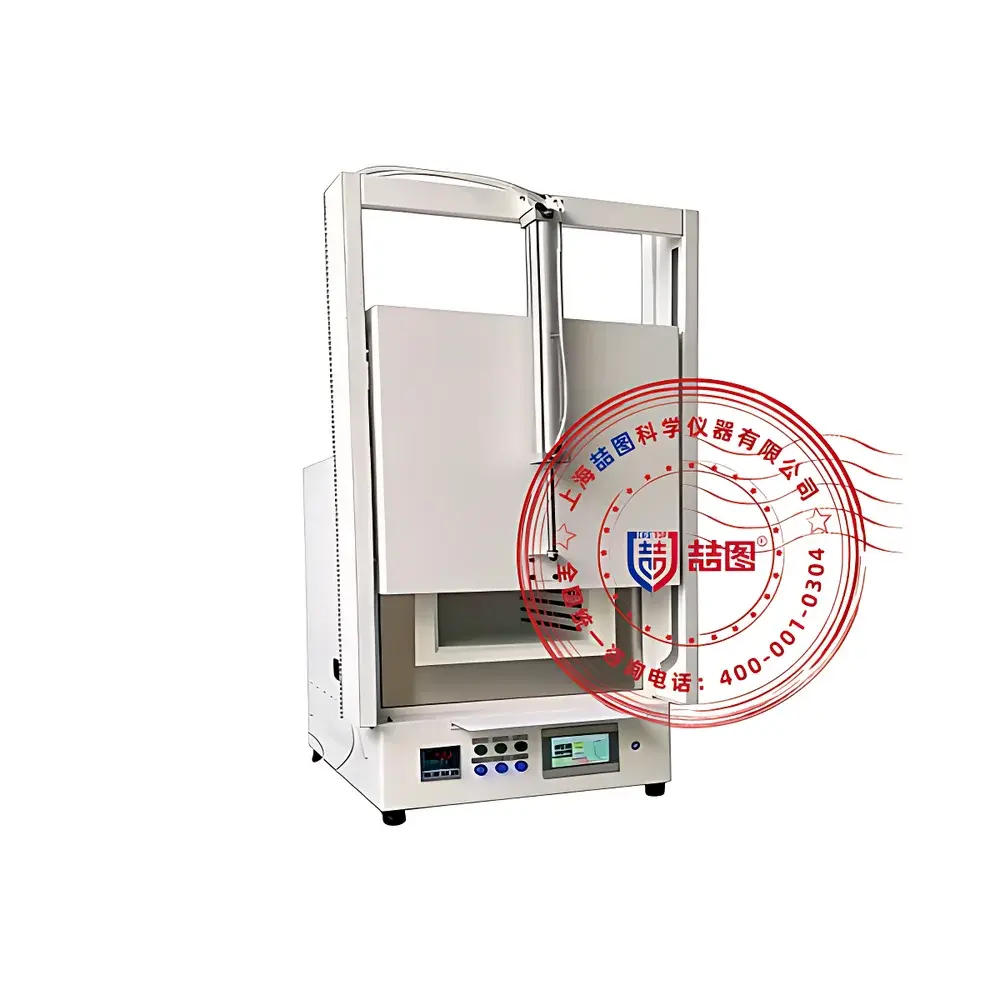
DRETOP MF12-2C Automatic Vertical-Lift Programmable Muffle Furnace
| Brand | DRETOP |
|---|---|
| Origin | Shanghai, China |
| Manufacturer Type | Direct Manufacturer |
| Product Category | Domestic |
| Model | MF12-2C |
| Instrument Type | Box-Type Muffle Furnace |
| Maximum Temperature | 1000 °C |
| Temperature Control Accuracy | ±1 °C |
| Rated Power | 2.5 kW |
| Heating Rate to Max Temp | 30 min |
| Heating Element | Nichrome Wire |
| Internal Chamber Dimensions | 120 × 200 × 80 mm |
| Control System | Microcomputer-Based PID Controller |
| Nominal Volume | 2 L |
Overview
The DRETOP MF12-2C Automatic Vertical-Lift Programmable Muffle Furnace is a compact, high-performance box-type thermal processing instrument engineered for precision laboratory heat treatment applications requiring rapid, repeatable, and programmable temperature control. Utilizing advanced ceramic fiber insulation and triple-sided resistive heating architecture, the furnace achieves exceptional thermal efficiency and uniformity across its 2 L chamber. Its core operating principle relies on Joule heating via high-stability nichrome wire elements embedded within low-density, vacuum-microporous ceramic fiber walls—enabling fast ramp rates (≤30 min to 1000 °C), minimal thermal mass, and reduced standby energy consumption compared to traditional refractory brick furnaces. Designed specifically for R&D laboratories, quality control departments, and materials science research groups, the MF12-2C supports critical thermal protocols including ashing, calcination, sintering, annealing, and heat treatment of ceramics, metals, powders, and nanomaterials under controlled atmospheric conditions.
Key Features
- Vertical automatic lift door mechanism with integrated safety interlock: heating ceases immediately upon door opening and resumes automatically after closure—ensuring operator safety and sample integrity during intermediate handling.
- 30-segment programmable PID controller with large-backlit LCD interface; supports user-defined ramp/soak profiles, dwell times, cooling rate modulation, and end-of-cycle auto-shutdown.
- Ceramic fiber chamber construction (rated to 1200 °C) with reinforced stainless-steel inner lining (2 mm thickness); provides superior thermal retention, lightweight portability, and resistance to thermal shock-induced cracking.
- Triple-wall heating configuration: spiral-wound nichrome elements mounted on all three internal vertical surfaces ensure radial and axial temperature homogeneity (±3 °C across working zone per ASTM E220).
- Dual-stage overtemperature protection: primary solid-state relay cutoff + secondary independent mechanical limiter; complemented by real-time voltage/current monitoring and fault diagnostics (open thermocouple, phase loss, overcurrent).
- Ergonomic industrial design: phosphate-treated steel housing with high-temp epoxy coating; front-mounted control panel with intuitive navigation; integrated heat shielding and cool-touch exterior surfaces.
Sample Compatibility & Compliance
The MF12-2C accommodates standard crucibles (alumina, quartz, graphite, stainless steel) up to Ø60 mm × 60 mm height within its 120 × 200 × 80 mm usable chamber volume. Its open-chamber geometry supports direct visual access (optional cat-eye viewport available) and facilitates rapid loading/unloading of small-volume samples typical in elemental analysis (e.g., ASTM D3174 ash content), ceramic glaze development, or metallographic specimen preparation. The furnace complies with IEC 61000-6-3 (EMC emissions), IEC 61000-6-2 (immunity), and meets general safety requirements per EN 61000-1-2. While not intrinsically rated for inert gas purging, optional fittings—including N₂ inlet valve, exhaust chimney, and RS485 communication port—enable integration into GLP/GMP workflows requiring audit-trail-capable process documentation (when paired with TC-series touchscreen or Pro-series PLC controllers).
Software & Data Management
The base model includes local data logging via built-in non-volatile memory (retains up to 100 program cycles and last 50 operational logs). For enhanced traceability, optional accessories extend functionality: RS485 Modbus RTU interface enables bidirectional communication with LIMS or SCADA systems; USB-enabled color touchscreen (TC variant) supports real-time curve visualization, multi-level password protection (engineer/operator/guest), and CSV export of temperature vs. time datasets. All firmware versions support power-failure recovery: upon restoration, the unit resumes the last active segment with preserved setpoints and elapsed time—critical for unattended overnight runs. Data integrity conforms to FDA 21 CFR Part 11 principles when deployed with validated software packages and electronic signature modules.
Applications
- Quantitative ash residue determination in coal, biomass, and polymers per ISO 1171 and ASTM D2974.
- Sintering of ferrites, lithium-ion cathode precursors (e.g., LiCoO₂), and oxide-based catalysts at precise dwell temperatures.
- Thermal annealing of thin-film substrates and semiconductor wafers requiring <±2 °C spatial uniformity.
- Pre-treatment of filter media and gravimetric sampling filters prior to particulate matter analysis (EPA Method 201A).
- Rapid thermal cycling for evaluating thermal stability of battery electrode materials and thermal barrier coatings.
- Controlled oxidation/reduction studies using optional inert gas inlets and vented exhaust configurations.
FAQ
What is the maximum recommended continuous operating temperature?
The MF12-2C is rated for continuous operation at 1000 °C; short-term excursions to 1050 °C are permissible but reduce element service life.
Does the furnace support inert atmosphere processing?
Yes—via optional N₂ or Ar inlet valve kits; users must supply external gas source and pressure regulator.
Can I export temperature log files for regulatory reporting?
Yes—when equipped with the TC-series touchscreen or Pro-series PLC controller, data can be exported via USB or RS485 to compliant LIMS platforms.
Is calibration certificate included with shipment?
A factory-assembled NIST-traceable thermocouple verification report is provided; full UKAS/DAkkS calibration requires third-party service.
What maintenance intervals are recommended?
Visual inspection of door gasket integrity every 100 operating hours; thermocouple verification annually or after 500 thermal cycles above 800 °C.



