
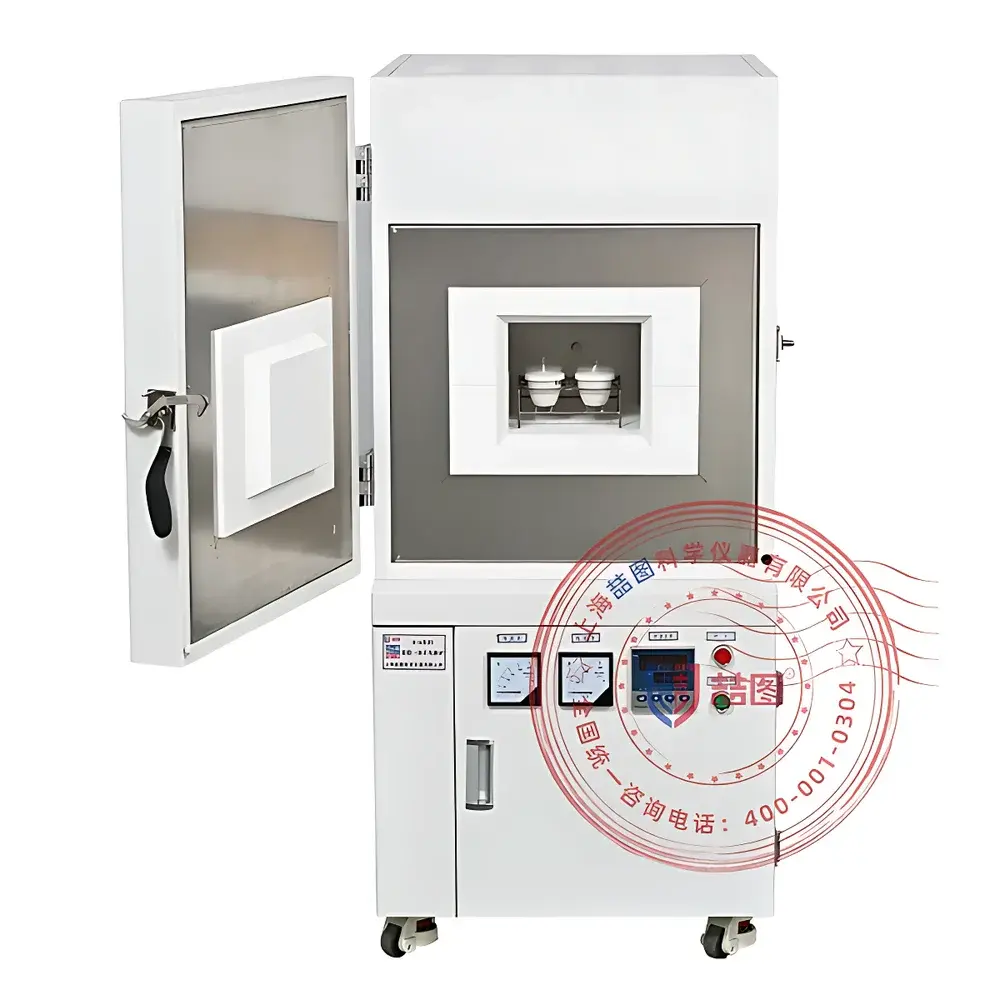
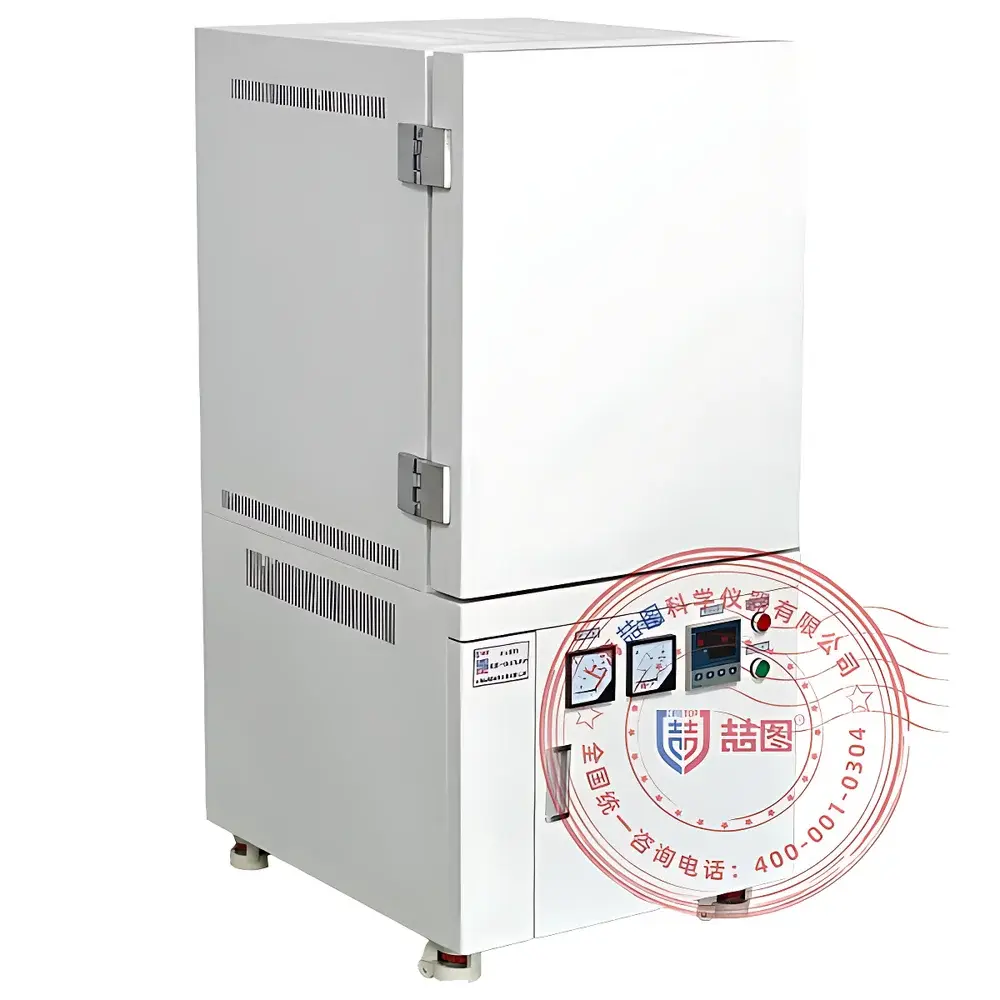
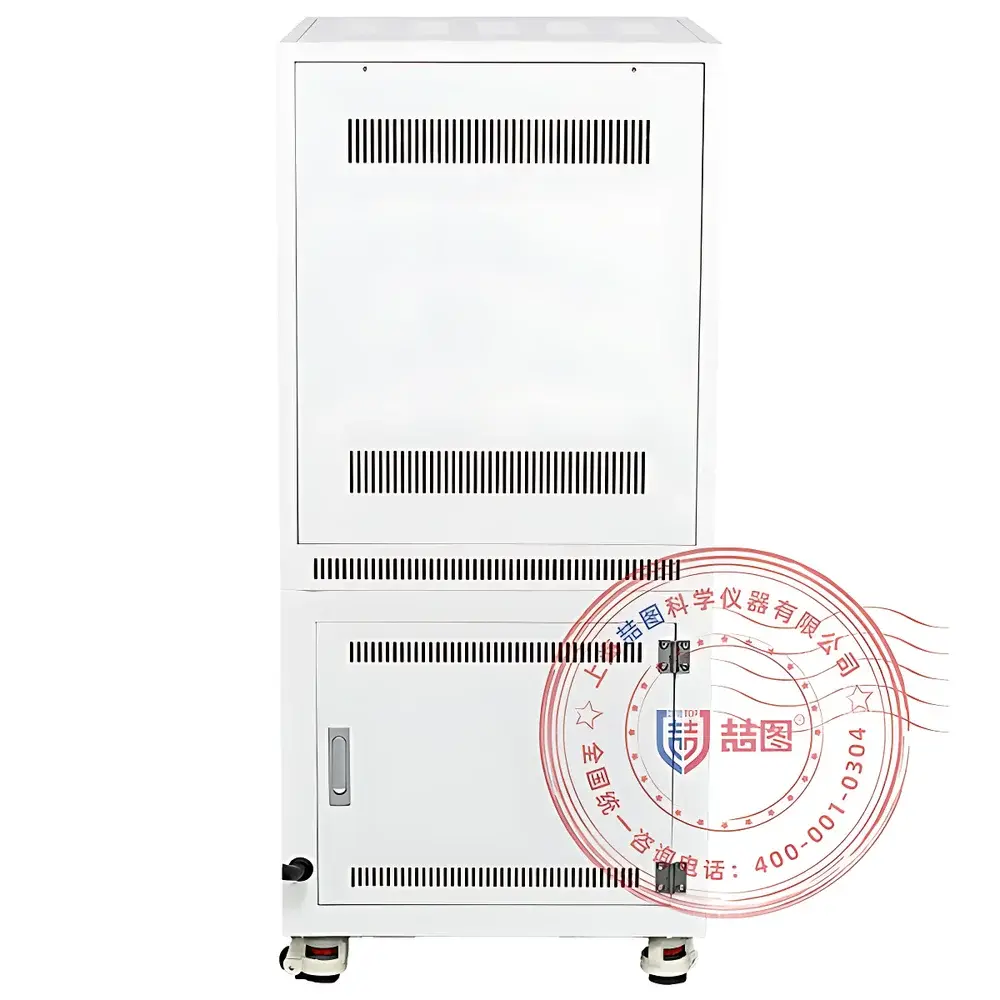
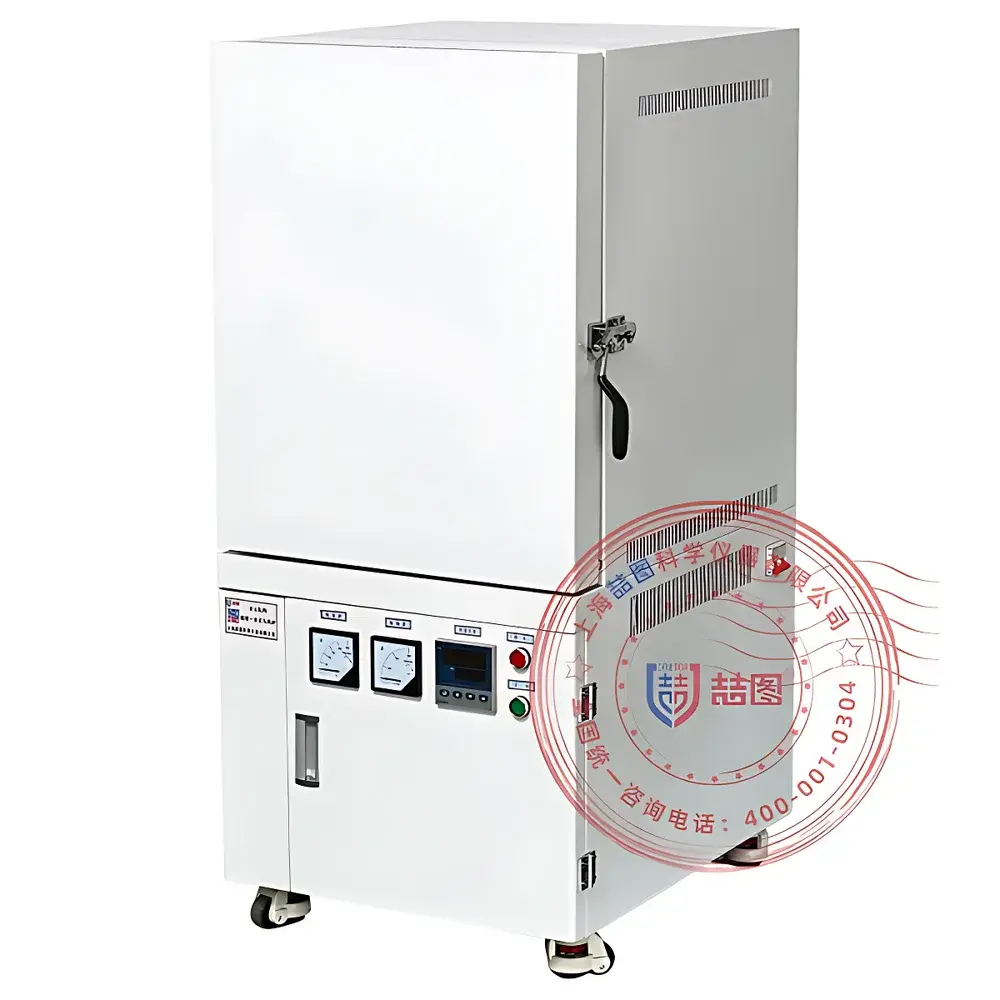
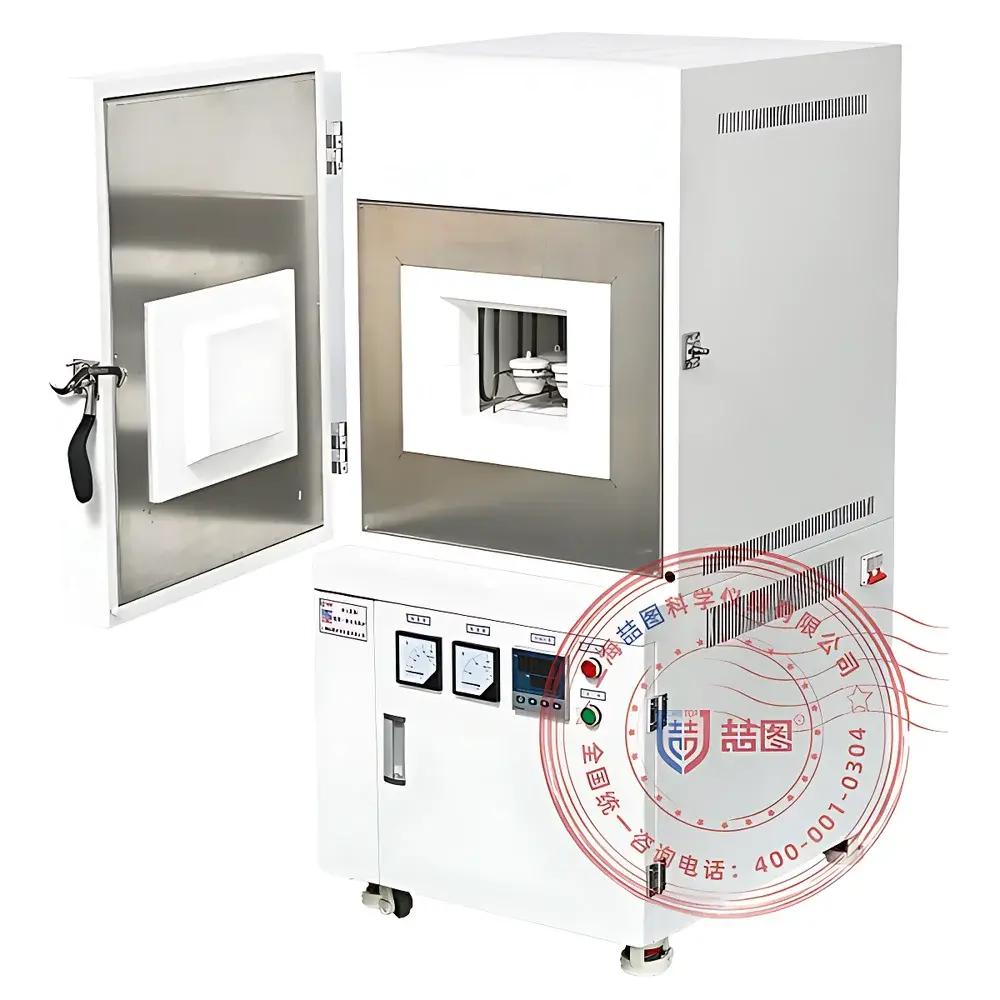
DRETOP Molybdenum Disilicide (MoSi₂) Programmable High-Temperature Box Furnace B16 & B18 Series
| Brand | DRETOP |
|---|---|
| Origin | Shanghai, China |
| Model | B16, B18 |
| Furnace Type | Box-Type Muffle Furnace |
| Max Temperature | 1800 °C |
| Temperature Control Accuracy | ±1 °C |
| Max Power | 18 kW |
| Heating Element | Silicon Molybdenum Rod (MoSi₂) |
| Internal Chamber Dimensions | 150×300×120 mm to 300×400×300 mm |
| Nominal Volume | 5 L to 36 L |
| Control System | AI-PID Programmable Controller with 7-inch Color Touchscreen (AI Series) or Digital Display (P Series) |
| Insulation Material | Vacuum-Microporous Alumina Fiber Board |
| Transformer | Three-Phase Dry-Type Isolation Transformer |
| Safety Features | Dual-Level Overtemperature Protection, Door-Interlocked Power Cut-off, Power Segment Limitation, Power Failure Memory, Phase Loss & Thermocouple Break Alarms |
| Compliance | Designed for GLP-compliant thermal processing |
Overview
The DRETOP Molybdenum Disilicide (MoSi₂) Programmable High-Temperature Box Furnace B16 and B18 Series is a precision-engineered laboratory furnace designed for sustained operation at extreme temperatures up to 1800 °C. Unlike conventional resistance-heated furnaces using Kanthal or NiCr alloys, this series employs high-purity silicon molybdenum rods (MoSi₂) as heating elements—offering exceptional oxidation resistance, structural stability above 1600 °C, and minimal resistance drift over extended service life. The furnace operates on the principle of Joule heating, where controlled current through MoSi₂ elements generates radiant and conductive heat within a thermally isolated chamber. Its vertical-integrated architecture incorporates a built-in three-phase dry-type isolation transformer, minimizing electromagnetic interference and ensuring stable power delivery under fluctuating grid conditions. Intended for rigorous thermal processing in analytical laboratories, materials R&D centers, and quality control environments, it supports repeatable, traceable, and auditable high-temperature protocols—from ceramic sintering and metal annealing to ashing, calcination, and thermal gravimetric pre-treatment.
Key Features
- AI-PID programmable temperature controller with 7-inch color touchscreen (AI-series models) or digital display (P-series), supporting multi-segment ramp-hold-cool profiles with linear or custom curve-fitting algorithms
- Three-wall heating configuration with spiral-wound MoSi₂ rods embedded in high-density polycrystalline alumina fiber walls—ensuring uniform radial and axial temperature distribution (±3 °C across working zone at 1600 °C)
- Vacuum-microporous alumina fiber insulation board lining, reducing thermal mass and enabling faster ramp rates while maintaining low surface temperature (<55 °C at ambient +25 °C)
- Door-interlocked safety circuit: automatic power cutoff upon door opening, with seamless resumption after resealing—critical for intermittent sample insertion during long-duration thermal cycles
- Dual-level overtemperature protection: primary limit set via controller firmware, secondary hardware-based cut-off triggered independently by redundant thermocouple monitoring
- Power segmentation logic prevents excessive inrush current at low temperatures, extending element lifespan and stabilizing voltage supply during startup
- Robust mechanical design featuring phosphate-treated steel casing with high-temp epoxy powder coating, stainless-steel inner flange sealing (2 mm thickness), and precision-machined latch mechanism for consistent door compression
- Integrated three-phase dry-type isolation transformer mitigates harmonic distortion and isolates furnace load from sensitive instrumentation circuits
- Real-time trend logging with timestamped data export (CSV format), configurable alarm history, and engineering-level password access (three-tier authority: operator, engineer, administrator)
Sample Compatibility & Compliance
The B16/B18 series accommodates standard crucibles (alumina, zirconia, graphite), quartz boats, and inert sample holders up to 300 mm × 400 mm × 300 mm internal dimensions. Its MoSi₂ heating system remains chemically inert in oxidizing atmospheres and compatible with optional inert gas purging (via N₂/Ar inlet valve). While not certified for hazardous area use, the furnace meets CE marking requirements for electrical safety (EN 61000-6-3, EN 61000-6-4) and complies with fundamental provisions of ISO/IEC 17025:2017 for equipment suitability in testing laboratories. It supports thermal process validation per ASTM E2891–22 (Standard Guide for Validation of Thermal Processing Equipment) and provides audit-ready data logs required under FDA 21 CFR Part 11 when paired with validated software configurations. Optional RS485 Modbus RTU interface enables integration into centralized lab management systems adhering to ISA-88 batch control standards.
Software & Data Management
The AI-series controller embeds firmware compliant with IEC 62443-3-3 security principles, including encrypted parameter storage, session timeout, and role-based access control. All temperature profiles, runtime logs, alarm events, and calibration records are stored internally with non-volatile memory retention (>10 years without power). Data export supports USB flash drive transfer in comma-separated values (CSV) format, preserving timestamps, setpoints, actual PV readings, and power output percentages. Optional 4G-enabled remote monitoring module allows secure HTTPS-based access to real-time chamber status and historical trends via browser or mobile application—facilitating off-site oversight during overnight sintering or weekend thermal cycling. Firmware updates are delivered via signed binary packages with SHA-256 verification to prevent unauthorized modification.
Applications
- High-temperature sintering of advanced ceramics (e.g., Si₃N₄, ZrO₂, AlN) and refractory metal powders (Mo, W, Ta)
- Heat treatment of small-scale alloy samples: solution annealing, stress-relief tempering, and phase transformation studies per ASTM E112 and ISO 643
- Residue analysis and ash content determination in pharmaceutical excipients, food matrices, and environmental solids (AOAC 942.05, EPA Method 3050B)
- Pre-conditioning of catalyst supports and battery cathode precursors prior to XRD, SEM-EDS, or BET surface area analysis
- Thermal calibration of thermocouples (Types B, S, R) and reference materials per NIST SP 250-89 guidelines
- Controlled oxidation studies of coated substrates and thin-film metallization layers
FAQ
What atmosphere options are supported?
The furnace operates natively in ambient air. Optional inert gas inlet kits (N₂ or Ar) enable oxygen-free processing; vacuum compatibility requires external pump integration and is not factory-certified.
Is the furnace suitable for GMP-regulated environments?
Yes—when configured with AI-series controller, audit trail logging, and electronic signature support, it satisfies baseline requirements for equipment qualification (IQ/OQ/PQ) under EU Annex 15 and PIC/S TR-13.
How is temperature uniformity verified?
Uniformity is characterized per ASTM E2203 using nine-point mapping with calibrated Type S thermocouples; typical results show ≤±3 °C deviation across the usable volume at 1600 °C.
Can the furnace be integrated into a SCADA system?
Yes—via optional RS485 Modbus RTU interface or Ethernet-to-Modbus gateway; register maps and communication protocols are documented in the OEM Integration Manual.
What maintenance is required for MoSi₂ heating elements?
No periodic replacement is needed under normal oxidizing operation; elements exhibit negligible resistance change over 2000+ hours at 1700 °C. Visual inspection every 500 operating hours is recommended for surface integrity.



