
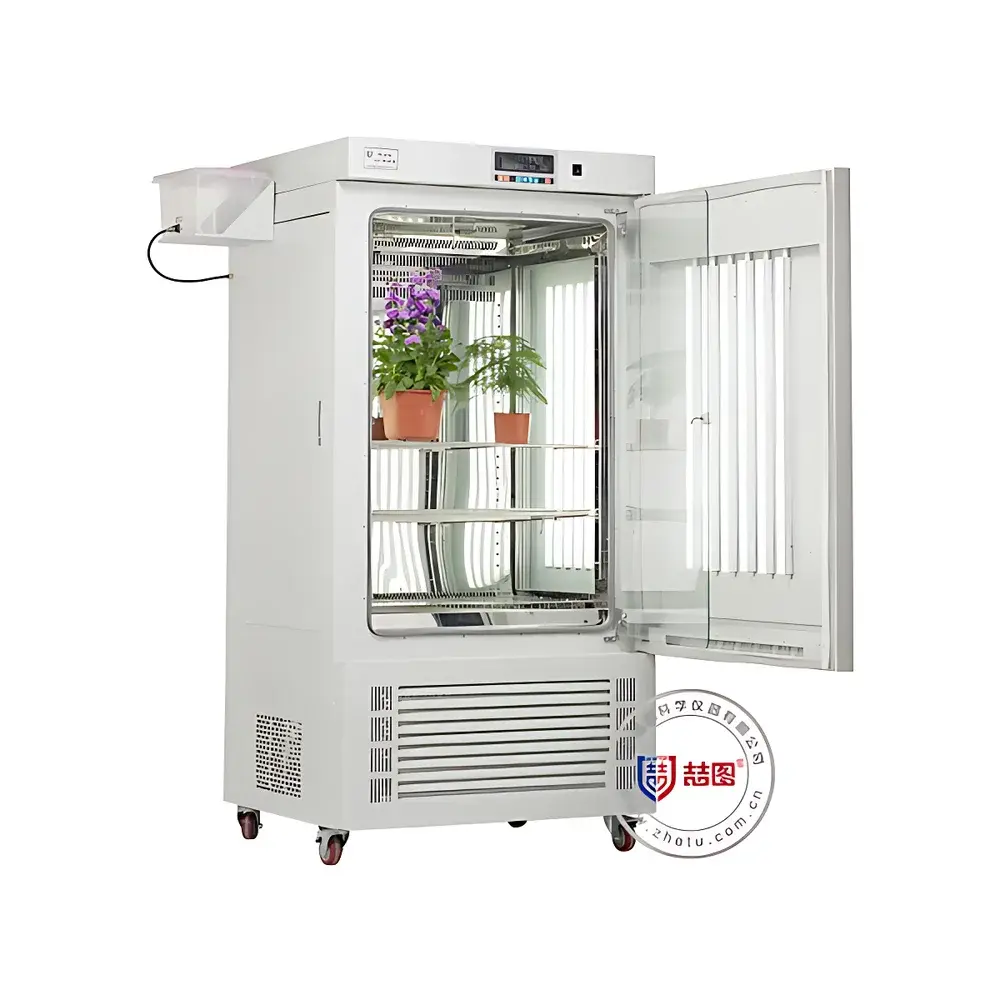
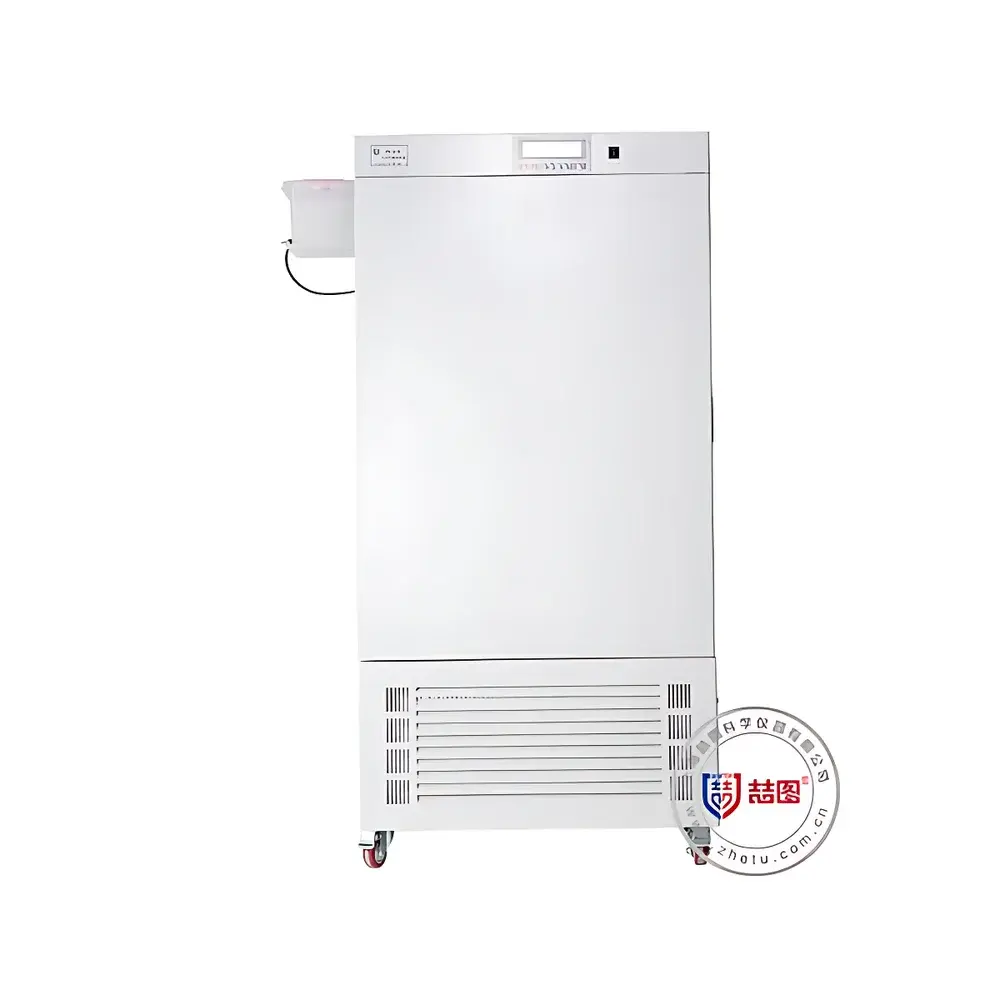
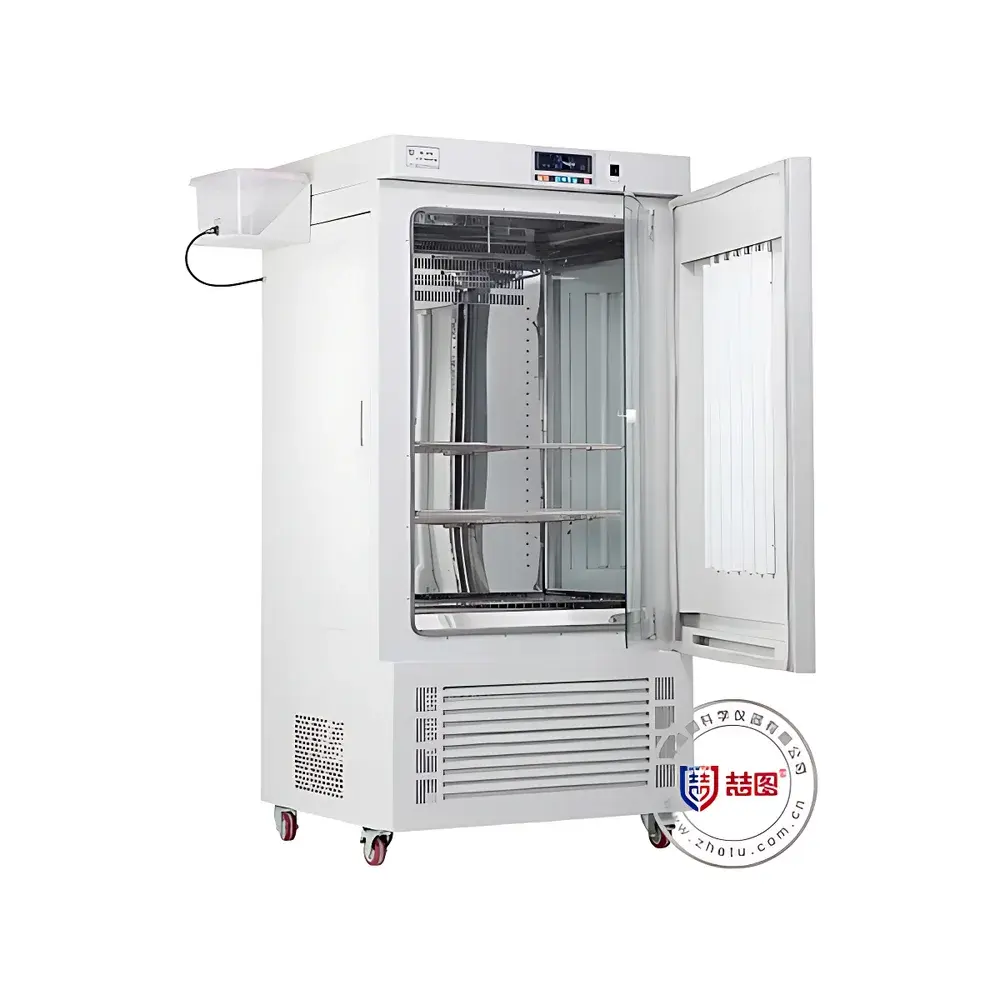
DRETOP NRQ-300T Artificial Climate Incubator
| Brand | DRETOP |
|---|---|
| Origin | Shanghai, China |
| Manufacturer Type | Direct Manufacturer |
| Instrument Type | Fully Automated (Programmable) |
| Capacity | 300 L |
| Temperature Range | 10–50 °C (with illumination), 0–50 °C (without illumination) |
| Humidity Range | 30–95 % RH |
| Illumination Intensity | 0–20,000 lx |
| External Dimensions (W×D×H) | 780 × 805 × 1660 mm |
| Power Supply | AC 220 V, 50 Hz |
| Temperature Fluctuation | ±0.5 °C |
| Temperature Resolution | 0.1 °C |
| Humidity Deviation | ±3–5 % RH |
| Illumination Mode | Triple-side LED lighting (6-level adjustable) |
| Heating Element | Nickel-Chromium Alloy Heater |
| Refrigeration System | Eco-friendly R134a Compressor-Based Cooling with Auto-Defrost |
| Air Circulation | Axial Flow Fan with Optimized Airflow Pathway |
| Control Interface | Color Touchscreen with Multi-stage Password Protection and Bilingual (EN/CN) UI |
| Data Logging Interval | 1 minute |
| Alarm Types | Temperature, Humidity, Illumination Deficiency, Door Open, Low Water, UV Lamp Life Expiry |
Overview
The DRETOP NRQ-300T Artificial Climate Incubator is a fully programmable, multi-parameter environmental simulation system engineered for precision-controlled biological experimentation. It integrates independent regulation of temperature, relative humidity, and spectrally tunable LED illumination within a 300 L stainless-steel chamber—enabling reproducible emulation of diurnal cycles, seasonal light regimes, and climatic stress conditions. Based on forced-air convection with axial-flow circulation and PID-based thermal-hygrometric feedback control, the system maintains stable setpoints across its operational envelope: 0–50 °C (dark) / 10–50 °C (lit), 30–95 % RH, and 0–20,000 lx illumination intensity. Designed for GLP-compliant laboratories, it supports long-term unattended operation under ISO 17025-aligned environmental monitoring protocols and meets structural safety requirements per IEC 61010-1.
Key Features
- Triple-side, six-level adjustable LED illumination system with independent red (R), blue (B), white (W), green (G), and violet (V) channel configuration—enabling customizable spectral ratios (e.g., R:B = 4:1 to 9:1) for photobiological studies;
- 30-segment programmable controller supporting three operational modes: fixed-value, day/night cycling, and multi-step ramp-and-soak profiles—with real-time clock synchronization and power-loss recovery;
- Microprocessor-based PID control architecture with dedicated algorithms for temperature, humidity, and illumination—featuring runtime counters for each parameter and selectable timing logic (e.g., temperature-only, humidity-only, or combined thermo-hygrometric hold);
- Double-door design with tempered glass inner door and magnetic nano-seal outer gasket—ensuring thermal insulation integrity while enabling full-field visual observation without chamber perturbation;
- Stainless-steel interior with removable, height-adjustable shelves; reinforced cold-rolled steel exterior with rounded-corner geometry for cleanability and mechanical durability;
- Energy-efficient refrigeration using R134a refrigerant and branded hermetic compressor, integrated with auto-defrost cycle management and compressor protection logic (start-delay, stop-interval, overheat cutoff);
- Comprehensive alarm suite including high/low temperature, humidity deviation, illumination deficiency, door-open, low-water, and UV lamp lifetime alerts—all logged with timestamps and accessible via touchscreen interface;
- Bilingual (English/Chinese) color touchscreen with screen lock, auto-dimming, and three-tier password protection—supporting time-limited access control and audit-ready session logging.
Sample Compatibility & Compliance
The NRQ-300T accommodates diverse biological specimens—including plant seedlings, tissue cultures, microbial colonies, insect larvae, and small aquatic organisms—across standardized growth protocols referenced in ASTM E1980 (light exposure testing), ISO 21748 (environmental simulation validation), and USP (pharmaceutical stability testing). Its stainless-steel chamber and non-porous surfaces comply with EN 13485 cleaning validation prerequisites. Humidity control accuracy (±3–5 % RH) and temperature uniformity (validated per ISO 15265 Annex A) support regulatory submissions requiring documented environmental consistency. The unit is suitable for use in GMP-aligned facilities when paired with external data integrity systems compliant with FDA 21 CFR Part 11.
Software & Data Management
Internal firmware records all operational parameters at 1-minute intervals—including chamber temperature, relative humidity, illumination intensity, alarm states, and system uptime—stored in non-volatile memory with automatic overwrite protection. Historical datasets are exportable via USB interface in CSV format for traceability and statistical analysis (e.g., ANOVA, trendline regression). Real-time graphical displays include rolling 60-minute curves for temperature and illumination, along with dynamic status indicators for lamp aging, water reservoir level, and door seal integrity. Firmware supports remote diagnostics through optional RS485/Modbus RTU integration, enabling centralized lab-wide monitoring via SCADA platforms.
Applications
- Plant physiology research: controlled photoperiodic studies, shade-tolerance screening, and LED-spectrum optimization for crop yield enhancement;
- Microbial culture standardization: BOD incubation per ISO 5815-1, fungal sporulation assays, and antibiotic susceptibility testing under defined hygrothermal conditions;
- Tissue engineering: stem cell differentiation experiments requiring precise temporal modulation of oxygen-mimetic light cues and humidity gradients;
- Entomological rearing: synchronized development trials for model organisms (e.g., Drosophila melanogaster) under replicated diel temperature/humidity profiles;
- Environmental toxicology: chronic exposure assessments using aquatic macroinvertebrates under regulated light–temperature–humidity stress combinations;
- Educational labs: hands-on instruction in experimental design, environmental parameter interaction, and long-term data acquisition methodology.
FAQ
What is the temperature uniformity specification for the NRQ-300T?
Temperature uniformity is validated per ISO 15265 Annex A at ≤ ±1.0 °C across the working volume under steady-state conditions (load: 3 shelves, mid-position). Actual performance depends on loading configuration and airflow obstruction.
Can the illumination spectrum be customized beyond standard RGBW configurations?
Yes—custom spectral combinations (e.g., narrowband 450 nm + 660 nm + 730 nm) are available upon request, subject to optical layout verification and minimum order quantity.
Is the unit compatible with laboratory information management systems (LIMS)?
Raw data export via USB is supported; for direct LIMS integration, Modbus RTU communication (RS485) can be enabled with optional firmware upgrade and protocol mapping documentation.
Does the incubator meet electromagnetic compatibility (EMC) standards for shared lab environments?
Yes—the NRQ-300T complies with EN 61326-1 (industrial EMC) and EN 61000-6-3 (emission limits), ensuring coexistence with sensitive analytical instrumentation.
How is calibration traceability maintained?
Factory calibration uses NIST-traceable reference sensors; users may perform field verification using accredited portable probes (e.g., Rotronic HC2-S, Vaisala HMP155) with documented uncertainty budgets per ISO/IEC 17025 Clause 6.5.



