
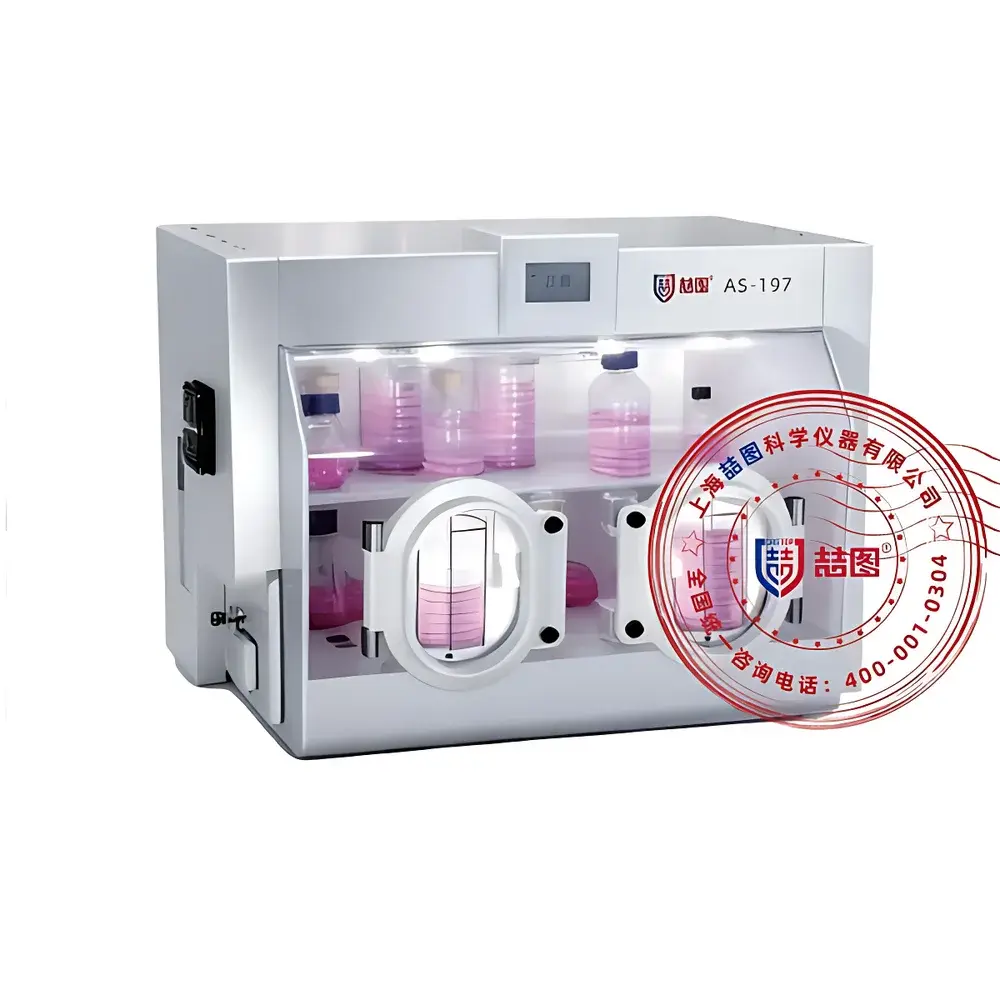
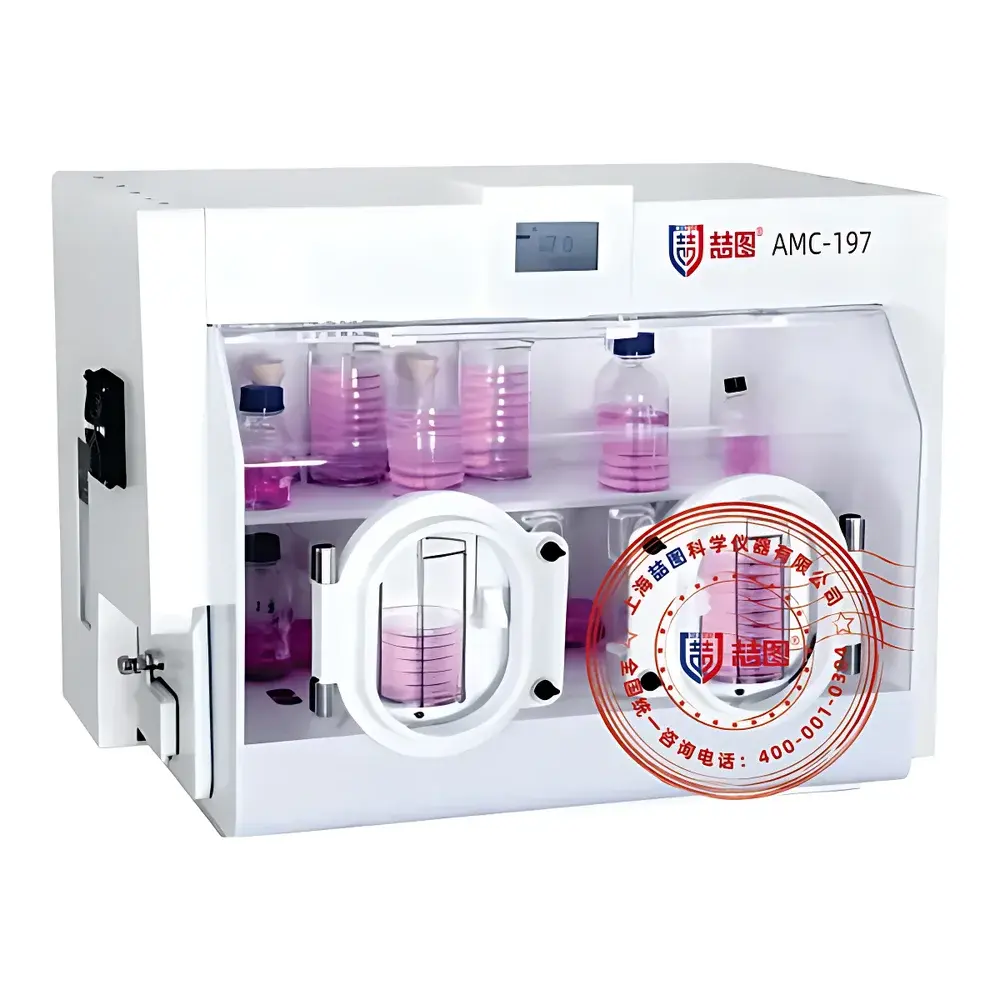
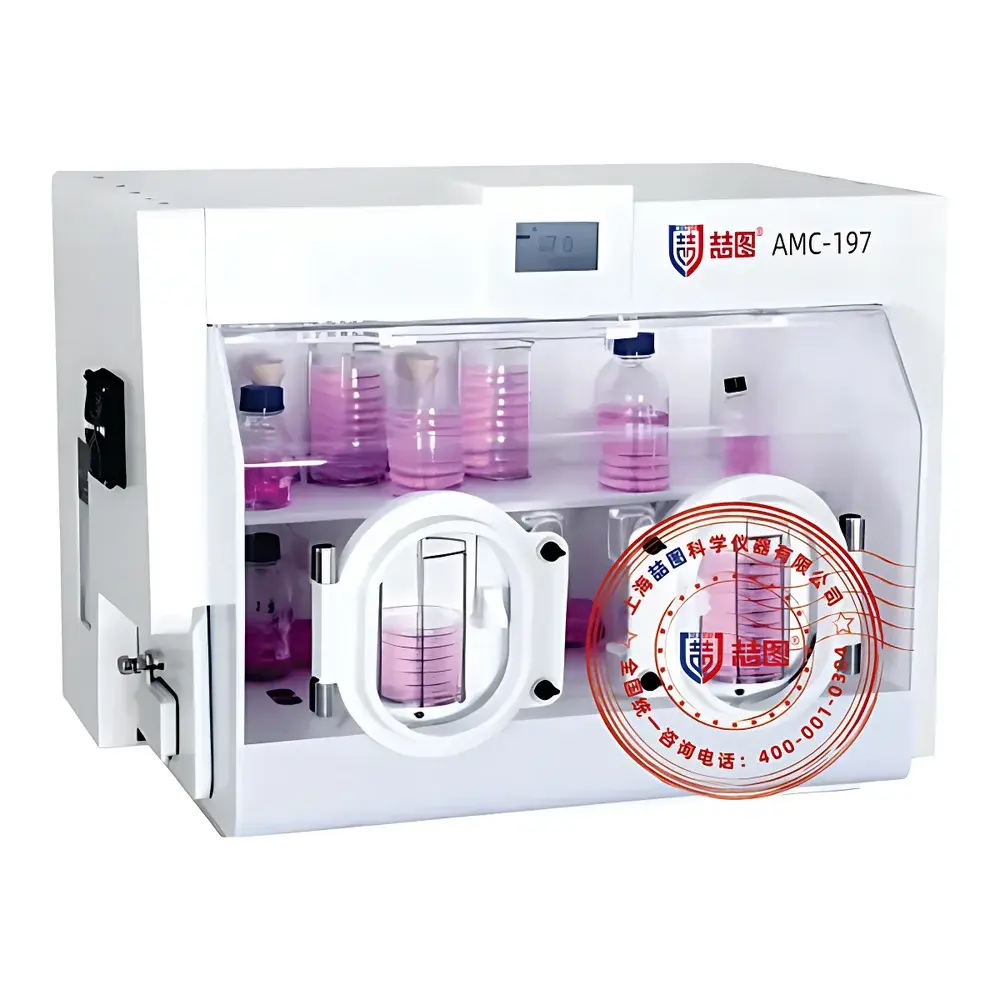
DRETOP OxyM-313Pro Multi-Oxygen Control Anaerobic Workstation
| Brand | DRETOP |
|---|---|
| Origin | Shanghai, China |
| Manufacturer Type | Authorized Distributor |
| Country of Origin | China |
| Model | OxyM-313Pro |
| Price Range | USD 22,500 – 56,000 (based on configuration) |
| Gas Environment Modes | Anaerobic, Microaerophilic, Gradient Oxygen |
| Operation Method | Gloved or Sleeveless Entry (optional integrated long-sleeve system) |
| Gas Supply Requirements | N₂, CO₂, H₂ (for anaerobic mode), compressed air (for microaerophilic/gradient modes) |
| Chamber Volume | 313 L |
| Transfer Lock Volume | 6 L (right-side mounted) |
| Operating Chamber Dimensions (W×D×H) | 890 × 600 × 588 mm |
| Temperature Range | RT + 3°C to 52°C |
| Temperature Uniformity | ±0.3°C |
| Temperature Control Resolution | 0.1°C |
| Humidity Control Range | 20–90% RH |
| O₂ Sensing Range | 0–100% (with optional 0–1000 ppm high-sensitivity sensor) |
| O₂ Control Accuracy | ±0.1% (full scale) |
| CO₂ Control Range | 0–20% |
| Catalyst Lifetime | >3 years (no pre-activation required) |
| De-toxification System | Integrated H₂S and volatile fatty acid scavenger |
| Data Logging Duration | 45 days (exportable via USB) |
| Validation Interface | Standard 4–20 mA / RS485 port for third-party probe integration |
| Safety Features | Dual-door interlock, pneumatic gasket sealing, low-pressure & leak-overrun alarms, HEPA filtration (ISO Class 5 equivalent), 254 nm UV sterilization |
Overview
The DRETOP OxyM-313Pro Multi-Oxygen Control Anaerobic Workstation is an engineered platform for precise, reproducible cultivation and manipulation of oxygen-sensitive microorganisms under rigorously controlled atmospheric conditions. Designed for research laboratories, clinical microbiology units, and pharmaceutical development facilities, the system implements a closed-loop gas management architecture based on catalytic oxygen removal (via H₂/N₂/CO₂ cold catalyst chemistry), real-time multi-parameter feedback control, and fail-safe physical isolation protocols. Unlike conventional anaerobic jars or glove boxes with static gas fills, the OxyM-313Pro actively regulates O₂, CO₂, temperature, and humidity—enabling dynamic transitions between anaerobic (≤5 ppm O₂), microaerophilic (e.g., 2–10% O₂), and programmable gradient-oxygen profiles. Its 313 L working chamber accommodates large-scale culture arrays—including up to 780 × 90 mm Petri dishes or 45 × 500 mL screw-cap bottles—while maintaining ISO Class 5-equivalent cleanliness through integrated HEPA filtration and timed 254 nm UV irradiation.
Key Features
- Triple-mode gas environment control: fully automated anaerobic (catalytic H₂/O₂ recombination), microaerophilic (compressed air blending), and time-programmable gradient-oxygen protocols with user-defined cycle count, duration, and setpoint ramping.
- Intelligent pneumatic transfer lock: right-side 6 L chamber with dual-door interlock, vacuum-assisted gasket sealing, and configurable N₂ purge timing (0–999 s) to prevent O₂ ingress during sample exchange.
- High-fidelity environmental monitoring: four independent sensors (O₂, CO₂, temperature, relative humidity) feeding data to a 7-inch industrial-grade touchscreen controller with 0.1°C/0.1% RH resolution and ±0.1% O₂ accuracy (full scale).
- Modular internal architecture: slide-out middle partition and foldable floor panel facilitate catalyst cartridge replacement and de-tox agent servicing without disassembly.
- Secure access management: three-tier user authentication (admin/operator/guest), audit-trail-enabled parameter logging, and bilingual UI (English/Chinese) compliant with GLP documentation requirements.
- Passive safety infrastructure: continuous positive pressure maintenance (<5 ppm O₂), automatic low-gas-pressure alarms (N₂, CO₂, air, H₂), over-purge cutoff (5 min max flow), and validated UV/HEPA decontamination cycles.
Sample Compatibility & Compliance
The OxyM-313Pro supports standard microbiological consumables including Petri dishes (90 mm, up to 780 per run), aerobic/anaerobic blood agar plates, thioglycollate broth tubes, anaerobic transport vials, and flexible sampling bags. Its chamber geometry and ergonomics accommodate pipetting, streaking, colony picking, and subculturing workflows without compromising environmental integrity. The system meets core design principles outlined in ISO 13408-1 (aseptic processing), ASTM E2612 (anaerobic chamber performance testing), and CLSI M47-A (standards for anaerobic culture systems). Optional 0–1000 ppm trace O₂ sensor enables validation against USP <645> water-for-injection purity thresholds. All electronic logs—including temperature, humidity, O₂/CO₂ concentration, purge timestamps, and alarm events—are timestamped and exportable as CSV files for FDA 21 CFR Part 11-compliant record retention when paired with external identity verification.
Software & Data Management
The embedded controller runs a deterministic real-time OS with non-volatile memory storing 45 days of continuous environmental telemetry at 10-second intervals. Data fields include chamber temperature, relative humidity, O₂ % (or ppm), CO₂ %, N₂ purge duration, door open/close events, UV cycle status, and alarm history. USB 2.0 host interface allows direct export to external drives; no proprietary software installation is required. For integration into laboratory information management systems (LIMS), the workstation provides RS485 Modbus RTU and analog 4–20 mA output ports compatible with third-party validation hardware (e.g., Ellab, Qualitrol, or Mesa Labs probes). Audit trails are immutable and include operator ID, timestamp, and parameter change values—supporting GMP Annex 11 and EU GMP Chapter 4 compliance frameworks.
Applications
- Clinical anaerobic bacteriology: isolation and identification of Clostridioides difficile, Bacteroides fragilis, Fusobacterium nucleatum, and other fastidious obligate anaerobes from stool, wound, and abscess specimens.
- Gut microbiome research: simulation of colonic oxygen gradients (0.1–8% O₂) to study facultative anaerobe–obligate anaerobe metabolic cross-feeding dynamics.
- Pharmaceutical stability testing: evaluation of antibiotic efficacy under physiologically relevant O₂ tensions mimicking tissue infection sites (e.g., abscess hypoxia).
- Bioprocess development: optimization of anaerobic fermentation parameters for biohydrogen, short-chain fatty acid, or biopolymer production.
- Veterinary diagnostics: culture of rumen microbiota and equine hindgut pathogens requiring strict O₂ exclusion or microaerophilic adaptation.
FAQ
What gas supply infrastructure is required to operate the OxyM-313Pro in anaerobic mode?
A dedicated gas manifold supplying medical-grade N₂ (≥99.998%), CO₂ (≥99.5%), and H₂ (≥99.995%) is mandatory. H₂ must be delivered via stainless steel tubing with leak-tested fittings and integrated flashback arrestors per NFPA 55 guidelines.
Can the system maintain ≤5 ppm O₂ continuously during active manipulation?
Yes—continuous positive pressure (0.5–1.0 mbar above ambient), catalytic O₂ scavenging, and interlocked transfer lock operation ensure chamber integrity remains intact throughout glove-based handling.
Is third-party temperature/humidity/O₂ sensor calibration supported?
Yes—the standard validation interface accepts industry-standard Pt100, capacitive RH, and electrochemical O₂ probes; calibration certificates can be generated using external metrology equipment.
How often must the catalyst and de-tox cartridges be replaced?
Catalyst lifetime exceeds 36 months under typical usage (≤8 hr/day, 5 ppm O₂ baseline); de-tox cartridges require replacement every 6–12 months depending on sample load and sulfur content.
Does the system comply with FDA 21 CFR Part 11 for electronic records?
The OxyM-313Pro satisfies technical controls (audit trail, electronic signature support via password tiers, data immutability) but requires site-specific procedural validation—including role-based access policies and backup retention protocols—to achieve full Part 11 compliance.



