
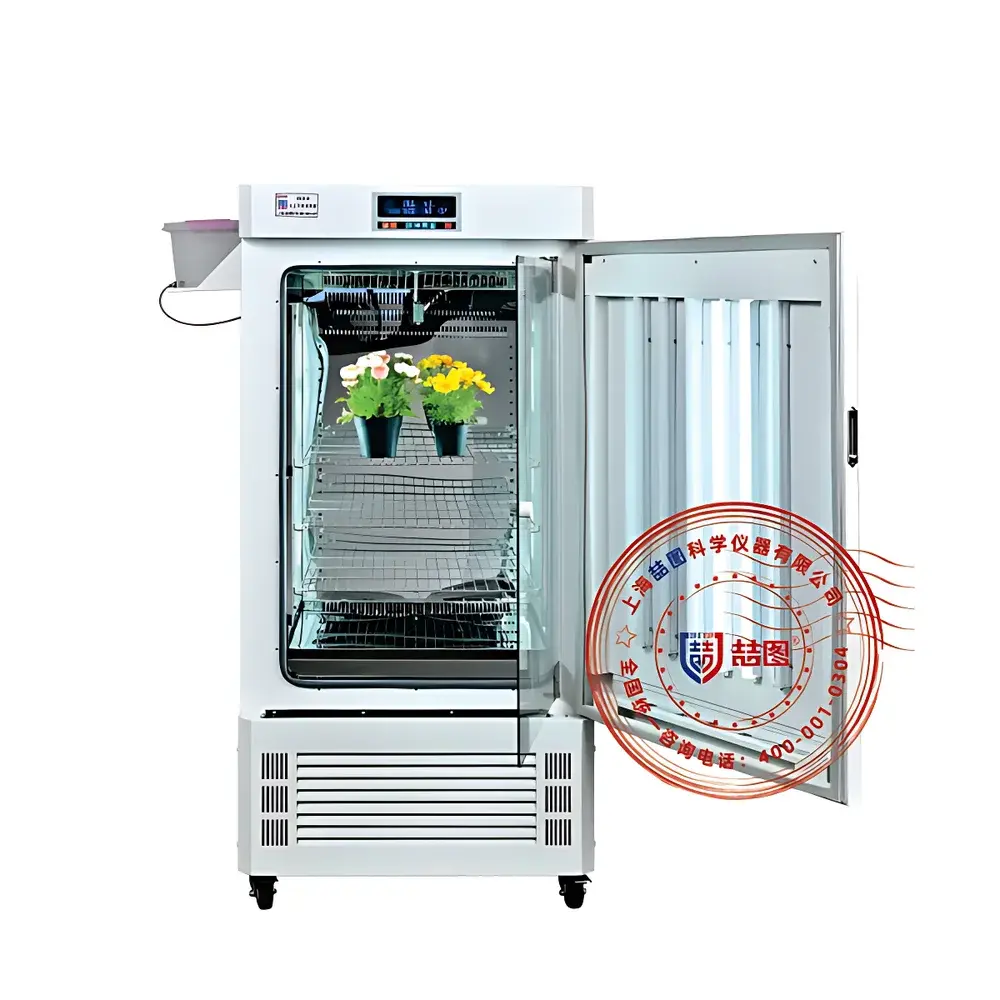
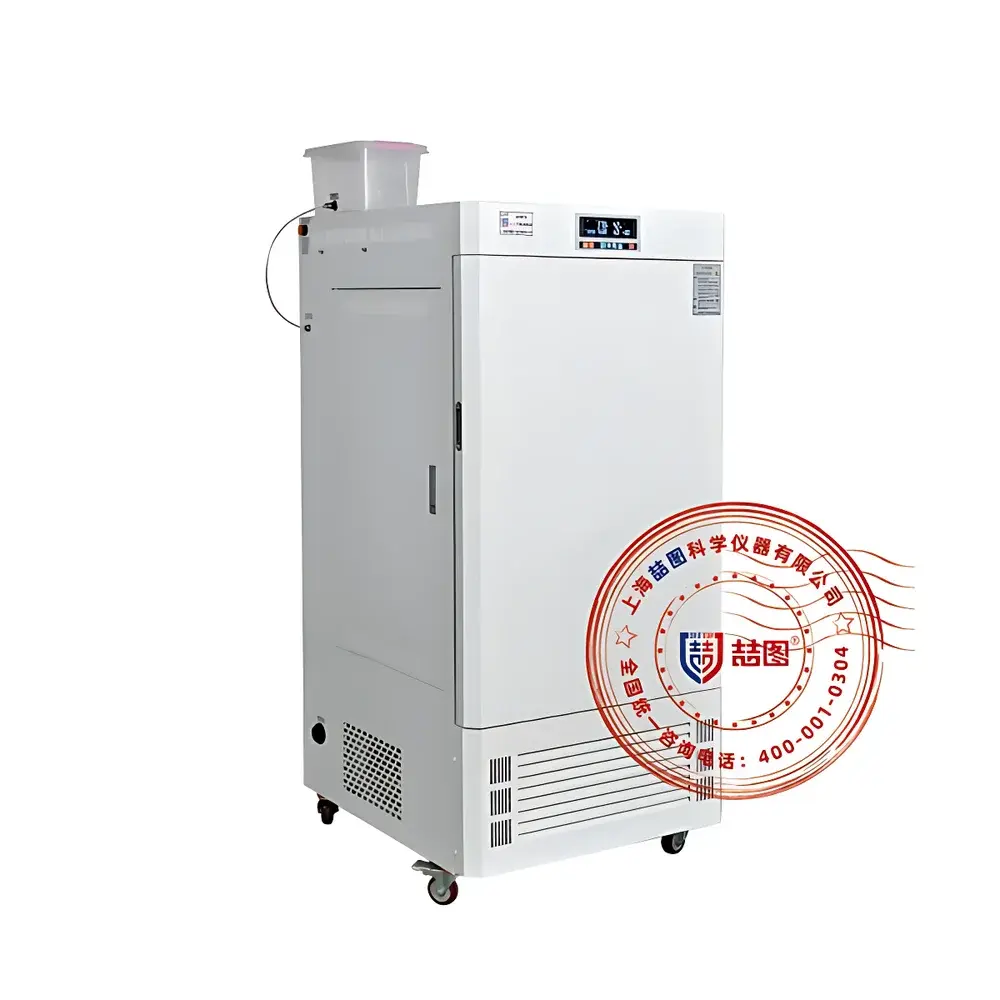
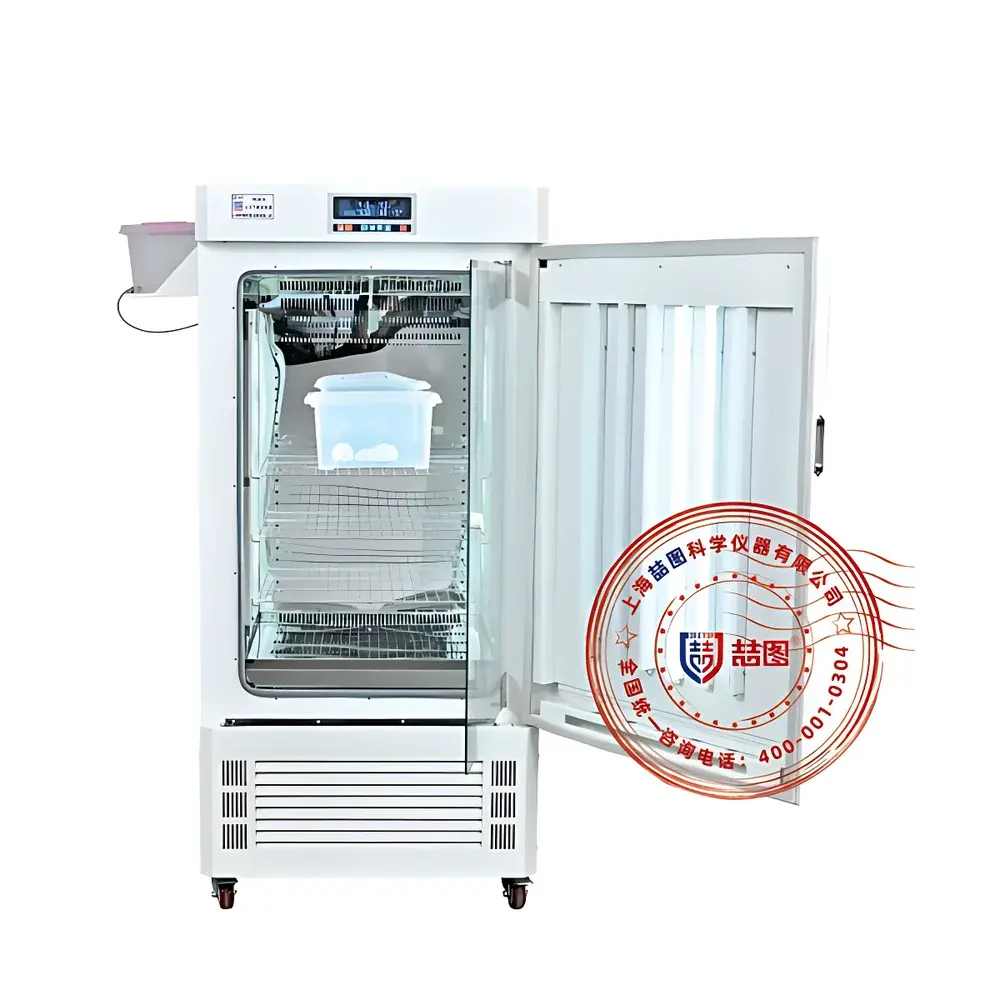
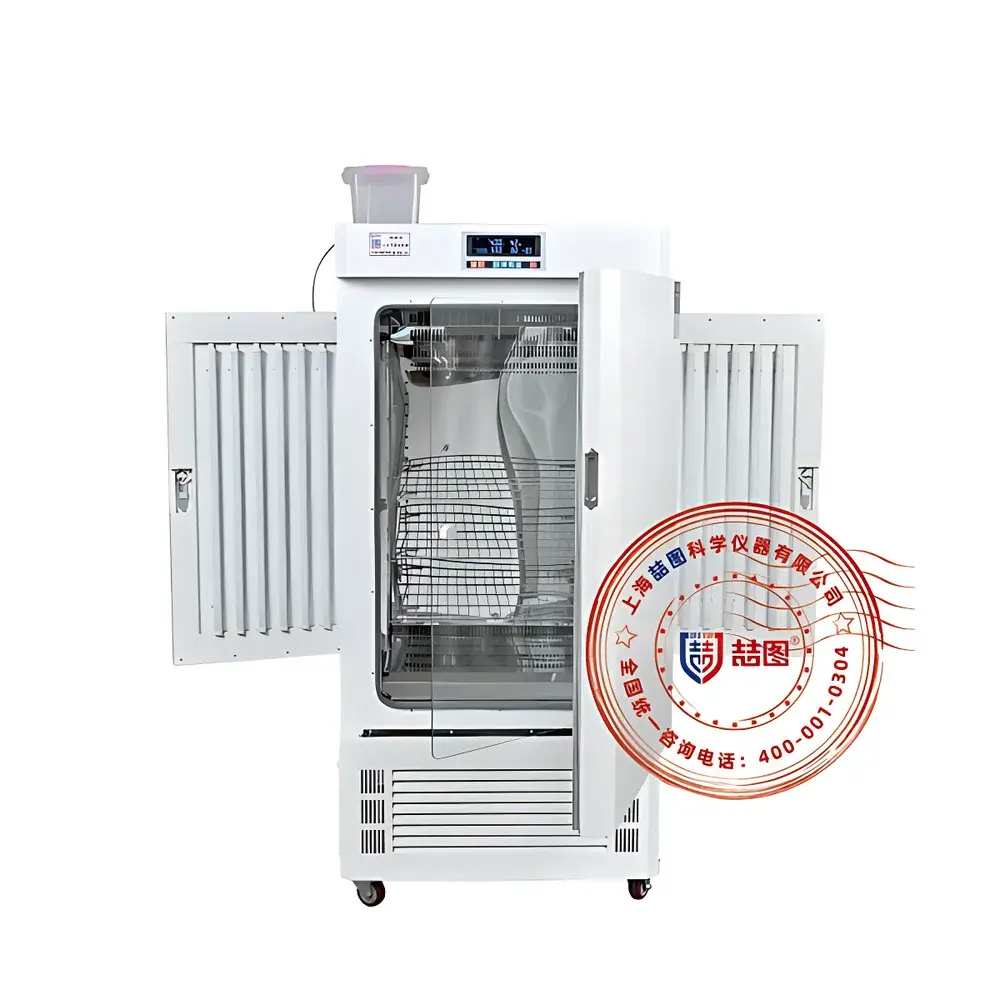
DRETOP QRQ-250-II High-Intensity Illuminated Artificial Climate Incubator
| Brand | DRETOP |
|---|---|
| Origin | Shanghai, China |
| Manufacturer Type | Direct Manufacturer |
| Instrument Type | Fully Automated (Programmable) |
| Capacity | 250 L |
| Temperature Range | 5–60 °C (with illumination) |
| Humidity Range | 30–95 % RH |
| Illuminance Range | 0–35,000 lx |
| External Dimensions (W×D×H) | 797 × 790 × 1585 mm |
| Construction | Stainless Steel Interior, Cold-Rolled Steel Exterior, Double-Glazed Observation Door with Magnetic Seal |
| Lighting System | Programmable Multi-Spectral LED Array (R/G/B/W/V), Adjustable Intensity & Spectrum Ratio |
| Control Interface | Color Touchscreen with 30-Stage Programmable Logic |
| Compliance | Designed for GLP-compliant environmental simulation |
Overview
The DRETOP QRQ-250-II High-Intensity Illuminated Artificial Climate Incubator is a precision-engineered environmental simulation platform designed for reproducible, long-term biological experimentation under tightly controlled photoperiodic, thermal, and hygric conditions. Based on the principle of active climate regulation—integrating solid-state LED illumination, P.I.D.-governed thermohygrometric control, and multi-layered insulation architecture—the system delivers stable, uniform environmental profiles across its 250 L working volume. Unlike conventional incubators limited to temperature-only control, the QRQ-250-II implements synchronized, independent modulation of light intensity (0–35,000 lx), spectral composition (selectable R/G/B/W/V combinations), relative humidity (30–95 % RH), and temperature (0–65 °C range, configurable), enabling rigorous emulation of diurnal cycles, seasonal transitions, or extreme climatic stressors. Its architecture conforms to core design tenets of life science instrumentation: structural rigidity for vibration-dampened sample stability, stainless steel interior surfaces for autoclavable hygiene, and double-door thermal isolation to minimize disturbance during observation.
Key Features
- 30-stage programmable controller supporting complex temporal profiles—including dual-setpoint day/night cycles, ramp-and-soak temperature transitions, and dynamic illumination scheduling—with user-defined start times, durations, and setpoint overrides.
- Multi-spectral LED lighting system featuring independently addressable red (620–780 nm), blue (420–490 nm), green (490–570 nm), white (400–830 nm), and violet (380–450 nm) channels; spectral ratios adjustable from 4:1 to 9:1 (R:B) to support species-specific photomorphogenesis protocols.
- Dual-glass observation door with nanocomposite magnetic seal and tempered inner pane ensures >92 % visible-light transmission while maintaining thermal integrity; outer door opening permits full-field visual inspection without measurable chamber perturbation (<±0.3 °C transient deviation).
- Intelligent P.I.D. climate control algorithm with adaptive learning—compensates for load-dependent thermal mass, door-opening events, and ambient fluctuations—delivering ±0.5 °C temperature stability and ±3–5 % RH accuracy across the entire working volume.
- Modular refrigeration system with hermetic compressor, automated defrost cycle, and evaporator condensate management—designed for continuous operation over 10,000-hour service intervals without performance degradation.
- Comprehensive safety architecture including over-temperature/over-humidity alarms, door-open detection, low-water-level alerts, illumination-failure monitoring, and automatic power-recovery logic preserving all active programs after grid interruption.
Sample Compatibility & Compliance
The QRQ-250-II accommodates standard ANSI/SLAS-format microplates (up to 3 stacked levels), Petri dishes, tissue culture flasks, insect rearing cages, and aquatic mesocosms up to 25 cm in height. Its stainless steel interior (AISI 304), removable adjustable shelves, and smooth-radius corners meet ISO 14644-1 Class 5 cleanroom compatibility requirements for aseptic workflows. The system is engineered to support regulatory compliance frameworks including GLP (OECD Series 1, Annex V), GMP (ICH Q5C), and USDA APHIS-certified quarantine protocols. When operated with optional validation kits (IQ/OQ/PQ documentation templates, NIST-traceable sensor calibration certificates), it satisfies method qualification criteria for ASTM E1826 (BOD incubation), ISO 21748 (temperature uncertainty estimation), and USP (photostability testing environments).
Software & Data Management
Equipped with embedded Linux-based firmware and a 7-inch capacitive touchscreen interface, the QRQ-250-II logs all operational parameters—including real-time temperature, humidity, illuminance, and alarm states—at 1-minute intervals. Historical datasets are stored internally for ≥12 months and exportable via USB 2.0 or Ethernet (TCP/IP) to LIMS or ELN platforms. Optional DRETOP ClimateLink™ software enables remote monitoring, multi-unit fleet management, electronic signature-enabled audit trails, and 21 CFR Part 11-compliant user access controls (role-based permissions, three-tier password protection, session timeout, and immutable log archiving). All data files conform to CSV and XML schema standards for seamless integration with JMP, MATLAB, or Python-based analysis pipelines.
Applications
This incubator serves as a primary environmental testbed in academic plant physiology labs (e.g., photoperiodic flowering induction, shade-avoidance response quantification), pharmaceutical stability chambers (ICH Q1B photostability), agricultural biotechnology (tissue culture acclimatization, somatic embryogenesis), entomological rearing (Drosophila circadian entrainment, mosquito vector development), and ecotoxicology (algal growth inhibition assays under variable PAR regimes). Its high-intensity, spectrally tunable illumination supports advanced research in optogenetics precursor screening, LED-based vertical farming optimization, and UV-A/B stress modeling for crop resilience studies. The dual-mode temperature range (0–65 °C) also enables non-biological applications such as polymer aging tests and accelerated corrosion trials under humidified oxidative conditions.
FAQ
What is the maximum allowable ambient operating temperature for continuous use?
The unit is rated for ambient temperatures up to 32 °C at 60 % RH; sustained operation above this requires auxiliary cooling or installation in climate-controlled rooms.
Can the LED spectrum be customized beyond the standard R/G/B/W/V options?
Yes—custom narrowband emitters (e.g., 660 nm ±5 nm peak, 450 nm ±3 nm) and UV-C (254 nm) modules are available under OEM configuration with lead-time consultation.
Is humidity control active below 10 °C?
Humidification is disabled below 10 °C to prevent condensation-induced sensor drift; dehumidification remains functional via refrigerant coil cooling down to 0 °C.
How is illumination uniformity verified across the chamber volume?
Uniformity is characterized using a calibrated photodiode array (NIST-traceable) per ISO/CIE 19476; typical spatial variation is ≤±8 % across central 80 % of shelf area at 20,000 lx setting.
Does the system support third-party SCADA integration?
Yes—Modbus TCP and OPC UA drivers are available upon request; hardware-level dry-contact I/O ports enable direct PLC interfacing for factory automation environments.
Related Products



