
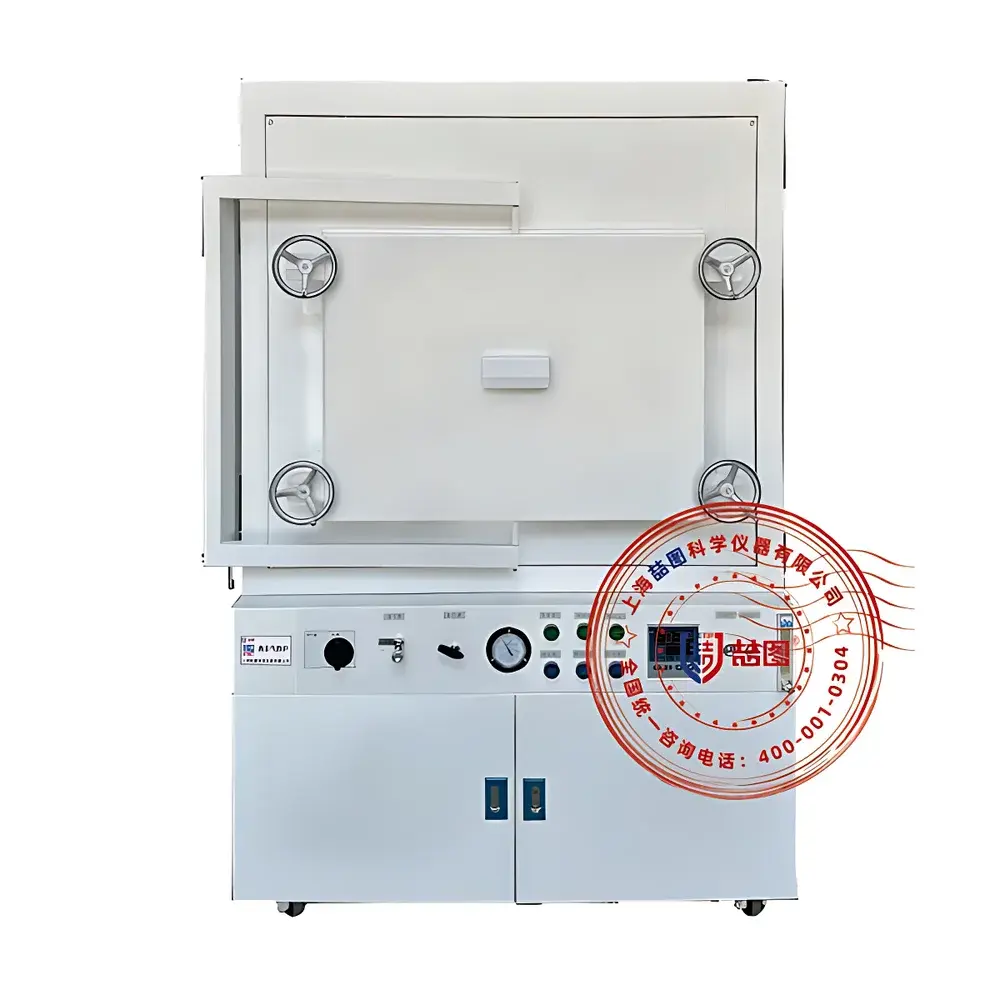
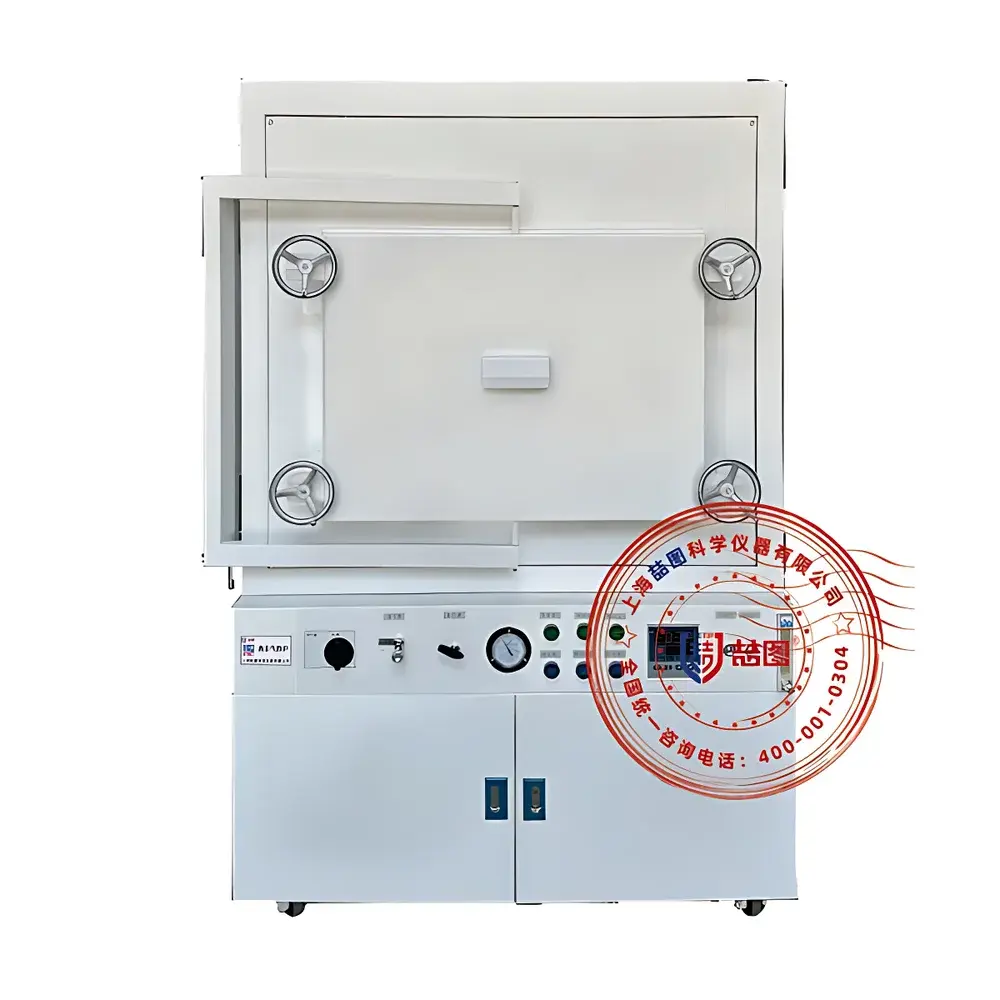
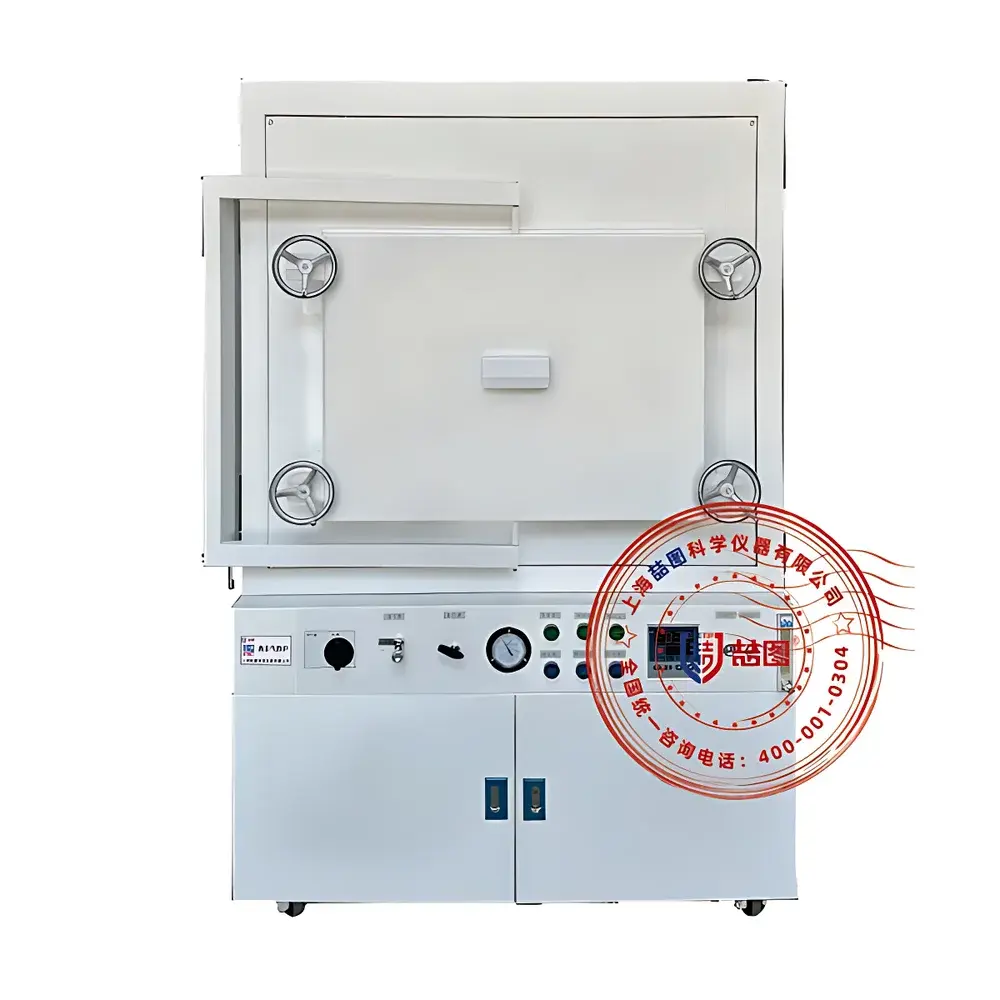
DRETOP QVB-5-18P Box-Type Vacuum & Controlled Atmosphere Muffle Furnace
| Brand | DRETOP |
|---|---|
| Origin | Shanghai, China |
| Manufacturer Type | Direct Manufacturer |
| Product Category | Domestic |
| Model | QVB-5-18P |
| Instrument Type | Box Furnace |
| Maximum Temperature | 1800 °C |
| Temperature Control Accuracy | ±1 °C |
| Rated Power | 10000 W |
| Internal Chamber Dimensions | 150 × 300 × 120 mm |
| Nominal Volume | 5 L |
| Heating Element | Silicon Molybdenum Rod (MoSi₂) |
| Control System | Microcomputer-Based Artificial Intelligence Controller with PID and Self-Tuning Algorithms |
| Vacuum Performance | Ultimate Vacuum ≤ −0.1 MPa (1 mbar absolute) |
| Pressure Regulation Range | 10–1000 mbar (gauge), Capable of Maintaining Positive Pressure up to 0.1 MPa (1 bar gauge) |
| Safety Features | Over-Temperature, Over-Pressure, Over-Current, Leakage Protection, Thermocouple Failure Cut-Off, Password-Protected Parameter Access |
Overview
The DRETOP QVB-5-18P is a high-temperature box-type muffle furnace engineered for precision thermal processing under vacuum and controlled reactive or inert atmospheres. It integrates dual operational modes—vacuum evacuation and programmable gas introduction—enabling oxidation-free sintering, annealing, brazing, calcination, and heat treatment of advanced materials. Operating up to 1800 °C, the furnace employs MoSi₂ heating elements capable of stable, uniform heating in oxygen-deficient environments. Its chamber is constructed from high-purity alumina fiber insulation and reinforced with double-wall stainless steel housing, achieving surface temperatures below 60 °C at maximum operating temperature—ensuring operator safety and energy efficiency. Unlike conventional air furnaces, the QVB-5-18P eliminates surface oxidation, decarburization, and contamination by maintaining vacuum levels down to 1 mbar absolute and enabling precise partial-pressure control (10–1000 mbar) via integrated mass flow controllers and pressure-regulated gas inlets.
Key Features
- High-temperature capability: Continuous operation up to 1700 °C; peak rating 1800 °C with thermal stability < ±1 °C across the full working volume.
- Dual-mode atmosphere management: Integrated vacuum system (including mechanical pump and digital vacuum gauge) and modular gas delivery system supporting N₂, Ar, He, and forming gas (N₂/H₂); hydrogen use strictly limited to low-concentration (<4% vol) applications per IEC 60079-10-1 guidelines.
- Robust thermal architecture: Double-layer furnace shell with ceramic fiber insulation and reflective aluminum foil shielding minimizes radial heat loss and ensures axial/radial temperature uniformity within ±5 °C at 1600 °C.
- Intelligent control platform: Microprocessor-based AI controller with 30-segment programmable ramp-soak profiles, auto-tuning PID, and real-time deviation compensation; supports RS485 Modbus RTU communication for integration into lab automation networks.
- Comprehensive safety compliance: Dual independent over-temperature cutoffs (mechanical and electronic), pressure interlock circuitry preventing door opening under positive pressure >0.02 MPa, and grounded chassis with IP20-rated electrical enclosure meeting IEC 61000-6-3 EMC requirements.
Sample Compatibility & Compliance
The QVB-5-18P accommodates diverse sample geometries—including crucibles (Al₂O₃, ZrO₂, graphite), powder compacts, thin films, and small metallic components—within its 5 L chamber (150 × 300 × 120 mm). It complies with ASTM F2627-20 (Standard Guide for Vacuum Heat Treatment of Titanium Alloys), ISO 10474 (Metallic Products — Types of Inspection Documents), and supports GLP/GMP-aligned process documentation when paired with optional data logging modules. All internal surfaces are passivated stainless steel; no organic binders or coatings are used in hot-zone construction—ensuring ultra-low outgassing rates (<1×10⁻⁹ Pa·m³/s·cm²) critical for semiconductor-grade sintering and superalloy processing. The furnace meets CE marking requirements under the Machinery Directive 2006/42/EC and Low Voltage Directive 2014/35/EU.
Software & Data Management
The embedded controller provides native CSV export of time-temperature-pressure-gas flow logs via USB flash drive. Optional PC software (DRETOP FurnaceLink v3.2) enables remote monitoring, alarm configuration, audit trail generation, and 21 CFR Part 11-compliant electronic signatures when deployed with Windows-domain authentication and encrypted database storage. Process recipes can be version-controlled, and all parameter changes—including setpoint modifications and manual overrides—are timestamped and attributed to user accounts. Raw thermocouple signals (Type S, calibrated traceable to NIST SRM 1747) are sampled at 1 Hz and filtered using exponential moving average algorithms to suppress EMI-induced noise.
Applications
- Advanced ceramics: Solid-state sintering of SiC, AlN, and YSZ under Ar/N₂; densification kinetics studies requiring reproducible dwell times at 1600–1750 °C.
- Refractory metals: Stress-relief annealing of molybdenum and tungsten sheet without embrittlement; recrystallization of TZM alloy under vacuum.
- Electrode materials: Lithium-ion cathode precursor calcination (e.g., NMC811) with O₂ partial pressure control to suppress Ni⁴⁺ reduction.
- Research-scale metallurgy: Phase transformation analysis of Ni-based superalloys; diffusion couple experiments under controlled pO₂ gradients.
- Materials synthesis: Carbothermal reduction of TiO₂ to TiC; nitridation of silicon powder to Si₃N₄ using NH₃/N₂ mixtures.
FAQ
What is the maximum allowable working pressure inside the chamber during gas purging?
The furnace is rated for continuous operation at gauge pressures up to 0.02 MPa (200 mbar). Exceeding this value triggers automatic venting and power cutoff per safety interlock logic.
Can the furnace be used with hydrogen as a reducing atmosphere?
Yes—but only at concentrations ≤4% H₂ in N₂ or Ar, and only below 800 °C. Full H₂ operation requires additional explosion-proof certification (ATEX/IECEx) not included in standard configuration.
Is calibration traceable to national standards?
Yes. Each unit ships with a factory calibration certificate referencing NIST-traceable Type S thermocouples and vacuum gauge verification against a primary capacitance manometer.
What maintenance intervals are recommended for the vacuum system?
Mechanical pump oil should be replaced every 500 operating hours; the vacuum chamber O-ring must be inspected and lubricated with fluorosilicone grease prior to each high-temperature cycle.
Does the controller support third-party SCADA integration?
Yes. Modbus RTU over RS485 is natively supported; optional OPC UA gateway firmware is available for seamless integration with Ignition, Siemens Desigo, or Emerson DeltaV systems.



