

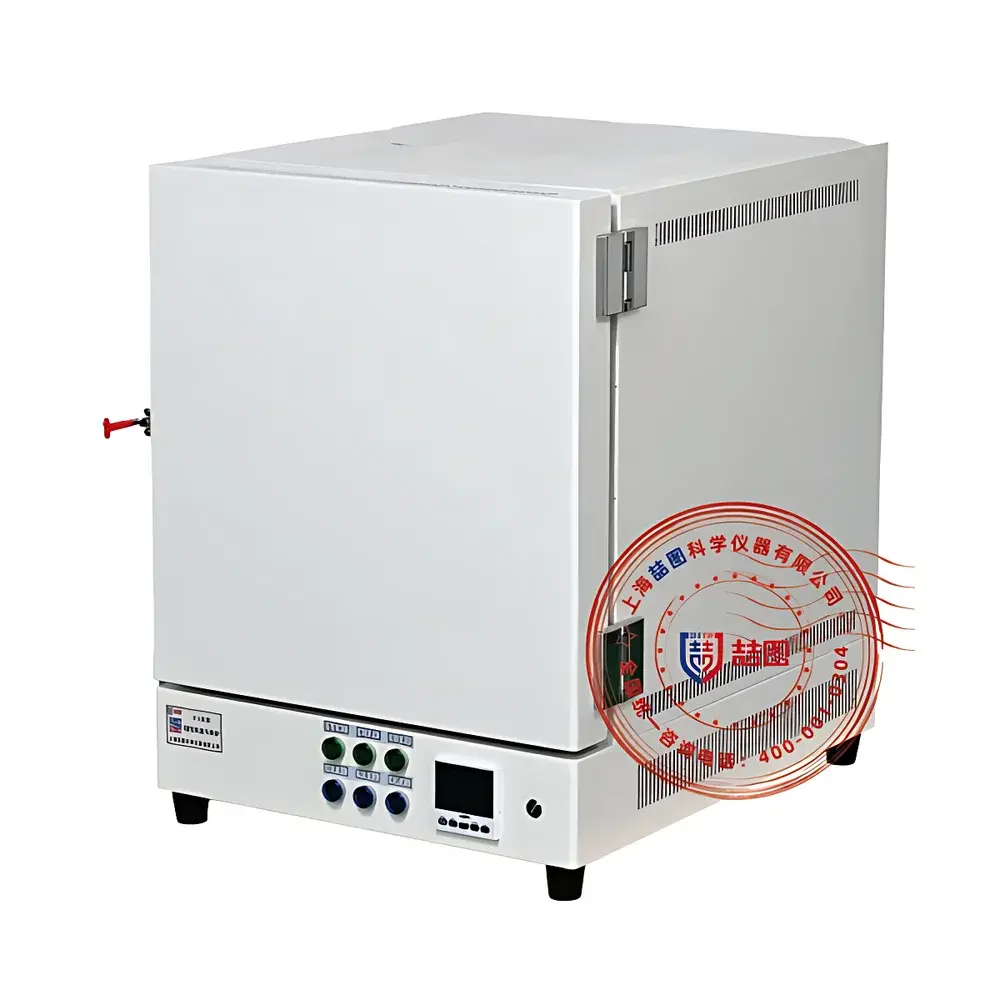
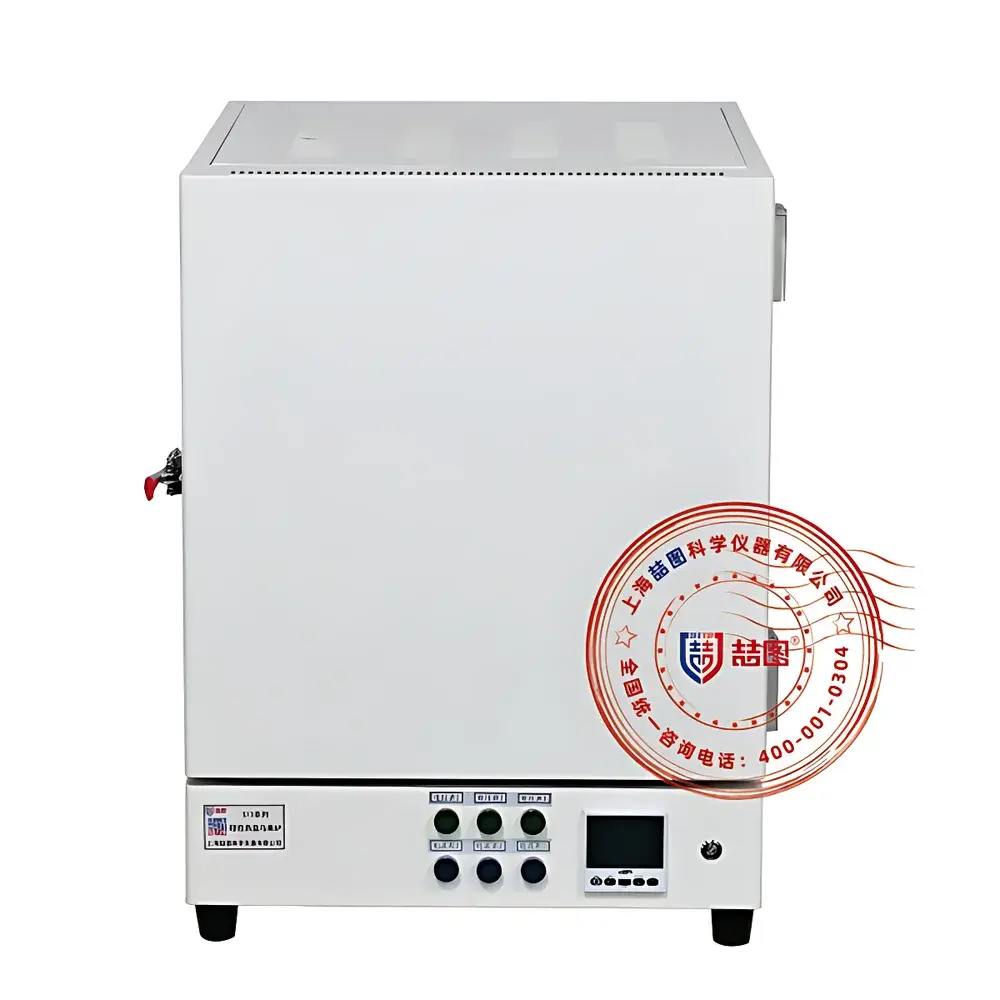
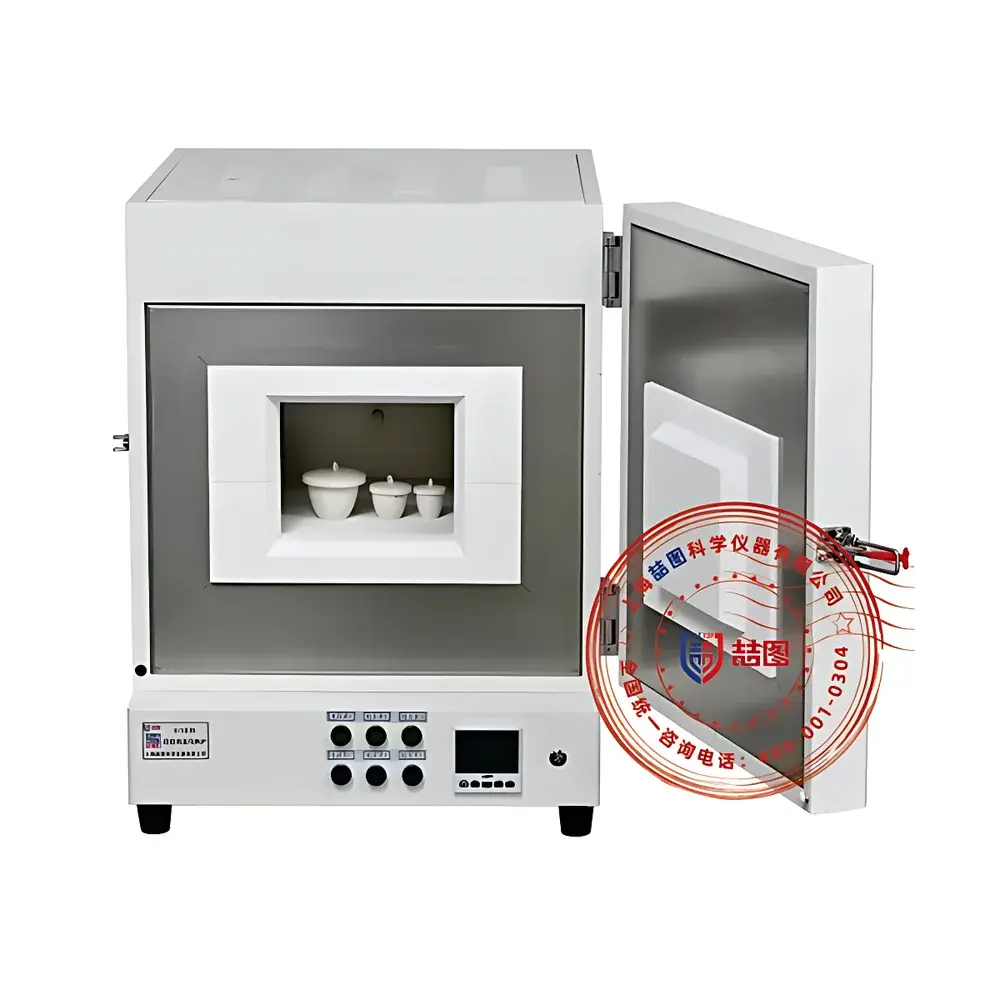
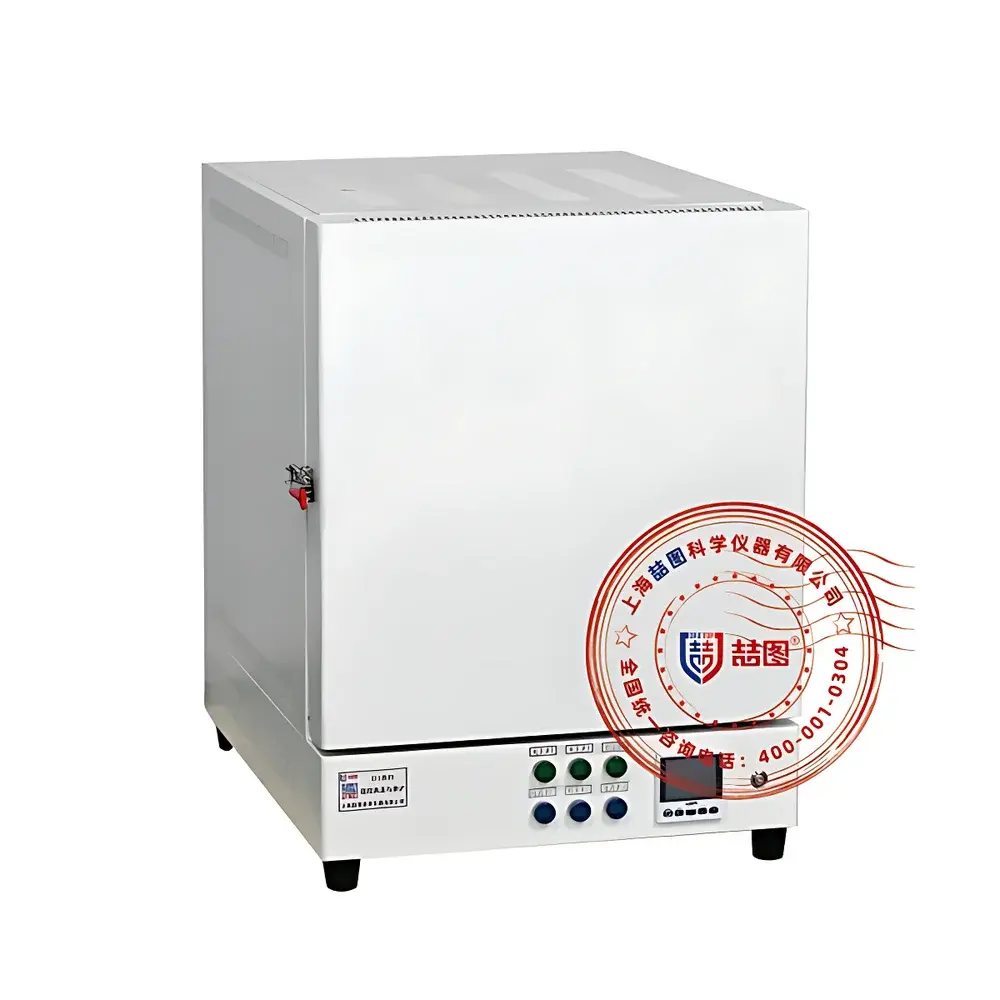
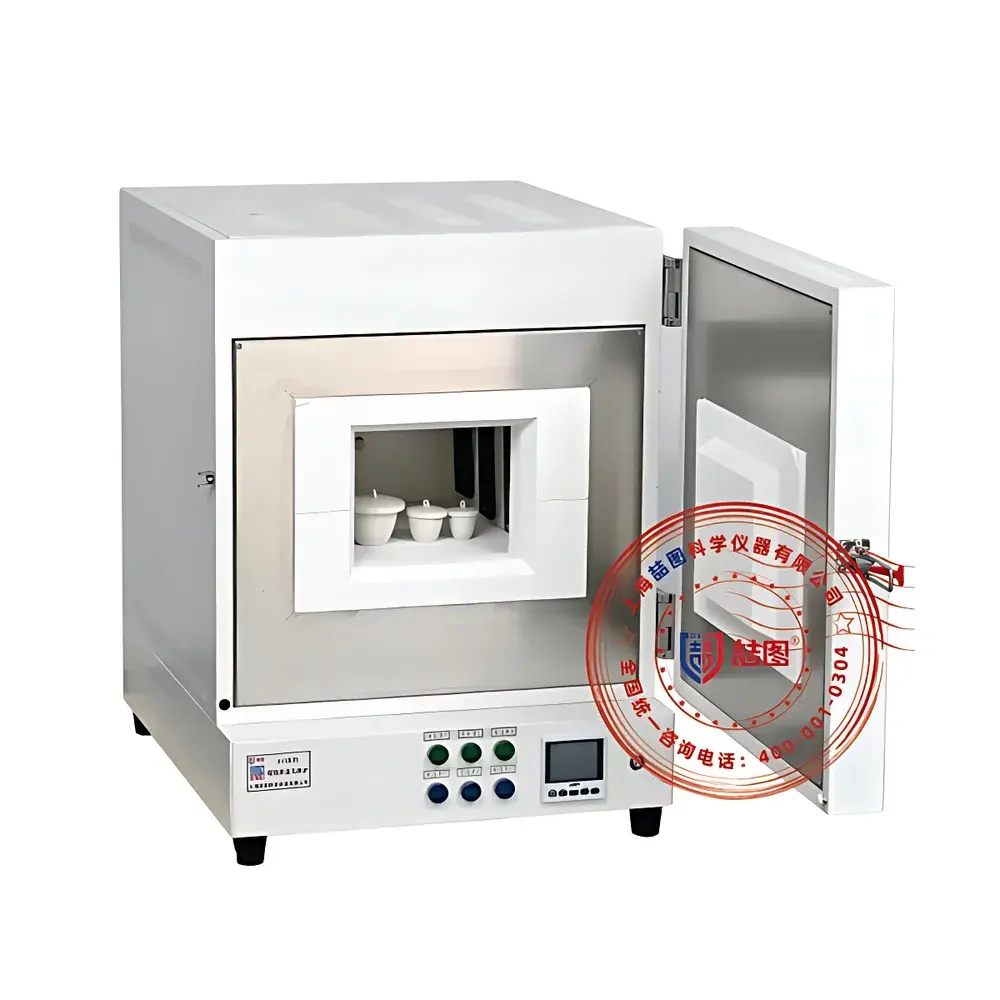
DRETOP S13-18PV Programmable High-Temperature Muffle Furnace
| Brand | DRETOP |
|---|---|
| Origin | Shanghai, China |
| Manufacturer Type | Direct Manufacturer |
| Product Category | Domestic |
| Model | S13-18PV |
| Instrument Type | Box-Type Muffle Furnace |
| Maximum Temperature | 1300 °C |
| Temperature Control Accuracy | ±1 °C |
| Rated Power | 8 kW |
| Heating Time to Max Temp | 50 min |
| Heating Element | Silicon Carbide Rods |
| Internal Chamber Dimensions | 200 × 400 × 180 mm |
| Control System | Industrial-Grade Color Touchscreen Controller |
| Nominal Volume | 20 L |
Overview
The DRETOP S13-18PV is a programmable high-temperature box-type muffle furnace engineered for precise thermal processing in research laboratories, quality control environments, and industrial R&D settings. Operating on resistive heating principles via silicon carbide (SiC) rod elements, it delivers stable, repeatable temperature profiles across its full operational range—from ambient +50 °C up to 1300 °C. Its triple-wall heating configuration ensures uniform radiant heat distribution throughout the chamber, minimizing axial and radial thermal gradients—a critical requirement for applications demanding high reproducibility in ashing, calcination, sintering, and thermal gravimetric pre-treatment. Designed to meet fundamental thermal stability requirements of ASTM E1142, ISO 7888, and USP , the S13-18PV supports GLP-compliant workflows through deterministic control logic, audit-ready event logging (when equipped with optional RS485/USB interfaces), and hardware-level safety interlocks.
Key Features
- Intelligent programmable controller with color touchscreen interface—supports multi-segment ramp-hold profiles, rate-controlled heating/cooling, automatic shutdown upon completion, and real-time temperature curve visualization.
- Dual-stage safety architecture: integrated overtemperature cutoff (OTC) with independent thermocouple monitoring, plus electrical fault detection including phase loss, open thermocouple (T/C break), and current/voltage anomaly alerts via front-panel analog meters.
- Triple-surface SiC rod heating system embedded within ceramic fiber walls—enables rapid thermal response (<50 min to 1300 °C) and maintains ≤±2 °C uniformity across the 20 L chamber volume (per IEC 60068-2-2 test methodology).
- Patented door-seal mechanism with refractory baffle plate—reduces heat leakage at the furnace mouth by >35% compared to standard designs, improving energy efficiency and thermal consistency during frequent sample access.
- Robust mechanical construction: 304 stainless steel inner lining (2 mm thickness), vacuum-formed micro-porous ceramic fiber insulation (density: 220 kg/m³), and phosphate-conversion coated carbon steel outer casing with high-temp epoxy finish.
- Automatic ambient temperature compensation algorithm—dynamically adjusts initial power output based on real-time ambient sensing, reducing warm-up latency without manual offset calibration.
Sample Compatibility & Compliance
The S13-18PV accommodates standard crucibles (alumina, quartz, platinum, graphite) and custom fixtures up to 180 mm height. Its inert, oxidation-resistant chamber environment—achievable with optional inert gas inlet (N₂, Ar)—supports ASTM D3174 (ash content), D3175 (volatile matter), and D3176 (elemental analysis) protocols for coal, biomass, and pharmaceutical excipients. The furnace complies with CE electromagnetic compatibility (EMC) directives (2014/30/EU) and low-voltage safety standards (2014/35/EU). When configured with password-protected user roles, timestamped operation logs, and electronic signature support (via optional PV-II series controller), it satisfies FDA 21 CFR Part 11 data integrity prerequisites for regulated QC labs.
Software & Data Management
The embedded controller provides local data storage for ≥1000 program cycles and 30 days of continuous temperature/event logging. Optional communication modules enable integration into LIMS or SCADA systems: RS485 (Modbus RTU), USB host port (for flash drive data export), and Ethernet-ready firmware (on PV-II upgrade path). All temperature setpoints, dwell times, and alarm thresholds are configurable with engineering-level access control (three-tier password hierarchy). Raw CSV-formatted logs include thermocouple ID, PID output %, relay status, and timestamped alarms—facilitating root-cause analysis during method validation or equipment qualification (IQ/OQ/PQ).
Applications
- Residue ashing per AOAC 942.05 and EPA Method 2540C for environmental soil/sediment testing.
- Thermal decomposition studies in catalysis research—including catalyst regeneration, coke burn-off, and TGA coupling pre-treatment.
- Pharmaceutical raw material purity verification (USP heavy metals, sulfated ash) and excipient thermal stability screening.
- Cement clinker phase analysis (ASTM C114), ceramic body densification, and metallurgical sintering trials under controlled oxidizing atmospheres.
- Calibration reference furnace applications where traceable stability ≤±1 °C at 1000 °C is required for secondary thermocouple verification.
FAQ
What is the maximum recommended continuous operating temperature?
The S13-18PV is rated for continuous operation at 1250 °C; 1300 °C is specified as short-term peak capability (≤2 hours per cycle) to preserve SiC rod longevity.
Can the furnace be purged with inert gas?
Yes—optional inert gas inlet (0–10 L/min flow capacity, NIST-traceable mass flow controller compatible) is available with flanged 1/4″ VCR fitting and integrated pressure relief valve.
Is the controller compliant with 21 CFR Part 11?
The base PV-series controller meets ALCOA+ data integrity principles; full Part 11 compliance requires PV-II upgrade with electronic signatures, audit trail encryption, and role-based access enforcement.
What thermocouple type is used for internal measurement?
Type S (Platinum/Rhodium 10%) thermocouples are factory-installed, certified to ITS-90, with cold-junction compensation accuracy ±0.5 °C.
How is temperature uniformity validated?
Uniformity mapping is performed per ASTM E2203 using nine-point sensor array (center + eight cardinal positions); typical results show ±1.5 °C deviation at 1000 °C across the usable load zone.



