

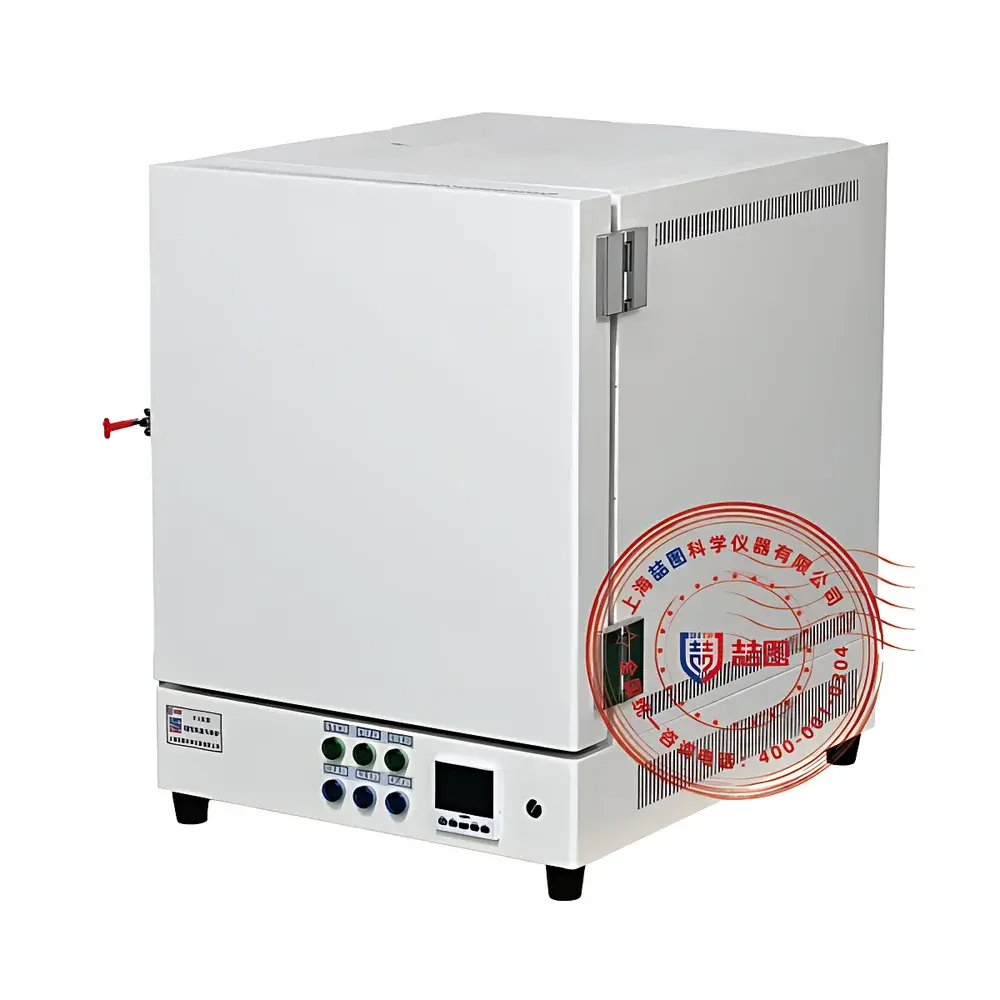
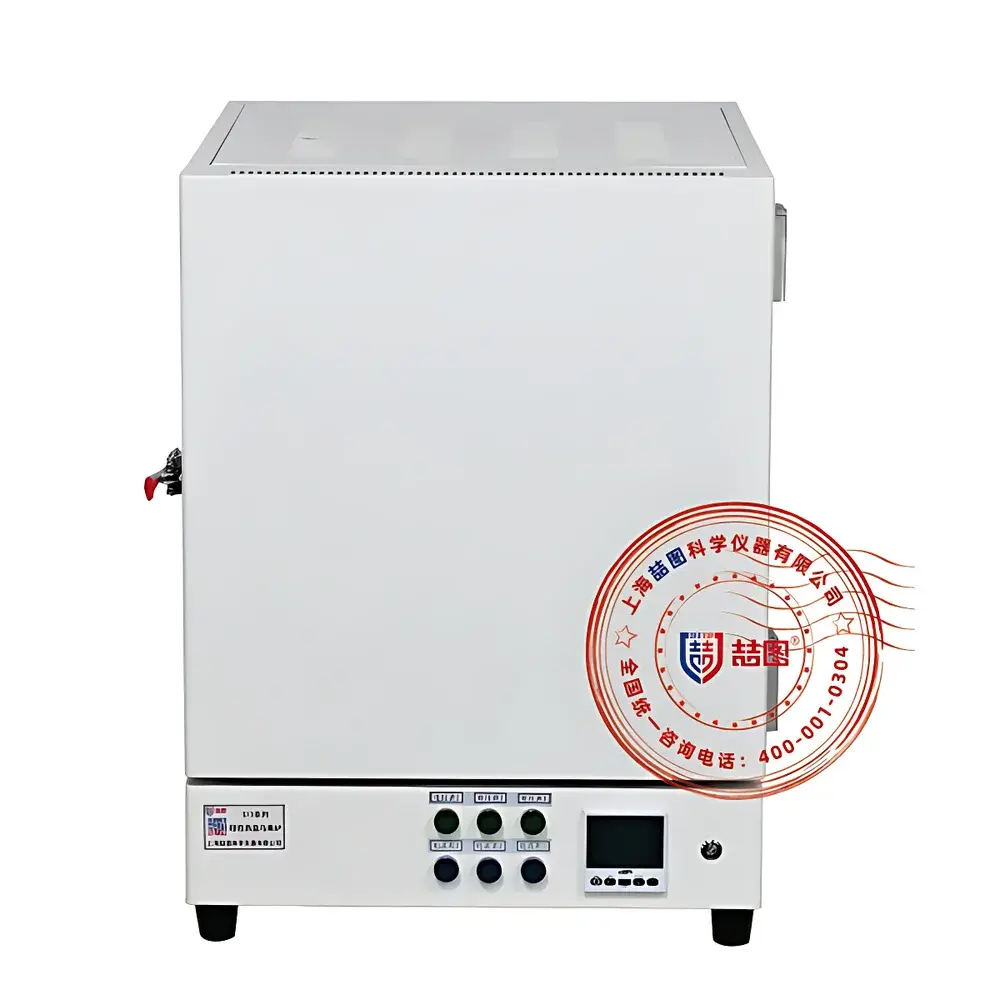
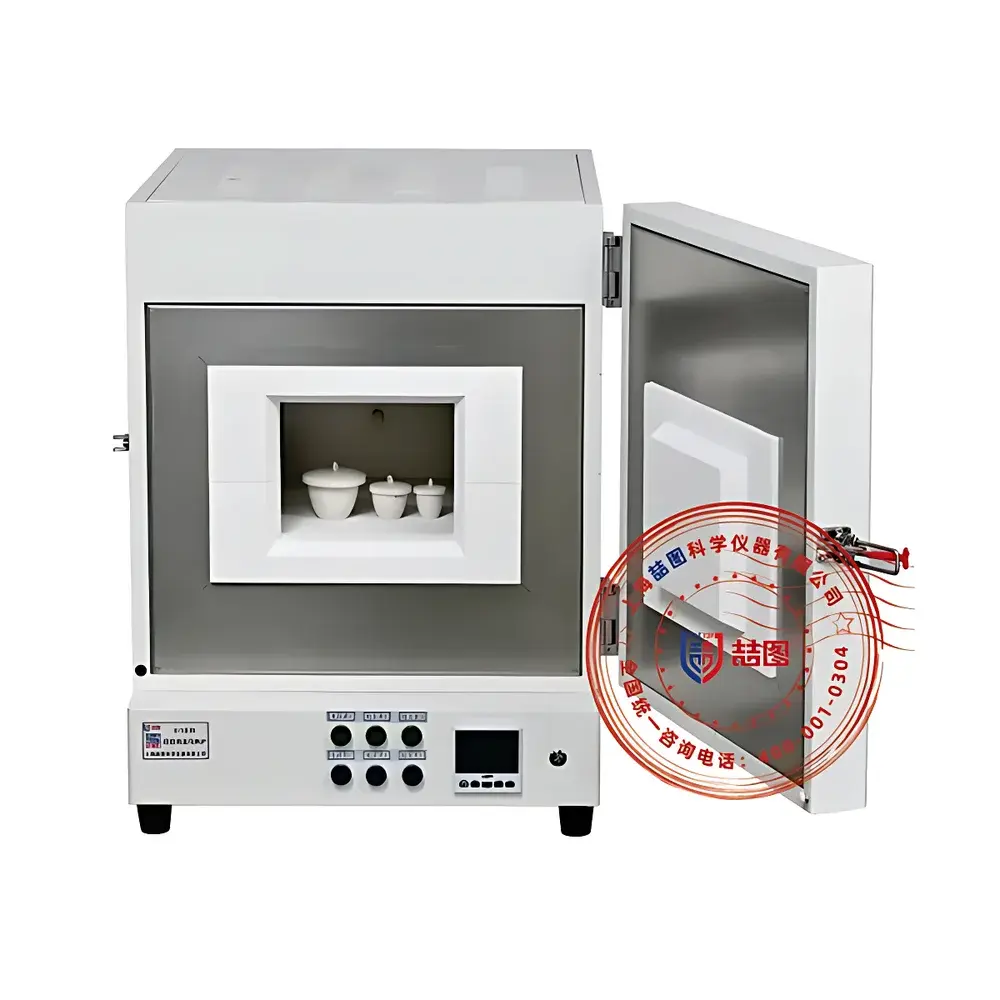
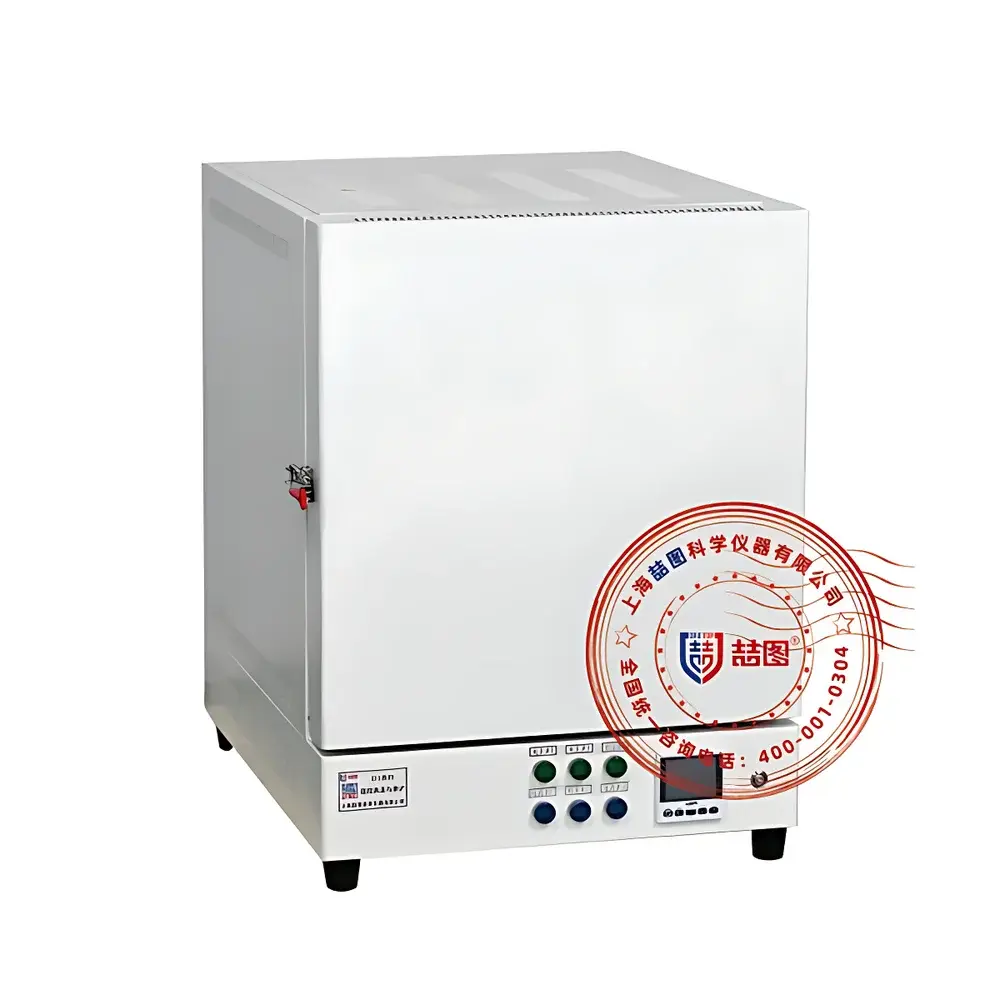
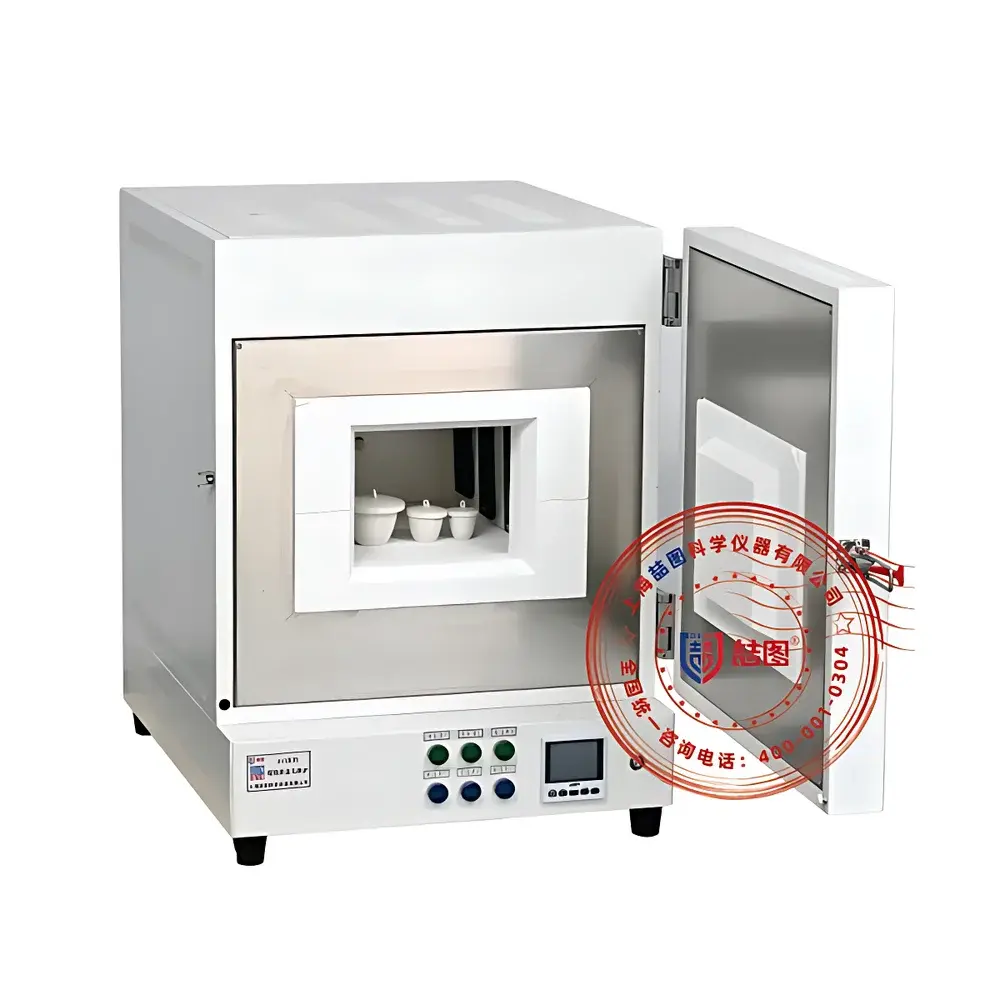
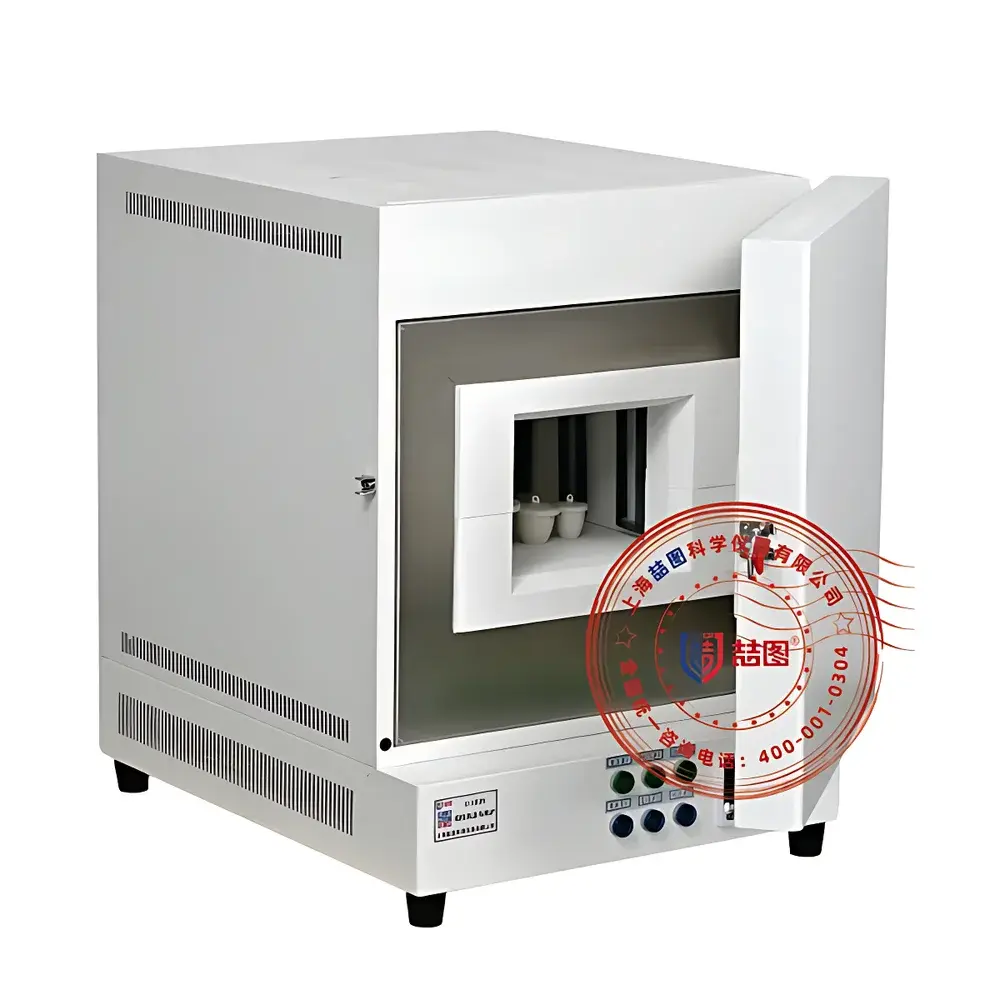
DRETOP S14-18P Programmable High-Temperature Muffle Furnace
| Brand | DRETOP |
|---|---|
| Origin | Shanghai, China |
| Manufacturer Type | Direct Manufacturer |
| Instrument Type | Box-Type Muffle Furnace |
| Maximum Temperature | 1400 °C |
| Temperature Control Accuracy | ±1 °C |
| Rated Power | 10 kW |
| Heating Time to Max Temp | ≤60 min |
| Heating Element | Silicon Carbide Rods |
| Internal Chamber Dimensions | 250 × 400 × 180 mm (W × D × H) |
| Nominal Volume | 20 L |
| Control System | Programmable Digital Display Controller with PID Algorithm |
| Safety Features | Door-Interlocked Power Cut-off, Dual-Stage Overtemperature Alarm, Thermocouple Break Detection, Phase Loss Protection |
Overview
The DRETOP S14-18P is a programmable high-temperature box-type muffle furnace engineered for precision thermal processing in research laboratories, quality control environments, and industrial R&D settings. Operating on the principle of resistive heating via silicon carbide (SiC) rod elements embedded in a triple-wall radiation-heated chamber, it delivers uniform, repeatable thermal profiles across its 20 L nominal cavity. Designed to meet stringent requirements in materials science, geochemistry, pharmaceutical testing, and environmental analysis, the furnace supports fully automated thermal cycles—including ramp-hold-cool sequences—with programmable rate control and endpoint logic. Its maximum operating temperature of 1400 °C enables applications such as ashing, calcination, sintering, heat treatment of ceramics and metals, and standardized thermal decomposition per ASTM E1357, ISO 1171, and USP <281>. The unit complies with IEC 61000-6-3 (EMC) and IEC 61010-1 (safety), and its architecture supports integration into GLP/GMP workflows through audit-trail-capable controllers (optional PV-II series).
Key Features
- Intelligent Thermal Management: Equipped with adaptive fuzzy PID algorithm and auto-tuning capability, enabling precise setpoint tracking within ±1 °C across the full 50–1400 °C range. Includes upper/lower limit alarms and positive/negative deviation alerts.
- Enhanced Structural Integrity: Triple-layer ceramic fiber insulation (vacuum-microporous board) minimizes thermal mass and improves energy efficiency. Reinforced furnace door with dual-seal refractory gasket ensures tight closure and reduces heat loss at the aperture.
- Robust Heating Architecture: Three-sided SiC rod placement—spirally wound and embedded in high-purity alumina ceramic supports—ensures radial and axial thermal symmetry. Internal baffle plate mitigates edge cooling effects near the door opening.
- Operational Safety Systems: Integrated door-interlock circuit cuts power immediately upon opening; resumes heating automatically after resealing. Dual-stage overtemperature protection includes primary controller cutoff and independent mechanical limiter. Real-time voltage/current monitoring via front-panel analog meters.
- Thermal Uniformity Validation: Certified uniformity of ±5 °C at 1400 °C (measured at 9-point grid per ASTM C1022), validated using calibrated Type S thermocouples traceable to NIST standards.
Sample Compatibility & Compliance
The S14-18P accommodates standard crucibles (alumina, quartz, platinum, graphite) up to Ø120 mm × 80 mm height. Its inert, sealed muffle chamber prevents sample contamination during ashing, LOI (Loss on Ignition), or elemental volatilization assays. It meets critical regulatory benchmarks including ASTM D3174 (ash content in coal), ASTM D5373 (total carbon in coal), ISO 1171 (determination of ash), and EPA Method 2540E (total suspended solids ignition). Optional inert gas inlet (N₂/Ar) enables controlled-atmosphere treatments compliant with ISO 8501-3 and ASTM F2284 for oxide-sensitive samples. All electrical and thermal safety designs conform to UL 61010-1 and CE EN 61000-6-2.
Software & Data Management
While the base P-series model uses a dedicated programmable digital controller with 30-step memory and real-time clock, optional PV and PV-II variants integrate full-color touchscreens with data logging (up to 10,000 records), USB export, RS485 Modbus RTU protocol, and password-protected multi-tier access (operator/engineer/administrator). Logged parameters include time-stamped temperature, setpoint, power output, alarm status, and thermocouple health diagnostics. Audit trail functionality satisfies FDA 21 CFR Part 11 requirements when paired with validated software packages. Optional thermal printer provides hard-copy cycle reports for QA documentation.
Applications
- Coal and coke analysis: moisture, volatile matter, fixed carbon, ash fusion temperature, and elemental composition via XRF sample prep.
- Pharmaceutical QC: residual solvent removal, excipient degradation studies, and USP <281> loss-on-drying validation.
- Environmental testing: TSS/TDS ashing per EPA methods, heavy metal recovery from filter media, and PCB destruction verification.
- Materials research: pre-sintering of battery cathodes (LiCoO₂, NMC), ceramic densification, and thermal stability screening of polymer composites.
- Geochemical labs: carbonate dissolution kinetics, clay mineral dehydroxylation, and silicate melt homogenization prior to EPMA.
FAQ
What is the recommended maintenance interval for the silicon carbide heating elements?
Silicon carbide rods typically maintain stable resistance and geometry for ≥3,000 hours under continuous operation at ≤1350 °C. We recommend quarterly visual inspection for surface cracking or localized oxidation and annual calibration of the thermocouple and controller against a reference standard.
Can the furnace be operated under vacuum or reducing atmospheres?
No—the S14-18P is designed exclusively for ambient-air or inert-gas (N₂/Ar) purged operation. Vacuum or hydrogen-containing atmospheres require specialized furnace models with water-cooled flanges and explosion-proof construction.
Is the internal chamber dimension sufficient for standard ASTM G160 crucibles?
Yes—the 250 × 400 × 180 mm chamber accommodates ASTM G160-compliant porcelain crucibles (100 mL, 60 mm OD) with 40 mm clearance on all sides, ensuring convective and radiative uniformity during prolonged ashing cycles.
Does the unit support remote monitoring via Ethernet or Wi-Fi?
The base P-series lacks network connectivity; however, the PV-II touchscreen option supports RS485-to-Ethernet gateways and can be integrated into LabView or SCADA systems using Modbus TCP mapping.
What is the typical thermal recovery time after door opening at 1200 °C?
With door open for ≤15 seconds, the chamber recovers to ±5 °C of setpoint within 4–6 minutes at 1200 °C, verified by internal thermocouple array measurements per IEC 60584-2.
Related Products



