

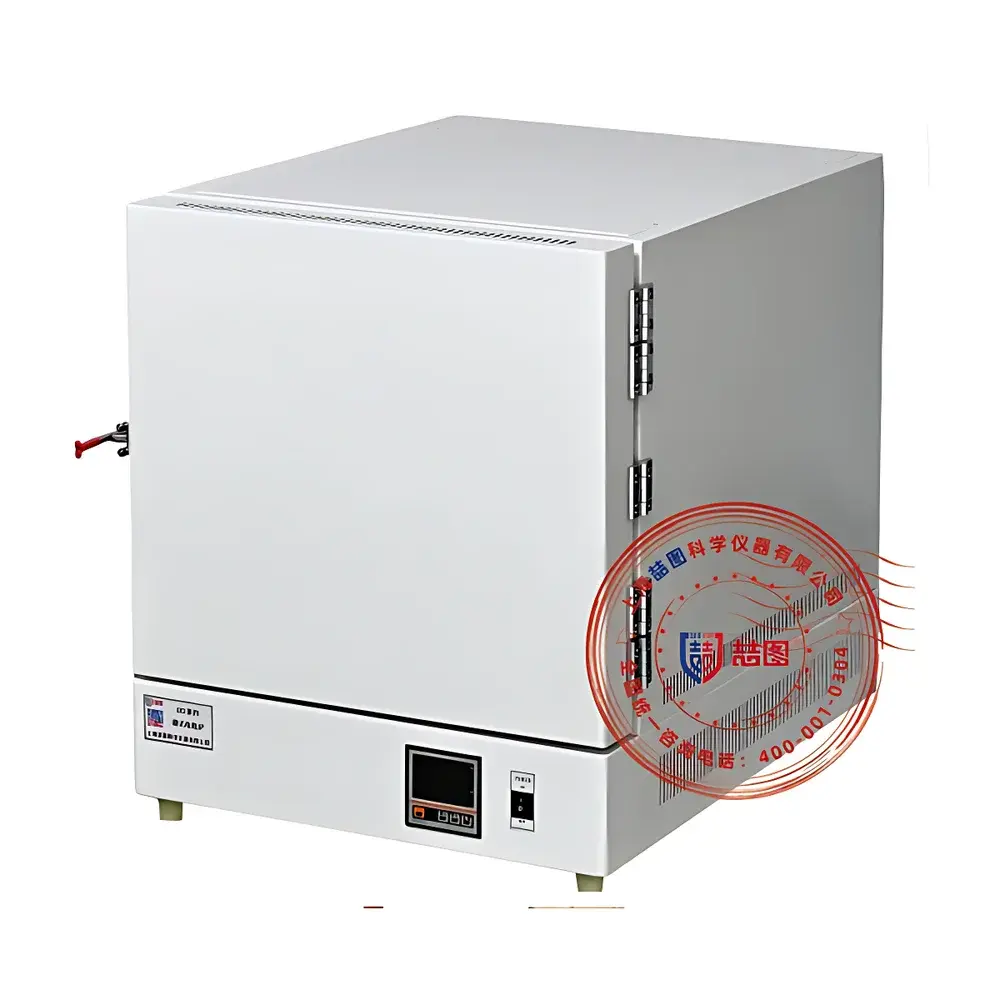
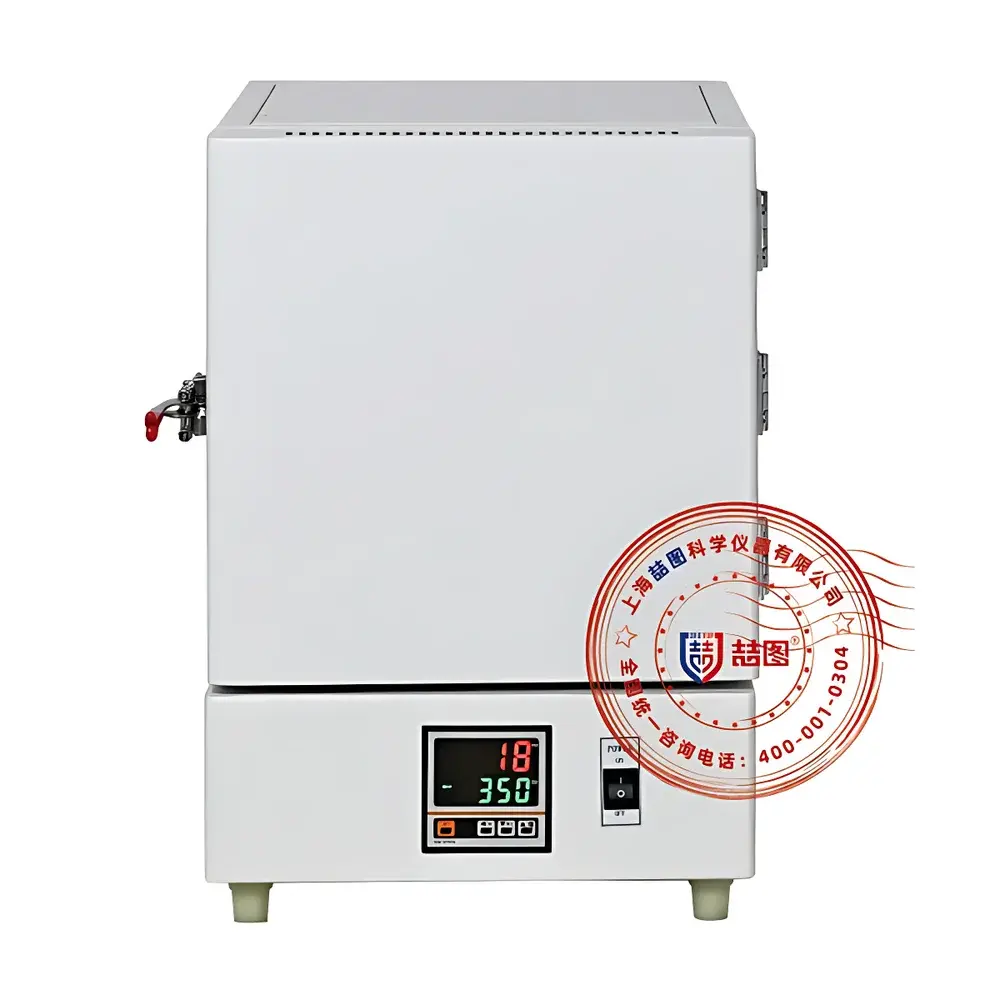
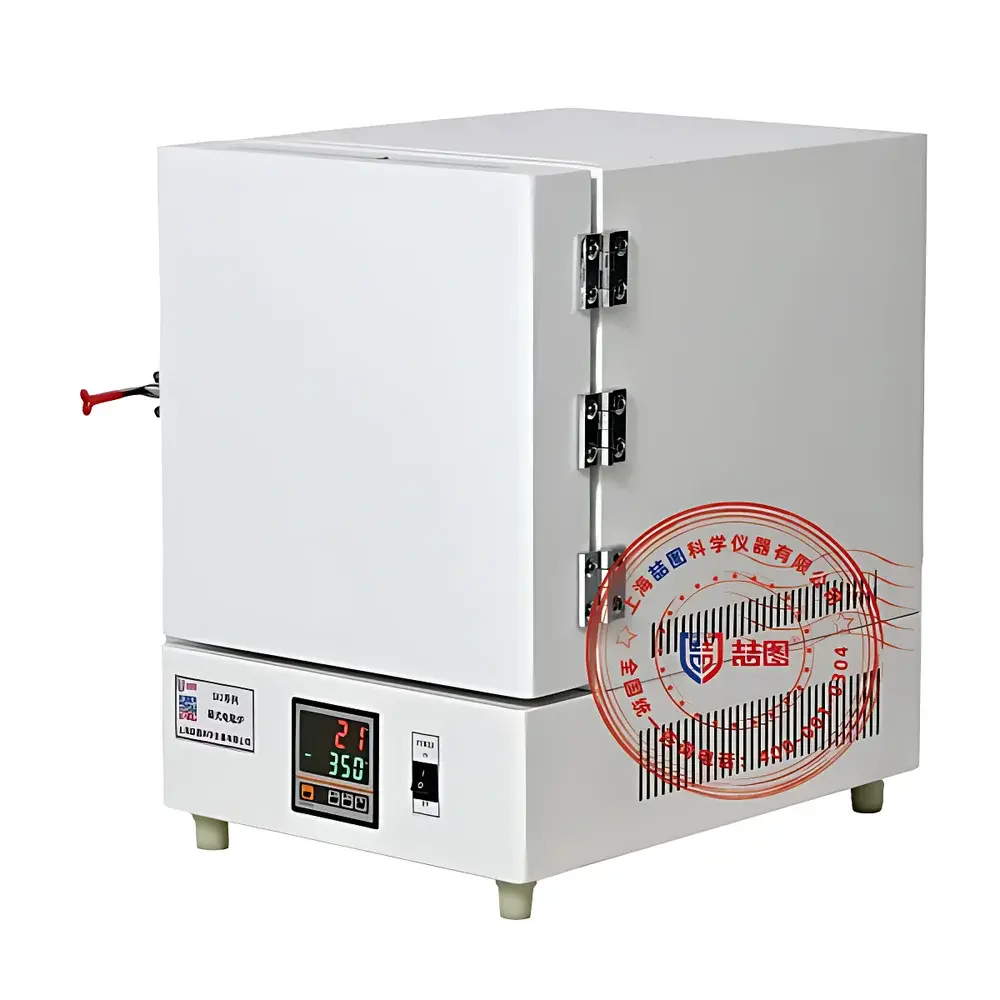
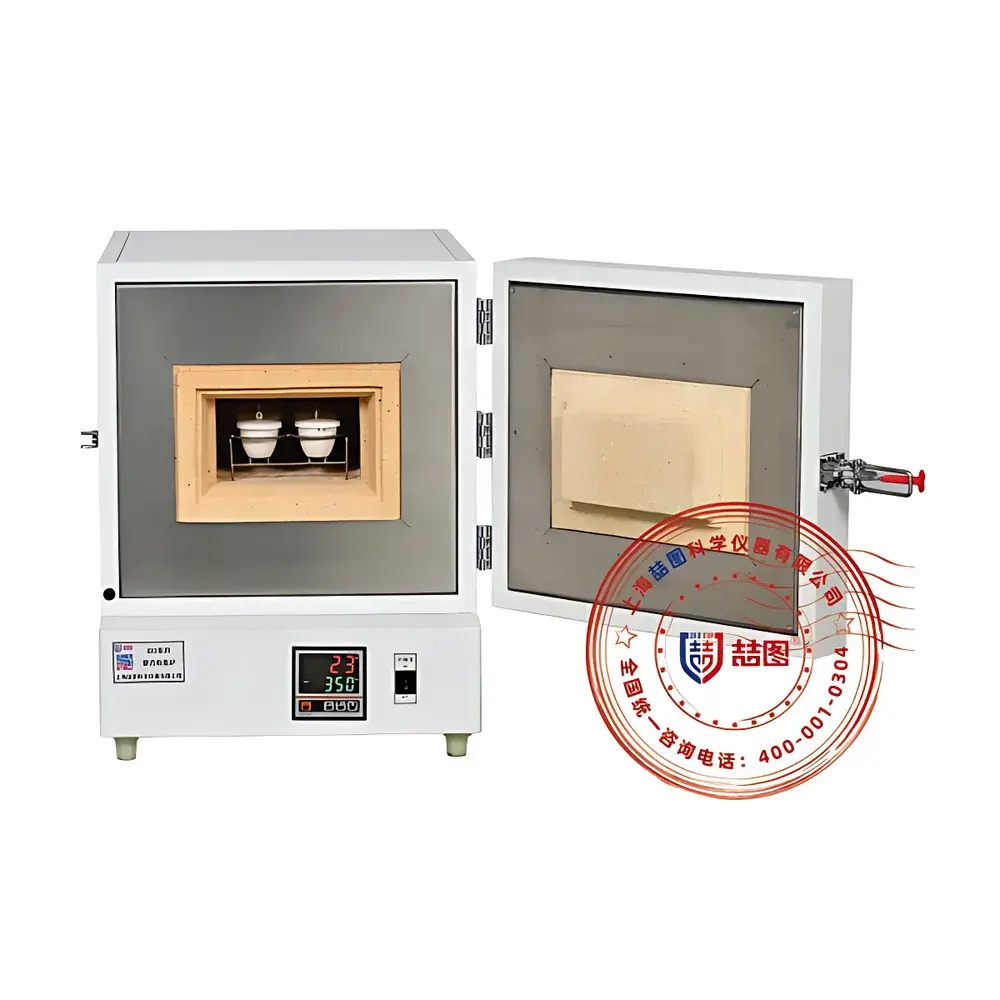
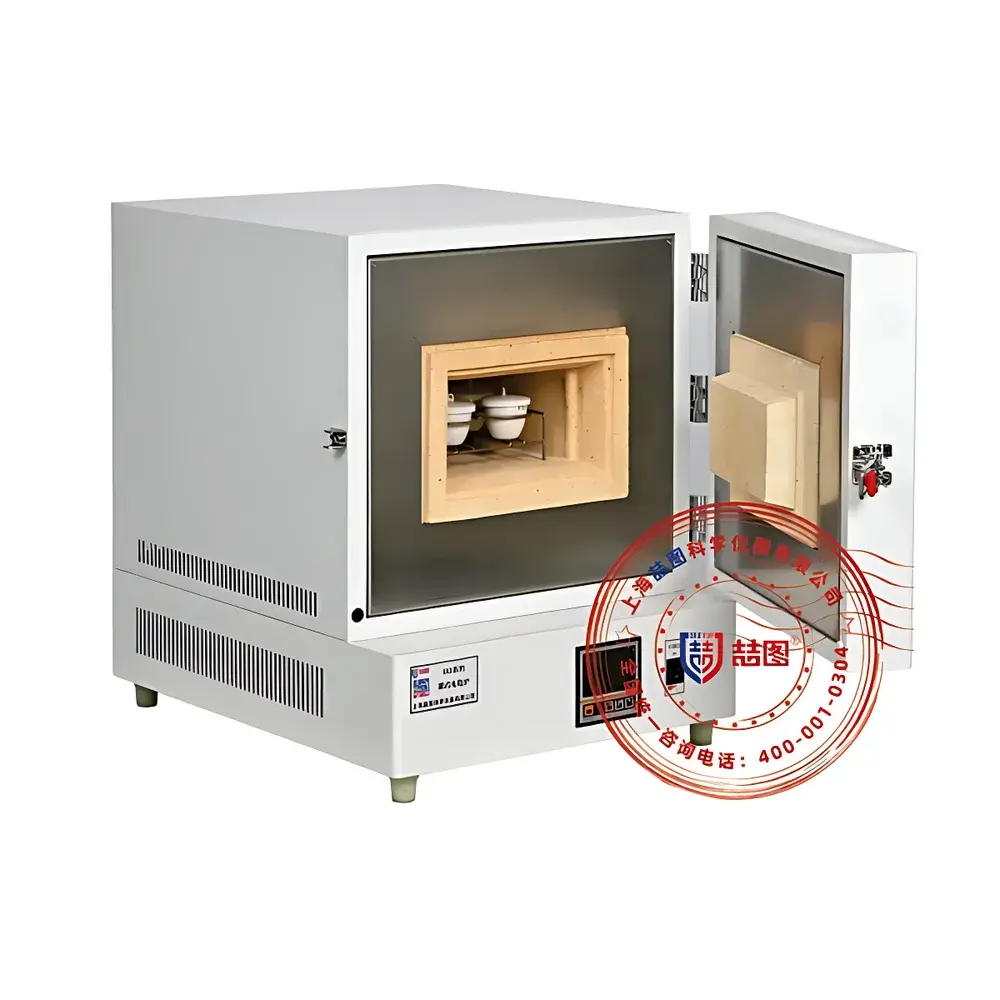
DRETOP SX2-4-10NP Box-Type Muffle Furnace
| Brand | DRETOP |
|---|---|
| Origin | Shanghai, China |
| Manufacturer Type | Direct Manufacturer |
| Product Category | Domestic |
| Model | SX2-4-10NP |
| Instrument Type | Box-Type Furnace |
| Maximum Temperature | 1000 °C |
| Temperature Control Accuracy | ±1 °C |
| Rated Power | 4 kW |
| Heating Time to Max Temp | 50 min |
| Heating Element | Nichrome Wire |
| Internal Chamber Dimensions | 200 × 300 × 120 mm (W × D × H) |
| Control System | Microcomputer-Based PID Controller |
| Nominal Volume | 7.2 L |
Overview
The DRETOP SX2-4-10NP is a benchtop box-type muffle furnace engineered for precise, repeatable high-temperature thermal processing in academic, industrial, and quality control laboratories. It operates on the principle of resistive heating via embedded nichrome wire elements, delivering uniform radiant heat across all four chamber walls to ensure spatial temperature homogeneity—critical for ash content determination, loss-on-ignition (LOI) analysis, calcination, and heat treatment of inorganic samples. Designed to meet fundamental thermal stability requirements in coal testing (ASTM D3174, ISO 1171), cement clinker analysis (ASTM C114), and pharmaceutical residual solvents (USP <631>), the furnace maintains a stable setpoint within ±1 °C across its full operating range (RT + 50 °C to 1000 °C), with no sample movement during thermal cycles—ensuring reproducible thermal history for comparative material characterization.
Key Features
- Four-wall heating architecture with helically wound nichrome wire elements, enabling rapid thermal equilibration and minimizing axial/radial gradients.
- Microcomputer-based PID controller with large-digit LED display, supporting 30-segment programmable ramp-soak profiles—including automatic hold termination and power cutoff upon completion.
- Dual-stage overtemperature protection: primary electronic cut-off at user-defined limit + secondary independent mechanical thermostat for fail-safe shutdown.
- Integrated door interlock system: heating ceases immediately upon door opening and resumes automatically when closed—eliminating thermal shock to samples and reducing operator exposure risk.
- Reinforced ceramic fiber insulation and double-layer refractory brick lining (Al₂O₃ ≥ 95%) provide low thermal mass, energy efficiency, and structural integrity under repeated thermal cycling.
- Front-access chamber with stainless steel inner seal (2 mm thick) and high-density firebrick door gasket ensures minimal heat leakage and consistent furnace atmosphere integrity.
Sample Compatibility & Compliance
The SX2-4-10NP accommodates standard crucibles (alumina, platinum, silicon carbide) up to Ø80 mm × 60 mm height, compatible with ASTM E171, ISO 562, and GB/T 212–2008 methodologies. Its sealed muffle design isolates samples from combustion byproducts, making it suitable for ashing organic matrices (e.g., biomass, feedstuffs, polymers) without cross-contamination. The furnace meets general safety requirements per IEC 61010-1:2010 (Equipment for Laboratory Use) and supports GLP-compliant workflows through optional data logging and audit-trail-capable controllers (NC-series touchscreen variant). While not intrinsically rated for hazardous atmospheres, optional inert gas inlet (N₂/Ar) enables controlled-atmosphere calcination per ISO 14705.
Software & Data Management
The base NP-series controller includes RS485 Modbus RTU interface for integration into centralized lab monitoring systems (e.g., LabVantage, Siemens Desigo). Optional NC-series color touchscreen adds real-time temperature curve visualization, multi-level password-protected access (Engineer/Operator/Supervisor), and internal storage for ≥1000 temperature logs with timestamp and event annotation. All recorded data comply with FDA 21 CFR Part 11 requirements when paired with validated third-party software platforms—supporting electronic signatures, change tracking, and export to CSV/PDF for audit readiness. Optional thermal printer provides hard-copy traceability for QC release documentation.
Applications
- Coal and coke analysis: volatile matter, fixed carbon, and ash content per ASTM D3172–D3176 and ISO 1171.
- Cement and mineral processing: LOI testing, clinker phase stabilization, and flux decomposition studies.
- Environmental labs: heavy metal digestion residue ashing (EPA Method 3050B), soil organic carbon quantification.
- Pharmaceutical R&D: excipient thermal degradation profiling, residual catalyst removal, and API crystallinity screening.
- Academic research: ceramic sintering pre-treatment, catalyst support calcination, and battery cathode precursor annealing.
FAQ
What is the maximum recommended continuous operating temperature?
The SX2-4-10NP is rated for continuous operation at 1000 °C; sustained use above 950 °C may reduce heating element service life and requires periodic calibration verification.
Does the furnace support inert or reducing atmospheres?
Yes—optional N₂/Ar inlet port (M6 thread) allows purging; however, the standard model lacks pressure regulation or exhaust flow control—external gas manifold and scrubber are required for reactive atmospheres.
Can temperature profiles be exported for regulatory submission?
When equipped with the NC-series controller and validated data acquisition software, full temperature-time logs—including operator ID, parameter changes, and alarm events—can be exported in PDF/CSV with digital signature capability.
Is the furnace compliant with CE or UL standards?
The unit conforms to IEC 61010-1:2010 for laboratory equipment safety; CE marking is available upon request for EU-bound shipments with additional EMC testing.
What maintenance intervals are recommended for optimal performance?
Inspect door gasket integrity and thermocouple calibration every 200 operational hours; clean interior refractory surfaces monthly using non-abrasive ceramic brushes; replace heating elements only after measurable resistance drift (>15% from baseline) or visible oxidation damage.



