
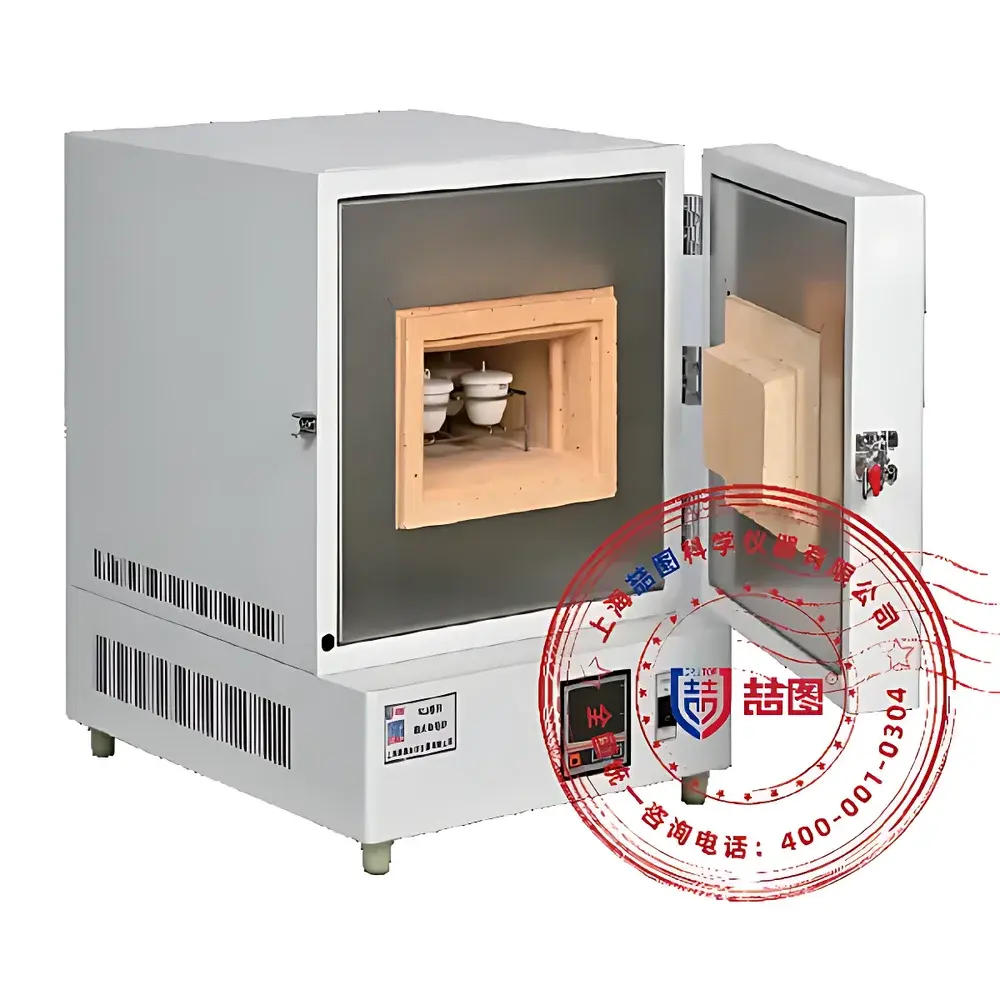
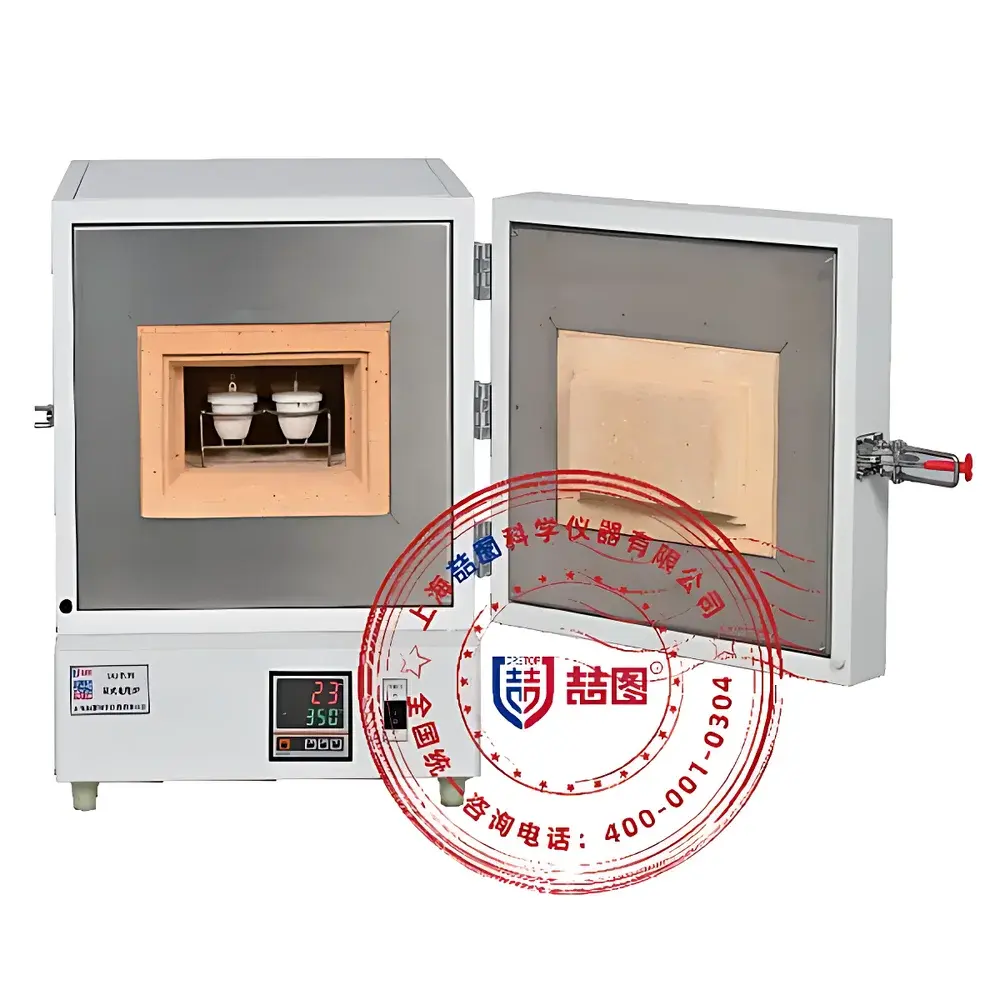
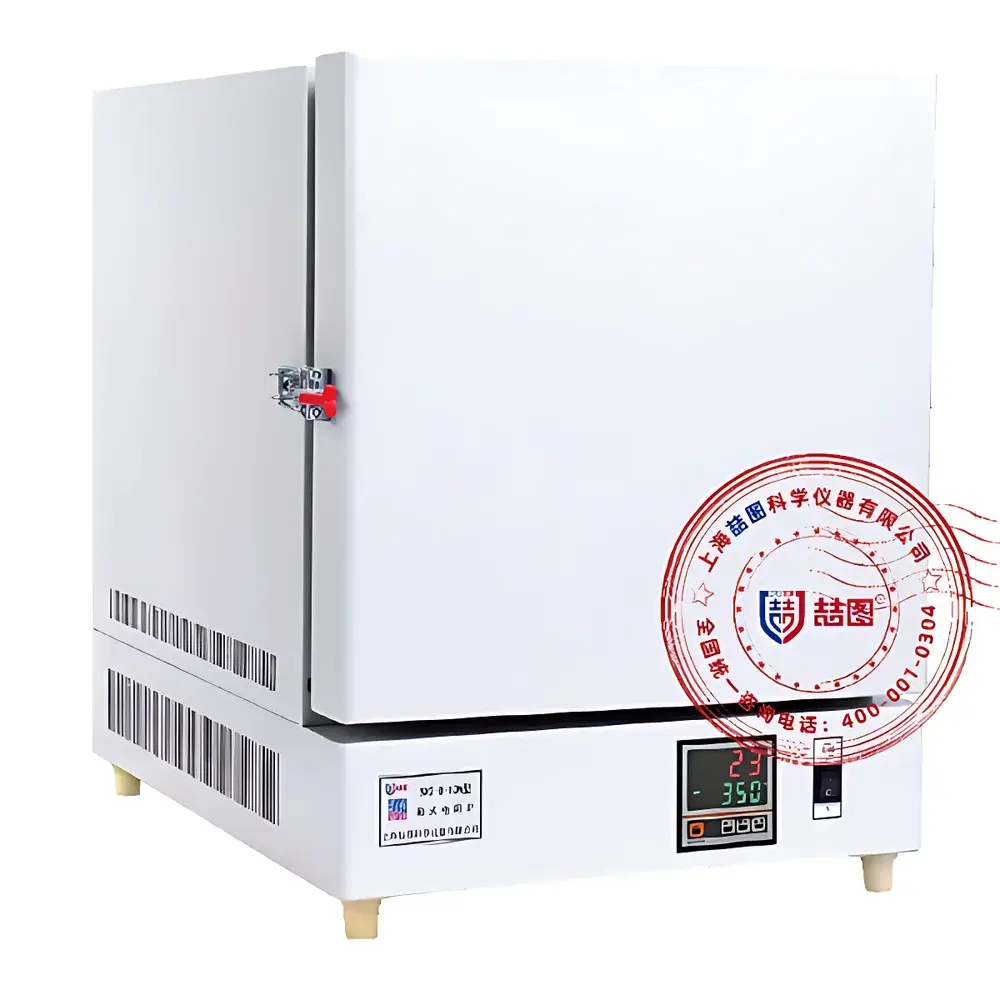
DRETOP SX3-8-13N 1300°C Refractory Brick Box-Type Muffle Furnace
| Brand | DRETOP |
|---|---|
| Origin | Shanghai, China |
| Manufacturer Type | Direct Manufacturer |
| Product Category | Domestic |
| Model | SX3-8-13N |
| Instrument Type | Box Furnace |
| Maximum Temperature | 1300°C |
| Temperature Control Accuracy | ±1°C |
| Rated Power | 8 kW |
| Heating Time to Max Temp | 50 min |
| Heating Element | Silicon Carbide Rods |
| Internal Dimensions | 250 × 400 × 160 mm (W × D × H) |
| Control System | Microcomputer-Based PID Controller |
| Nominal Volume | 16 L |
Overview
The DRETOP SX3-8-13N is a high-performance box-type muffle furnace engineered for precise, repeatable high-temperature thermal processing in research laboratories and industrial quality control environments. Designed around a robust refractory brick chamber architecture, it operates on the principle of resistive heating via silicon carbide (SiC) rod elements—offering superior thermal stability, uniform radial and axial temperature distribution, and long-term operational integrity at continuous service temperatures up to 1300°C. Unlike tube furnaces, its sealed box configuration ensures minimal convective heat loss and optimal thermal containment during static sample treatments such as ashing, calcination, sintering, heat treatment, and gravimetric analysis. The furnace complies with fundamental safety and performance expectations aligned with IEC 61000-6-3 (EMC emissions) and IEC 61000-6-2 (immunity), and supports GLP-compliant workflows through deterministic thermal profiling and traceable control logic.
Key Features
- Triple-wall heating configuration with SiC rods embedded in all three vertical chamber walls—enabling rapid, symmetrical heat transfer and minimizing axial temperature gradients (typical uniformity: ±5°C across working zone at 1300°C).
- Refractory brick lining (Al₂O₃-SiO₂ composite) with low thermal mass and high emissivity—reducing energy consumption by ~22% compared to fiber-ceramic alternatives while maintaining structural integrity after >500 thermal cycles.
- Microprocessor-based PID controller with 30-segment programmable ramp-soak profiles, supporting custom heating/cooling rates (0.1–20°C/min), dwell time scheduling, and automatic power cutoff upon completion.
- Dual-stage overtemperature protection: primary limit set at 1350°C (hardware cut-off), secondary at 1320°C (software-triggered alarm + relay deactivation); both independently monitored via redundant S-type thermocouples.
- Integrated door interlock system—automatically disables heating upon door opening and resumes operation only after full closure confirmation, eliminating thermal shock risks to samples and operator exposure.
- Front-panel digital display with real-time voltage/current monitoring, ambient temperature compensation algorithm, and auto-recall of last-used program after power interruption.
- Structural design includes stainless steel inner flange (2 mm thickness) at furnace mouth to prevent carbon deposition buildup; surface-treated carbon steel housing with phosphate conversion coating and high-temp epoxy powder finish (200°C rated).
Sample Compatibility & Compliance
The SX3-8-13N accommodates standard ceramic crucibles (alumina, silica, zirconia), metal trays (Inconel 600, stainless steel 310S), and graphite boats—compatible with ASTM E1726 (ash content determination in coal), ISO 5912 (ceramic sintering characterization), and USP (heavy metals testing). Its static loading configuration ensures mechanical stability for fragile or powdered specimens during prolonged holds. The furnace meets electrical safety requirements per IEC 61010-1 and is suitable for use in Class II, Division 1 hazardous locations when paired with optional inert gas purging kits (N₂/Ar inlet valve available as add-on). No CE marking is affixed; users must perform local conformity assessment per applicable national regulations (e.g., UKCA, FCC, NRCan).
Software & Data Management
While the base N-series model features standalone microcontroller operation, optional NV-I series upgrades include an industrial-grade 7-inch color touchscreen HMI with embedded data logging (1 Hz sampling), password-protected multi-tier access (Operator/Engineer/Administrator), and RS485 Modbus RTU interface for integration into SCADA or LIMS platforms. Logged parameters include setpoint, actual temperature, power output %, elapsed time, and alarm event timestamps—with export capability to CSV via USB host port. All firmware versions support audit trail generation compliant with FDA 21 CFR Part 11 Annex 11 principles (user action logging, electronic signature placeholder, immutable record retention), provided external validation protocols are implemented onsite.
Applications
- Coal and coke analysis: volatile matter determination (ASTM D3175), fixed carbon assay (ASTM D3174), and sulfur ash fusion testing.
- Cement and clinker phase transformation studies under controlled oxidative atmospheres.
- Pre-treatment of catalyst supports (e.g., γ-Al₂O₃ calcination prior to Pt impregnation).
- Thermal decomposition kinetics of pharmaceutical excipients (lactose, microcrystalline cellulose) per ICH Q1A(R3) guidelines.
- Residue-on-ignition (ROI) quantification in food additives, mineral supplements, and environmental soil extracts.
- Calibration verification of thermocouples and RTDs using fixed-point reference materials (e.g., Al, Zn, Sn ITS-90 points).
FAQ
What is the maximum recommended continuous operating temperature?
The furnace is rated for continuous operation at 1300°C; extended use above 1250°C requires periodic inspection of SiC rod resistance drift and refractory joint integrity.
Can this furnace be used under inert or reducing atmospheres?
Yes—when equipped with the optional inert gas inlet valve and exhaust chimney, it supports N₂ or Ar purging; however, H₂ or CO atmospheres require additional explosion-proof certification not included in standard configuration.
Is the temperature uniformity validated per any standard?
Uniformity mapping is performed per internal QA protocol (DRETOP-QC-087) using 9-point thermocouple array; typical deviation is ≤±5°C within central 70% volume at 1300°C steady state.
Does the unit include calibration documentation?
Each furnace ships with factory-as-tested calibration certificate (traceable to NIM China), including thermocouple offset values and PID tuning parameters—valid for 12 months from shipment date.
What maintenance intervals are recommended?
Visual inspection of SiC rods and refractory joints every 200 operating hours; replacement of door gasket every 18 months or after 500 open/close cycles—whichever occurs first.



