
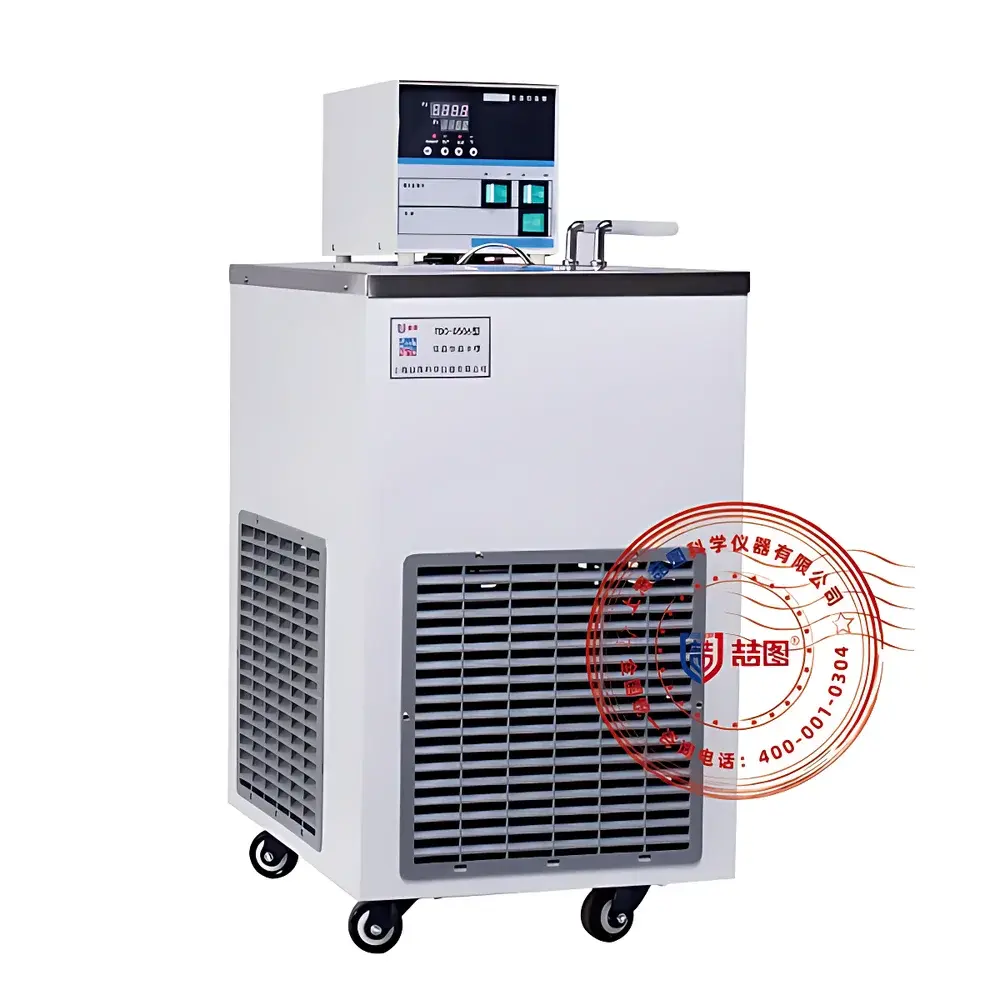
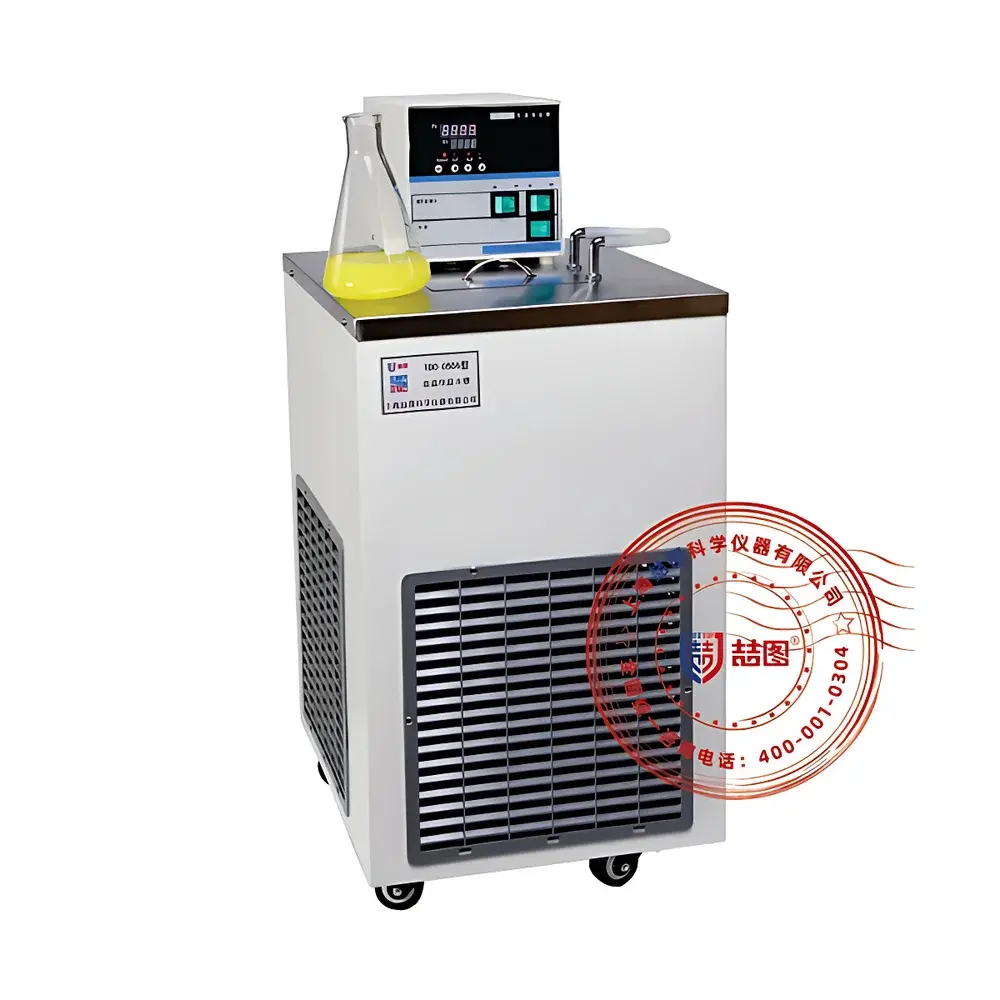
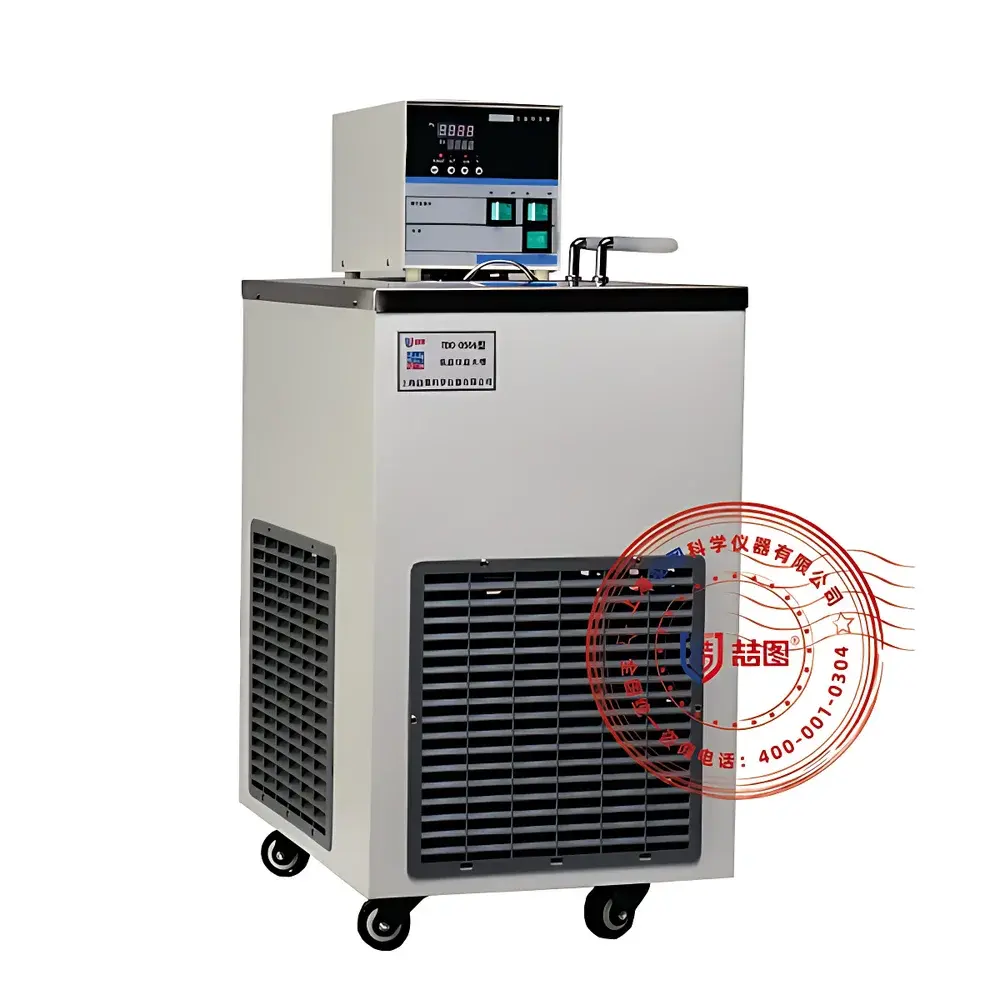
DRETOP TDC-0530M High-Precision Low-Temperature Circulating Bath
| Brand | DRETOP |
|---|---|
| Origin | Shanghai, China |
| Manufacturer Type | Direct Manufacturer |
| Product Category | Domestic |
| Model | TDC-0530M |
| Instrument Type | Circulating Temperature Bath |
| Circulation Mode | Internal & External |
| Temperature Control | Refrigeration + Heating |
| Bath Volume | 30 L |
| Temperature Range | −5 °C to 100 °C |
| Temperature Resolution | 0.1 °C |
| Power Supply | 220 V, 50 Hz |
Overview
The DRETOP TDC-0530M High-Precision Low-Temperature Circulating Bath is a laboratory-grade temperature control system engineered for stable, uniform thermal management of external equipment and in-bath samples. It operates on a dual-mode thermoelectric refrigeration and resistive heating principle, integrated with a high-efficiency closed-loop circulation system. Unlike basic water baths, the TDC-0530M delivers active temperature regulation across a wide span—from sub-zero cooling to boiling-point heating—while maintaining exceptional spatial uniformity and temporal stability. Its horizontal footprint design optimizes benchtop space utilization without compromising thermal performance, making it suitable for integration into analytical workflows requiring precise auxiliary temperature control, such as reaction calorimetry, viscometry, spectroscopic cell conditioning, or chromatographic column ovens.
Key Features
- High-precision PID temperature controller with 0.1 °C resolution and ±0.2 °C temperature fluctuation (typical), ensuring reproducible setpoint maintenance under dynamic load conditions.
- Stainless steel 304 inner tank and work surface, combined with electrostatically sprayed powder-coated exterior—resistant to corrosion, easy to clean, and compliant with GLP laboratory hygiene standards.
- Dual-circulation architecture: internal recirculation via silicone tubing enables rapid bath homogenization; external circulation supports connection to reactors, condensers, or synthesis modules through standardized 1/2″ BSP inlet/outlet ports.
- Low-heat centrifugal circulation pump minimizes self-heating interference, preserving bath temperature field integrity—critical for applications sensitive to thermal drift (e.g., calibration reference baths or optical alignment setups).
- Comprehensive safety suite includes dry-run protection, low-level fluid detection, over-temperature cutoff, compressor thermal overload protection, and current-fault monitoring—all logged with timestamped event history in non-volatile memory.
- Ergonomic front-panel interface with backlit LCD touchscreen, intuitive menu navigation, and programmable ramp-soak profiles for multi-step thermal protocols.
Sample Compatibility & Compliance
The TDC-0530M accommodates a broad range of heat transfer media—including deionized water, ethylene glycol/water mixtures (1:1 to 1:3), anhydrous ethanol (≥99.5%), isopropanol, and specialty low-temperature silicone-based fluids—subject to compatibility with stainless steel 304 wetted parts and user-defined sample containment materials (e.g., glass, PTFE, or borosilicate). Media selection must adhere to ASTM D1176 (Standard Practice for Sampling Water) and ISO 3696 (Water for Analytical Laboratory Use) for purity, while low-temperature operation requires adherence to flash point and vapor pressure limits per NFPA 30 and OSHA 1910.106. The unit meets CE marking requirements for electromagnetic compatibility (EN 61326-1) and electrical safety (EN 61010-1), and its firmware architecture supports audit-trail generation for FDA 21 CFR Part 11–aligned environments when paired with validated software.
Software & Data Management
While the TDC-0530M operates autonomously via its embedded controller, optional RS485/Modbus RTU or USB-to-serial interfaces enable remote monitoring and parameter adjustment using third-party SCADA or LIMS platforms. Real-time temperature data, alarm status, and system diagnostics can be streamed at user-configurable intervals (1–60 s). For regulated laboratories, DRETOP provides a validation support package—including IQ/OQ documentation templates, sensor calibration certificates traceable to NIST standards, and temperature mapping reports generated per ISO/IEC 17025 guidelines. All firmware updates are digitally signed and delivered via secure HTTPS, ensuring integrity and version control.
Applications
- Thermal conditioning of analytical instrumentation: HPLC column ovens, UV-Vis cuvette holders, FTIR ATR cells, and rheometer sample geometries.
- Process simulation: Controlled cooling/heating of jacketed reactors, continuous flow microreactors, and extraction vessels in pharmaceutical development and fine chemical synthesis.
- Material testing: Thermal cycling of polymer specimens, thermal expansion coefficient measurement, and phase transition analysis (e.g., DSC reference baths).
- Biological stability studies: Incubation support for enzyme kinetics assays, protein denaturation profiling, and cell culture equipment pre-conditioning.
- Calibration laboratories: Serving as a stable thermal reference source for thermometer and RTD verification per ISO/IEC 17025 Clause 6.5.2.
FAQ
What is the recommended heat transfer fluid for operation between −5 °C and 100 °C?
For this range, a 1:2 volume ratio of USP-grade ethylene glycol to deionized water is optimal—providing a freezing point below −30 °C, boiling point above 110 °C, low viscosity, and minimal corrosion risk.
Can the TDC-0530M be used for external circulation with a 500 mL jacketed flask?
Yes—the unit’s 30 L reservoir and 15 L/min nominal flow rate (at 0.2 bar ΔP) support efficient thermal coupling with vessels up to 2 L volume; ensure inlet/outlet tubing ID ≥6 mm and total loop length ≤3 m for minimal pressure drop.
Does the system support programmable temperature ramps?
Yes—up to 10 segment ramp-soak profiles can be stored locally, with ramp rates adjustable from 0.1 to 10.0 °C/min and soak durations from 1 minute to 99 hours 59 minutes.
Is the bath compatible with GLP-compliant data archiving?
When configured with optional data logging software and external time-server synchronization, the system generates CSV-formatted audit logs containing timestamped temperature readings, operator IDs, and alarm events—fully traceable and exportable for regulatory review.
What maintenance intervals are recommended for long-term reliability?
Fluid replacement every 6 months (glycol/water), annual inspection of condenser coil cleanliness and refrigerant charge verification, and biannual calibration of the PT100 sensor against a certified reference standard are advised per manufacturer service bulletin SB-TDC-2023-04.



