
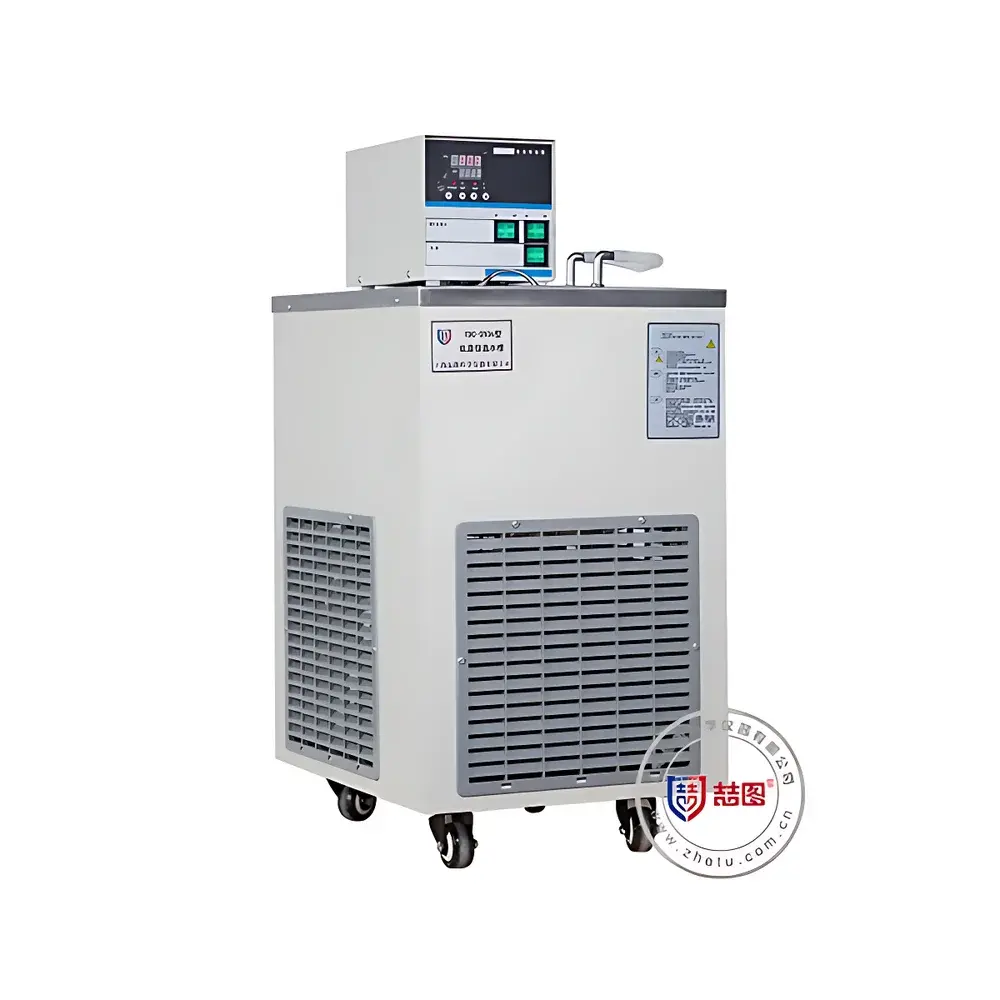
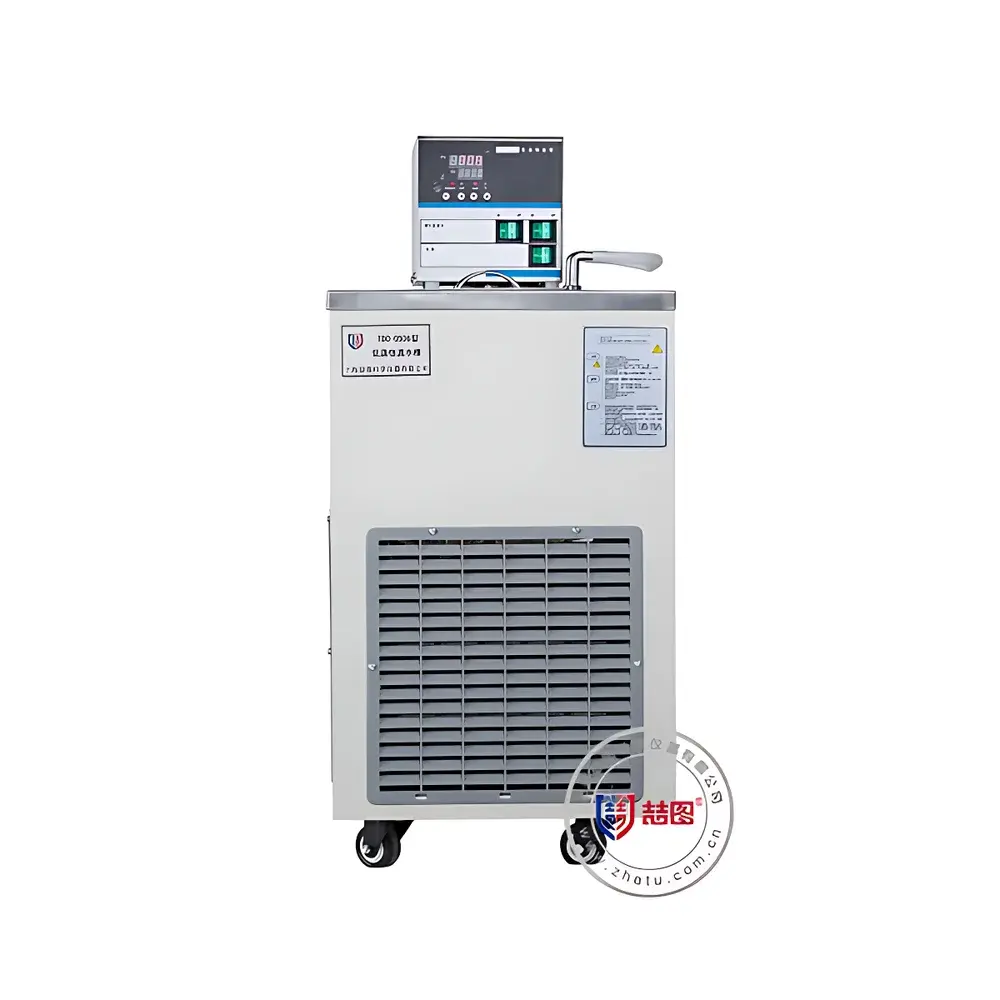
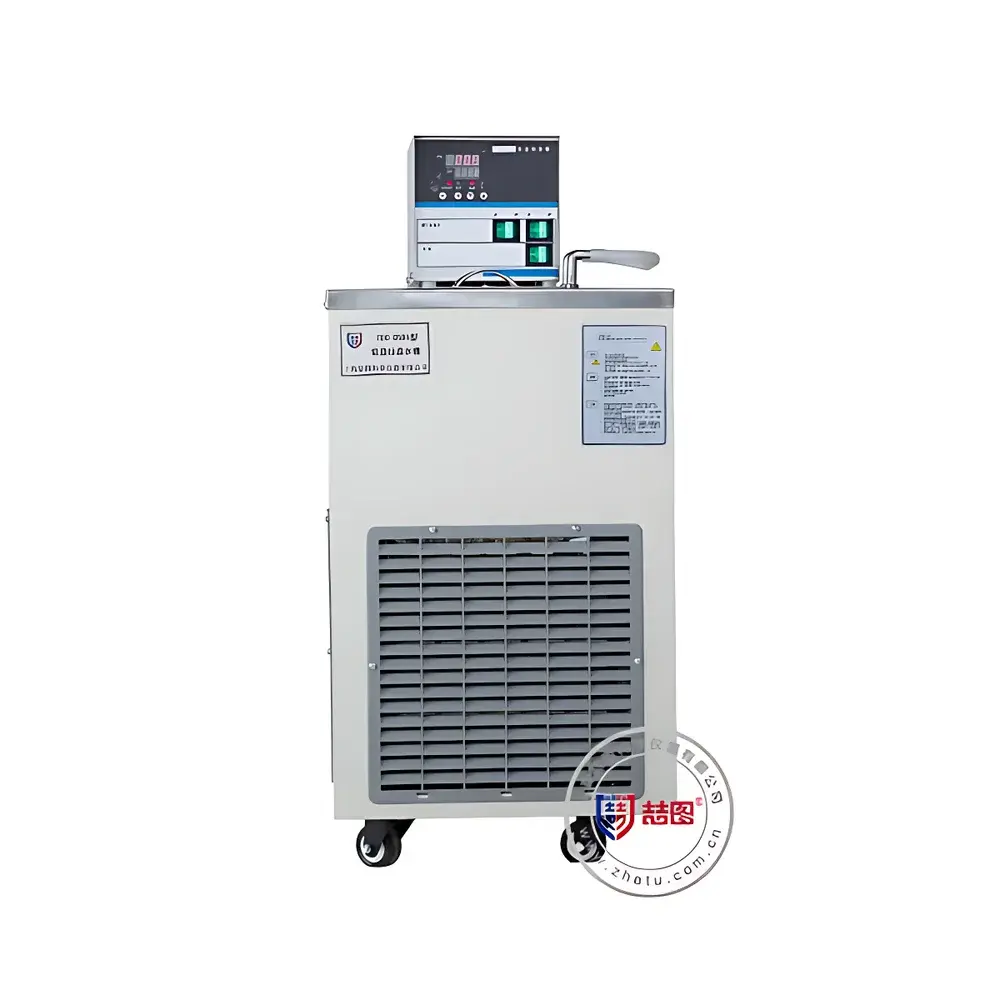
DRETOP TDC-1006 Low-Temperature Constant-Temperature Bath
| Brand | DRETOP |
|---|---|
| Origin | Shanghai, China |
| Manufacturer Type | Direct Manufacturer |
| Product Category | Domestic |
| Model | TDC-1006 |
| Instrument Type | Circulating Constant-Temperature Bath |
| Circulation Mode | Internal & External |
| Temperature Control | Refrigeration & Heating |
| Bath Volume | 6 L |
| Temperature Range | −10 °C to 100 °C |
| Temperature Stability | ±1 °C |
| Temperature Resolution | 0.1 °C |
| Power Supply | 220 V, 50 Hz |
| Refrigeration Capacity (at 20 °C) | 800 W |
| Pump Flow Rate | 13 L/min |
| Construction | Stainless Steel Interior & Deck, Powder-Coated Exterior |
Overview
The DRETOP TDC-1006 Low-Temperature Constant-Temperature Bath is a precision-engineered circulating thermal bath designed to deliver stable, uniform temperature control across a broad operational range—from sub-zero cooling (−10 °C) to high-temperature heating (100 °C). Built on a dual-mode thermoregulation architecture, it integrates a hermetically sealed refrigeration compressor with a high-efficiency resistive heating system, enabling seamless transition between cooling and heating modes without manual intervention. Unlike passive water baths, the TDC-1006 actively circulates temperature-controlled fluid via a robust centrifugal pump, ensuring spatial homogeneity (<±0.5 °C typical deviation across bath volume) and minimizing thermal stratification. Its primary function is to serve as a calibrated external thermal source or sink for experimental apparatus—such as viscometers, spectrophotometers, calorimeters, and reaction blocks—where precise thermal conditioning of samples, sensors, or ancillary components is required. The unit complies with fundamental thermal management requirements outlined in ISO/IEC 17025 for calibration laboratories and supports traceable temperature control protocols under GLP environments.
Key Features
- Stainless steel inner tank and top deck (AISI 304), corrosion-resistant and compatible with aqueous, glycol–water mixtures, and low-concentration organic solvents;
- Hermetically sealed refrigeration system with dual-stage overheat and overcurrent protection, certified to IEC 60335-1 safety standards;
- Bi-directional circulation architecture: internal recirculation (via integrated inlet/outlet ports) and external loop capability (via 10 mm OD quick-connect fittings);
- LED-backlit digital controller with real-time display of setpoint, actual bath temperature, and system status; standard resolution 0.1 °C (optional U-series upgrade to 0.01 °C, M-series to 0.001 °C);
- Thermally optimized insulation layer minimizes ambient heat exchange, improving energy efficiency and long-term stability during extended operation;
- Modular design accommodates integration into automated test benches—compatible with analog (0–10 V / 4–20 mA) and digital (RS485 Modbus RTU) process interfaces upon request.
Sample Compatibility & Compliance
The TDC-1006 supports a wide range of working media: deionized water (5–85 °C), 15% (v/v) glycerol–water solution (85–95 °C), and silicone oil (up to 100 °C, subject to viscosity constraints). It is routinely deployed in ASTM D2196 (viscosity measurement), ISO 2555 (solution viscosity), and USP environmental monitoring workflows. All wetted surfaces meet FDA-compliant material specifications (21 CFR 177.2600), and the unit’s temperature logging functionality—when paired with optional data acquisition software—supports audit-ready records compliant with 21 CFR Part 11 (electronic signatures and audit trails). CE marking confirms conformity with EU Machinery Directive 2006/42/EC and Electromagnetic Compatibility Directive 2014/30/EU.
Software & Data Management
While the base configuration operates via standalone front-panel control, optional PC-based software enables remote parameter setting, real-time temperature graphing, and scheduled ramp/soak profiles. Data export is supported in CSV format for post-processing in MATLAB, Python (NumPy/Pandas), or LIMS platforms. The embedded controller logs timestamped temperature values at user-defined intervals (1 s to 60 min), retaining up to 30 days of continuous history in non-volatile memory. For regulated environments, firmware versions with password-protected administrator mode, electronic signature prompts, and immutable event logs are available to satisfy GxP documentation requirements.
Applications
- Calibration of temperature-sensitive analytical instruments (e.g., refractometers, densitometers, and pH meters);
- Thermal conditioning of optical cells and cuvettes prior to UV-Vis or FTIR spectroscopy;
- Controlled-rate cooling/heating of polymer samples during DSC pre-conditioning or rheological pretreatment;
- Stabilization of laser diodes, photodetectors, and other optoelectronic components during performance testing;
- Supporting ASTM E2251 (standard practice for calibration of liquid-in-glass thermometers) and ISO 17025-accredited reference temperature baths;
- Cell culture incubator validation, where auxiliary cold/hot plates require synchronized thermal referencing.
FAQ
What fluids are compatible with the TDC-1006 at −10 °C?
Deionized water with 30% (v/v) ethylene glycol or propylene glycol is recommended. Avoid methanol or acetone due to material compatibility risks.
Can the TDC-1006 maintain ±0.1 °C stability during external circulation?
Yes—stability specification holds under both internal and external loop configurations when flow resistance remains below 0.5 bar and tubing length does not exceed 3 m.
Is the unit suitable for continuous 24/7 operation?
Yes. Rated for Class B continuous-duty operation per IEC 60034-1, with thermal cutouts and compressor duty-cycle management to prevent overheating.
Does the TDC-1006 support external temperature feedback from a probe placed in the sample vessel?
Not natively—but optional PID cascade control modules (sold separately) accept external PT100 input for sample-point referenced regulation.
What maintenance intervals are recommended?
Compressor oil inspection every 24 months; condenser coil cleaning every 6 months in dusty environments; annual verification of temperature sensor calibration using NIST-traceable reference standards.



