
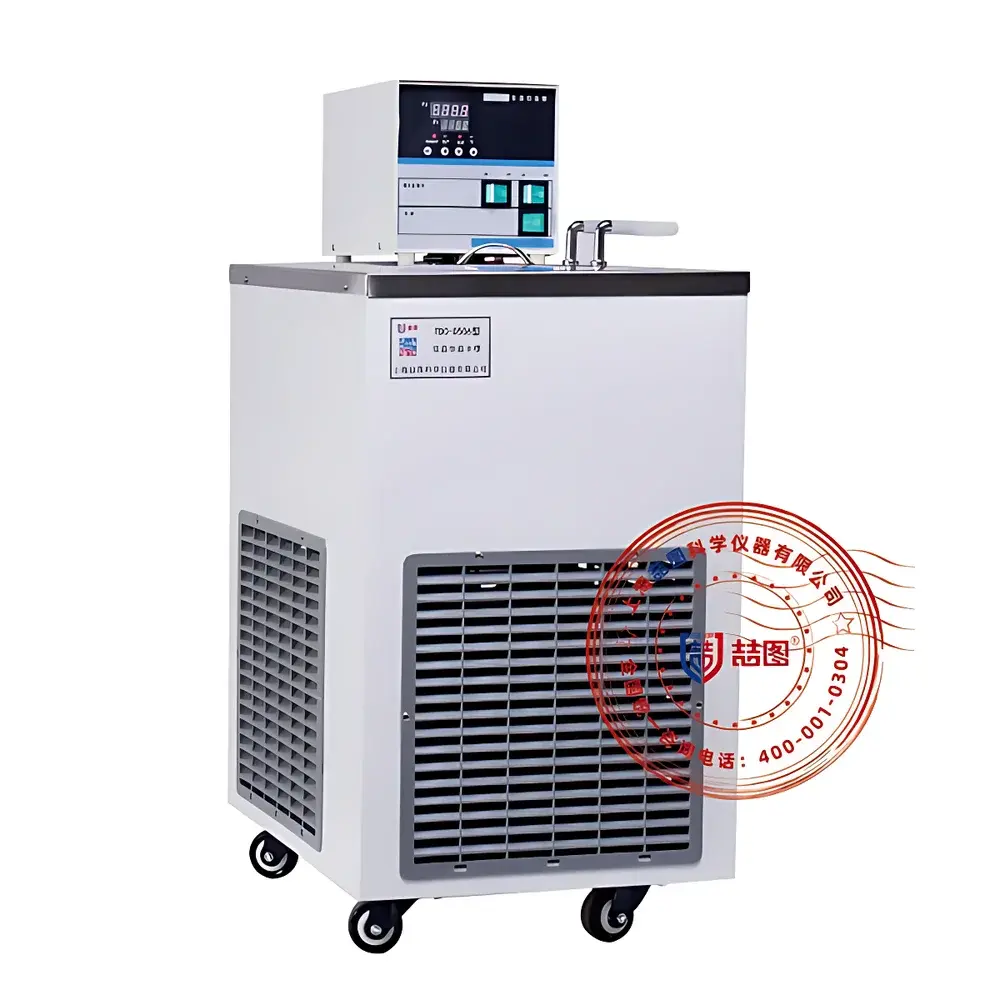
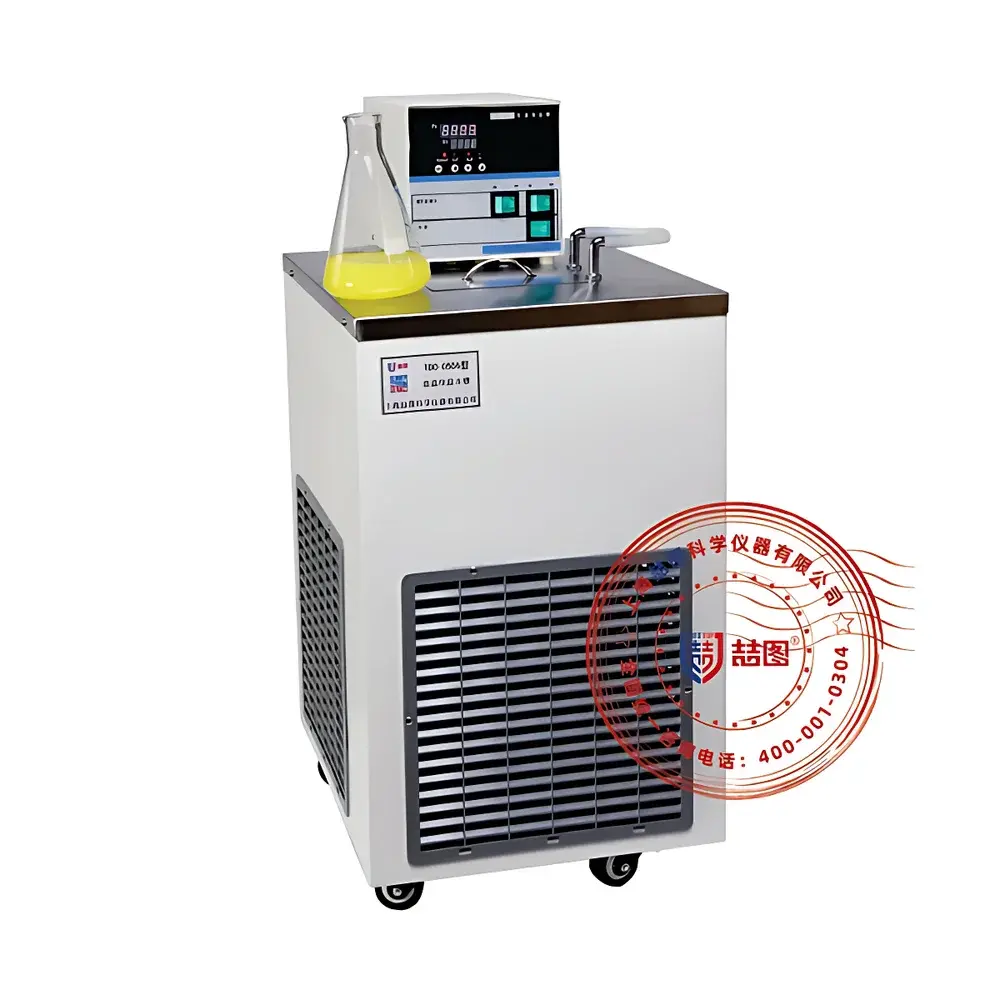
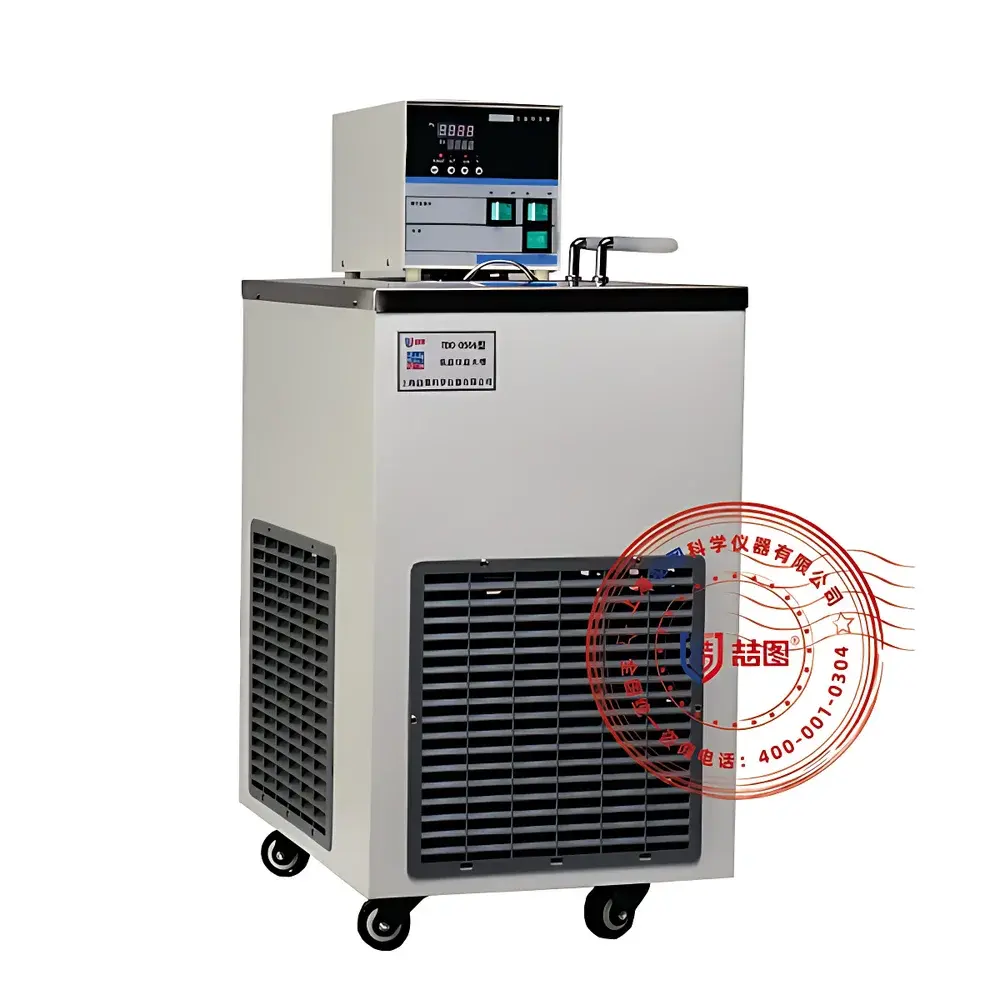
DRETOP TDC-1015 Precision Low-Temperature Circulating Bath
| Brand | DRETOP |
|---|---|
| Origin | Shanghai, China |
| Manufacturer Type | OEM/ODM Manufacturer |
| Product Category | Domestic |
| Model | TDC-1015 |
| Instrument Type | Circulating Temperature Bath |
| Circulation Mode | Internal & External Loop |
| Temperature Control | Refrigeration + Heating |
| Bath Volume | 15 L |
| Temperature Range | −10 °C to 100 °C |
| Temperature Stability | ±1 °C |
| Temperature Resolution | 0.1 °C |
| Power Supply | 220 V, 50 Hz |
Overview
The DRETOP TDC-1015 Precision Low-Temperature Circulating Bath is a compact, benchtop-compatible temperature control system engineered for laboratory and industrial applications requiring stable, uniform thermal environments across a broad operational range (−10 °C to 100 °C). Utilizing a dual-mode refrigeration–heating thermodynamic cycle with high-efficiency compressors and PID-driven digital temperature regulation, the unit delivers precise thermal management for external equipment integration or direct sample immersion. Its horizontal footprint minimizes bench space usage while maintaining full functional capability—ideal for integration with reaction vessels, condensers, automated synthesis platforms, extraction systems, and material testing apparatuses. The bath employs a closed-loop circulation architecture with corrosion-resistant 304 stainless steel reservoir and internal components, ensuring long-term reliability under repeated thermal cycling and diverse heat transfer fluid chemistries.
Key Features
- Intuitive 4.3-inch color LCD touchscreen interface with programmable PID temperature control algorithm for rapid setpoint acquisition and minimal overshoot.
- Robust construction: electrostatically sprayed powder-coated exterior housing and seamless 304 stainless steel inner tank and work surface—resistant to chemical exposure, easy to sanitize, and compliant with ISO 14644 cleanroom-compatible maintenance protocols.
- Dual-circulation capability: internal recirculation via integrated low-heat-generation centrifugal pump; external loop enabled by quick-connect inlet/outlet ports (standard 10 mm OD barbed fittings) for remote temperature control of reactors, jackets, or analytical instrumentation.
- Integrated safety architecture including over-temperature cutoff, low-level liquid detection, compressor overheat protection, current surge monitoring, and automatic power-fail recovery with memory retention.
- Optimized fluid dynamics: multi-port U-shaped return manifold design ensures turbulent, homogeneous flow distribution—achieving ≤±1 °C spatial uniformity across the entire 15 L working volume without hot/cold stratification.
Sample Compatibility & Compliance
The TDC-1015 supports a wide spectrum of heat transfer media—including deionized water, ethylene glycol/water mixtures (1:1 to 1:3 v/v), anhydrous ethanol (≥99.5%), isopropanol, and specialty low-temperature silicone-based fluids—subject to compatibility with stainless steel (ASTM A240 Type 304) and standard lab-grade elastomers (e.g., EPDM, Viton). Users must observe fundamental thermal fluid selection criteria: freezing point maximum operating temperature; flash point ≥13 °C for safe operation in non-classified laboratories per NFPA 30 and OSHA 1910.106 guidelines. The unit complies with IEC 61000-6-3 (EMC emissions) and IEC 61000-6-2 (immunity), and meets CE marking requirements for electrical safety (EN 61010-1:2010). Optional calibration documentation traceable to NIST standards is available upon request for GLP/GMP-regulated environments.
Software & Data Management
While the TDC-1015 operates autonomously via its embedded controller, optional RS485/Modbus RTU communication enables integration into centralized lab automation networks (e.g., LabVantage, Thermo Fisher SampleManager). Real-time temperature logging, alarm event timestamping, and user-accessible parameter history support audit readiness per FDA 21 CFR Part 11 when paired with validated third-party SCADA software. All temperature setpoints, ramp rates, hold durations, and safety thresholds are password-protected and logged with operator ID and timestamp—facilitating full traceability during quality assurance reviews or regulatory inspections.
Applications
- Controlled-temperature testing of polymer viscoelasticity, phase transitions, and crystallization kinetics in materials science labs.
- Thermal conditioning of HPLC columns, GC injectors, and spectrophotometer cuvettes to minimize baseline drift and improve measurement reproducibility.
- Stabilization of laser diodes, photodetectors, and cryogenic sensors in optical metrology setups.
- Process validation support for pharmaceutical dissolution testing (USP ) and stability chambers (ICH Q1A–Q1E).
- Calibration of thermocouples, RTDs, and infrared thermometers against reference-grade baths per ASTM E74 and ISO/IEC 17025 requirements.
FAQ
What heat transfer fluids are recommended for operation at −10 °C?
Ethylene glycol/water (1:2 v/v) provides optimal balance of freeze protection (≈−35 °C), viscosity, and chemical inertness. Anhydrous ethanol (≥99.5%) is acceptable but requires ventilation due to flammability (flash point = 13 °C).
Can the TDC-1015 maintain ±0.1 °C stability at 100 °C?
The standard model guarantees ±1 °C stability across its full range; for sub-0.1 °C performance at elevated temperatures, consider the TDC-1015U variant equipped with ultra-stable PID tuning and enhanced thermal shielding.
Is external circulation compatible with glass-jacketed reactors?
Yes—provided reactor inlet/outlet ports accept 10 mm OD tubing and maximum backpressure remains below 1.2 bar (typical for jacketed vessels ≤5 L volume).
How often should the heat transfer fluid be replaced?
Deionized water: every 3–6 months. Ethylene glycol solutions: annually or if discoloration or microbial growth is observed. Ethanol/isopropanol: replace immediately upon odor change or visible oxidation.
Does the unit include a drain valve for fluid replacement?
Yes—a front-mounted, PTFE-sealed drain valve enables complete reservoir evacuation without disassembly, supporting routine maintenance and cross-contamination prevention between experiments.



