
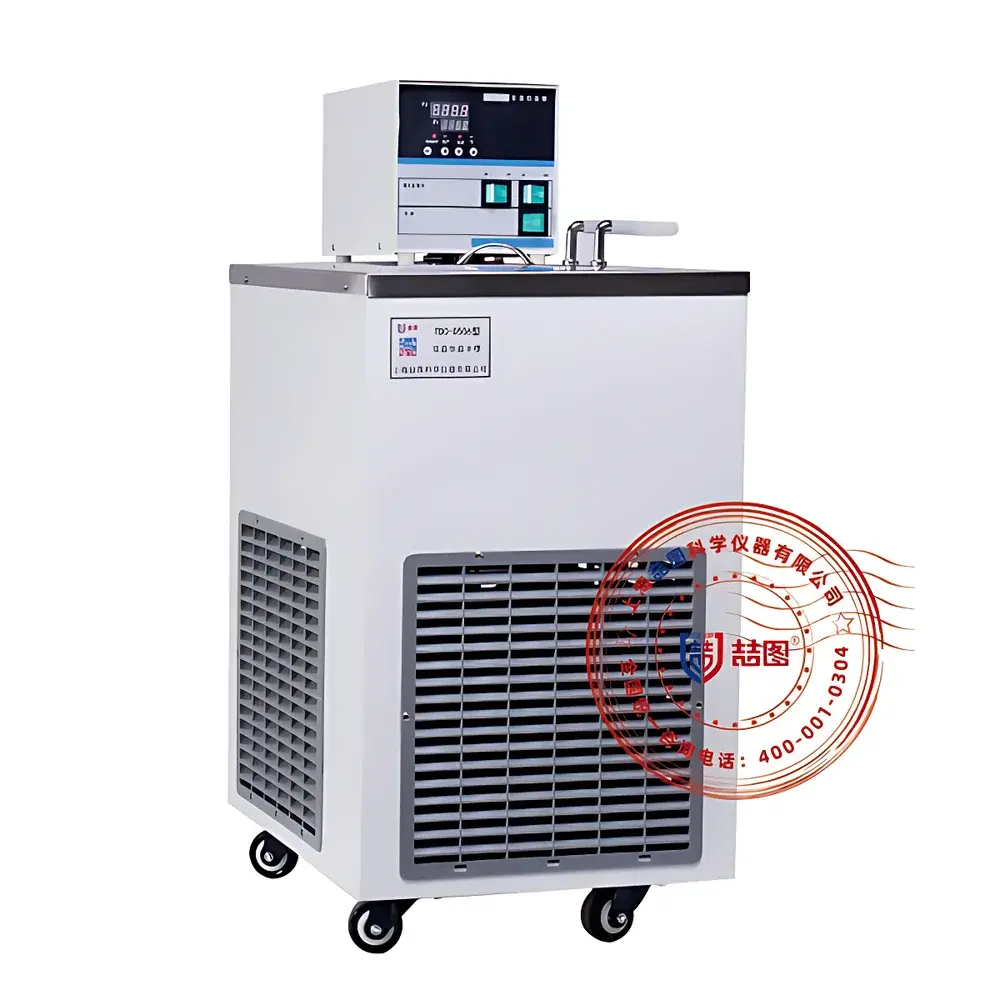
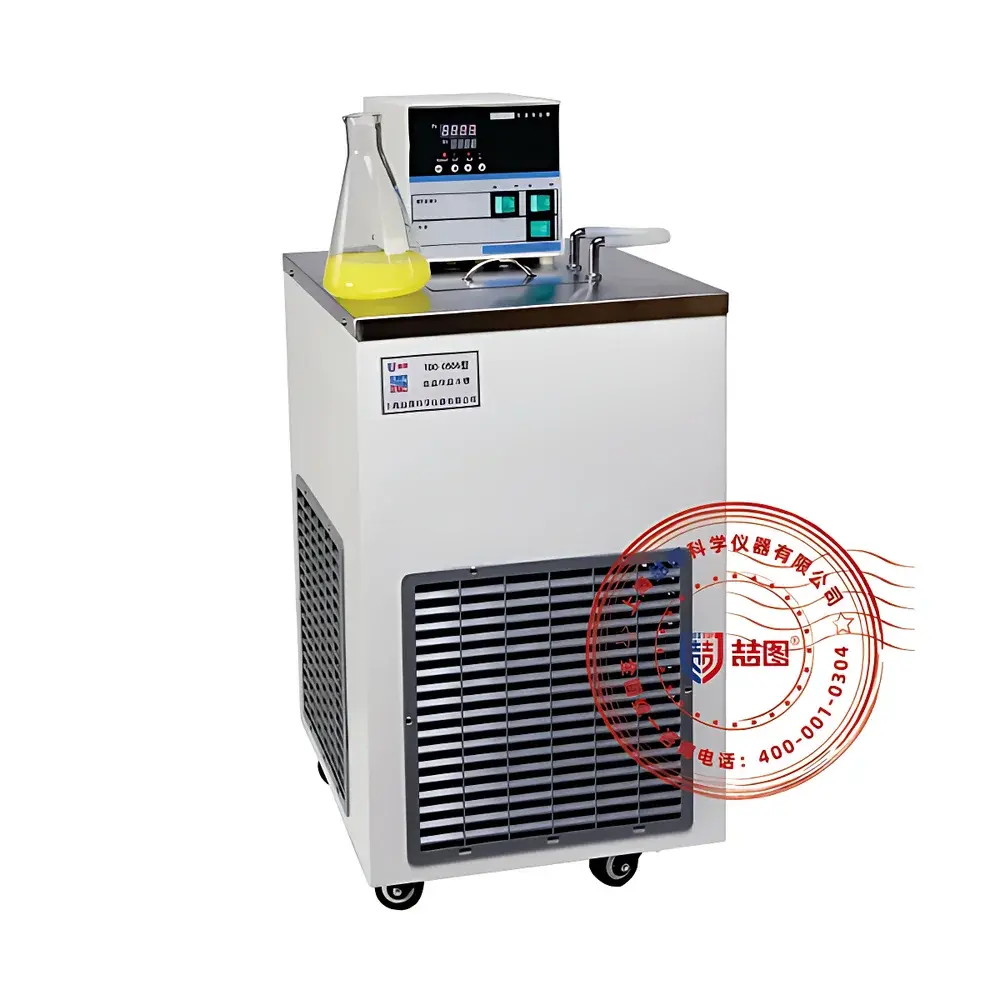
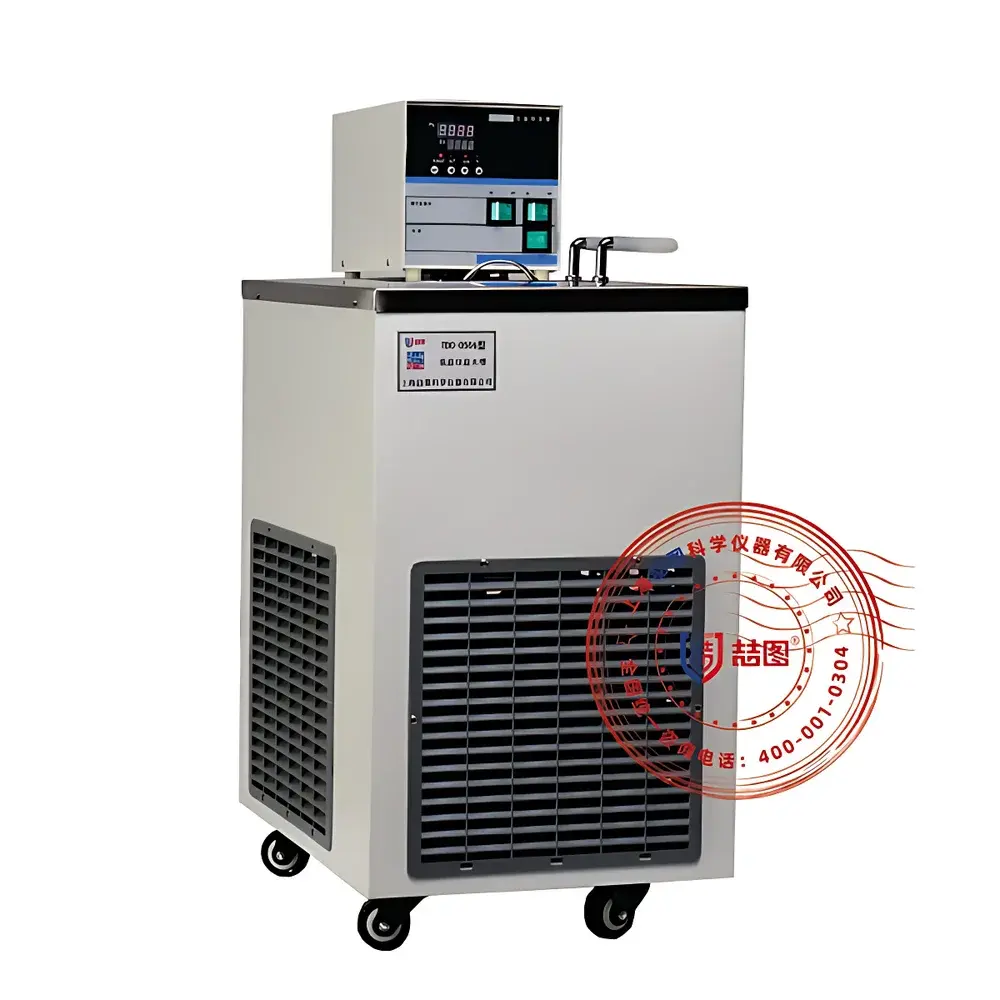
DRETOP TDC-1020 Low-Temperature Constant-Temperature Bath
| Brand | DRETOP |
|---|---|
| Origin | Shanghai, China |
| Manufacturer Type | Direct Manufacturer |
| Product Category | Domestic |
| Model | TDC-1020 |
| Instrument Type | Constant-Temperature Bath |
| Circulation Mode | Internal & External |
| Temperature Control | Refrigeration & Heating |
| Bath Volume | 20 L |
| Temperature Range | −10 °C to 100 °C |
| Temperature Stability | ±1 °C |
| Temperature Resolution | 0.1 °C |
| Power Supply | 220 V, 50 Hz |
Overview
The DRETOP TDC-1020 Low-Temperature Constant-Temperature Bath is a precision-engineered, self-contained thermal management system designed to deliver stable, uniform, and controllable liquid-phase temperature environments for laboratory and industrial applications. Utilizing a dual-mode compressor-based refrigeration circuit coupled with PID-regulated resistive heating, the unit maintains setpoint accuracy across its full operational range (−10 °C to 100 °C) without requiring external chiller or heater integration. Its horizontal footprint optimizes benchtop space utilization while supporting both direct immersion experiments and external temperature control of ancillary equipment—including reaction vessels, condensers, automated synthesis platforms, and extraction systems—via integrated internal/external circulation pathways. The bath’s thermally isolated stainless steel tank, low-heat-generation centrifugal circulation pump, and U-shaped turbulent flow channel design collectively ensure high spatial temperature uniformity (±0.5 °C typical) and minimal thermal drift over extended operation.
Key Features
- High-contrast LCD touchscreen interface with intuitive menu navigation and programmable PID temperature control algorithms for rapid stabilization and reduced overshoot.
- 304 stainless steel inner tank and work surface, combined with electrostatically applied corrosion-resistant exterior coating, ensuring long-term durability and ease of decontamination.
- Dual-circuit fluid handling: internal recirculation via silicone tubing for bath homogenization; external loop connection points (inlet/outlet ports) for temperature-controlled cooling/heating of external apparatus.
- Integrated drain valve and dual-purpose cold water inlet/outlet manifold, enabling efficient medium replacement, routine maintenance, and compatibility with diverse heat transfer fluids—including deionized water, ethylene glycol/water mixtures, anhydrous ethanol, and specialty low-temperature oils.
- Comprehensive safety architecture including over-temperature cutoff, low-level fluid detection, compressor thermal overload protection, and current-fault monitoring—certified to IEC 61010-1 for laboratory electrical safety.
Sample Compatibility & Compliance
The TDC-1020 supports broad sample and vessel compatibility through its chemically inert 304 stainless steel bath chamber and non-reactive fluid path components. It accommodates standard glassware (e.g., round-bottom flasks, jacketed reactors), PTFE-lined containers, and metal process vessels up to 400 mm × 280 mm × 180 mm (W × D × H). Fluid selection must adhere to thermal stability, viscosity, and material compatibility guidelines: for operation between −10 °C and 100 °C, 30–50% ethylene glycol/water solutions are recommended to prevent freezing and boiling while minimizing corrosion risk. The unit complies with ISO/IEC 17025 calibration traceability requirements when used with NIST-traceable reference thermometers and is suitable for GLP/GMP environments where audit-ready temperature logging and alarm event records are maintained per user-defined protocols.
Software & Data Management
While the TDC-1020 operates as a standalone instrument with embedded firmware, optional RS485/Modbus RTU communication enables integration into centralized lab automation networks. When paired with DRETOP’s optional LabLink™ data acquisition module (sold separately), users can log real-time temperature profiles, export CSV-formatted datasets, configure alarm thresholds, and generate compliance reports aligned with FDA 21 CFR Part 11 electronic record requirements—including user authentication, audit trail generation, and immutable timestamping. All temperature setpoints, ramp rates, hold durations, and system status events are stored in non-volatile memory with battery-backed retention for ≥72 hours during power interruption.
Applications
- Calibration of thermocouples, RTDs, and infrared sensors under controlled thermal gradients (ASTM E230, IEC 60584).
- Viscosity measurement support for rotational rheometers and capillary viscometers requiring precise thermal conditioning of test fluids.
- Stability testing of pharmaceutical formulations per ICH Q1A(R2) guidelines, including accelerated degradation studies at defined isothermal conditions.
- Controlled cooling of exothermic chemical reactions in pilot-scale synthesis, minimizing thermal runaway risk.
- Thermal conditioning of optical components, semiconductor wafers, and metrology fixtures prior to dimensional inspection (ISO 230-3).
- Biological incubation support for enzyme kinetics assays, cell culture media pre-equilibration, and cryopreservation workflows requiring sub-zero stabilization.
FAQ
What heat transfer fluids are compatible with the TDC-1020 at −10 °C?
Deionized water is unsuitable below 0 °C; a 40:60 (v/v) ethylene glycol/water mixture is recommended—providing a freezing point of approximately −25 °C while maintaining low viscosity and minimal corrosion potential.
Can the TDC-1020 be used for external circulation with a 5-L jacketed reactor?
Yes—the unit’s external loop delivers ≥12 L/min flow rate at ≤0.2 bar backpressure, sufficient for most standard jacketed glass reactors; verify reactor jacket volume and pressure rating before commissioning.
Is temperature uniformity validated across the entire 20-L bath volume?
Per factory verification using nine-point probe mapping (per ISO 17025 Annex A.3), spatial uniformity is ≤±0.5 °C at 25 °C and ≤±0.8 °C at −10 °C and 100 °C, measured at 50 mm intervals within the working zone.
Does the unit support remote monitoring via Ethernet or Wi-Fi?
No native Ethernet/Wi-Fi interface is included; connectivity requires the optional LabLink™ module with RS485-to-Ethernet gateway configuration.
What maintenance schedule is recommended for optimal long-term performance?
Fluid replacement every 3–6 months (water/glycol), biannual inspection of condenser coil cleanliness, annual verification of PID tuning parameters, and replacement of silicone circulation tubing every 24 months under continuous operation.



