
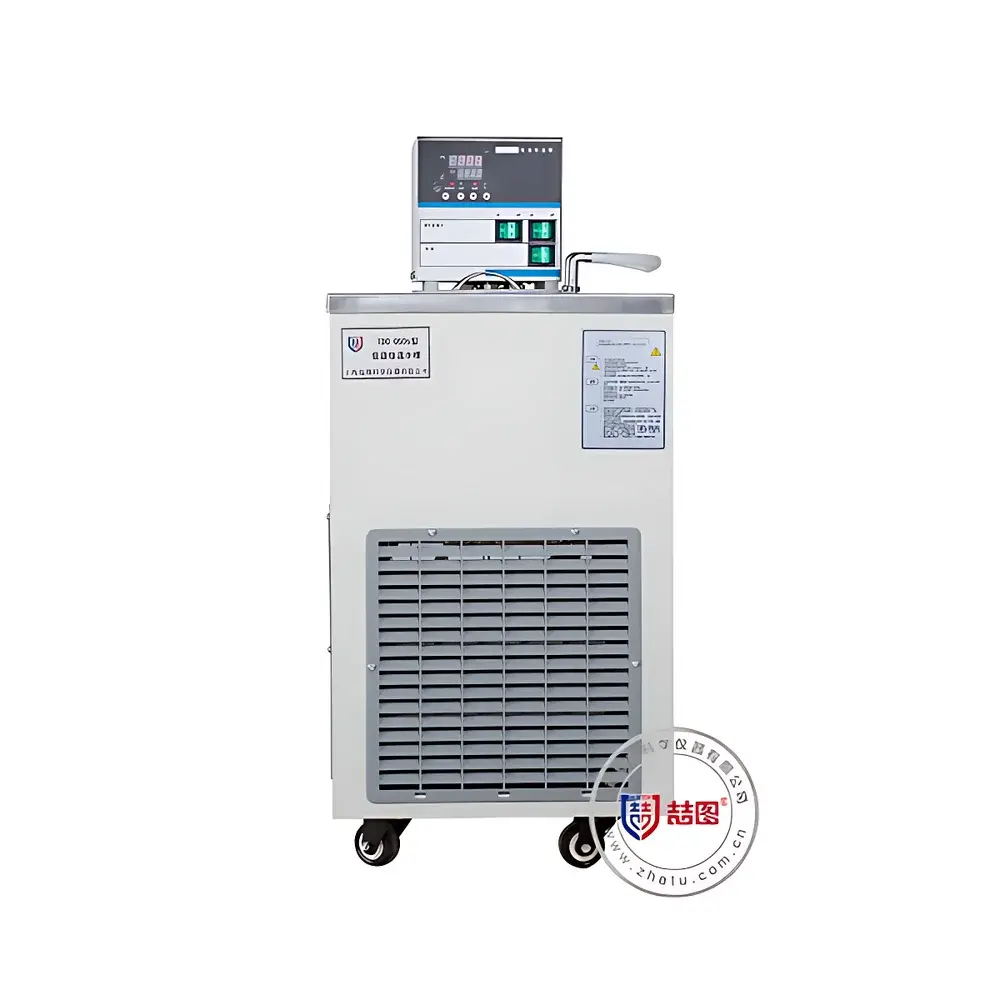
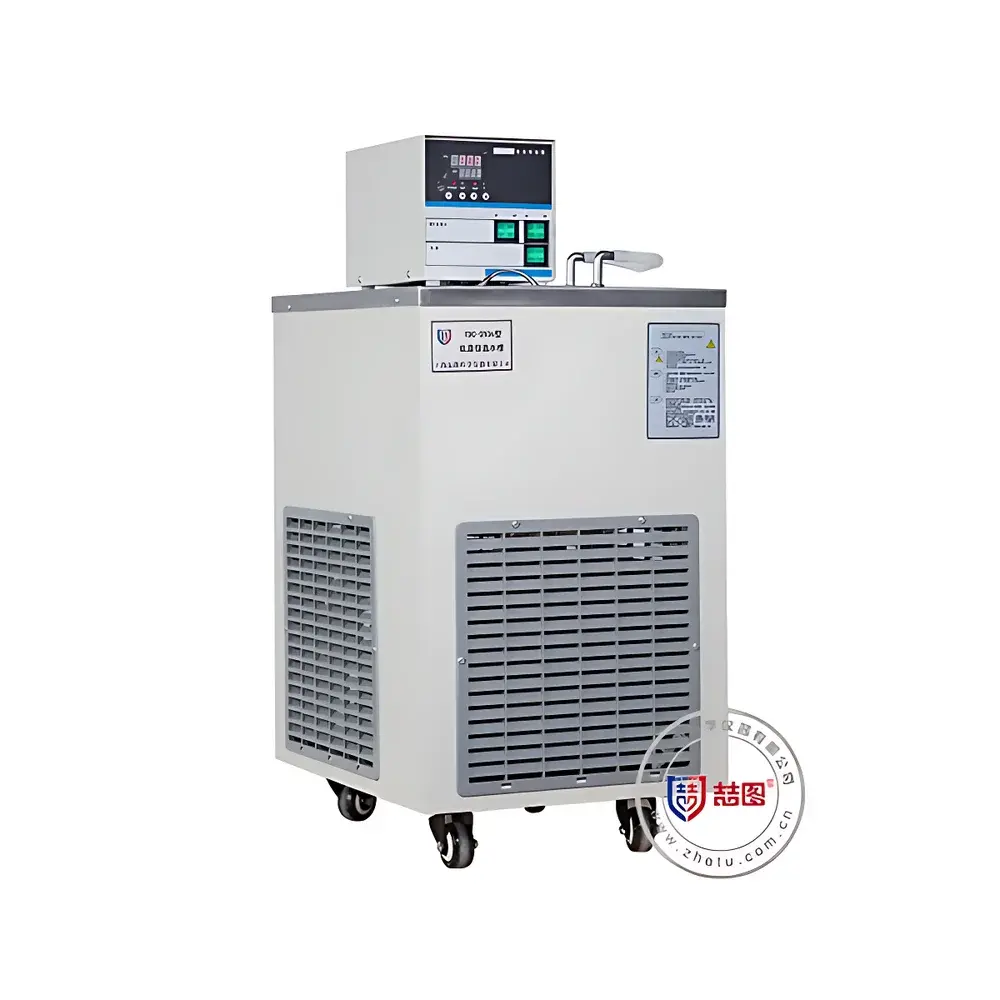
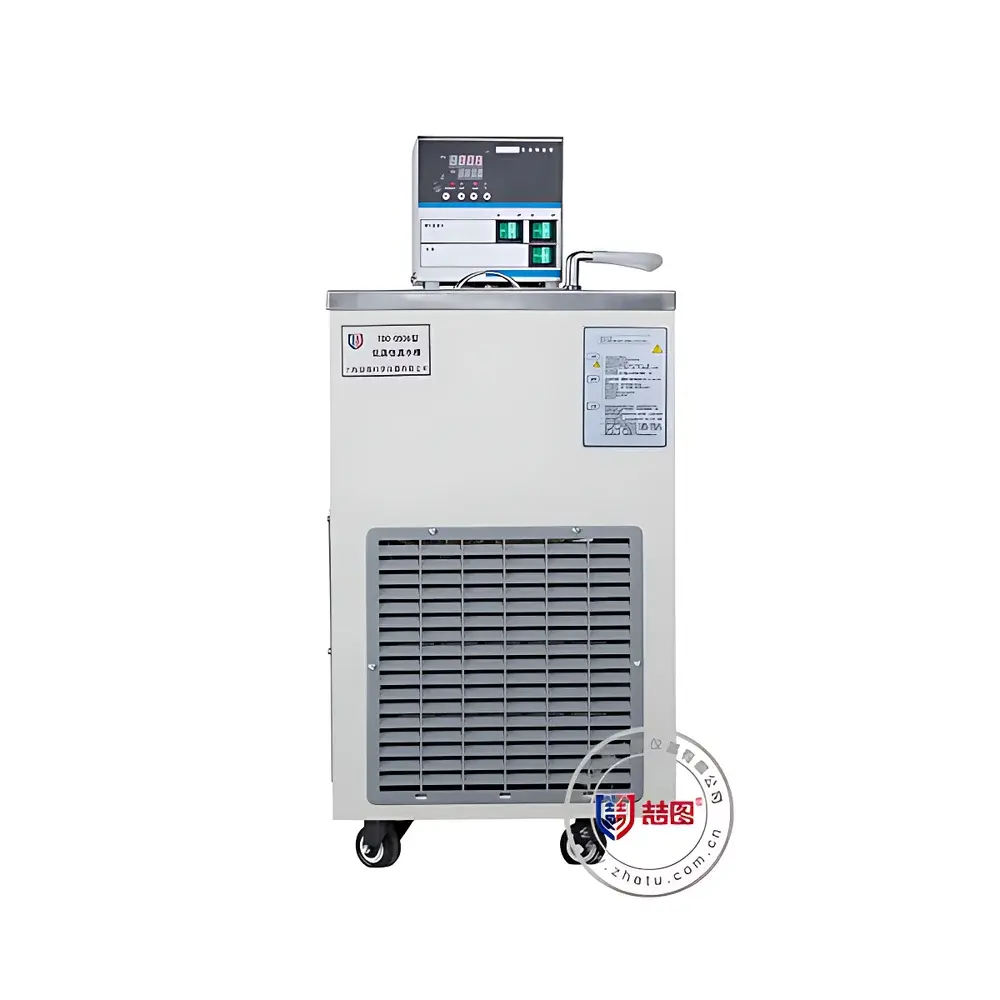
DRETOP TDC-2006 Low-Temperature Constant-Temperature Bath
| Brand | DRETOP |
|---|---|
| Origin | Shanghai, China |
| Manufacturer Type | Direct Manufacturer |
| Product Category | Domestic |
| Model | TDC-2006 |
| Instrument Type | Circulating Constant-Temperature Bath |
| Circulation Mode | Internal & External |
| Temperature Control | Refrigeration & Heating |
| Bath Capacity | 6 L |
| Temperature Range | −20 °C to 100 °C |
| Temperature Stability | ±1 °C |
| Temperature Resolution | 0.1 °C |
| Power Supply | 220 V, 50 Hz |
| Refrigeration Capacity (at 20 °C) | 1200 W |
| Pump Flow Rate | 13 L/min |
| Inner Chamber Dimensions (L×W×D) | 200 × 200 × 180 mm |
| Opening Dimensions | 180 × 140 mm |
| Construction | Full Stainless Steel Interior & Work Surface, Powder-Coated Exterior |
Overview
The DRETOP TDC-2006 Low-Temperature Constant-Temperature Bath is a precision-engineered circulating thermal bath system designed to deliver stable, uniform temperature control across a broad operational range—from −20 °C to +100 °C. It integrates a hermetically sealed refrigeration compressor with dual-mode heating and cooling capability, enabling rapid thermal equilibration and high reproducibility in both laboratory and industrial process environments. Unlike passive water baths, the TDC-2006 employs active liquid circulation via a robust magnetic-drive centrifugal pump (13 L/min flow rate), ensuring consistent thermal distribution within the 6 L stainless steel chamber and facilitating external temperature control of auxiliary equipment through dedicated inlet/outlet ports. Its design adheres to fundamental thermodynamic principles governing heat transfer in forced-convection fluid systems, making it suitable for applications requiring traceable, repeatable thermal conditioning—particularly where ambient drift or localized thermal gradients must be minimized.
Key Features
- Full stainless steel interior tank and work surface—resistant to corrosion from water, glycol solutions, and mild chemical exposure; compatible with long-term use of aqueous and 15% glycerol–water mixtures up to 95 °C.
- Hermetically sealed refrigeration system with overheat and overcurrent protection circuits—ensuring operational safety and extended compressor service life under continuous duty cycles.
- Dual circulation mode: internal recirculation (via connected inlet/outlet ports) for enhanced bath homogeneity; external circulation (via flexible tubing) to regulate temperature of external reactors, spectrophotometer cells, or sensor calibration fixtures.
- LED-backlit digital controller with real-time temperature display and adjustable setpoint resolution (standard 0.1 °C; optional upgrades to 0.01 °C or 0.001 °C available upon configuration).
- Compact horizontal footprint (200 × 200 × 180 mm internal volume; 180 × 140 mm opening)—optimized for benchtop integration without compromising accessibility or thermal performance.
- Integrated condensate management: dedicated inlet and outlet connections for external chiller loop integration or dehumidification support in high-humidity lab environments.
Sample Compatibility & Compliance
The TDC-2006 accommodates a wide variety of sample containers—including glass beakers, metal reaction vessels, quartz cuvettes, and jacketed bioreactors—provided external dimensions fit within the 180 × 140 mm bath opening and immersion depth remains within the 180 mm working height. It supports common thermal media such as deionized water (5–85 °C), 15% glycerol–water solution (85–95 °C), and silicone oil (up to 100 °C, subject to viscosity and flash point verification). While not certified to ISO/IEC 17025 or ASTM E2877 for metrological validation out-of-the-box, the system’s architecture permits integration into GLP/GMP workflows when paired with external NIST-traceable thermometry and documented calibration procedures. Its electrical design conforms to IEC 61010-1:2010 for laboratory equipment safety, and all wiring complies with CE marking requirements for EMC and low-voltage directives.
Software & Data Management
The standard TDC-2006 operates via an embedded microcontroller-based interface with no onboard data logging or PC connectivity. However, analog output (0–5 V or 4–20 mA) is available on request for integration with SCADA systems, PLCs, or third-party DAQ hardware (e.g., National Instruments USB-6009). For regulated environments requiring audit trails, users may deploy external temperature loggers compliant with FDA 21 CFR Part 11—such as those from Omega Engineering or Testo—paired with validated CSV export protocols. Firmware updates are performed manually via USB interface (optional accessory); no remote cloud access or proprietary software installation is required or supported.
Applications
- Calibration of thermocouples, RTDs, and infrared sensors against known thermal references per ASTM E220 and ISO 17025 guidelines.
- Viscosity measurement support for rotational rheometers and capillary viscometers requiring precise thermal preconditioning of test fluids.
- Stability testing of pharmaceutical formulations per ICH Q1A(R2), including accelerated degradation studies at controlled sub-zero temperatures.
- Material property characterization—e.g., coefficient of thermal expansion (CTE) measurements via dilatometry, or phase transition analysis using DSC pre-conditioning stages.
- Electronics testing: thermal cycling of PCB assemblies, semiconductor packaging, and optoelectronic components under controlled cold-soak conditions.
- Biological assay incubation support for enzyme kinetics, protein denaturation profiling, and cryopreservation protocol development.
FAQ
What temperature media are recommended for operation between 85 °C and 95 °C?
A 15% (v/v) glycerol–water mixture is recommended to suppress boiling and minimize evaporation while maintaining acceptable viscosity and thermal conductivity.
Can the TDC-2006 maintain ±0.1 °C stability during external circulation?
Yes—stability of ±1 °C is guaranteed under full load with external circulation; achieving ±0.1 °C requires optional high-resolution controller upgrade (U-series) and careful thermal insulation of external tubing.
Is the stainless steel chamber suitable for use with organic solvents?
The 304 stainless steel construction resists alcohols, acetone, and chlorinated solvents short-term; prolonged exposure to halogenated or strongly acidic media is not advised without prior compatibility verification.
Does the unit include a drain valve for maintenance?
Yes—a bottom-mounted brass drain valve facilitates complete fluid evacuation for cleaning, refilling, or seasonal storage.
What is the maximum allowable ambient temperature for continuous operation?
For rated performance and compressor longevity, ambient temperature should not exceed 30 °C with ≥20 cm clearance around all ventilation grilles.
Related Products



