
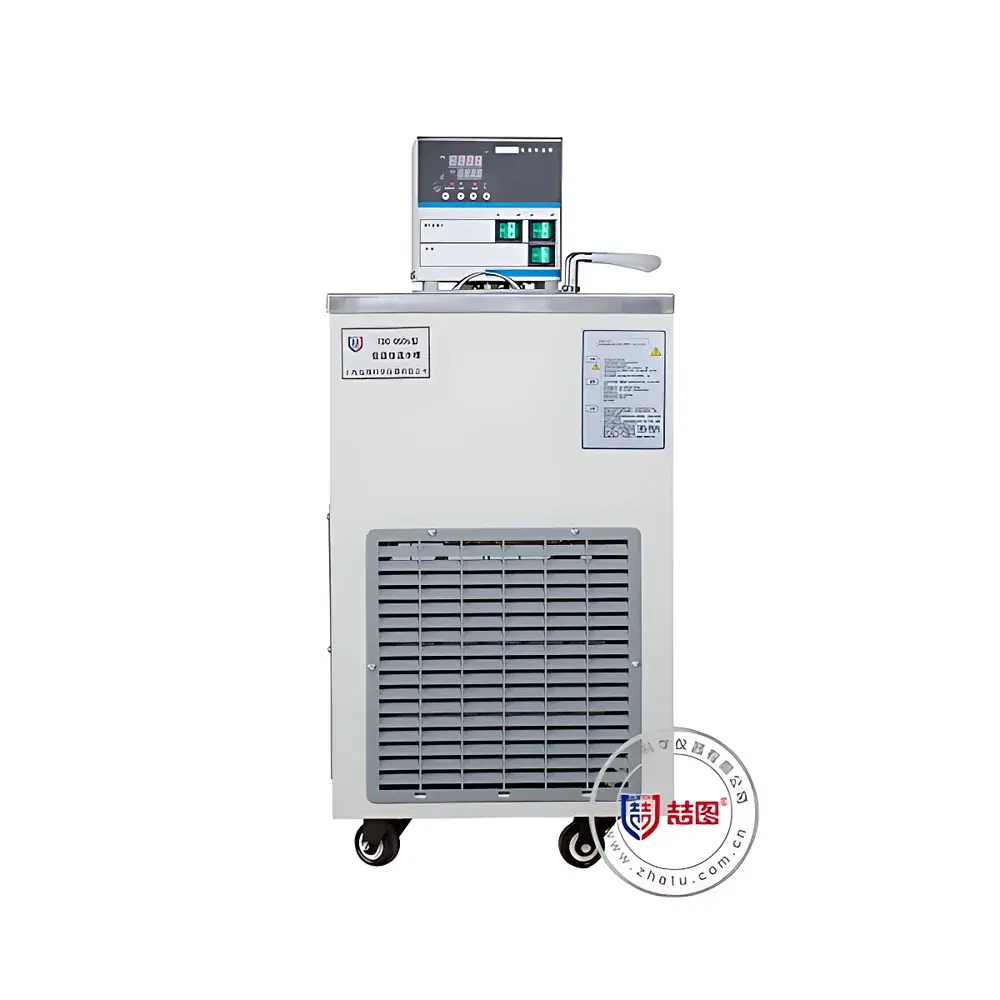
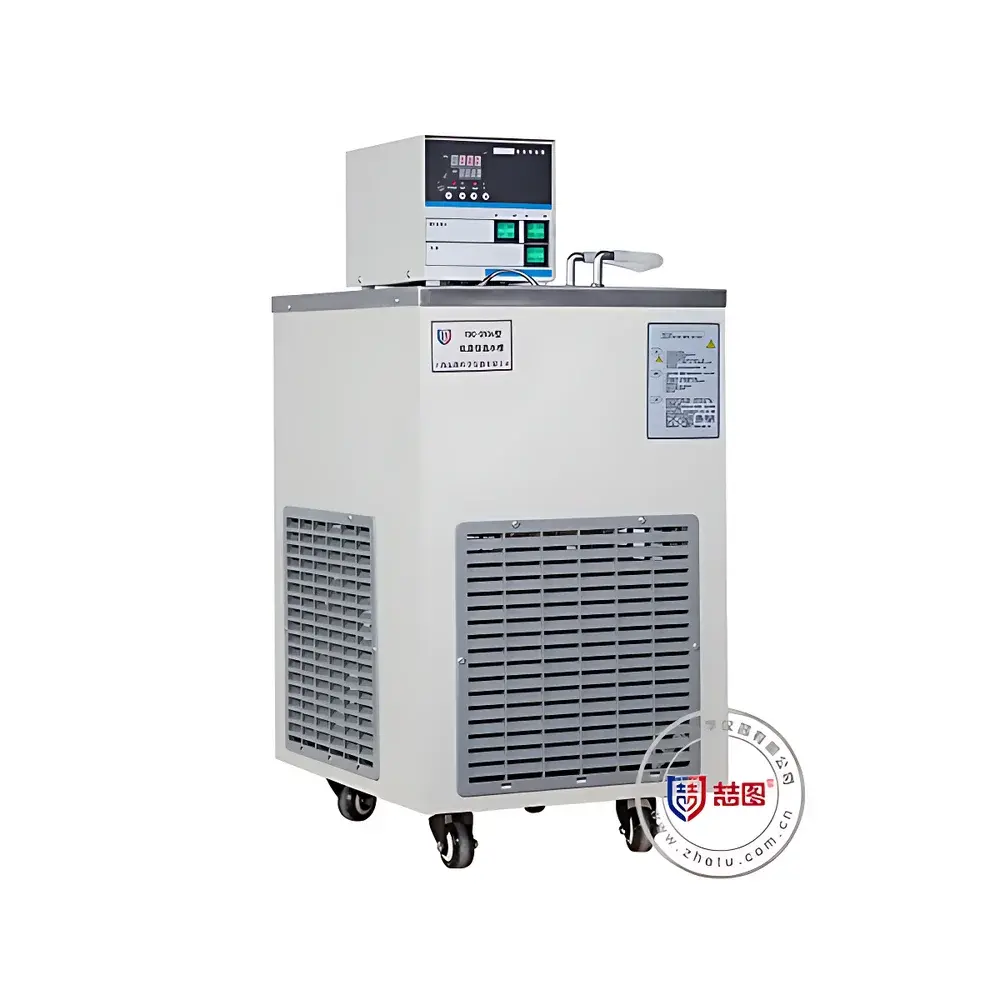
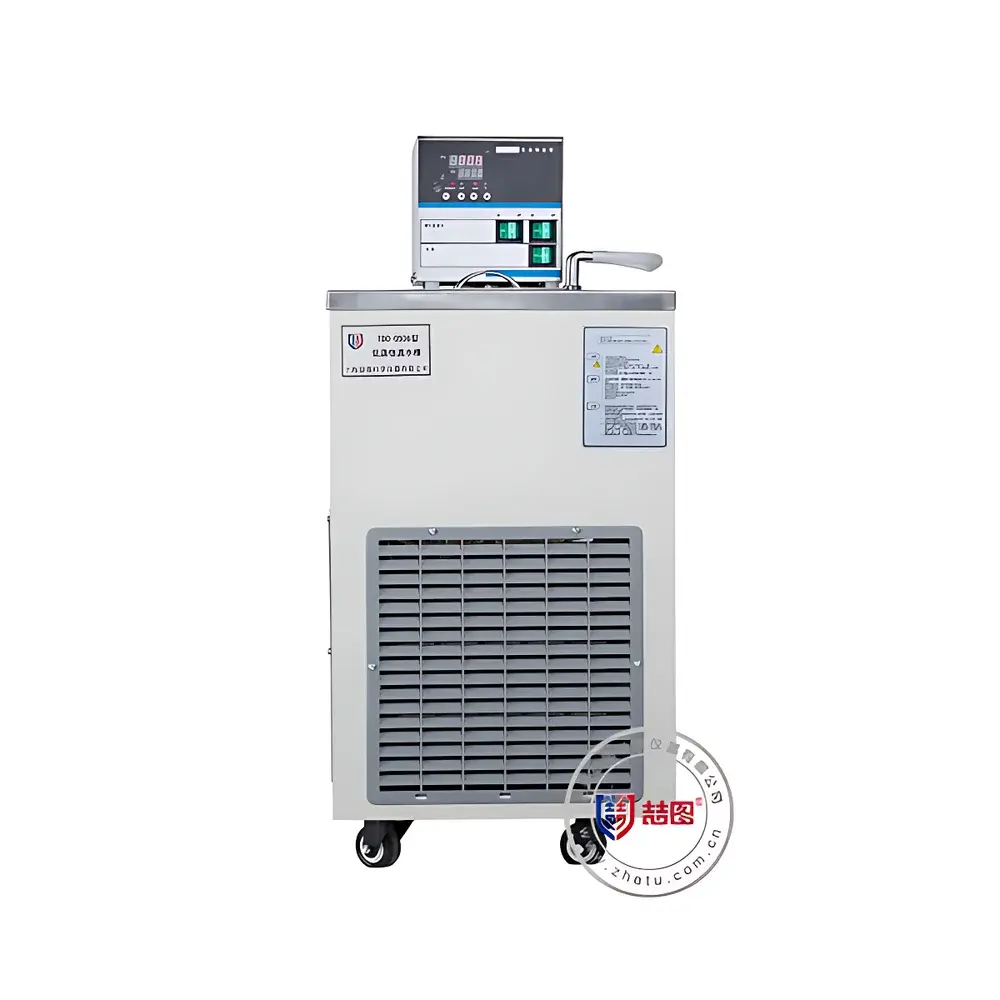
DRETOP TDC-3050 Low-Temperature Constant-Temperature Bath
| Brand | DRETOP |
|---|---|
| Origin | Shanghai, China |
| Manufacturer Type | Direct Manufacturer |
| Country of Origin | China |
| Model | TDC-3050 |
| Instrument Type | Circulating Constant-Temperature Bath |
| Circulation Mode | Internal & External |
| Temperature Control | Refrigeration & Heating |
| Bath Capacity | 50 L |
| Temperature Range | −30 °C to 100 °C |
| Temperature Stability | ±1 °C |
| Temperature Resolution | 0.1 °C |
| Power Supply | 220 V, 50 Hz |
| Refrigeration Capacity at 20 °C (Water) | 5200 W |
| Pump Flow Rate | 13 L/min |
| Internal Dimensions (L×W×D) | 500 × 370 × 300 mm |
| Opening Dimensions | 350 × 300 mm |
| Construction | Full Stainless Steel Interior & Work Surface, Powder-Coated Steel Exterior |
Overview
The DRETOP TDC-3050 Low-Temperature Constant-Temperature Bath is a precision-engineered circulating thermal bath designed to deliver stable, uniform temperature control across a wide operational range—from −30 °C to +100 °C. Built upon a dual-mode refrigeration and heating architecture, it functions as both a high-capacity cold source and a calibrated heat source for laboratory and industrial applications requiring strict thermal management. Its core thermodynamic design integrates a hermetically sealed compressor-based refrigeration system with PID-controlled resistive heating elements, enabling rapid thermal response and sustained setpoint accuracy. The unit is not merely a passive temperature reservoir but an actively regulated thermal environment—capable of maintaining thermal equilibrium in external apparatus via closed-loop circulation or supporting direct immersion experiments within its 50 L stainless steel chamber. This makes it suitable for applications demanding reproducible thermal conditioning—such as calibration of temperature-sensitive sensors, viscosity measurements under controlled thermal gradients, or stabilization of optical benches and analytical instrumentation.
Key Features
- Hermetically sealed refrigeration system with dual overheat and overcurrent protection circuits, ensuring long-term reliability and safe operation under continuous load.
- Full 304 stainless steel interior tank and work surface—resistant to corrosion from water, glycol-water mixtures, and mild chemical exposure; powder-coated carbon steel exterior provides mechanical durability and aesthetic consistency in shared lab environments.
- Dual-mode circulation architecture: internal recirculation (via integrated pump and return path) maintains homogeneity within the bath; external circulation (via dedicated inlet/outlet ports) enables temperature control of secondary systems—including spectrophotometer cells, reaction jackets, or custom test fixtures.
- High-flow centrifugal circulation pump delivering 13 L/min at low backpressure, engineered for minimal pulsation and consistent flow distribution across extended fluid paths.
- LED-backlit digital controller with intuitive menu navigation, real-time temperature display, and user-configurable parameters including ramp rate, hold time, and alarm thresholds.
- Modular fluid compatibility: optimized for deionized water (5–85 °C), 15% aqueous glycerol solution (85–95 °C), or other low-viscosity, non-flammable heat transfer fluids approved for closed-loop use.
Sample Compatibility & Compliance
The TDC-3050 accommodates a broad spectrum of sample configurations—from standard immersion probes and cuvettes to large-volume reactor vessels and custom-built thermal enclosures. Its open-top 350 × 300 mm aperture permits unobstructed access for multi-sensor insertion, stirrer integration, or manual manipulation without compromising thermal stability. The stainless steel construction complies with ISO 8573-1 (compressed air purity) and ASTM E2251-22 (laboratory equipment material compatibility) standards for inert, non-leaching surfaces. While the unit itself is not certified to GLP or GMP Annex 11, its hardware architecture supports full auditability when integrated into validated workflows—particularly when paired with external data loggers compliant with FDA 21 CFR Part 11 requirements for electronic records and signatures. Temperature stability of ±1 °C (at setpoint) meets typical acceptance criteria outlined in USP for thermal validation of analytical instrumentation.
Software & Data Management
The TDC-3050 operates via embedded firmware with no proprietary software dependency—enabling plug-and-play functionality across Windows, macOS, and Linux host systems. RS232 and optional RS485 interfaces support ASCII command protocol for remote parameter setting, real-time temperature streaming, and status interrogation. When deployed in networked lab environments, it can be integrated into centralized monitoring platforms (e.g., LabVIEW, MATLAB, or custom SCADA) using Modbus RTU or simple serial scripting. All temperature logs—including setpoint history, actual bath temperature, and alarm events—are timestamped and storable on external USB drives (via optional adapter). For regulated environments, third-party validation packages are available to document IQ/OQ protocols, including temperature mapping studies per ISO/IEC 17025 and traceable calibration against NIST-traceable reference thermometers.
Applications
- Calibration and verification of thermocouples, RTDs, infrared thermometers, and thermal imaging systems across extended temperature ranges.
- Stabilization of laser diodes, photodetectors, and interferometric optics where thermal drift directly impacts measurement fidelity.
- Controlled-temperature testing of polymer rheology, phase-change materials, and battery electrolyte conductivity.
- Supporting ASTM D2857 (solution viscosity), ISO 3104 (petroleum products), and USP (dissolution apparatus thermal validation) protocols.
- Cell culture incubator pre-conditioning, enzyme kinetics assays, and low-temperature electrophoresis buffer cooling.
- QC/QA thermal soak testing for automotive sensors, aerospace components, and medical device sterilization validation rigs.
FAQ
What is the maximum allowable working temperature when using 15% glycerol-water solution?
The recommended upper limit is 95 °C. Exceeding this may accelerate glycerol degradation and increase vapor pressure beyond safe operating thresholds.
Can the TDC-3050 maintain temperature stability during extended external circulation?
Yes—provided the external loop volume remains ≤ 15 L and tubing diameter ≥ 10 mm, the unit sustains ±1 °C stability at setpoints between −20 °C and 80 °C for durations exceeding 72 hours.
Is the stainless steel tank compatible with 0.1 M HCl or NaOH solutions?
No. While 304 stainless steel resists mild corrosion from neutral aqueous media, prolonged exposure to strong acids or alkalis is not advised. For aggressive chemistry, consult DRETOP’s chemically resistant bath variants (TDC-CR series).
Does the unit include factory calibration documentation?
Each TDC-3050 ships with a Certificate of Conformance and a traceable temperature verification report at three points (−20 °C, 25 °C, 80 °C) referenced to a NIST-traceable platinum resistance thermometer.
What maintenance intervals are recommended for optimal performance?
Compressor oil inspection every 12 months; condenser coil cleaning every 6 months in dusty environments; annual verification of pump seal integrity and refrigerant charge pressure by authorized service personnel.



