
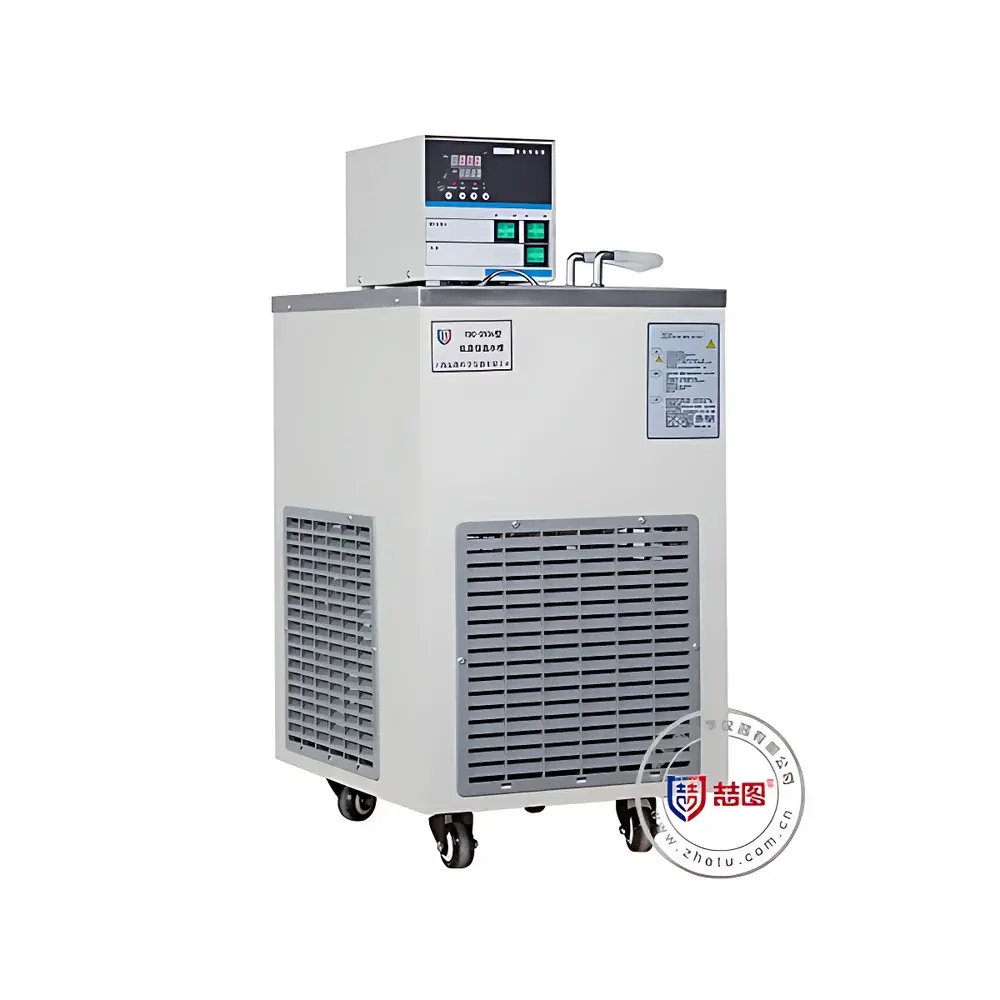
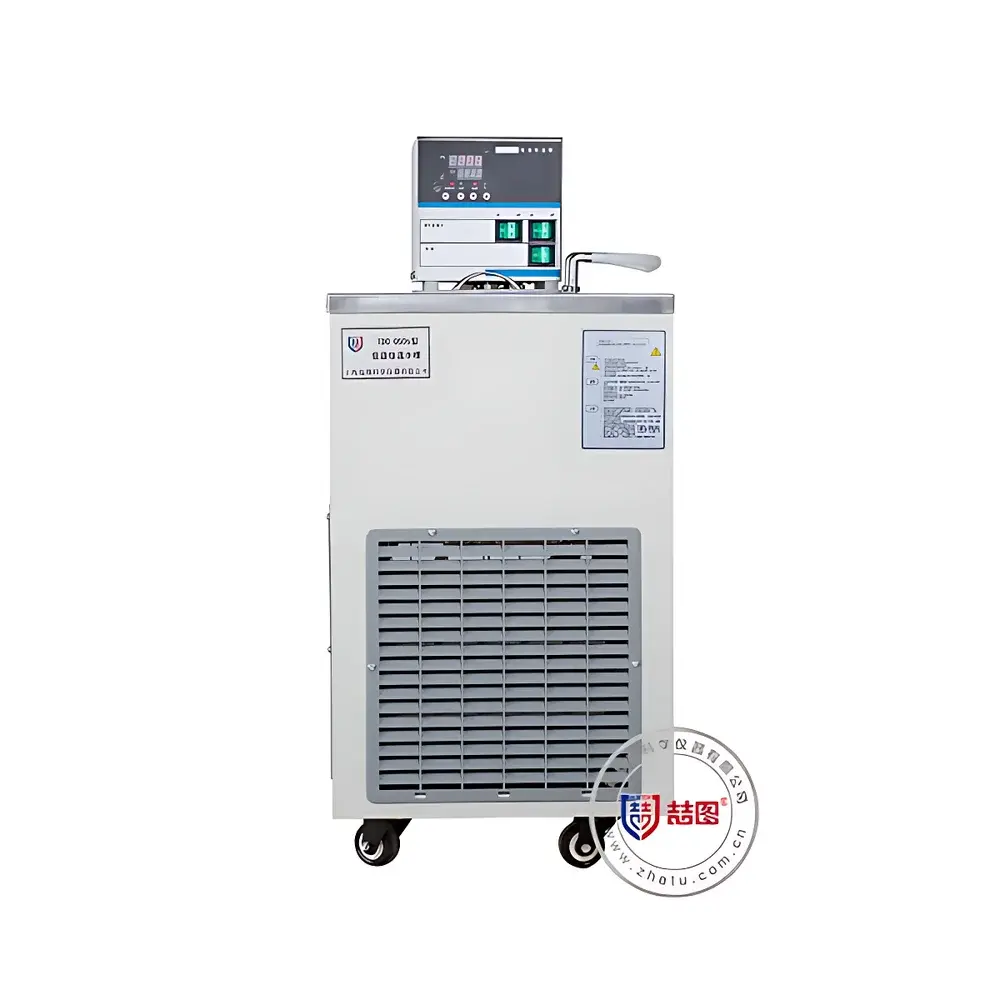
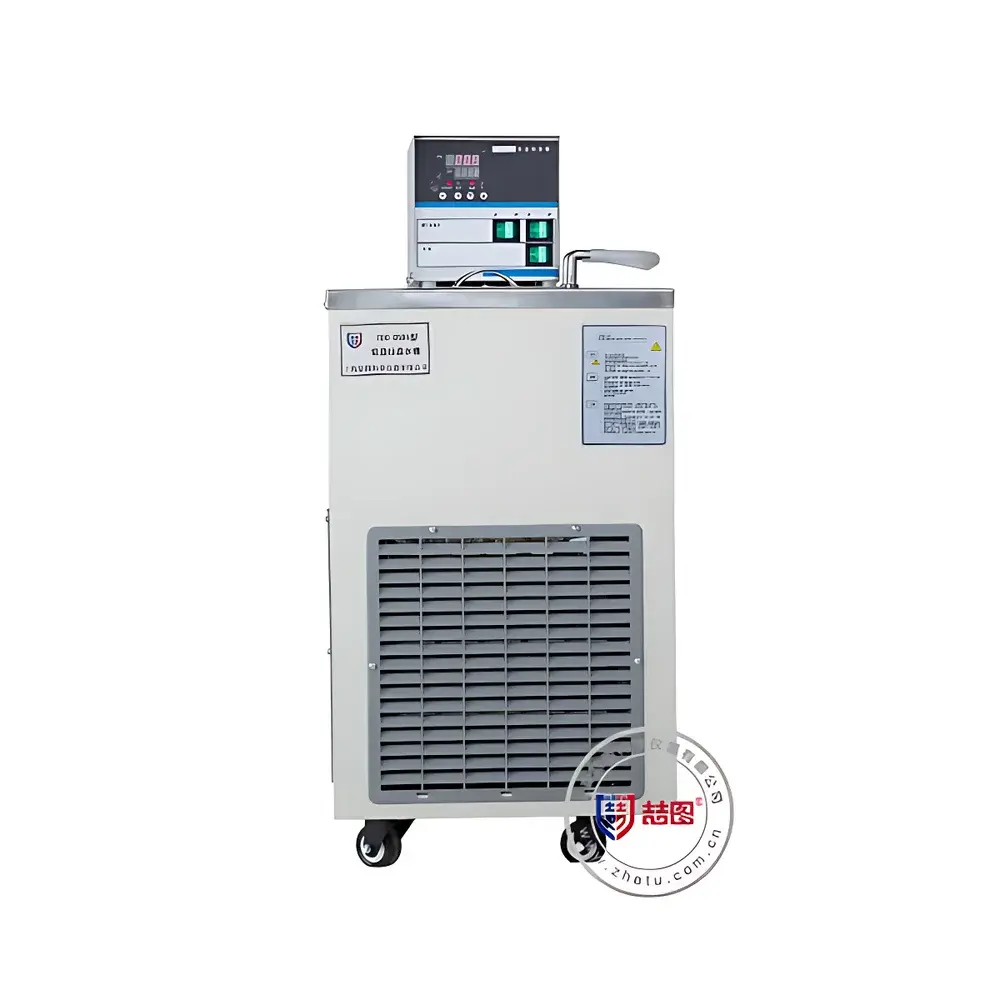
DRETOP TDC-4015 Low-Temperature Constant-Temperature Bath
| Brand | DRETOP |
|---|---|
| Origin | Shanghai, China |
| Manufacturer Type | Direct Manufacturer |
| Product Category | Domestic |
| Model | TDC-4015 |
| Instrument Type | Constant-Temperature Bath |
| Circulation Mode | Internal & External Circulation |
| Temperature Control | Refrigeration & Heating |
| Bath Volume | 15 L |
| Temperature Range | −40 °C to 100 °C |
| Temperature Stability | ±1 °C |
| Temperature Resolution | 0.1 °C |
| Power Supply | 380 V, 50 Hz |
Overview
The DRETOP TDC-4015 Low-Temperature Constant-Temperature Bath is a precision-engineered thermal control system designed to deliver stable, uniform, and programmable liquid temperature environments across an extended operational range of −40 °C to 100 °C. Utilizing a dual-mode refrigeration–heating architecture with high-efficiency compressors and PID-controlled heating elements, the unit maintains precise thermal setpoints through active feedback regulation. Its horizontal bath configuration optimizes benchtop footprint—ideal for integration with external equipment such as reaction vessels, condensers, automated synthesis platforms, and analytical instrumentation requiring auxiliary thermal management. The TDC-4015 operates on the principle of forced liquid circulation, where temperature-controlled fluid is dynamically distributed via a low-heat-generation centrifugal pump, minimizing self-heating interference and ensuring superior thermal field homogeneity within the bath chamber and throughout external loops.
Key Features
- Intuitive touch-panel interface with real-time LCD display and embedded PID temperature control algorithm for rapid stabilization and minimal overshoot.
- Robust construction featuring electrostatically sprayed steel exterior and 304 stainless-steel inner tank and work surface—resistant to corrosion, easy to sanitize, and compliant with laboratory hygiene standards.
- Dual-circuit fluid handling system: integrated inlet/outlet ports support both internal recirculation (via supplied silicone tubing) and external closed-loop circulation (e.g., to jacketed reactors or cold traps).
- Drain valve located at the base enables complete medium exchange—critical for maintaining fluid integrity during long-term operation or when switching between aqueous, glycol-based, or organic heat-transfer fluids.
- Multi-layer safety architecture includes over-temperature cutoff, low-level fluid detection, compressor overheat protection, current overload monitoring, and automatic power-fail recovery with alarm logging.
- U-shaped multi-orifice internal flow path ensures turbulent, high-velocity circulation—enhancing thermal uniformity (±0.5 °C typical across working volume) and eliminating stratification.
Sample Compatibility & Compliance
The TDC-4015 accommodates a broad spectrum of sample containers—including glass flasks, metal reactors, PTFE-lined vessels, and quartz cuvettes—provided thermal expansion coefficients and chemical compatibility with selected heat-transfer media are verified. Users must select bath fluids in accordance with operational temperature requirements and material compatibility guidelines: deionized water (5–80 °C), ethylene glycol/water mixtures (−35 °C to 100 °C), anhydrous ethanol (≥99.5%, −80 °C to 20 °C), or specialty low-volatility synthetic heat-transfer liquids (−80 °C to 100 °C). All configurations comply with IEC 61010-1:2010 for electrical safety in laboratory equipment. While not certified to ISO/IEC 17025 or GLP/GMP out-of-the-box, the system supports audit-ready operation when paired with validated SOPs and external calibration records traceable to NIST or equivalent national metrology institutes.
Software & Data Management
The TDC-4015 operates autonomously via its onboard controller without dependency on PC software; however, optional RS485 or USB-to-serial interfaces enable integration into centralized lab automation systems. When connected, users may log temperature profiles, event timestamps (e.g., alarm triggers, power cycles), and setpoint history using third-party SCADA or LIMS-compatible applications. Data export is supported in CSV format. For regulated environments, optional firmware upgrades can provide electronic signature capability and 21 CFR Part 11–compliant audit trails—including user authentication, immutable record retention, and change documentation—when deployed with validated IT infrastructure.
Applications
- Calibration of thermocouples, RTDs, and infrared sensors under controlled thermal gradients.
- Stabilization of laser diodes, photodetectors, and optical components sensitive to thermal drift.
- Temperature-dependent kinetic studies in physical chemistry and catalysis research.
- Controlled cooling/heating of chromatographic columns, viscometers, and density meters.
- Pre-conditioning of polymer samples prior to DMA, DSC, or rheological testing.
- Supporting cryogenic reactions in pharmaceutical process development and fine chemical synthesis.
- Quality assurance testing of electronic components under thermal stress (JEDEC JESD22-A104 qualification support).
FAQ
What heat-transfer fluids are recommended for operation at −40 °C?
Anhydrous ethanol (≥99.5%) or specialized low-temperature synthetic fluids with pour points below −50 °C are suitable. Avoid water-based solutions at this range due to freezing risk.
Can the TDC-4015 maintain ±0.1 °C stability across its full range?
Temperature stability of ±1 °C is specified per manufacturer datasheet; enhanced stability (±0.01 °C) requires optional ultra-precision models (e.g., TDC-4015U) with upgraded sensor arrays and adaptive PID tuning.
Is external circulation compatible with pressurized reactor systems?
Yes—the unit supports external loop pressures up to 2 bar gauge when equipped with appropriate fittings and fluid-rated tubing; consult engineering specifications before integrating with high-pressure vessels.
How often should the heat-transfer medium be replaced?
Deionized water: every 3–6 months. Ethylene glycol mixtures: annually or when viscosity increases >15%. Organic solvents: replace immediately upon discoloration, odor development, or observed phase separation.
Does the system include validation documentation for GxP environments?
Factory calibration certificates are provided; IQ/OQ protocols and performance verification templates are available upon request for installation in regulated laboratories.



