
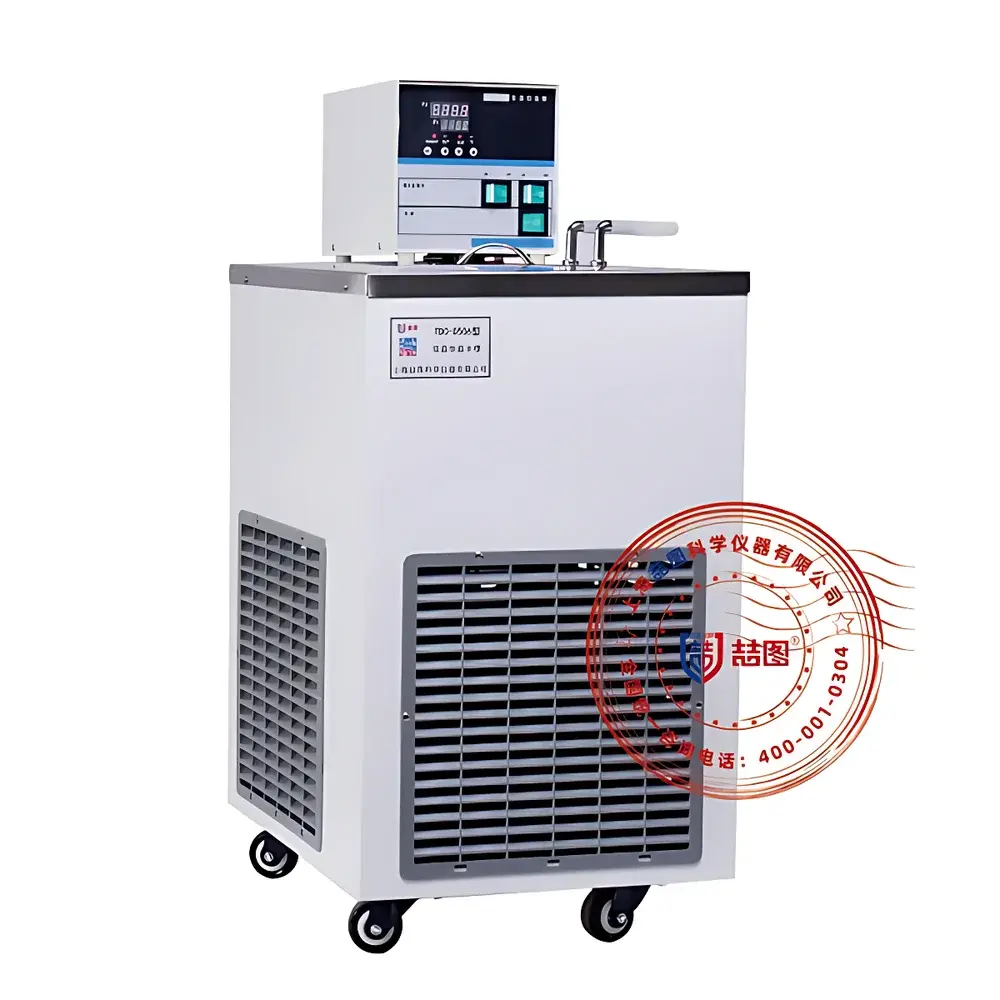
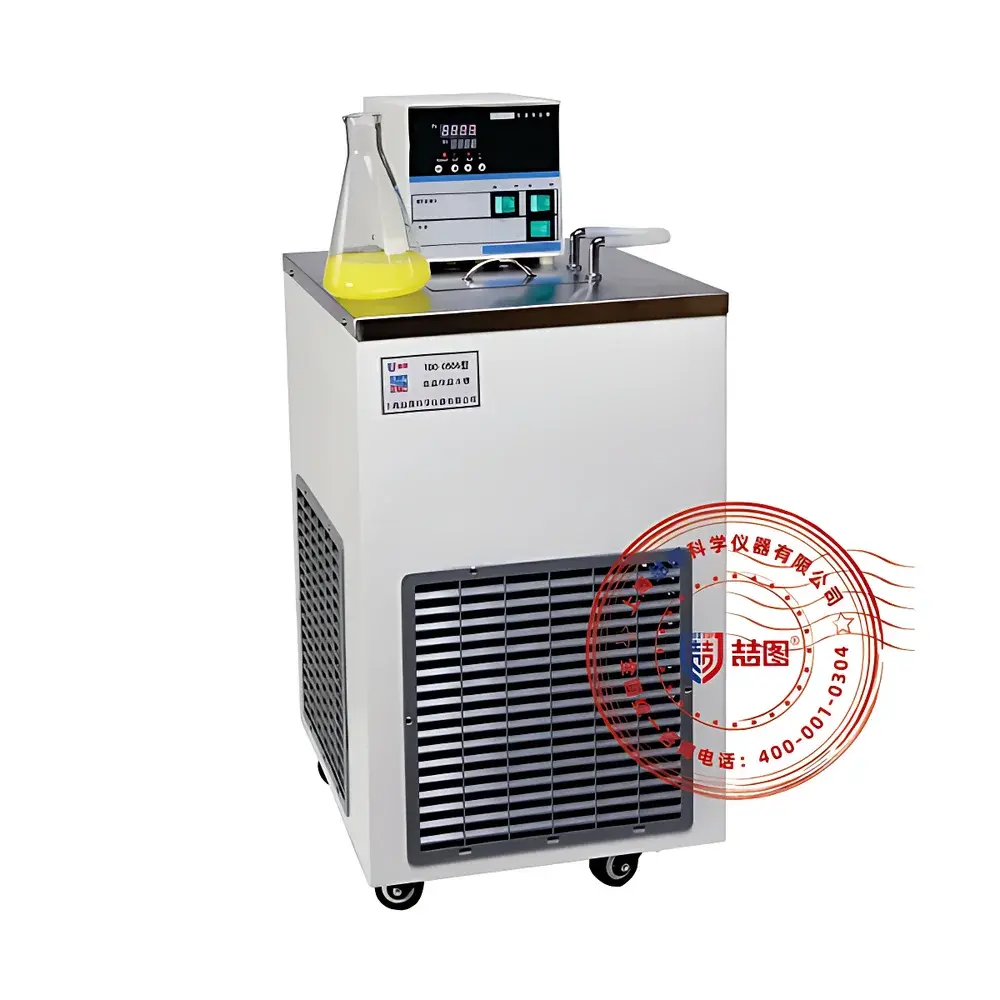
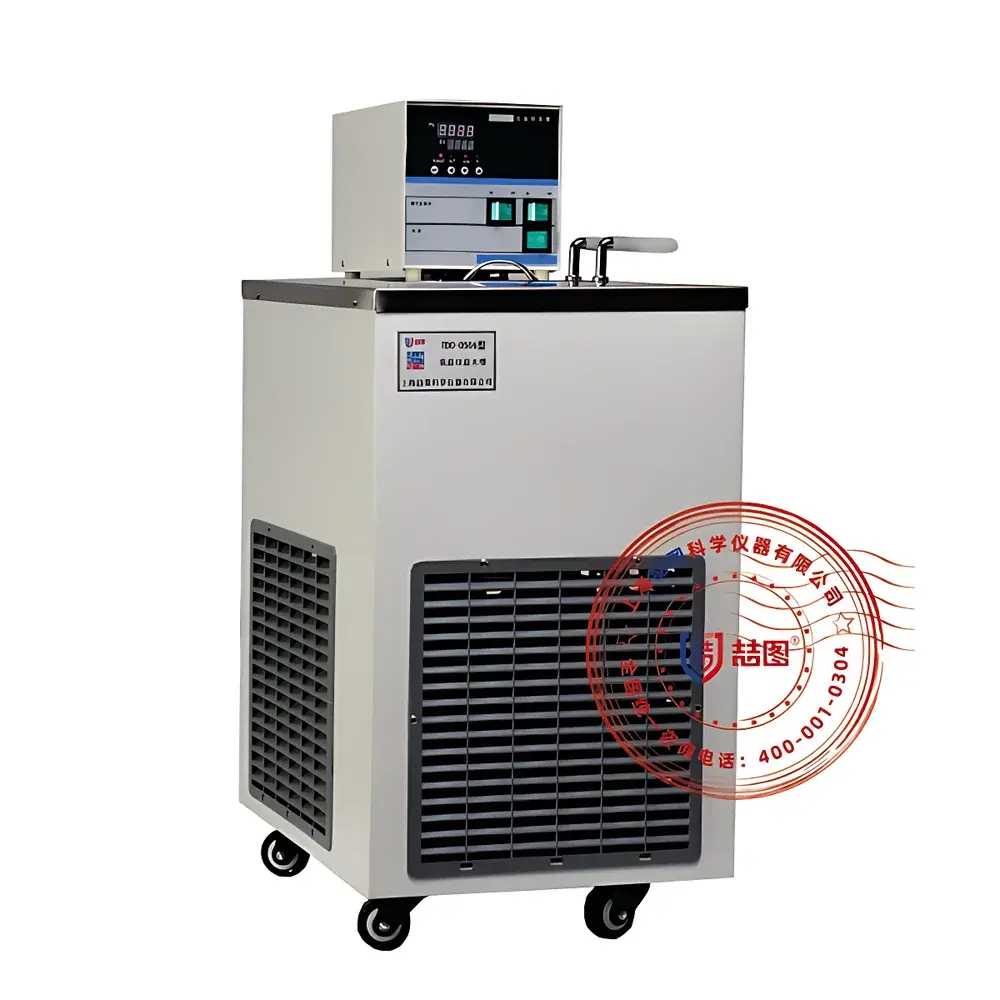
DRETOP TDC-4020U Precision Low-Temperature Circulating Bath
| Brand | DRETOP |
|---|---|
| Origin | Shanghai, China |
| Manufacturer Type | Direct Manufacturer |
| Product Category | Domestic |
| Model | TDC-4020U |
| Instrument Type | Circulating Temperature Bath |
| Circulation Mode | Internal & External |
| Temperature Control | Refrigeration + Heating |
| Bath Volume | 15 L |
| Temperature Range | −40 °C to 100 °C |
| Temperature Stability | ±0.02 °C |
| Temperature Resolution | 0.01 °C |
| Power Supply | AC 220 V |
Overview
The DRETOP TDC-4020U Precision Low-Temperature Circulating Bath is an engineered thermal management system designed for laboratory and industrial applications requiring high-fidelity temperature control across an extended operational range (−40 °C to 100 °C). It functions as a self-contained, dual-mode (refrigeration and heating) circulating bath that delivers precise, uniform, and stable thermal environments for external equipment conditioning or direct sample immersion. Its core architecture integrates a hermetically sealed compressor-based refrigeration circuit, PID-controlled resistive heating elements, and a low-heat-generation centrifugal circulation pump—ensuring minimal self-heating interference and exceptional spatial temperature homogeneity (< ±0.05 °C uniformity within the 15 L stainless steel bath chamber). The unit is purpose-built for integration with reaction vessels, jacketed reactors, condensers, automated synthesis platforms, and material testing apparatus where traceable, reproducible thermal profiles are critical to experimental integrity.
Key Features
- High-resolution touchscreen interface with intuitive menu navigation and programmable ramp/soak profiles.
- 304 stainless steel inner tank and work surface—corrosion-resistant, non-porous, and compliant with ISO 15190:2020 laboratory equipment material standards.
- Dual-circuit fluid management: integrated inlet/outlet ports support both internal recirculation (via silicone tubing) and external closed-loop circulation to auxiliary devices (e.g., reactor jackets or calorimeters).
- Drain valve assembly enables rapid, complete media exchange—essential for protocol compliance when switching between aqueous, glycolic, alcoholic, or synthetic heat-transfer fluids.
- Multi-layer safety architecture: includes over-temperature cutoff, low-level fluid detection, compressor overheat protection, current surge monitoring, and automatic shutdown on sensor failure.
- U-shaped multi-orifice return manifold design promotes turbulent flow dynamics, eliminating thermal stratification and ensuring < ±0.02 °C temporal stability under steady-state operation.
Sample Compatibility & Compliance
The TDC-4020U accommodates a broad spectrum of thermally sensitive samples and process equipment through its chemically inert 304 stainless steel bath chamber and configurable fluid pathways. Users may select from deionized water (5–80 °C), ethylene glycol/water mixtures (−35–100 °C), anhydrous ethanol (≥99.5%, −80–20 °C), or specialty low-volatility silicone-based heat-transfer fluids (−80–100 °C), subject to compatibility with sample containment materials (e.g., glass, PTFE, or Hastelloy). The system meets structural and electrical safety requirements per IEC 61010-1:2010 (Safety Requirements for Electrical Equipment for Measurement, Control, and Laboratory Use) and supports GLP/GMP workflows via optional audit-trail-enabled software modules compliant with FDA 21 CFR Part 11.
Software & Data Management
While the standard configuration operates via embedded firmware with local parameter logging (temperature setpoint, actual bath temperature, runtime hours), optional USB- or Ethernet-connected software enables remote monitoring, real-time graphing, and CSV export of time-stamped thermal datasets. The platform supports user-defined alarm thresholds, event-triggered data capture, and calibration certificate generation traceable to NIST-certified reference standards. Data logs include timestamps with millisecond resolution, enabling full traceability for ISO/IEC 17025-accredited laboratories conducting method validation or uncertainty analysis per GUM (Guide to the Expression of Uncertainty in Measurement).
Applications
- Temperature control of jacketed chemical reactors and continuous flow synthesis systems in pharmaceutical R&D.
- Calibration of thermocouples, RTDs, and infrared sensors against stable thermal references.
- Material property testing—including viscosity, thermal expansion, and phase transition behavior—per ASTM D7042, ISO 2555, and USP <1031>.
- Cooling of analytical instrumentation such as HPLC column ovens, GC detectors, and spectrophotometer sample compartments.
- Biochemical assay incubation requiring sub-zero stabilization (e.g., enzyme kinetics at −20 °C) or controlled thawing protocols.
- Quality assurance testing in electronics manufacturing, including thermal cycling of PCB assemblies and semiconductor packaging.
FAQ
What heat-transfer fluids are compatible with the TDC-4020U at −40 °C?
Anhydrous ethanol (≥99.5%) or specialized low-freezing-point synthetic fluids (e.g., propylene glycol–ethanol–water blends) are recommended. Avoid aqueous solutions below −10 °C due to freezing risk.
Can the unit maintain ±0.02 °C stability during external circulation?
Yes—provided the external loop volume does not exceed 5 L and tubing length remains ≤3 m with insulated routing to minimize ambient thermal loading.
Is the bath suitable for GLP-compliant temperature mapping studies?
Affirmative. With optional calibrated PT100 probe inputs and time-synchronized multi-point logging, it satisfies Annex 15 (EU GMP) and WHO TRS 961 requirements for thermal distribution qualification.
Does the system support programming of multi-step temperature ramps?
Yes—the onboard controller allows up to 10 segment ramp/soak programs with independent rate limits (0.1–10 °C/min) and hold durations (1 min–99 h 59 min).
What maintenance intervals are recommended for optimal long-term accuracy?
Fluid replacement every 3–6 months (aqueous/glycol), annual verification of refrigerant charge and pump seal integrity, and biannual calibration of the primary Pt100 sensor using a certified dry-block calibrator.
Related Products



