
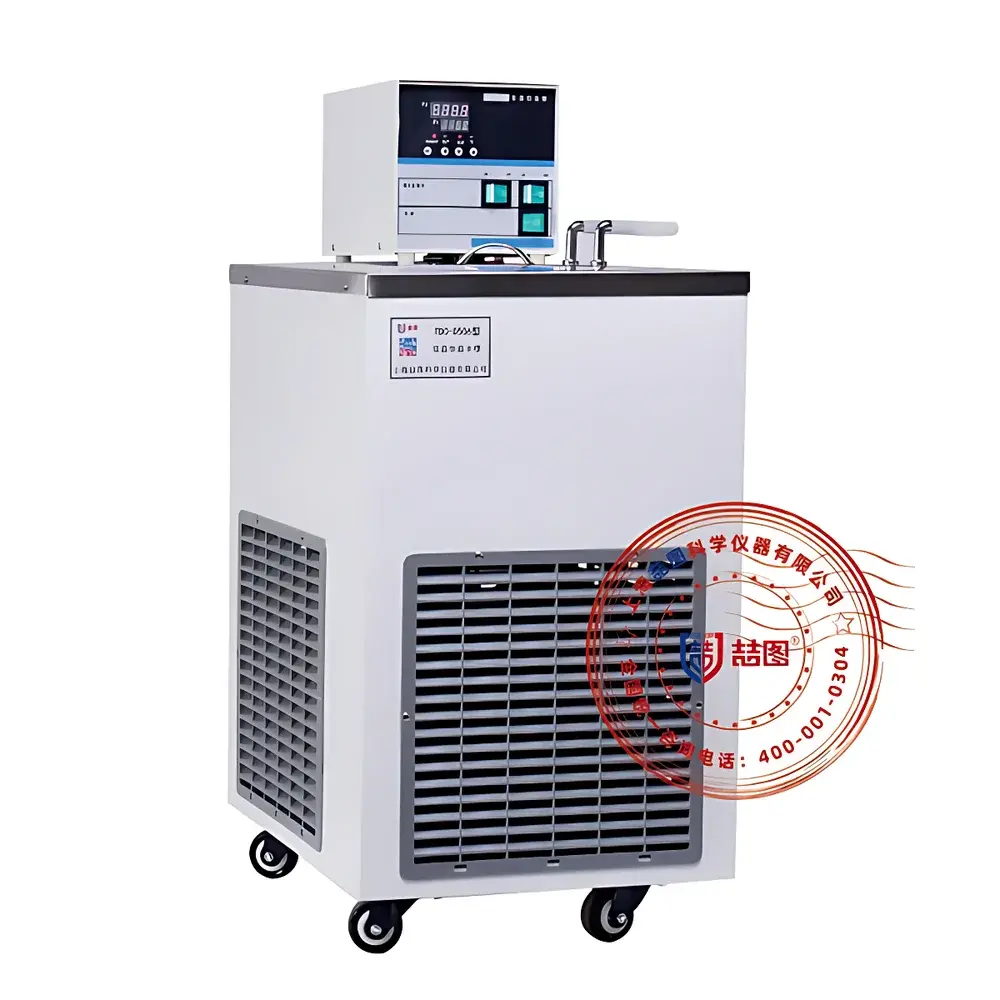
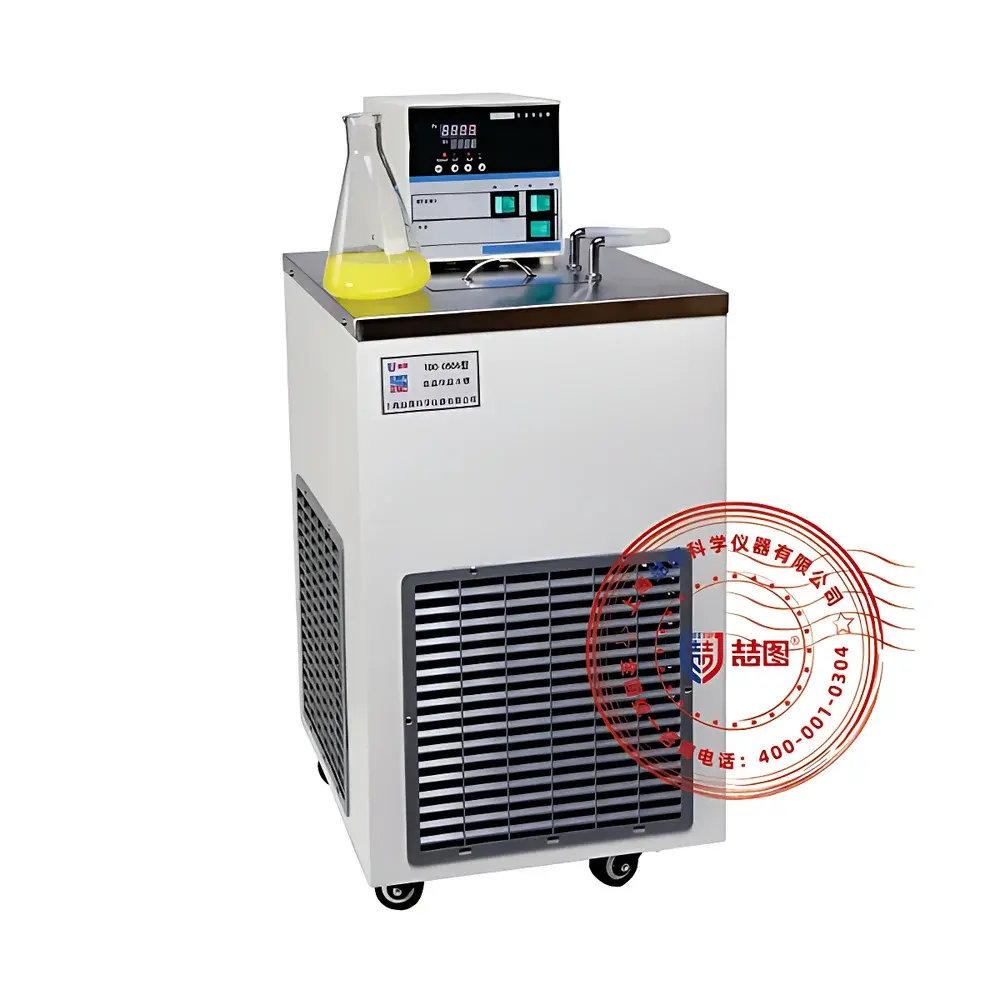
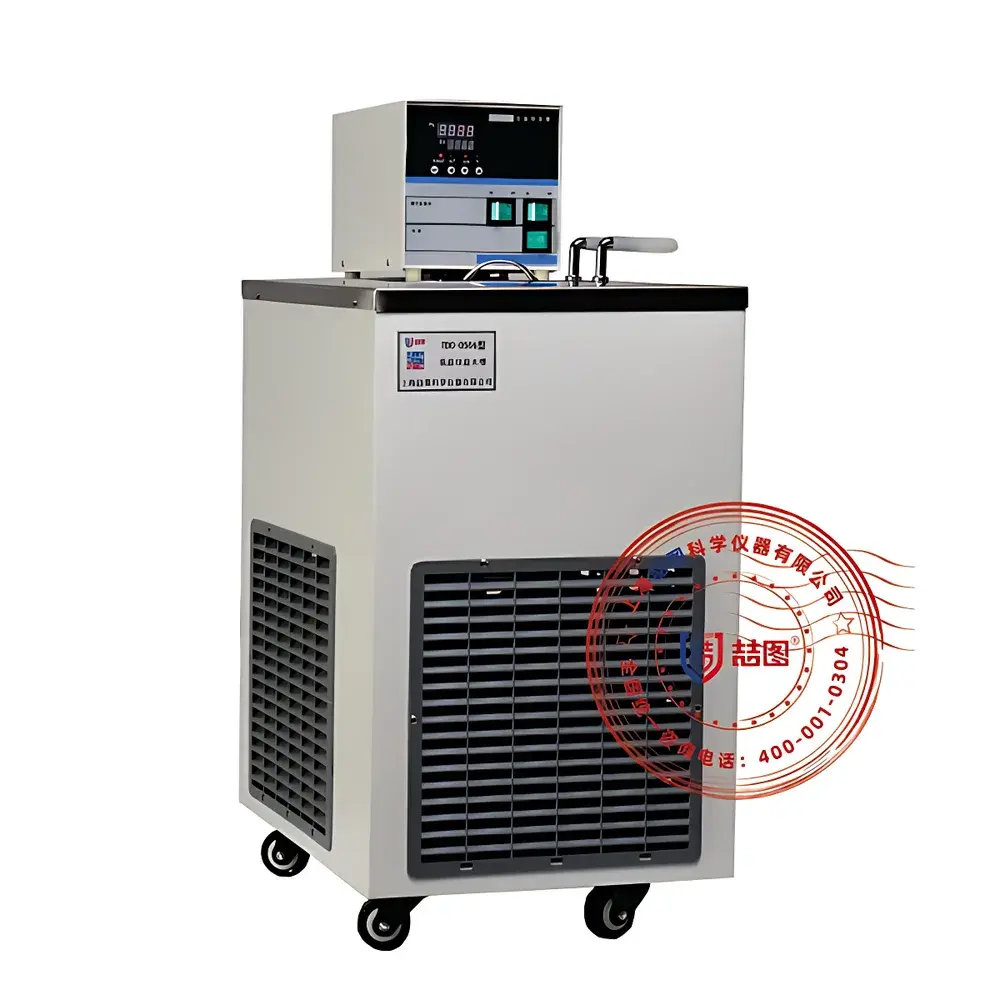
DRETOP TDC-4050 Precision Low-Temperature Circulating Bath
| Brand | DRETOP |
|---|---|
| Origin | Shanghai, China |
| Manufacturer Type | Direct Manufacturer |
| Product Category | Domestic |
| Model | TDC-4050 |
| Instrument Type | Circulating Temperature Bath |
| Circulation Mode | Internal & External |
| Temperature Control | Refrigeration & Heating |
| Bath Volume | 50 L |
| Temperature Range | −40 °C to +100 °C |
| Temperature Stability | ±1 °C |
| Temperature Resolution | 0.1 °C |
| Power Supply | 380 V, 50 Hz |
Overview
The DRETOP TDC-4050 Precision Low-Temperature Circulating Bath is a high-performance, dual-mode (refrigeration/heating) temperature control system engineered for laboratory and industrial applications requiring stable, uniform thermal environments across an extended range of −40 °C to +100 °C. Unlike conventional water baths or immersion chillers, the TDC-4050 integrates a hermetically sealed refrigeration circuit with a high-efficiency resistive heating system, enabling precise, bidirectional temperature regulation without manual medium exchange. Its core operating principle relies on forced convection via a magnetically coupled, zero-heat-generation centrifugal circulation pump—eliminating self-heating artifacts that compromise bath uniformity in traditional impeller-driven systems. The unit employs a multi-stage PID algorithm with adaptive learning to maintain setpoint accuracy under dynamic load conditions, such as when external reactors or analytical instruments draw heat or cold through the external loop. Designed for integration into controlled-environment workflows—including reaction calorimetry, material property testing, and pharmaceutical stability studies—the TDC-4050 delivers reproducible thermal conditioning compliant with ISO/IEC 17025 calibration traceability requirements when operated with certified reference thermometers.
Key Features
- Intelligent touch-screen interface with real-time graphical display of temperature trajectory, setpoint deviation, and system status (compressor load, pump speed, fault codes)
- Stainless steel 304 inner tank and work surface—electropolished finish for corrosion resistance, cleanability, and compatibility with aqueous, glycolic, alcoholic, and silicone-based heat transfer fluids
- Dual-loop circulation architecture: internal recirculation ensures bath homogeneity; external porting supports closed-loop temperature control of external equipment (e.g., jacketed reactors, condensers, spectroscopic cells)
- Integrated drain valve and dual-port coolant manifold (inlet/outlet) with quick-connect fittings for rapid fluid exchange and maintenance
- Comprehensive safety suite: over-temperature cutoff (hardware-independent), low-level fluid sensor, compressor thermal overload protection, phase-loss detection, and ground-fault circuit interruption (GFCI)
- U-shaped multi-orifice internal flow path design—induces turbulent flow to minimize thermal stratification and achieve ±0.5 °C spatial uniformity across the 500 × 370 × 300 mm working chamber
Sample Compatibility & Compliance
The TDC-4050 accommodates a broad spectrum of heat transfer media—including deionized water, ethylene glycol/water mixtures (1:1 to 1:3 v/v), anhydrous ethanol (≥99.5%), isopropanol, and specialty low-temperature synthetic fluids—subject to compatibility with stainless steel 304 and standard fluoropolymer seals. Users must select media based on operational temperature boundaries: freezing point ≤ −45 °C for −40 °C operation; flash point ≥ 60 °C for unattended use above 40 °C; and viscosity < 50 cSt at minimum operating temperature to ensure pump priming and laminar flow in external circuits. The system complies with IEC 61000-6-3 (EMC emission standards) and IEC 61000-6-2 (immunity), and its electrical design meets UL 61010-1 and GB 4793.1 safety requirements. When configured with audit-trail-enabled software (optional), it supports GLP/GMP documentation needs per FDA 21 CFR Part 11 for regulated QC laboratories.
Software & Data Management
The TDC-4050 operates autonomously via embedded firmware but supports optional PC-based control via RS485 (Modbus RTU) or Ethernet (TCP/IP). DRETOP’s proprietary LabTemp Control Suite enables remote parameter setting, real-time data logging (sample interval: 1–60 s), alarm configuration, and export of CSV-formatted temperature histories with timestamped metadata (operator ID, session ID, ambient conditions). All logged data include checksum-verified integrity fields and are stored redundantly—on-device flash memory and host PC—to satisfy ALCOA+ data integrity principles. Firmware updates are delivered via signed binary packages to prevent unauthorized modification, and system diagnostics generate comprehensive self-test reports upon startup and at user-defined intervals.
Applications
- Temperature-controlled synthesis in jacketed glass reactors (e.g., Grignard, lithiation, hydrogenation)
- Calibration of thermocouples, RTDs, and infrared sensors against NIST-traceable references
- Viscosity measurement support for rotational rheometers requiring thermostated sample environments
- Cooling of HPLC columns, GC detectors, and mass spectrometer ion sources to enhance resolution and signal-to-noise ratio
- Accelerated stability testing of pharmaceuticals per ICH Q1A(R3) guidelines (e.g., 40 °C/75% RH, 25 °C/60% RH)
- Thermal cycling of electronic components and printed circuit boards during reliability qualification
- Material testing per ASTM D3418 (DSC), ASTM D648 (HDT), and ISO 75 (deflection temperature)
FAQ
What heat transfer fluids are recommended for continuous operation at −40 °C?
Anhydrous ethanol (≥99.5%) or specialized low-temperature synthetic fluids (e.g., Dowtherm J) are validated for this range. Ethylene glycol/water mixtures are not suitable below −30 °C due to increased viscosity and risk of pump cavitation.
Can the TDC-4050 maintain ±0.1 °C stability during external heat load fluctuations?
Yes—when paired with a well-insulated external loop and media exhibiting low thermal inertia (e.g., 30% glycol/water), the system achieves ±0.1 °C short-term stability (30-min window) per ISO 17025 Annex A.3 verification protocols.
Is the unit compatible with third-party automation systems?
Yes—Modbus RTU over RS485 allows seamless integration with PLCs, SCADA platforms, and LIMS via standard function codes (03h, 06h, 10h) for read/write access to all operational parameters and status registers.
How often should the heat transfer fluid be replaced?
Deionized water: every 3 months; 50% ethylene glycol/water: every 6–12 months; anhydrous ethanol: replace immediately upon discoloration or odor change; synthetic fluids: consult manufacturer’s datasheet—typically 18–24 months under continuous operation.
Does the TDC-4050 support validation documentation for ISO 13485-certified medical device manufacturing?
Yes—DRETOP provides Factory Acceptance Test (FAT) reports, IQ/OQ templates aligned with Annex 15 of EU GMP, and calibration certificates traceable to NIM (China National Institute of Metrology), supporting full regulatory submission packages.



