
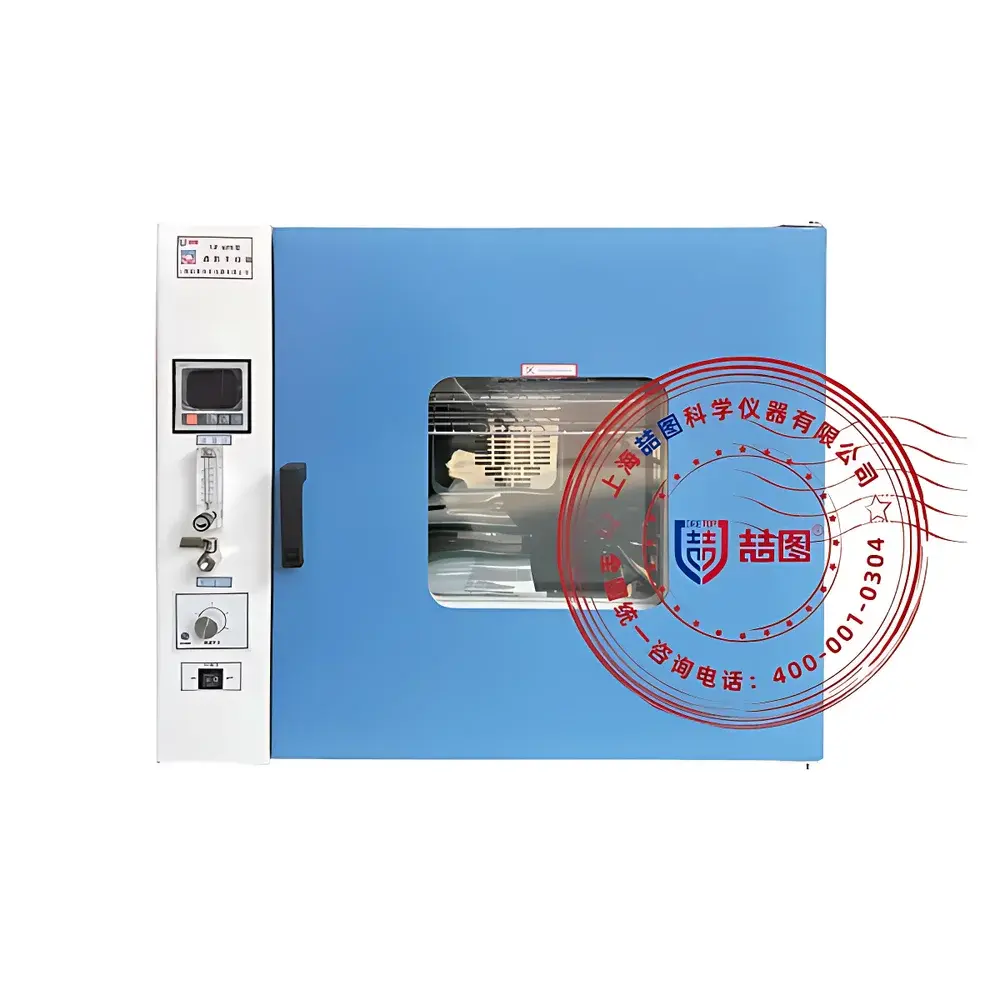
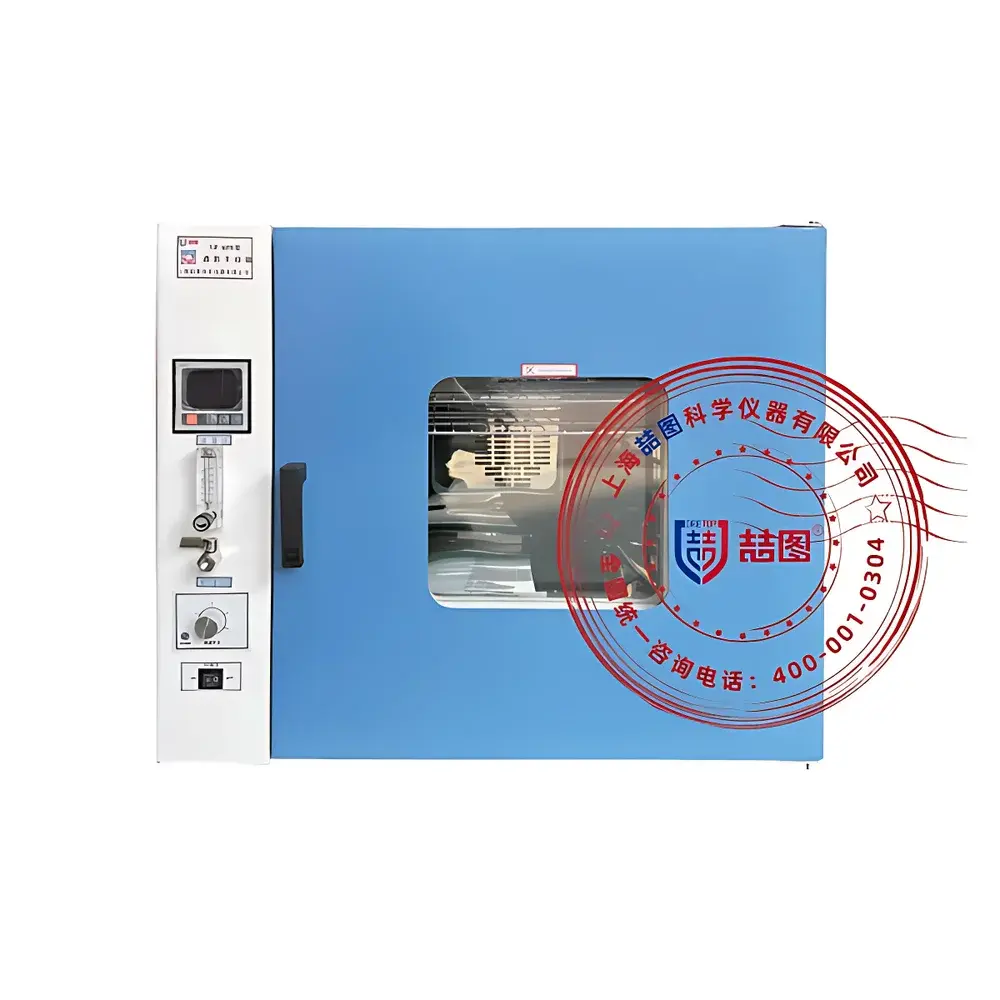
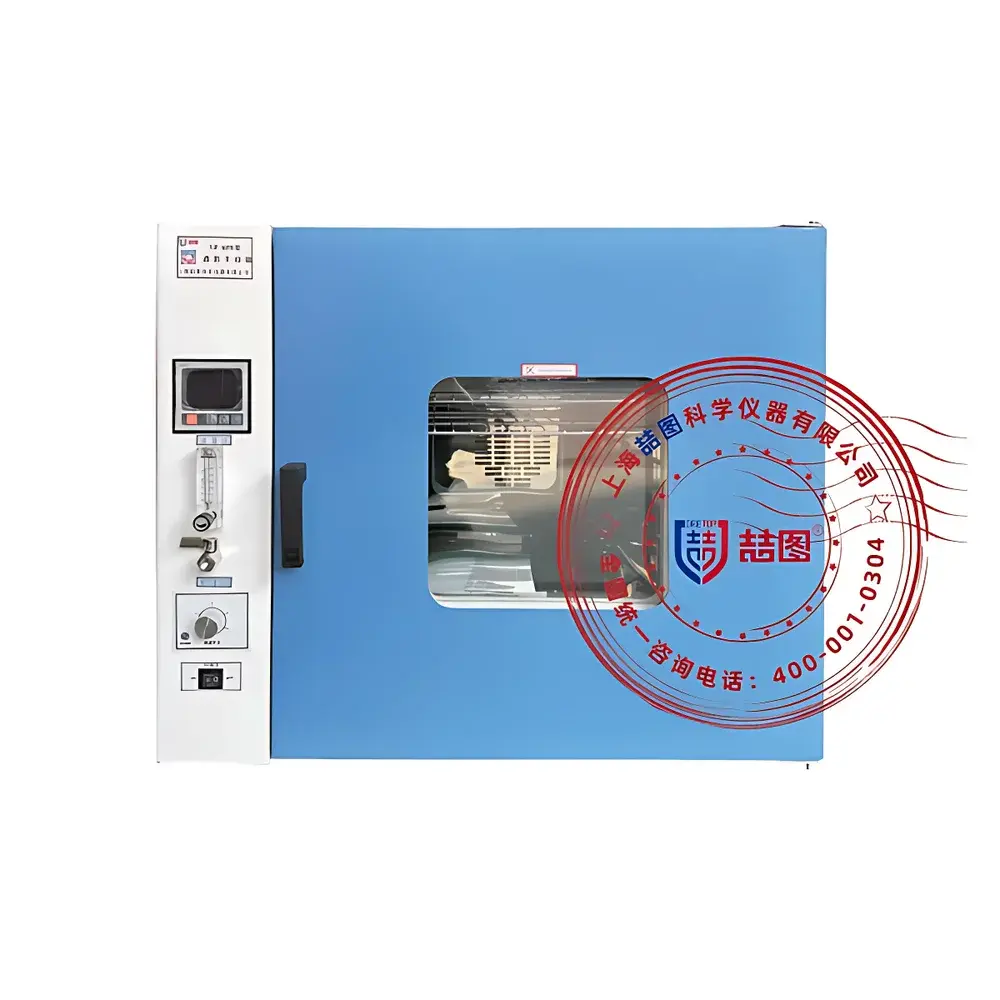
DRETOP TDG-30A Nitrogen-Purged Drying Oven
| Brand | DRETOP |
|---|---|
| Origin | Shanghai, China |
| Manufacturer Type | Direct Manufacturer |
| Product Category | Domestic |
| Model | TDG-30A |
| Instrument Type | General-Purpose Forced-Air Drying Oven |
| Temperature Range | RT+5°C to 250°C |
| External Dimensions (W×D×H) | 625 × 450 × 490 mm |
| Internal Chamber Dimensions (W×D×H) | 340 × 330 × 320 mm |
| Temperature Resolution | 0.1°C |
| Operating Ambient Temperature | 5–45°C |
| Chamber Material | Stainless Steel (AISI 304) |
| Heating Method | Forced-Air Convection with Adjustable Fan Speed |
| Temperature Uniformity | ±1.5°C at 100°C (per JB/T 5520-91) |
Overview
The DRETOP TDG-30A Nitrogen-Purged Drying Oven is an engineered laboratory drying system designed for controlled thermal processing under inert atmospheric conditions. Unlike standard convection ovens, the TDG-30A integrates a precision nitrogen purge system to actively displace ambient oxygen from the chamber—reducing internal O₂ concentration to ≤0.5% (v/v) when operated continuously at recommended flow rates. This capability enables oxidation-sensitive applications including moisture removal from metal powders, solvent evaporation from photopolymer formulations, pre-bake stabilization of semiconductor wafers, and residual solvent elimination in pharmaceutical active ingredients (APIs). The oven operates on the principle of forced-air convection heating, where a variable-speed centrifugal blower circulates heated nitrogen across the chamber volume, ensuring rapid thermal equilibration and minimizing localized hot/cold zones. Its architecture complies with structural and safety requirements outlined in JB/T 5520–91 (“Technical Specifications for Drying Ovens”) and GB/T 212–2008 (“Industrial Analysis of Coal”), making it suitable for regulated environments in materials R&D, QC laboratories, and pilot-scale process validation.
Key Features
- Stainless steel (AISI 304) interior chamber with full-welded seams and fluororubber door gasket—ensuring low nitrogen leakage rate (<0.5 L/min at 0.1 MPa differential pressure) and long-term corrosion resistance.
- Programmable PID temperature controller with 0.1°C resolution and auto-tuning function; supports up to 8-segment ramp-soak profiles for graded thermal treatments such as polymer crosslinking or catalyst activation.
- Multi-mode airflow control: manual 3-step fan speed selection (low/medium/high) plus dynamic speed modulation linked to setpoint deviation—enhancing energy efficiency during low-temperature holds while accelerating heat transfer at elevated setpoints.
- Dual-stage safety system: independent mechanical over-temperature cut-off (adjustable up to 280°C), electronic overheat alarm with audible/visual indication, and pressure-relief vent integrated into the nitrogen inlet manifold.
- Modular nitrogen interface: standardized 6 mm OD stainless steel inlet port compatible with mass flow controllers (MFCs), pressure regulators, and optional vacuum pump kits (TDZ-V series upgrade path).
Sample Compatibility & Compliance
The TDG-30A accommodates a broad range of sample formats—including Petri dishes, crucibles, glass vials, ceramic boats, and custom fixtures—within its 30 L working volume. Its uniform temperature distribution (±1.5°C at 100°C, per JB/T 5520–91 verification protocol) and inert gas environment support ISO/IEC 17025-compliant drying procedures for reference material certification, ASTM E145–22 (Standard Specification for Gravity-Convection and Forced-Ventilation Ovens), and USP (Sterility Assurance for Dry Heat Sterilization). While not intrinsically rated for explosion-proof operation, the unit may be deployed in Class 1, Division 2 hazardous locations when installed with certified nitrogen supply infrastructure and external gas monitoring systems.
Software & Data Management
The standard LCD controller provides real-time display of chamber temperature, setpoint, elapsed time, and fan status. Optional color touchscreen upgrade (model TDG-30A-T) adds USB data logging (CSV export), password-protected parameter locking, and configurable audit trails compliant with FDA 21 CFR Part 11 Annex 11 requirements. All configurations support GLP/GMP traceability through timestamped event records—including door openings, temperature deviations >±2°C, and nitrogen flow interruptions. Remote monitoring via RS485 Modbus RTU interface enables integration into centralized lab infrastructure management platforms.
Applications
- Pharmaceutical: Residual solvent removal from lyophilized intermediates; stability testing per ICH Q1A(R3) under inert atmosphere to prevent degradation of nitroaromatic APIs.
- Electronics: Pre-solder paste drying for PCB assembly; oxide inhibition during annealing of thin-film resistors and MEMS packaging substrates.
- Advanced Materials: Dehydration of MOF precursors without framework collapse; calcination of battery cathode materials (e.g., NMC, LFP) under controlled pO₂.
- Academic Research: Controlled pyrolysis studies of biomass derivatives; inert-atmosphere curing of epoxy composites for aerospace prototyping.
- Quality Control: Moisture content determination per GB/T 211–2017 (Coal Total Moisture) and GB 474–2008 (Coal Sample Preparation), where oxygen exclusion prevents spontaneous oxidation of high-volatile bituminous coals.
FAQ
Can the TDG-30A operate as a vacuum oven?
No—the TDG-30A is configured exclusively for positive-pressure nitrogen purging. For vacuum-capable operation, select the TDZ-V30 series, which includes integrated dual-stage vacuum pump and reinforced chamber sealing.
What nitrogen purity and flow rate are required for optimal performance?
Instrument performance is validated using ≥99.995% pure nitrogen at 10–30 L/min (standard conditions). Flow rate must be adjusted based on chamber leak rate and target O₂ residual; typical operational range is 15–25 L/min for full inertization within 15 minutes.
Is calibration documentation provided with shipment?
Yes—a factory-issued temperature uniformity verification report (per JB/T 5520–91) and NIST-traceable temperature sensor calibration certificate are included. On-site IQ/OQ protocols can be supported by DRETOP’s authorized service partners.
Does the unit meet CE or UL safety standards?
The TDG-30A conforms to IEC 61010–1:2010 for electrical safety in laboratory equipment. CE marking is available upon request for EU-distributed units with additional EMC testing (EN 61326–1) and RoHS compliance documentation.
Can multiple TDG-30A units be networked for centralized control?
Yes—via optional RS485 gateway module, up to 32 units can be daisy-chained to a single supervisory PC running DRETOP LabLink™ software for synchronized scheduling, alarm aggregation, and consolidated data archiving.



