
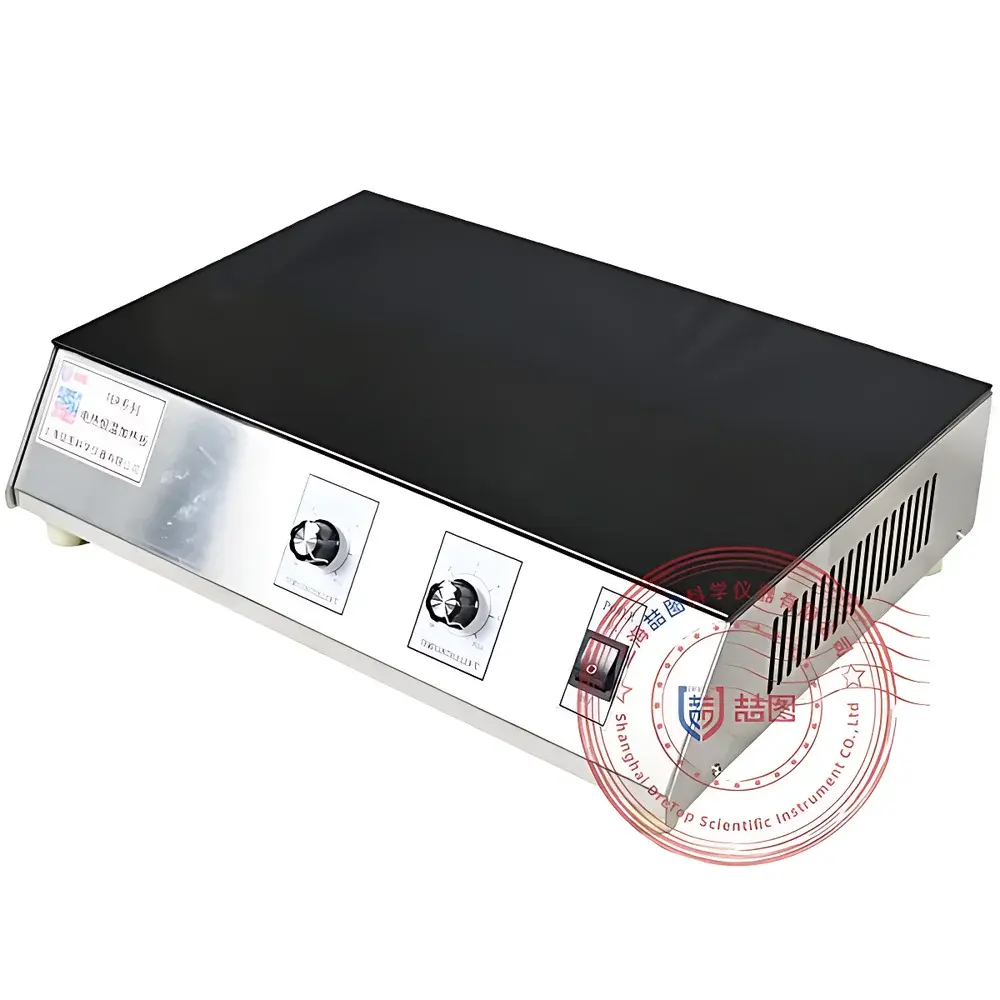
DRETOP TER-30 Electric Ceramic Hotplate
| Brand | DRETOP |
|---|---|
| Origin | Shanghai, China |
| Manufacturer Type | Direct Manufacturer |
| Model | TER-30 |
| Price Range | USD 280–420 |
| Heating Power | 1200 W |
| Controller | PID Microprocessor-Based Temperature Control |
| Max Operating Temperature | 450 °C |
| Temperature Uniformity | Not Specified by Manufacturer |
| Plate Dimensions (W×D×H) | 365 × 303 × 130 mm |
| Heating Zone Dimensions | 300 × 300 mm |
| Display & Interface | Analog Knob Adjustment (Non-Digital) |
Overview
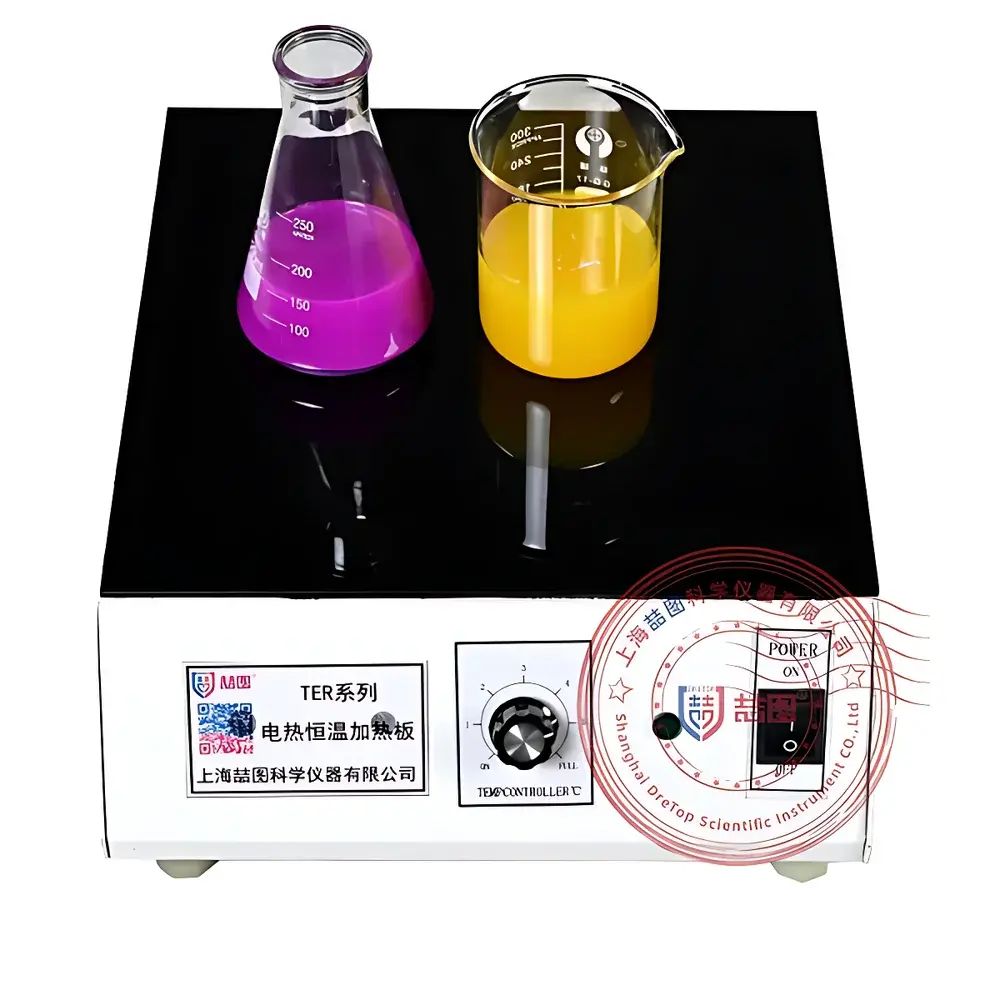
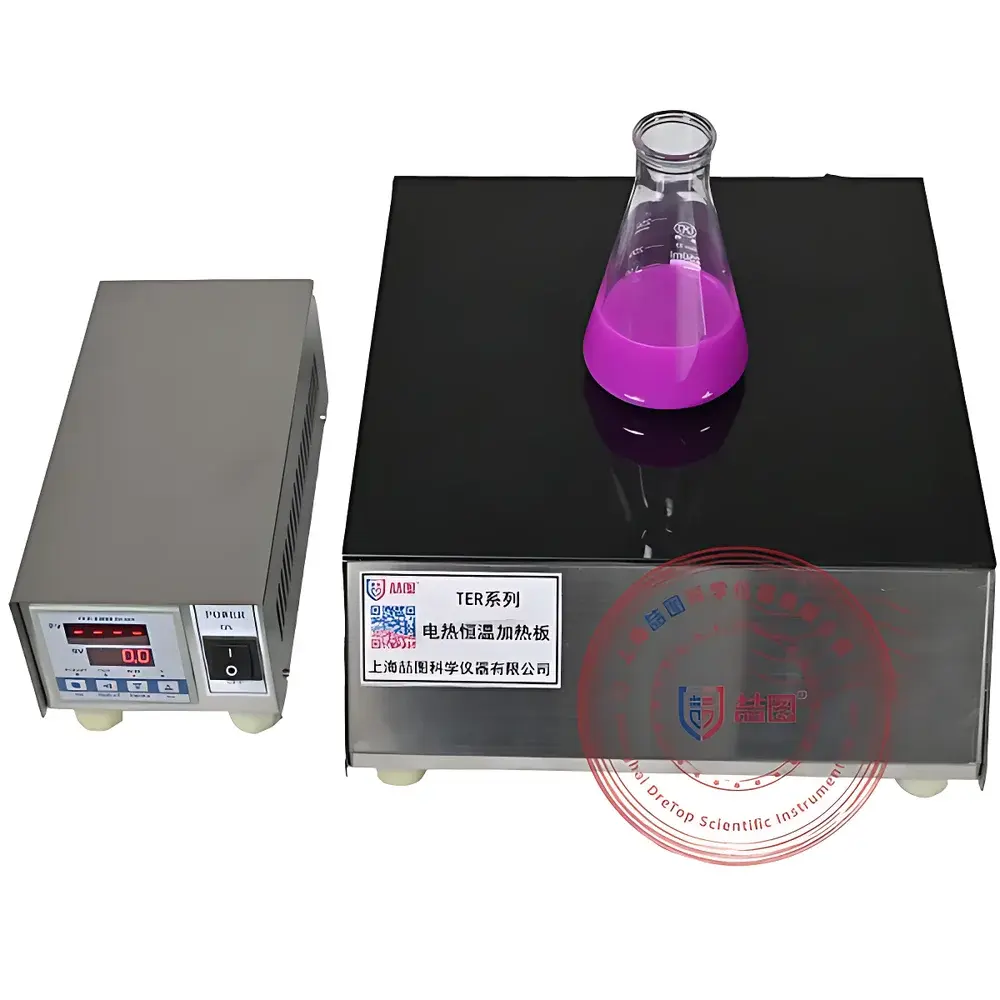
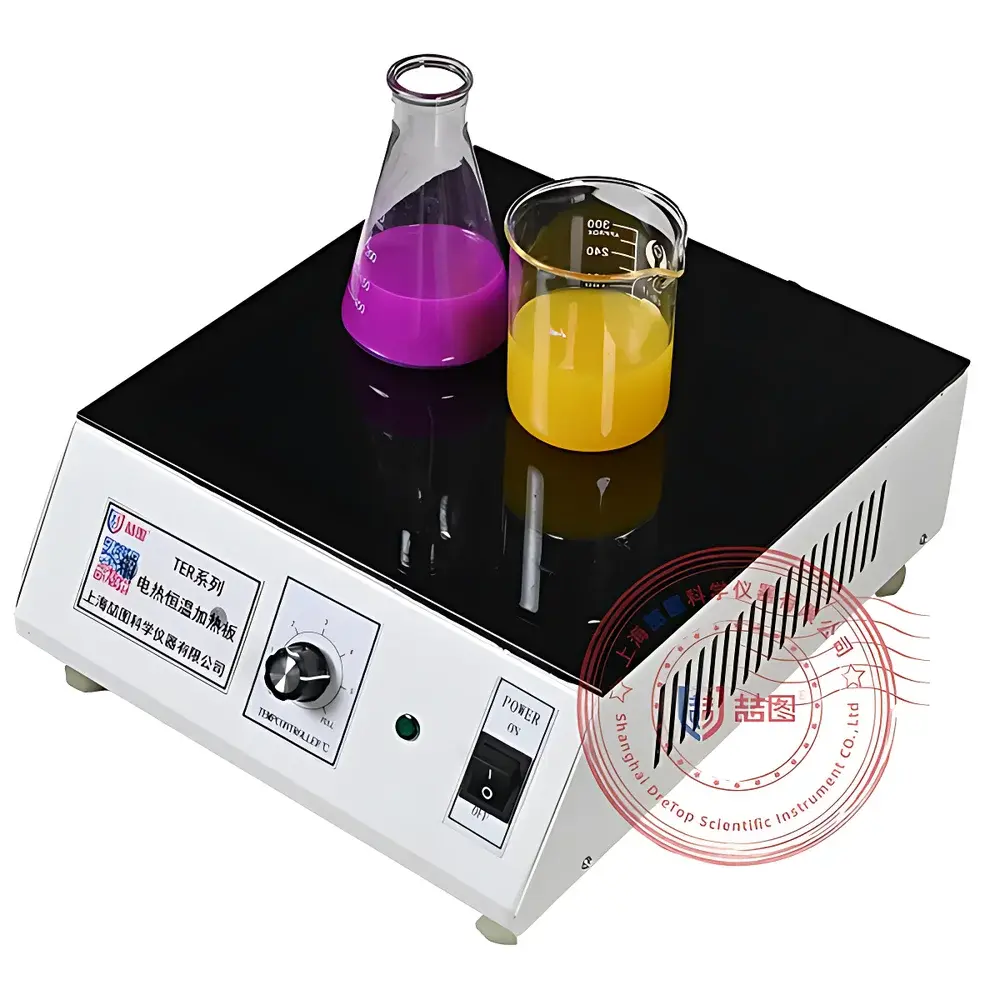
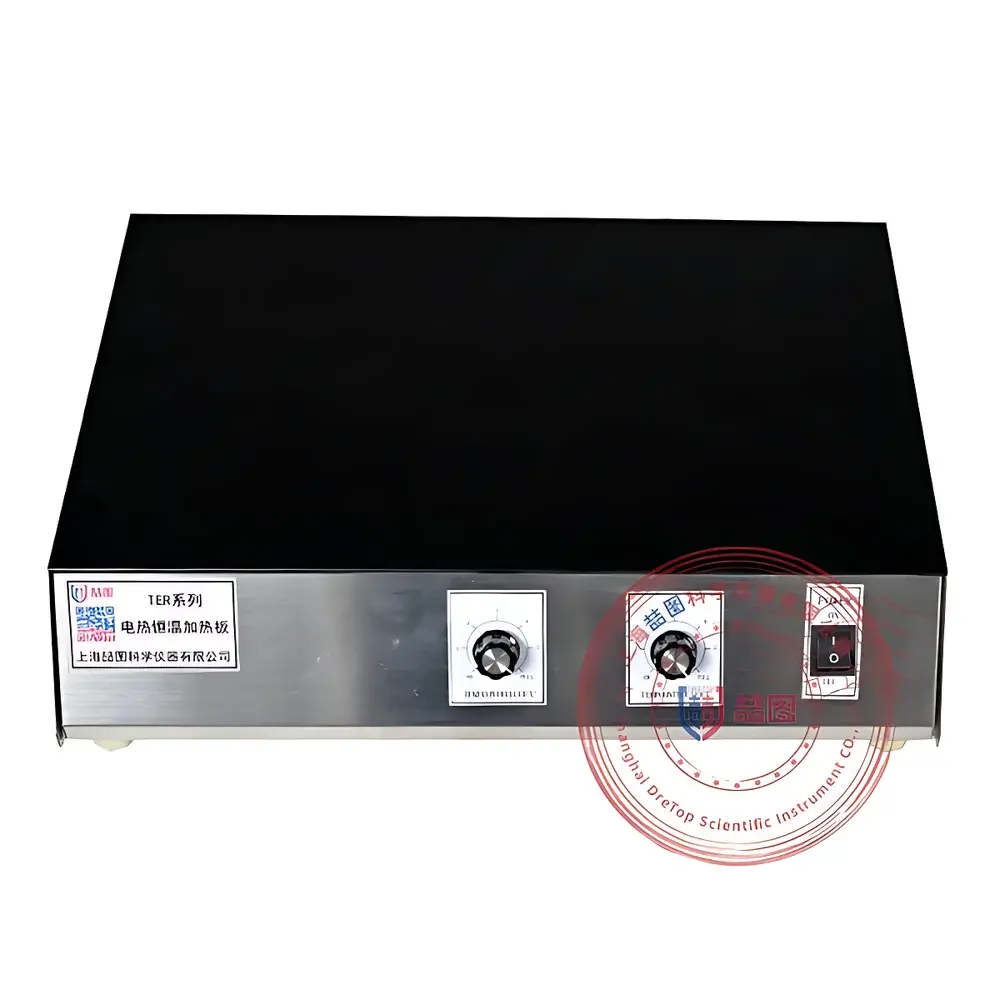
The DRETOP TER-30 Electric Ceramic Hotplate is a robust, benchtop laboratory heating device engineered for precision thermal control in sample preparation, digestion, evaporation, and reaction support applications. It operates on resistive heating principles, utilizing high-efficiency embedded heating elements beneath a durable ceramic-glass (microcrystalline glass) top plate. This material—produced via high-temperature fusion and controlled crystallization—exhibits low thermal expansion, exceptional chemical resistance, high mechanical strength, and excellent thermal shock resilience. Unlike traditional metal-surface hotplates, the TER-30’s ceramic-glass surface eliminates hot-spot formation, prevents sample adhesion during high-temperature processes (e.g., acid digestion), and enables rapid, uniform heat transfer across the 300 × 300 mm active zone. Designed for continuous-duty operation in regulated environments, it meets fundamental safety and performance expectations for GLP-compliant laboratories engaged in environmental analysis, food safety testing, materials science, and academic research.
Key Features
- PID microprocessor-based temperature regulation ensures stable setpoint maintenance with minimal overshoot and drift—critical for extended digestion cycles or kinetic studies.
- Integrated one-piece construction combines heating module and control electronics into a sealed, corrosion-resistant chassis; internal wiring is fully encapsulated to prevent acid vapor intrusion.
- Ceramic-glass surface (microcrystalline glass) offers non-porous, inert, and easy-to-clean topology—resistant to HNO₃, HCl, HF, and aqua regia under standard operating conditions.
- 316L stainless steel perimeter frame (standard on corrosion-resistant variants) provides structural integrity and long-term compatibility with aggressive reagents.
- Analog rotary knob interface delivers intuitive, maintenance-free manual control—ideal for routine protocols where digital logging is not required.
- Thermal design includes a 3–5 mm peripheral margin around the heating zone to reduce operator burn risk and improve thermal boundary management.
- Non-slip, thermally insulating feet elevate the unit ~20 mm above the work surface, ensuring adequate airflow for component cooling and protecting lab benches from conductive heat transfer.
Sample Compatibility & Compliance
The TER-30 supports a wide range of sample containers—including borosilicate glass beakers, quartz crucibles, PTFE digestion vessels, and ceramic boats—without surface degradation or catalytic interference. Its inert ceramic surface avoids metal ion leaching, making it suitable for trace-metal analysis workflows (e.g., EPA Method 3050B, ISO 11466). While the device itself does not carry CE, UL, or IEC 61010-1 certification out-of-the-box, its electrical architecture conforms to standard Class I protection requirements when used with grounded AC 220 V / 50 Hz supply. For GMP/GLP-regulated labs, users may implement procedural controls (e.g., daily calibration verification using NIST-traceable thermocouples) to satisfy audit requirements under ISO/IEC 17025 or FDA 21 CFR Part 11 (when paired with external data loggers).
Software & Data Management
The TER-30 operates as a standalone analog instrument with no built-in data output ports or software interface. Temperature setting and monitoring are performed manually via the front-panel rotary controller; no digital display or real-time logging capability is included. For laboratories requiring electronic recordkeeping, integration with third-party USB thermocouple data loggers (e.g., Omega OM-DAQPRO-5300 or Testo 176 T4) is recommended. Such configurations enable time-stamped temperature profiles, export to CSV, and alignment with LIMS or ELN systems—supporting ALCOA+ data integrity principles where applicable.
Applications
- Environmental Testing: Acid digestion of soil, sediment, and sludge samples per EPA 3050B/3051A; reflux-assisted extraction of organic pollutants (e.g., PAHs, PCBs).
- Food & Agriculture: Kjeldahl digestion for protein determination; fat extraction via Soxhlet pre-heating; pesticide residue concentration in fruit/vegetable homogenates.
- Materials Science: Polymer melt conditioning prior to rheological testing; catalyst calcination; nanoparticle annealing under inert atmosphere (when used inside gloveboxes).
- Pharmaceutical QC: Solvent evaporation in stability studies; excipient drying; API crystallization support under controlled thermal ramping (via external timer integration).
- Academic Research: Undergraduate chemistry labs for reflux setups; graduate-level kinetics experiments requiring reproducible isothermal conditions over 8–72 h durations.
FAQ
Does the TER-30 support programmable ramp-soak temperature profiles?
No—the TER-30 uses only manual analog control and lacks programmable logic or multi-step sequencing capability.
Is the ceramic surface resistant to hydrofluoric acid (HF)?
While the microcrystalline glass exhibits strong resistance to most mineral acids, prolonged direct exposure to concentrated HF is not recommended without additional protective measures (e.g., PTFE inserts or secondary containment).
Can the TER-30 be used inside a fume hood?
Yes—its sealed electronics and lack of open coils make it compatible with fume hood installation; ensure adequate clearance for ventilation and avoid obstructing airflow paths.
What is the typical warm-up time to reach 400 °C?
From ambient (25 °C), approximate stabilization at 400 °C requires 12–18 minutes under no-load conditions; actual time varies with vessel mass, thermal mass, and ambient humidity.
Is calibration documentation provided with the unit?
DRETOP supplies no factory calibration certificate; users must perform initial and periodic verification using an accredited external thermometer or thermocouple system per ISO/IEC 17025 guidelines.



