

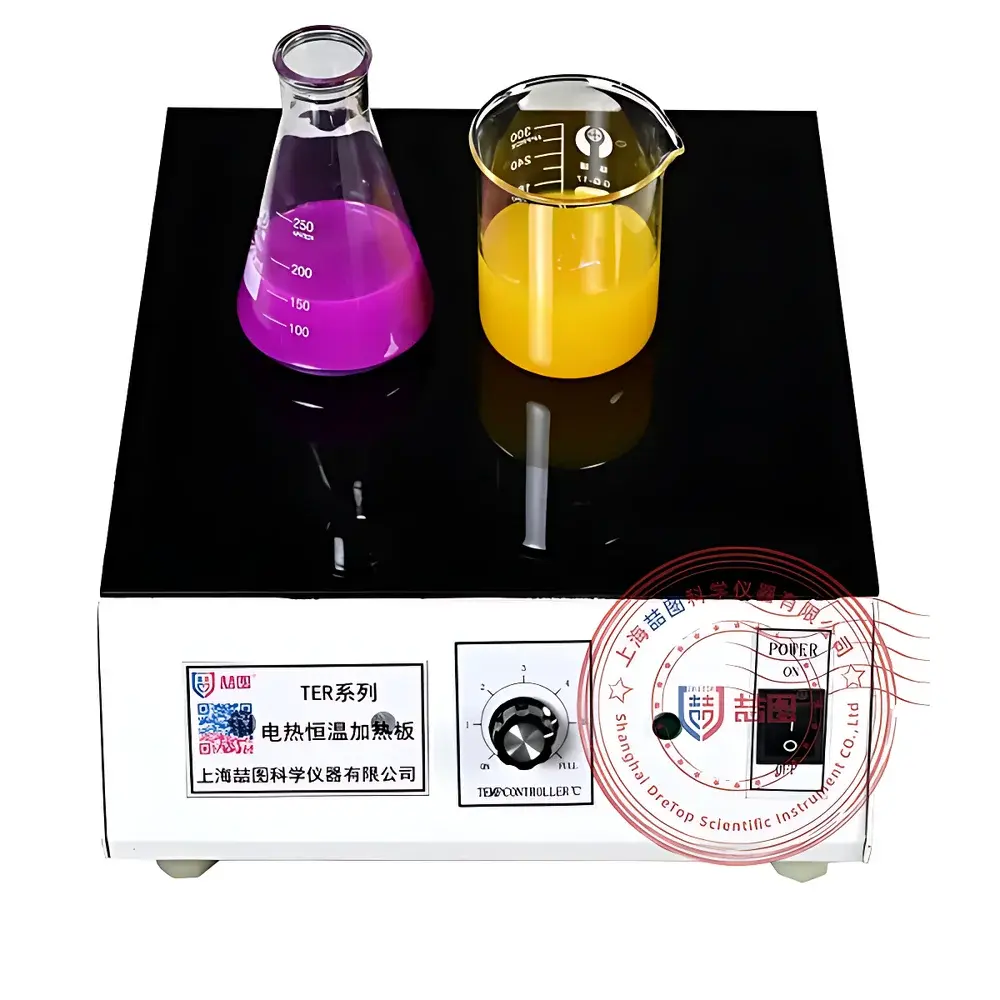
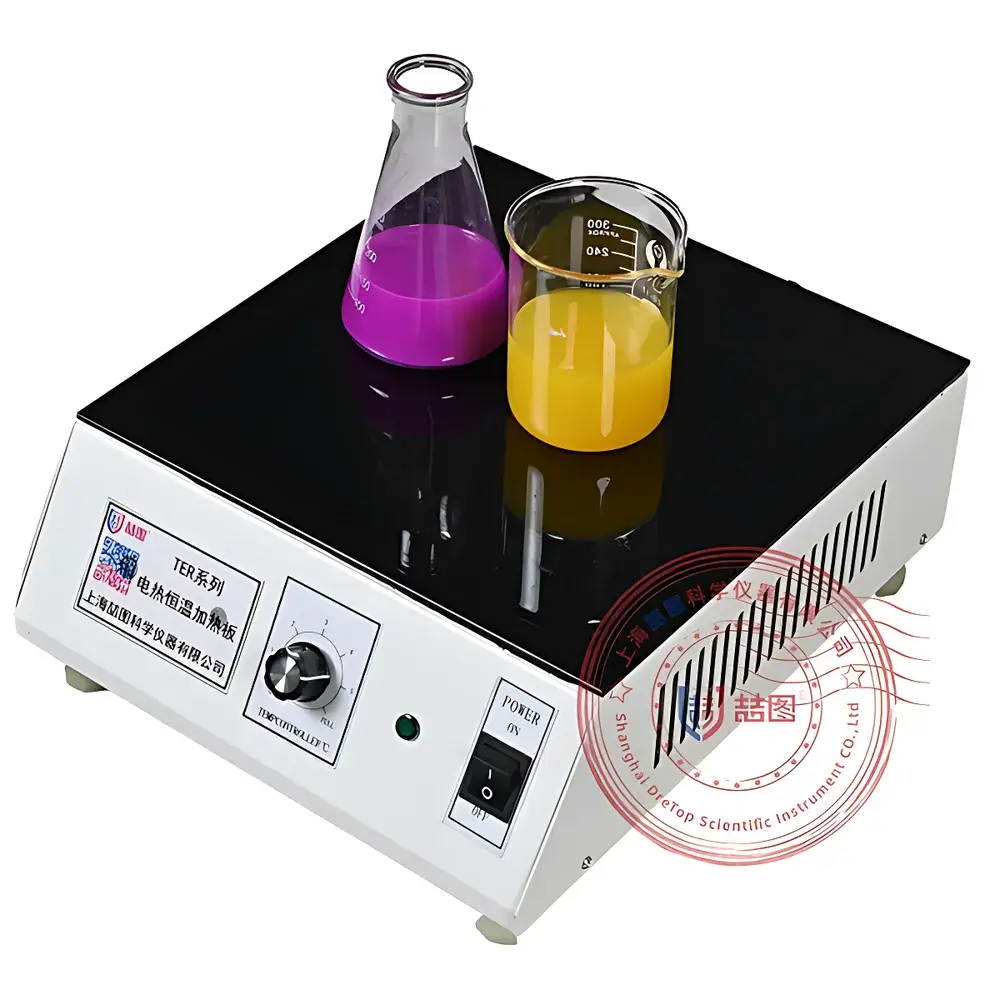
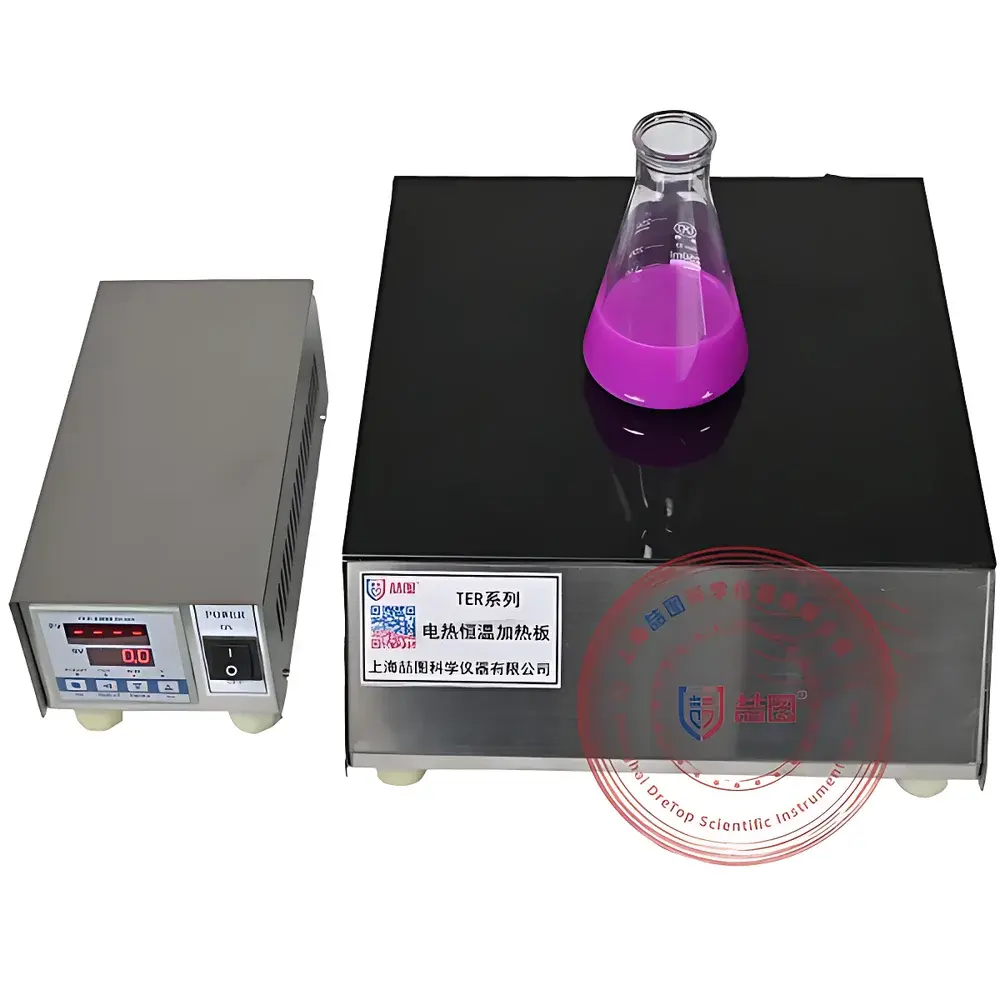
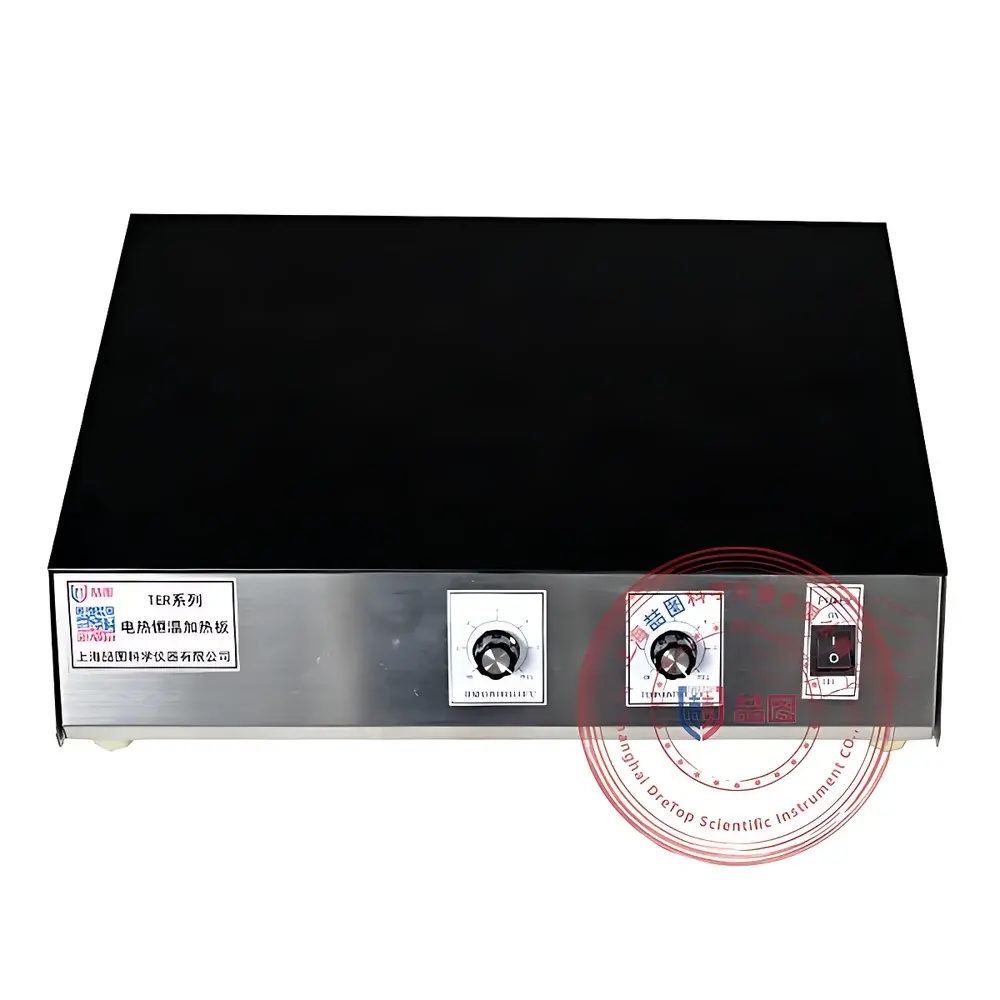
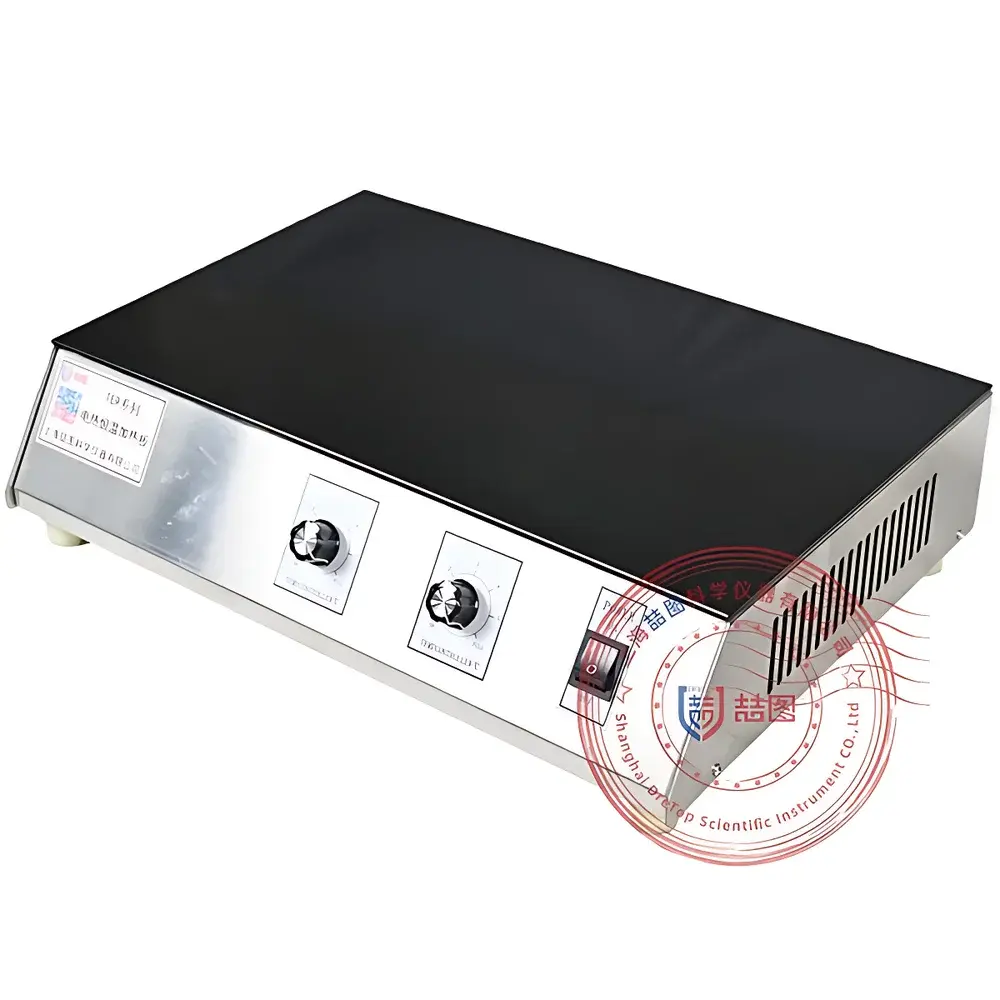
DRETOP TER-30F Ceramic Top Electric Heating Plate
| Brand | DRETOP |
|---|---|
| Origin | Shanghai, China |
| Manufacturer Type | Direct Manufacturer |
| Model | TER-30F |
| Price Range | USD 850–1,150 (FOB) |
| Heating Power | 1200 W |
| Temperature Control | PID Microprocessor-Based Controller |
| Max Operating Temperature | 450 °C |
| Heating Zone Dimensions | 300 × 300 mm |
| Overall Dimensions (W × D × H) | 365 × 303 × 130 mm |
| Display & Interface | Analog Rotary Knob with Visual Temperature Scale |
| Surface Material | Polycrystalline Ceramic (Schott Ceran®-grade Glass-Ceramic) |
| Construction | Integrated Monoblock Design |
| Corrosion Resistance | 316L Stainless Steel Frame + Acid-Resistant Ceramic Top |
| Safety Features | Sealed Internal Circuitry, Thermal Isolation Base, Non-Combustible Enclosure, Low-Thermal-Expansion Panel |
Overview
The DRETOP TER-30F Ceramic Top Electric Heating Plate is a precision-engineered laboratory heating platform designed for reproducible, contamination-free thermal treatment of samples in analytical, preparatory, and synthetic workflows. Unlike conventional metal-surface hotplates, the TER-30F utilizes a high-purity polycrystalline glass-ceramic top—fabricated via controlled nucleation and crystallization of lithium aluminosilicate glass—which delivers exceptional thermal shock resistance (ΔT > 600 °C), near-zero thermal expansion (α ≈ 0–2 × 10⁻⁶ K⁻¹), and outstanding chemical inertness against concentrated HNO₃, HCl, HF, and aqua regia. Its operational principle relies on resistive Joule heating embedded beneath the ceramic layer, coupled with closed-loop PID feedback control to maintain stable setpoint temperatures across the entire 300 × 300 mm active zone. The device complies with IEC 61000-6-3 (EMC Emission) and IEC 61000-6-2 (Immunity), ensuring reliable operation in electromagnetically noisy environments typical of multi-instrument laboratories.
Key Features
- Integrated monoblock architecture with fully sealed internal electronics—no exposed wiring or vents—prevents acid vapor infiltration during digestion protocols.
- Polycrystalline ceramic surface (Schott Ceran®-equivalent) offers non-porous, scratch-resistant, and radiation-free heating; compatible with ASTM E2913-22 for trace-metal cleanroom applications.
- PID microprocessor controller enables ±1 °C long-term stability (measured at center, 1 hr dwell, ambient 23 °C); supports continuous operation up to 450 °C without thermal drift.
- 316L stainless steel perimeter frame provides mechanical rigidity and corrosion resistance per ISO 9227 (NSS salt spray test ≥ 96 h).
- Thermally isolated base with 20 mm air gap and silicone-rubber anti-slip feet ensures passive convection cooling of power electronics and prevents benchtop damage.
- Analog rotary temperature adjustment offers tactile precision, extended service life (>10⁵ actuations), and immunity to electrostatic discharge (ESD) events common in glovebox or dry-room settings.
Sample Compatibility & Compliance
The TER-30F is routinely deployed in EPA Method 3050B (acid digestion of soils/sediments), AOAC 985.27 (crude fat extraction), and USP heavy metal testing workflows. Its inert ceramic surface eliminates metal leaching risks associated with aluminum or stainless-steel plates—critical for ICP-MS and AAS sample preparation. The unit meets GLP documentation requirements when paired with external calibrated thermocouples (e.g., Type K, NIST-traceable). It is certified to CE (EN 61000-6-2/6-3, EN 61326-1) and RoHS 2011/65/EU standards. While not intrinsically rated for Class I Div 1 hazardous locations, its sealed construction supports use in fume hoods per ANSI/AIHA Z9.5–2022 ventilation guidelines.
Software & Data Management
The TER-30F operates as a standalone analog instrument with no digital interface or firmware. Temperature setpoints are manually adjusted via the front-panel rotary knob; real-time surface temperature is inferred—not measured—via calibrated thermal response curves derived from factory validation using PT100 reference probes (per ISO/IEC 17025 accredited calibration). For audit-ready workflows requiring electronic records, integration with third-party data loggers (e.g., Omega OM-DAQPRO-5300) is supported via optional K-type thermocouple input ports (sold separately). All calibration certificates and conformity declarations are supplied with each unit for FDA 21 CFR Part 11–aligned quality systems.
Applications
- Environmental Analysis: Closed-vessel acid digestion of soil, sludge, and fly ash per EPA 3050B/3051A; evaporation of organic extracts prior to GC-MS analysis.
- Food & Agriculture: Kjeldahl digestion support, Soxhlet reflux pre-heating, and moisture content determination (AOAC 950.46).
- Pharmaceutical R&D: Solvent removal from API intermediates under nitrogen blanket; thermal stability screening of excipients (ICH Q1A).
- Materials Science: Controlled annealing of thin-film catalysts on quartz substrates; polymer melt rheology pre-conditioning prior to DSC or TGA.
- Academic Teaching Labs: Safe, open-flame-free alternative for Grignard reactions, esterifications, and hydrolysis kinetics experiments.
FAQ
Is the TER-30F suitable for HF-based digestions?
Yes—the polycrystalline ceramic surface and 316L stainless steel housing resist etching by hydrofluoric acid concentrations up to 40% v/v when used with appropriate PPE and fume hood containment.
What is the recommended maintenance interval?
No scheduled maintenance is required; wipe the ceramic surface with deionized water and lint-free cloth after each use. Avoid abrasive cleaners or metal scrapers to preserve surface integrity.
Can the unit be used inside a nitrogen-purged glovebox?
Yes—its fully sealed electronics and absence of fans or vents make it compatible with inert-atmosphere enclosures (O₂ < 1 ppm).
Does the rotary knob provide precise temperature readout?
No—the knob is an analog setpoint actuator only; actual surface temperature must be verified externally using a calibrated contact thermometer or IR pyrometer.
Is the heating plate compliant with ISO/IEC 17025 calibration traceability requirements?
The unit ships with a factory calibration report referencing NIST-traceable standards; users must perform periodic in-house verification using accredited reference thermometers per ISO/IEC 17025 Clause 6.6.



