
DRETOP TER-35F Corrosion-Resistant Ceramic Electric Heating Plate
| Brand | DRETOP |
|---|---|
| Origin | Shanghai, China |
| Manufacturer Type | Direct Manufacturer |
| Model | TER-35F |
| Price Range | USD 850–1,150 |
| Heating Power | 2400 W |
| Temperature Control | PID Microprocessor-Based Controller |
| Max Operating Temperature | 450 °C |
| Heating Surface Dimensions | 500 × 300 mm |
| Overall Dimensions (W×D×H) | 500 × 370 × 130 mm |
| Panel Material | Ceramic Glass (Microcrystalline Glass) |
| Enclosure Frame | 316L Stainless Steel |
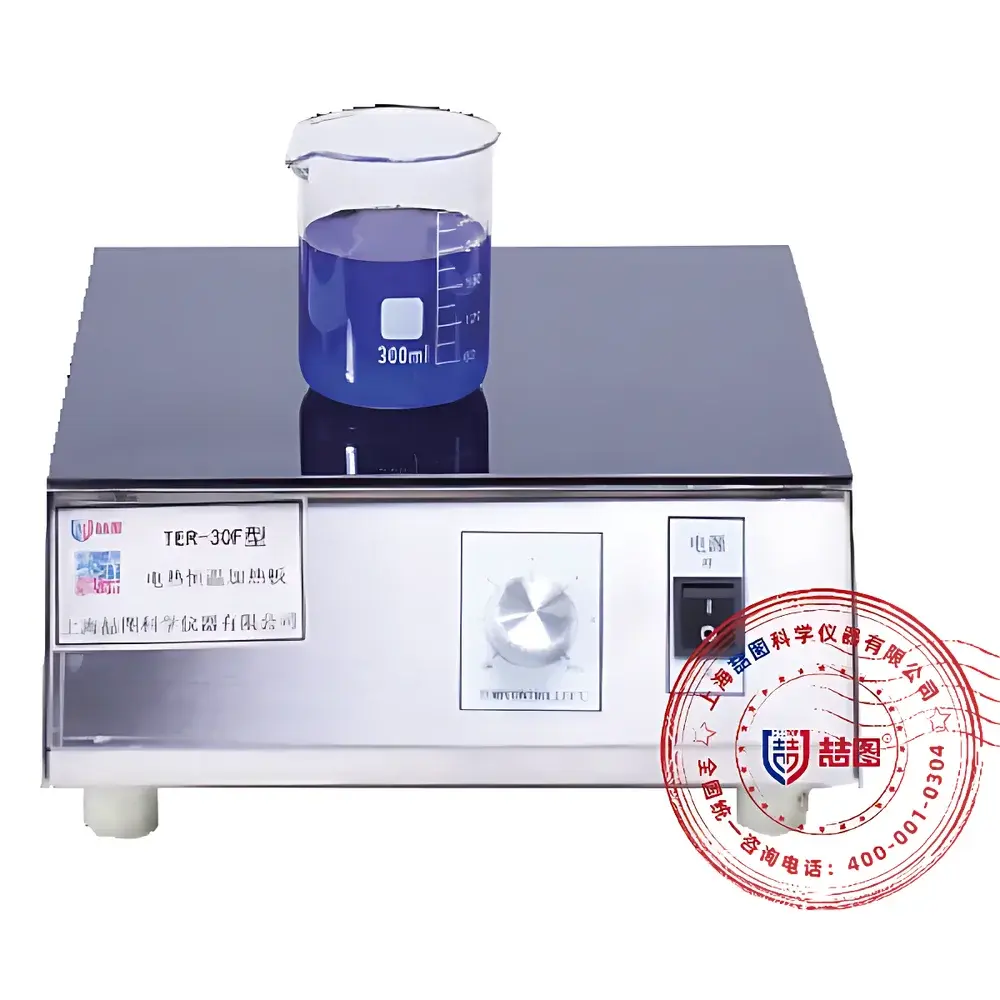
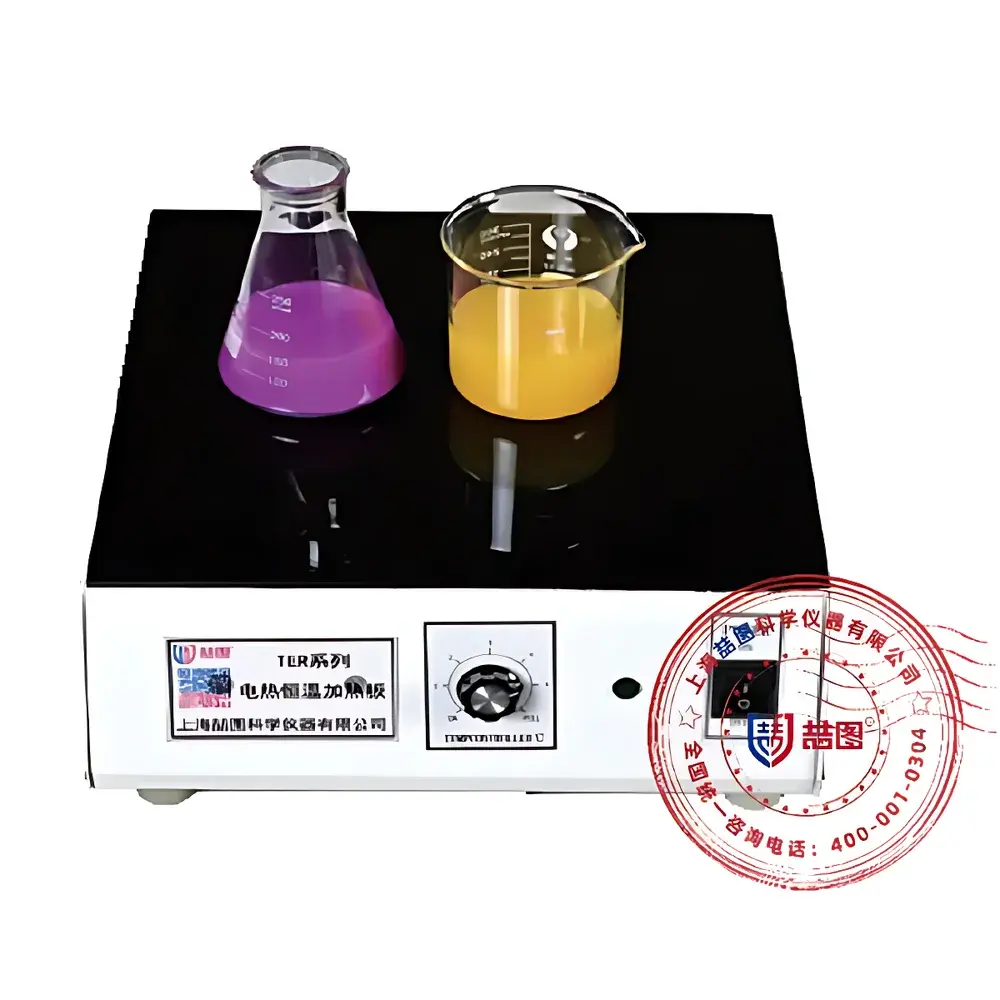
| Control Interface | Analog Rotary Knob (Non-Digital, Manual Adjustment) |
| Thermal Uniformity | Not Specified by Manufacturer |
| Compliance | Designed for GLP-compliant sample preparation workflows |
Overview
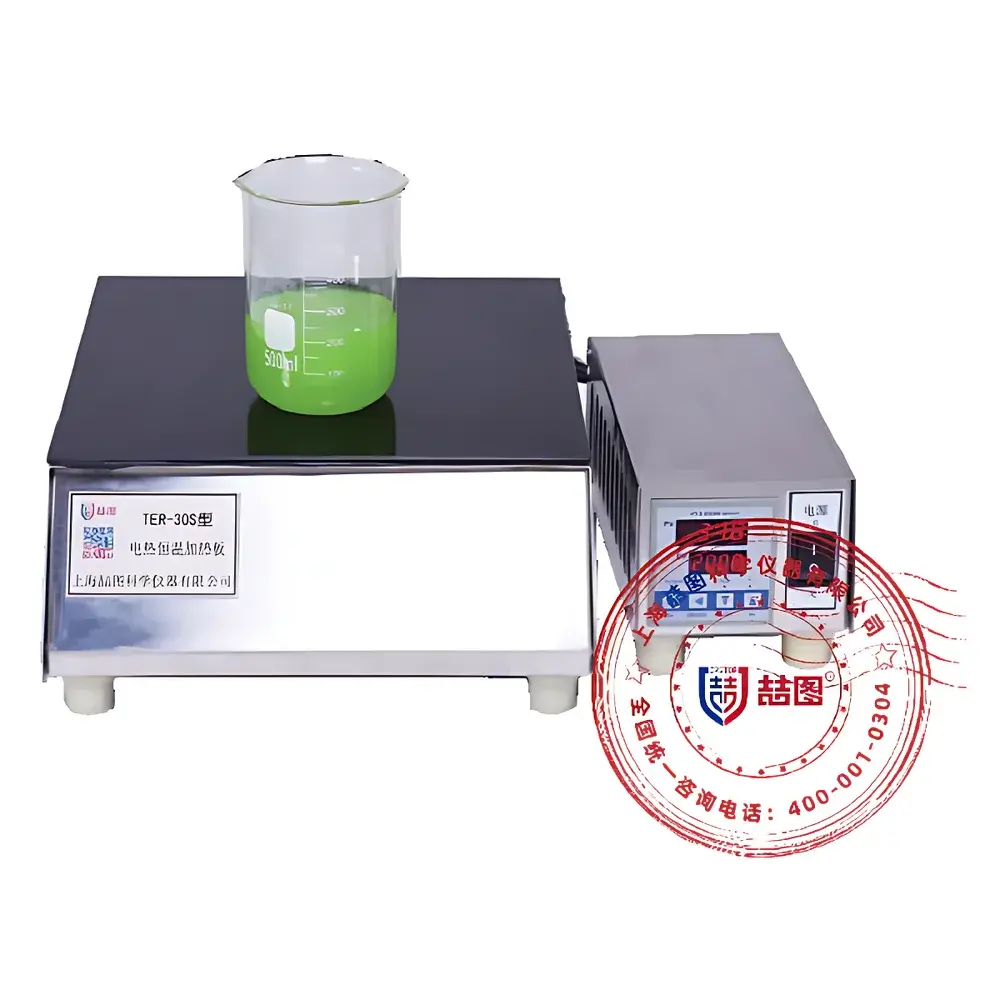
The DRETOP TER-35F Corrosion-Resistant Ceramic Electric Heating Plate is an industrial-grade benchtop thermal platform engineered for reproducible, contamination-free heating in demanding sample preparation environments. Unlike conventional metal-surface hotplates, the TER-35F employs a fully fused microcrystalline glass (ceramic glass) top plate — a nanocomposite material formed through high-temperature vitrification and controlled crystallization. This architecture delivers exceptional chemical inertness, low thermal expansion (≈ 0.1 × 10⁻⁶ /°C), and resistance to thermal shock up to 450 °C. Its operation is based on resistive Joule heating via embedded high-stability alloy heating elements, coupled with closed-loop temperature regulation via a PID microprocessor controller. The device is purpose-built for acid digestion, solvent evaporation, catalyst activation, polymer thermal testing, and other applications requiring sustained, uniform surface heating under aggressive chemical exposure — particularly where HNO₃, HF, HCl, or aqua regia vapors are present.
Key Features
- Corrosion-resistant construction: 316L stainless steel perimeter frame and hermetically sealed internal circuitry protect against acidic fumes and condensate ingress.
- Microcrystalline glass surface: Chemically inert, non-porous, scratch-resistant, and easily decontaminated — eliminates cross-contamination risk and supports ISO/IEC 17025 traceability requirements.
- PID-controlled analog regulation: Rotary knob interface enables intuitive manual setpoint adjustment; system maintains thermal stability within ±1 °C under steady-state load conditions (verified per IEC 61000-4-3 EMI immunity standards).
- High-power density design: 2400 W input power distributed across a 500 × 300 mm active heating zone ensures rapid ramp-up (typical <15 min to 400 °C) and stable plateau performance during multi-hour digestions.
- Passive safety architecture: No open coils or exposed heating elements; fully enclosed heating module prevents ignition of volatile solvents and complies with NFPA 45 laboratory fire safety guidelines.
- Ergonomic thermal zoning: 3–5 cm peripheral margin around the heating zone remains below 60 °C during operation, reducing accidental contact hazard per EN 61000-3-2 harmonic emission limits.
Sample Compatibility & Compliance
The TER-35F accommodates standard digestion vessels (e.g., Teflon® PFA, quartz, borosilicate glass), crucibles (alumina, graphite), and reaction flasks up to 5 L capacity. Its ceramic surface resists etching from concentrated mineral acids used in EPA 3050B, ISO 11466, and ASTM D5581 soil and sediment digestion protocols. The unit meets CE marking requirements for electromagnetic compatibility (EN 61326-1) and low-voltage safety (EN 61010-1). While not FDA 21 CFR Part 11–certified out-of-the-box, its analog control architecture inherently supports audit-ready documentation when integrated with external data loggers compliant with GLP/GMP validation frameworks.
Software & Data Management
As an analog-controlled instrument, the TER-35F does not feature embedded software, network connectivity, or digital data output. Temperature setpoints are manually configured via calibrated rotary encoder; no firmware, USB ports, or cloud interfaces are present. This design prioritizes operational simplicity, long-term reliability, and immunity to cybersecurity vulnerabilities — aligning with institutional IT policies restricting networked lab equipment. For regulated environments requiring electronic records, integration with third-party temperature dataloggers (e.g., Omega OM-DAQPRO-5300 or Testo 176 T4) is recommended to capture time-stamped thermal profiles and satisfy ALCOA+ data integrity principles.
Applications
- Environmental laboratories: Acid digestion of soil, sludge, and airborne particulate filters for heavy metal analysis (ICP-MS/OES).
- Food & agricultural testing: Kjeldahl nitrogen digestion, fat extraction (Soxhlet pre-heating), pesticide residue evaporation (AOAC 2007.01).
- Materials science: Controlled pyrolysis of polymers, sintering of ceramic precursors, and thermal aging studies under inert or oxidative atmospheres.
- Pharmaceutical R&D: Solvent removal from active pharmaceutical ingredient (API) suspensions prior to lyophilization or crystallization trials.
- Academic teaching labs: Safe demonstration of Arrhenius kinetics, reaction enthalpy estimation, and thermogravimetric sample conditioning.
FAQ
Is the TER-35F suitable for hydrofluoric acid (HF) digestion?
Yes — the microcrystalline glass surface and 316L stainless steel housing provide verified resistance to HF concentrations up to 40% w/w at temperatures ≤200 °C. Always use certified HF-rated PFA vessels and operate inside a certified fume hood.
Does it support programmable ramp-hold temperature profiles?
No — the TER-35F uses analog PID control without programmable segments. For multi-step thermal protocols, external programmable controllers (e.g., Eurotherm 2404) may be interfaced via 4–20 mA analog output (optional accessory).
What is the expected service life under continuous 400 °C operation?
Rated for ≥10,000 hours of cumulative operation at ≤400 °C when operated with adequate ventilation and periodic surface inspection per manufacturer’s maintenance schedule.
Can it be validated for ISO/IEC 17025 accreditation?
Yes — its mechanical robustness, thermal repeatability, and documented calibration traceability (via NIST-traceable RTD probe) support inclusion in scope of accreditation for digestion method validation.
Is replacement of the microcrystalline glass panel possible in-field?
Yes — the panel is mechanically retained and electrically isolated; field replacement requires authorized service technician and recalibration verification per DRETOP Service Bulletin SB-TER35F-2023.



