

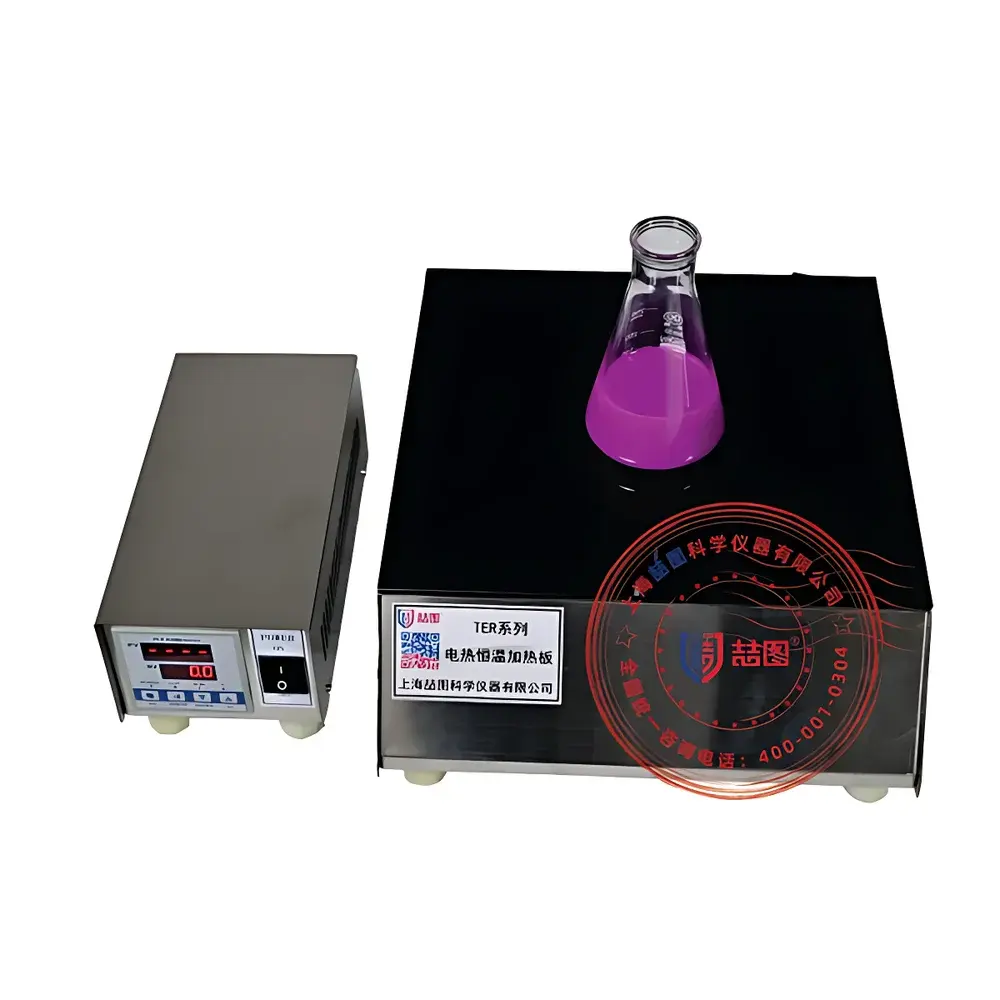
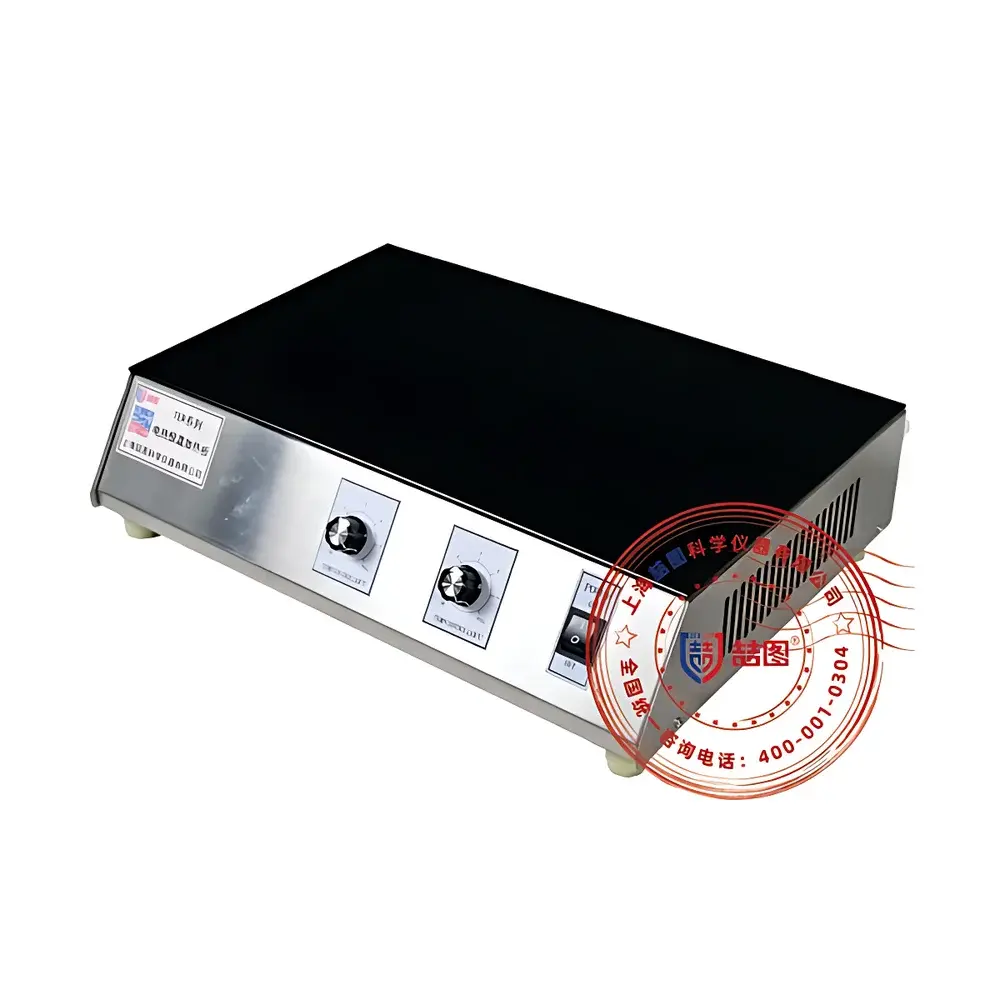
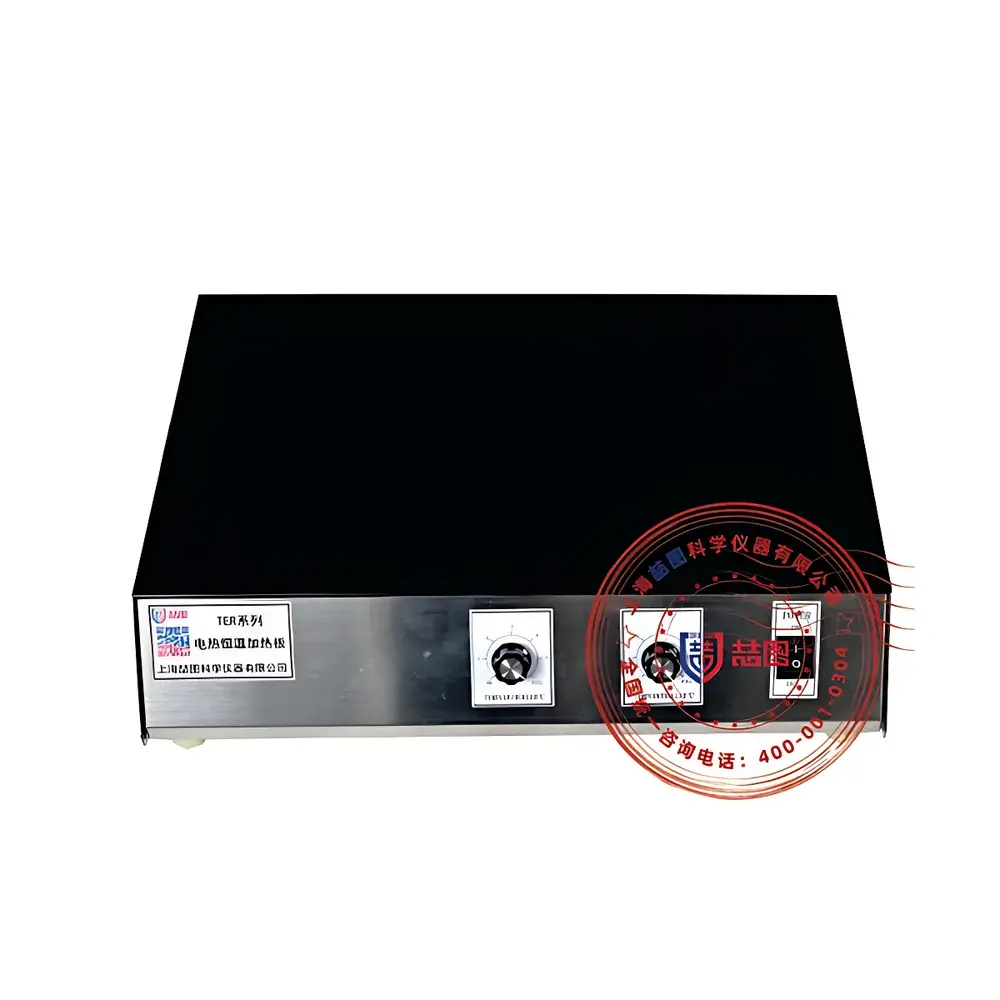
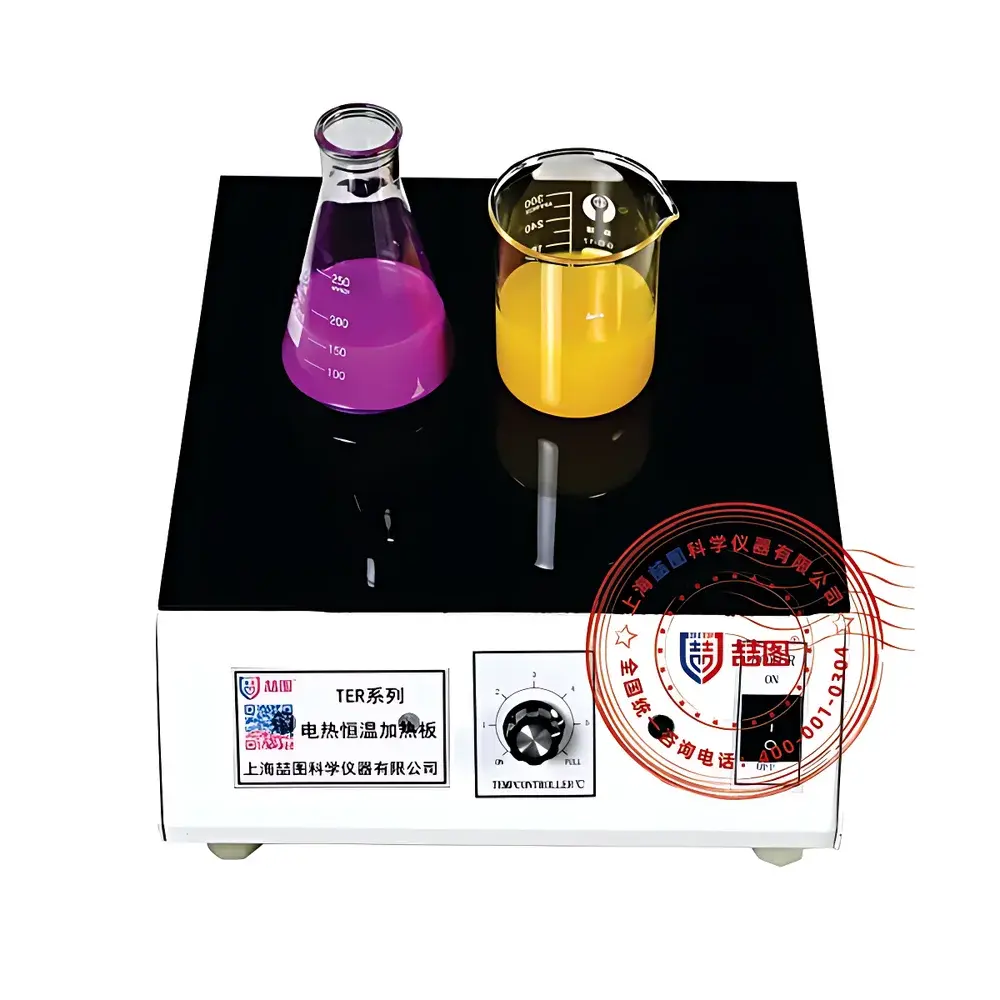
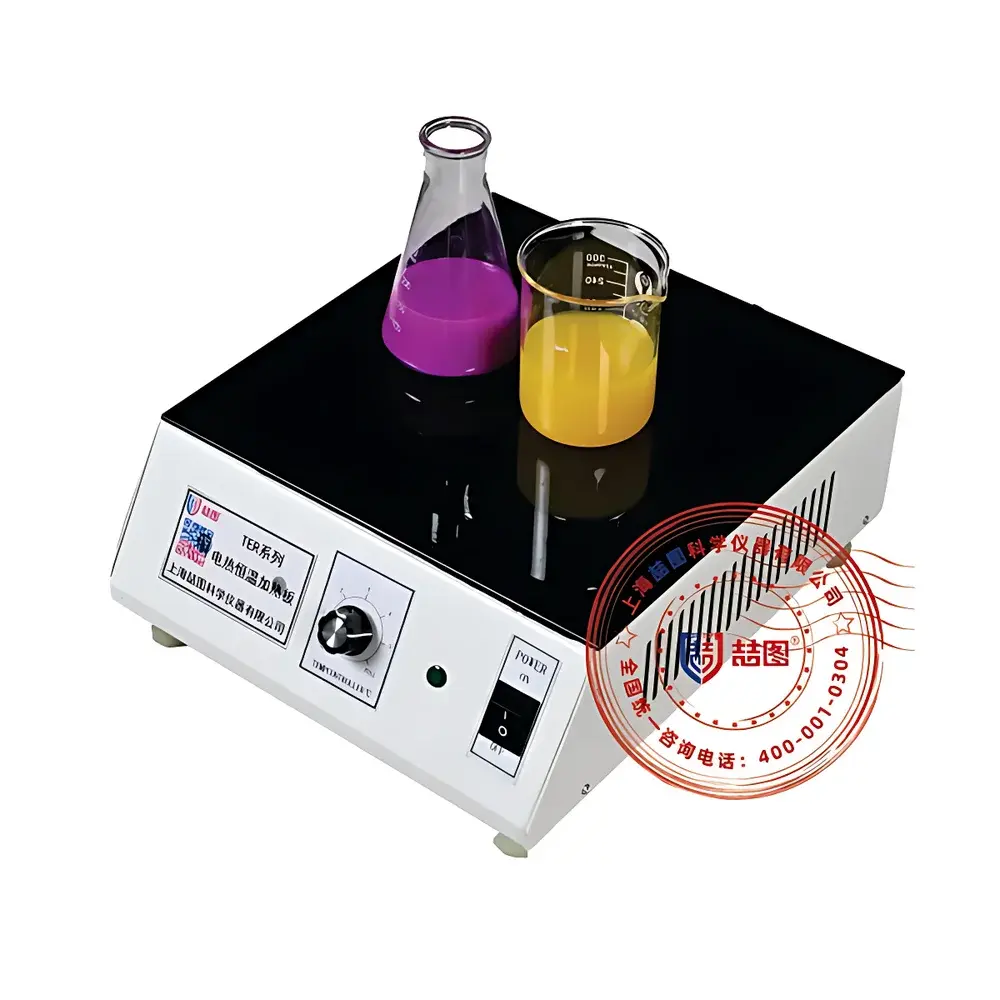
DRETOP TER-35S Digital Electric Heating Plate
| Brand | DRETOP |
|---|---|
| Origin | Shanghai, China |
| Manufacturer Type | Direct Manufacturer |
| Model | TER-35S |
| Heating Power | 2400 W |
| Controller | Microcomputer PID Controller |
| Max. Operating Temperature | RT + 20 °C to 400 °C |
| Temperature Uniformity | ±1 °C |
| Overall Dimensions (W×D×H) | 620 × 355 × 125 mm |
| Heating Zone Dimensions | 500 × 300 mm |
| Display | LED Digital Display |
Overview
The DRETOP TER-35S Digital Electric Heating Plate is a precision-engineered laboratory heating platform designed for consistent, safe, and contamination-free thermal treatment of samples during sample preparation, acid digestion, solvent evaporation, and thermal conditioning workflows. It operates on resistive heating principles, utilizing high-efficiency embedded heating elements beneath a durable microcrystalline glass (ceramic-glass composite) surface. This material—produced via nanoscale fusion and controlled crystallization—exhibits low thermal expansion coefficient ( 500 °C ΔT), and outstanding chemical inertness against concentrated mineral acids (e.g., HNO₃, HCl, HF up to 65% w/w at ≤ 200 °C). The unit is engineered for continuous-duty operation in ISO/IEC 17025-accredited laboratories, GLP-compliant QA/QC environments, and regulated R&D settings where trace-metal integrity, thermal reproducibility, and operator safety are non-negotiable.
Key Features
- PID-controlled microprocessor regulation ensures stable setpoint maintenance with ±0.1 °C repeatability over extended periods (≥ 8 h), minimizing thermal drift during multi-step digestion protocols.
- Integrated one-piece design: heating module, control electronics, and digital interface are co-located within a single robust chassis—no external controller cables or vulnerable interconnects.
- Full-power rapid ramp-up (0 → 400 °C in < 12 min under no-load conditions), followed by intelligent duty-cycle modulation to sustain target temperature without overshoot.
- Triac-based phase-angle power control enables smooth, stepless temperature adjustment across the full 20–400 °C range—ideal for gradient heating or method development requiring fine thermal resolution.
- Microcrystalline glass surface (Schott Ceran®-equivalent composition) provides Class A flatness (≤ 0.1 mm deviation over 500 × 300 mm), non-porous topography, and easy decontamination using standard lab-grade cleaners (e.g., 10% nitric acid rinse).
- Perimeter safety margin: 35 mm unheated border around the active zone prevents accidental contact burns and accommodates oversized vessels or clamping fixtures.
- Hermetically sealed internal circuitry with conformal coating resists ambient acid vapor ingress—validated per IEC 60529 IP54 rating when operated in fume hoods or digestion workstations.
- Ergonomic front-panel LED display with intuitive button navigation; controller physically decoupled from heating surface via extended thermal barrier to prevent sensor drift from radiant heat feedback.
- Non-slip, thermally insulating silicone feet elevate base 20 mm above benchtop—ensuring passive airflow beneath chassis and eliminating conductive heat transfer to sensitive instrumentation or laminar flow cabinets.
Sample Compatibility & Compliance
The TER-35S accommodates standard laboratory vessels including borosilicate glass beakers (up to 2 L), PTFE and quartz digestion tubes, ceramic crucibles, and stainless-steel trays. Its uniform heating profile supports ASTM D5504 (sulfur analysis), EPA Method 3050B/3052 (acid digestion of soils/sediments), and ISO 11047 (metal determination in foodstuffs). The microcrystalline surface complies with USP for extractables testing and meets RoHS Directive 2011/65/EU restrictions on hazardous substances. Units are supplied with CE marking (2014/30/EU EMC Directive and 2014/35/EU LVD Directive) and factory-calibrated per ISO/IEC 17025 traceable procedures.
Software & Data Management
While the TER-35S operates as a standalone analog-digital hybrid instrument, its microcontroller architecture supports optional RS-485 Modbus RTU communication (via accessory interface module) for integration into centralized Lab Information Management Systems (LIMS) or SCADA networks. Audit trails—including setpoint history, actual temperature logs (sampled at 2 Hz), and power-on/off timestamps—can be exported in CSV format for 21 CFR Part 11-compliant electronic records when paired with validated third-party data acquisition software. Firmware updates are performed via USB-C port using DRETOP’s certified calibration utility.
Applications
- Open-vessel acid digestion of environmental matrices (soils, sludges, sediments) prior to ICP-MS or AAS analysis.
- Controlled evaporation of organic solvents (e.g., hexane, acetone) during pesticide residue extraction (AOAC 2007.01).
- Thermal conditioning of polymer blends and composites in materials science labs.
- Pre-heating and holding of reagent solutions in clinical chemistry and pharmaceutical QC labs.
- Drying and carbonization steps in gravimetric analysis (e.g., ash content per AOAC 923.03).
- Supporting hotplate-stirrer synchronization in synthesis workflows when used alongside compatible magnetic stirrers (not included).
FAQ
Is the TER-35S suitable for HF-based digestions?
Yes—the microcrystalline glass surface demonstrates verified resistance to hydrofluoric acid concentrations up to 5% w/w at temperatures ≤ 150 °C for durations ≤ 4 h. For prolonged HF exposure, use PTFE-coated support rings to isolate vessel bases.
Does it meet GMP documentation requirements?
The unit includes a factory calibration certificate (traceable to NIST SRM 1967), configurable password-protected parameter locking, and optional electronic log export—enabling alignment with Annex 11 and EU GMP Chapter 4 data integrity expectations.
Can multiple units be daisy-chained for synchronized control?
Via RS-485 Modbus, up to 32 TER-35S units may share a single master controller for batch process orchestration—supporting coordinated ramp-hold-cool sequences across heterogeneous sample sets.
What is the expected service life under continuous 400 °C operation?
Rated for ≥ 15,000 hours of cumulative heating time at ≤ 350 °C; at 400 °C, derate to 8,000 hours with quarterly verification of surface emissivity and controller linearity.
Is third-party validation support available?
DRETOP provides IQ/OQ protocol templates compliant with ASTM E2500 and offers on-site PQ execution services through ISO 17025-accredited partners in North America, EMEA, and APAC regions.



