
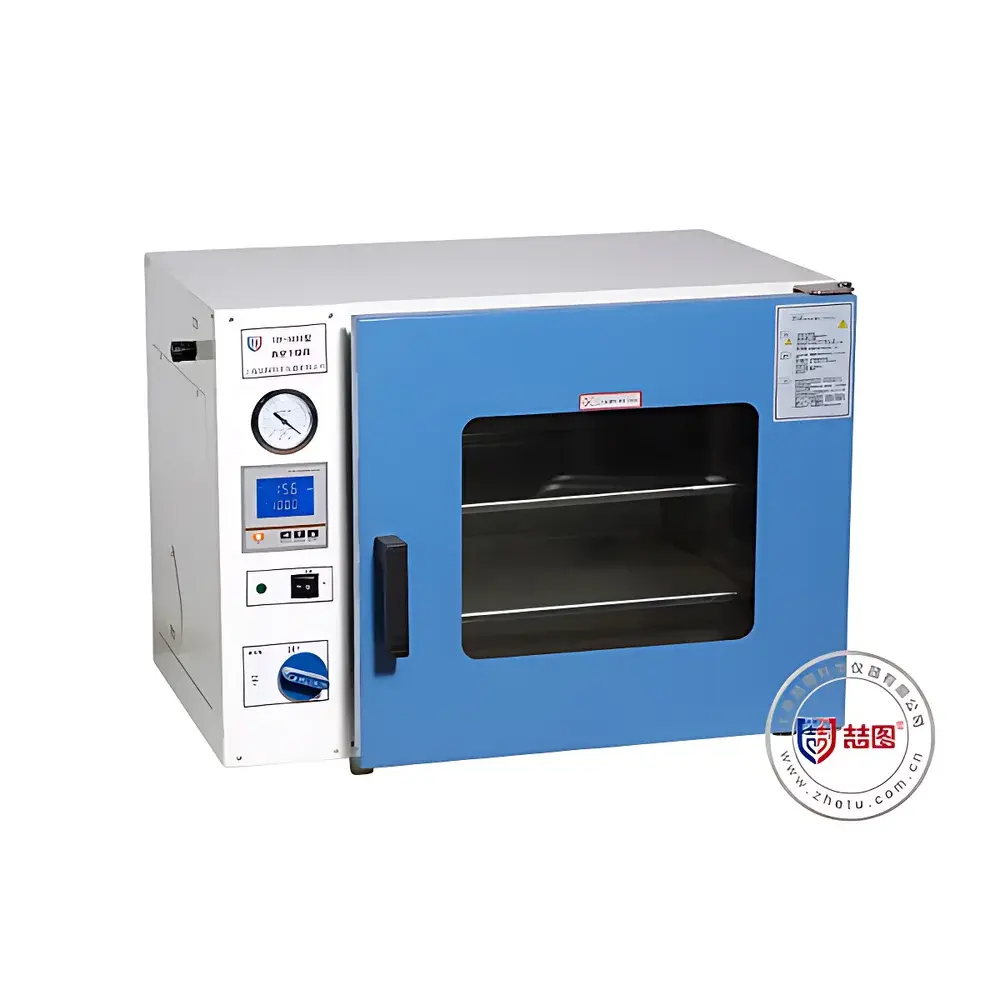
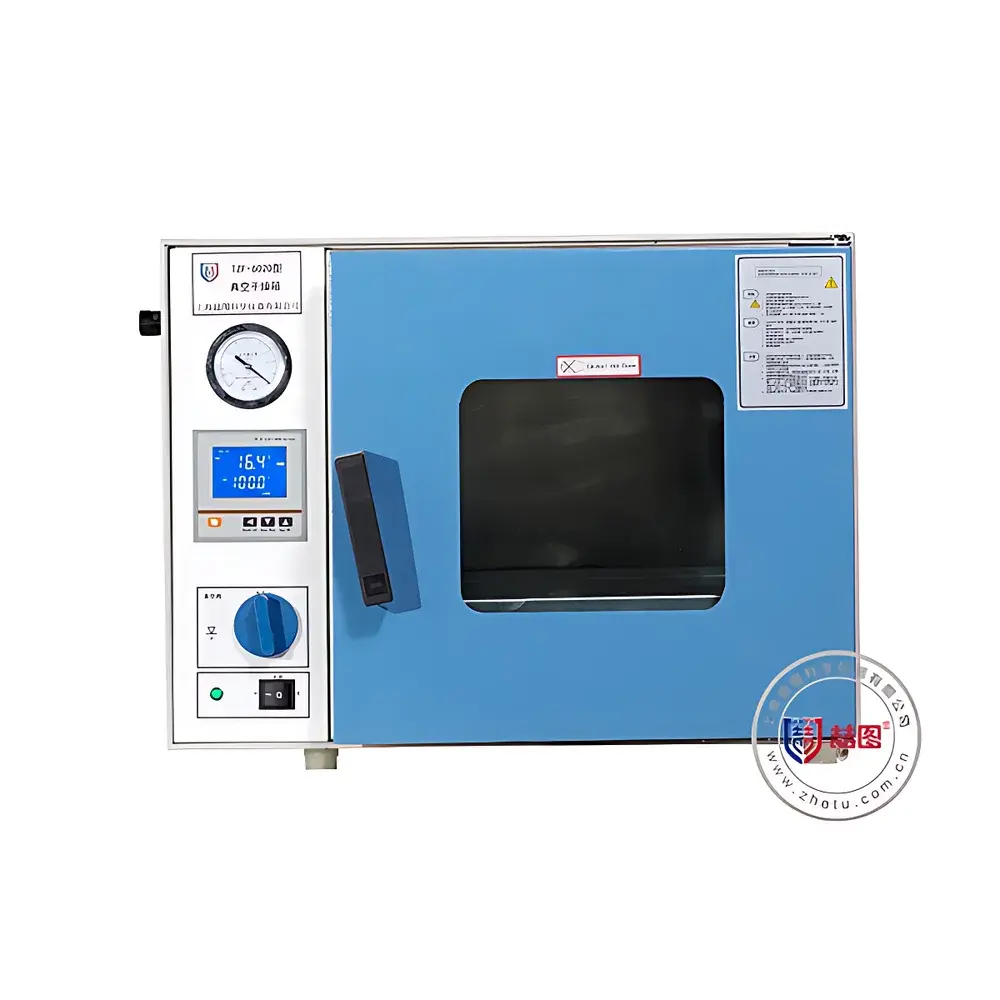
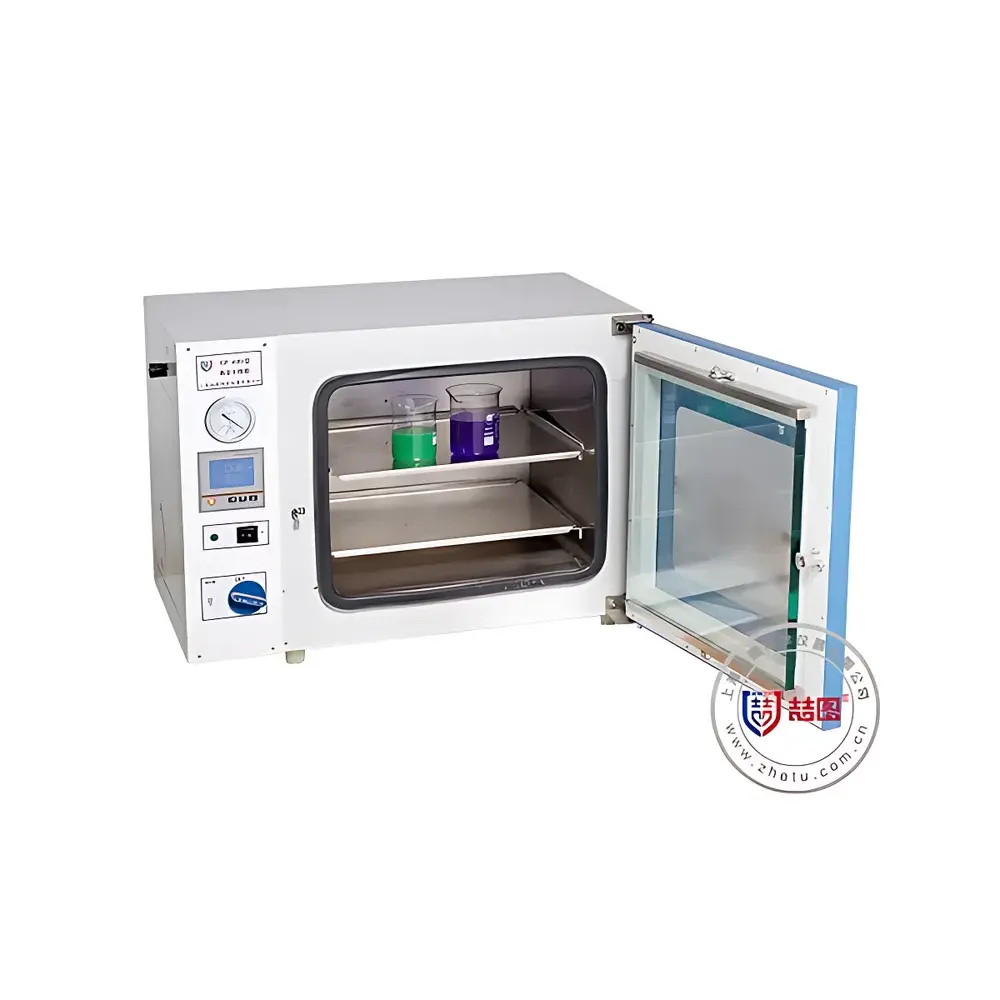
DRETOP TFL-30Se Corrosion-Resistant Vacuum Drying Oven
| Brand | DRETOP |
|---|---|
| Origin | Shanghai, China |
| Manufacturer Type | Direct Manufacturer |
| Equipment Type | Vacuum Oven |
| Model | TFL-30Se |
| Temperature Range | RT+10 to 250 °C |
| Temperature Uniformity | ±1 °C |
| Temperature Fluctuation | ±0.5 °C |
| Temperature Resolution | 0.1 °C |
| Vacuum Level | ≤133 Pa |
| Inner Chamber Dimensions | 320 × 320 × 300 mm (W×D×H) |
| Inner Chamber Volume | 30 L |
| Inner Chamber Material | 316L Stainless Steel with PTFE-Coated Surfaces |
| Heating Method | External Four-Side Radiant Heating |
| Insulation | High-Density Glass Fiber |
| Safety Protections | Over-Temperature, Over-Current, Short-Circuit, Leakage, and Power-Failure Data Retention |
| Compliance | Designed for GLP/GMP-aligned laboratory environments |
Overview
The DRETOP TFL-30Se Corrosion-Resistant Vacuum Drying Oven is an engineered solution for thermal processing under controlled low-pressure conditions. It operates on the principle of vacuum-assisted dehydration—removing moisture and volatile components via reduced ambient pressure while maintaining precise temperature control. Unlike conventional convection ovens, this system eliminates oxidative degradation by evacuating oxygen-rich air prior to heating, making it indispensable for thermally sensitive, oxidation-prone, or chemically reactive materials. Its core architecture integrates a robust 316L stainless steel chamber with optional PTFE surface coating, enabling reliable operation in aggressive chemical environments—including exposure to concentrated organic acids, alkaline solutions, and halogenated solvents. The external four-side radiant heating design ensures uniform thermal distribution without internal heating elements that could compromise vacuum integrity or generate localized arcing. This configuration supports stable, repeatable drying kinetics across diverse sample matrices—from lithium-ion battery electrode slurries and semiconductor photoresists to pharmaceutical active ingredients and biopolymer scaffolds.
Key Features
- Corrosion-resistant construction: 316L stainless steel inner chamber with optional electropolished finish and PTFE-coated surfaces, validated for compatibility with ≤100% H₂SO₄, ≤20% HCl, ≤10% HF, and ≤50% NaOH.
- Precision temperature control: Microprocessor-based P.I.D. controller with 0.1 °C resolution, ±0.5 °C fluctuation tolerance, and programmable ramp-soak profiles.
- Stable vacuum performance: Dual-stage sealing mechanism with dual-gasketed door and reinforced silicone O-ring ensures long-term vacuum retention at ≤133 Pa.
- Enhanced operator safety and data integrity: Triple-layer protection system including over-temperature cutoff, leakage current detection, and non-volatile parameter memory for power interruption recovery.
- Ergonomic usability: Large-format LCD display with tri-color status indicators, intuitive menu navigation, real-time fault code diagnostics, and adjustable shelf spacing for flexible sample loading.
- Thermal efficiency optimization: High-density glass fiber insulation between chamber and outer casing minimizes heat loss and reduces energy consumption per drying cycle.
Sample Compatibility & Compliance
The TFL-30Se accommodates heterogeneous sample forms—including powders, gels, thin-film coatings, porous ceramics, and hygroscopic polymers—without mechanical disturbance or particle dispersion during vacuum evacuation. Its inert chamber environment prevents surface oxidation, hydrolysis, or catalytic decomposition commonly observed in atmospheric drying. The unit meets baseline mechanical and electrical safety requirements per IEC 61010-1 and is routinely deployed in laboratories adhering to Good Laboratory Practice (GLP) and Good Manufacturing Practice (GMP) frameworks. While not inherently 21 CFR Part 11 compliant, its RS485 interface and optional embedded printer support integration into validated data acquisition systems requiring audit trails, electronic signatures, and secure data export (e.g., CSV/USB). Optional cold trap and inert gas inlet (N₂ or Ar) enable moisture-sensitive or pyrophoric material handling per ASTM E145 and USP guidelines.
Software & Data Management
The standard control interface features a 4.3-inch TFT LCD with touch-responsive soft keys and real-time graphical display of temperature/vacuum curves. Optional upgrades include programmable logic controller (PLC)-based sequencing for multi-step processes—such as pre-vacuum hold, gradient heating, dwell stabilization, and controlled venting—and color touchscreen modules supporting recipe storage (≥100 protocols), user-level access control, and timestamped event logging. All configurations support USB data export for offline analysis and comply with ISO/IEC 17025 clause 7.7 on measurement traceability when paired with NIST-traceable calibration records. Remote monitoring via RS485 enables integration into centralized lab management platforms using Modbus RTU protocol.
Applications
This vacuum oven serves critical functions across multiple high-precision domains: in semiconductor R&D, it dries photolithographic resists and removes residual solvents from wafer-mounted die without inducing microcracking; in battery manufacturing, it dehydrates cathode/anode slurries and electrolyte-impregnated separators under inert gas purge to prevent LiPF₆ decomposition; in pharmaceutical development, it stabilizes amorphous solid dispersions and lyophilized intermediates while preserving crystallinity and assay potency; in materials science, it densifies metal-organic frameworks (MOFs) and activates porous carbons without structural collapse. Additional use cases include moisture content validation per ISO 554, residual solvent analysis per ICH Q3C, and accelerated aging studies per ASTM F1980.
FAQ
What vacuum level does the TFL-30Se achieve, and how is it maintained?
The chamber achieves and sustains ≤133 Pa using a high-efficiency vacuum pump interface (KF16/KF25 compatible); maintenance relies on dual-seal door architecture and leak-tight 316L chamber welds.
Can the TFL-30Se be used for outgassing of ultra-high vacuum components?
It is suitable for pre-bakeout conditioning but not for UHV chamber bakeout; maximum operating temperature (250 °C) aligns with standard vacuum component cleaning protocols per ASTM E595.
Is PTFE coating applied to all interior surfaces, including shelves and door gasket contact zones?
PTFE coating covers all exposed 316L surfaces within the chamber, including removable shelves and door flange interfaces—excluding the silicone gasket itself, which remains uncoated for optimal compression sealing.
Does the unit support inert gas purging during vacuum cycles?
Yes—via optional integrated inert gas inlet valve (N₂ or Ar), enabling controlled backfilling to atmospheric pressure or partial-pressure stabilization during heating phases.
How is temperature uniformity verified and documented for compliance purposes?
Uniformity is validated using nine-point sensor mapping per ISO 17025 Annex A.3; DRETOP provides factory calibration certificates traceable to national metrology institutes, with optional on-site verification services available.



