

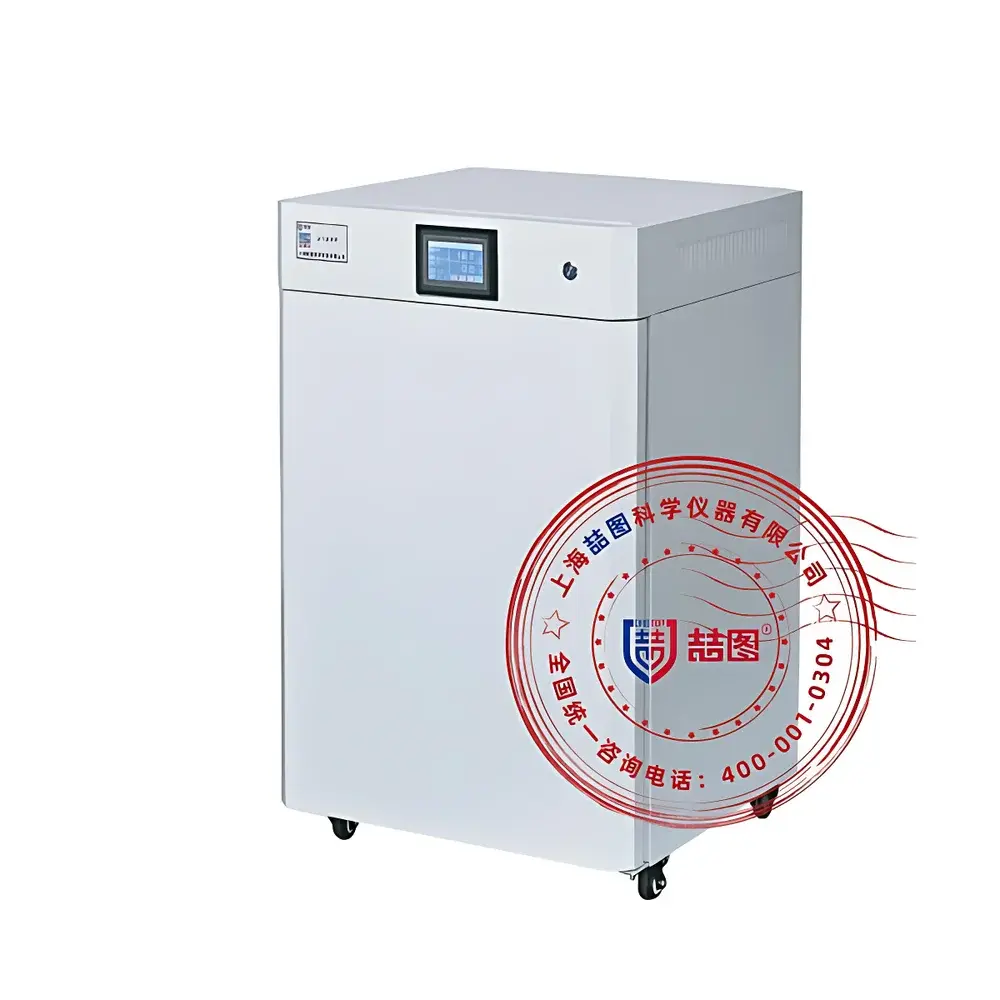
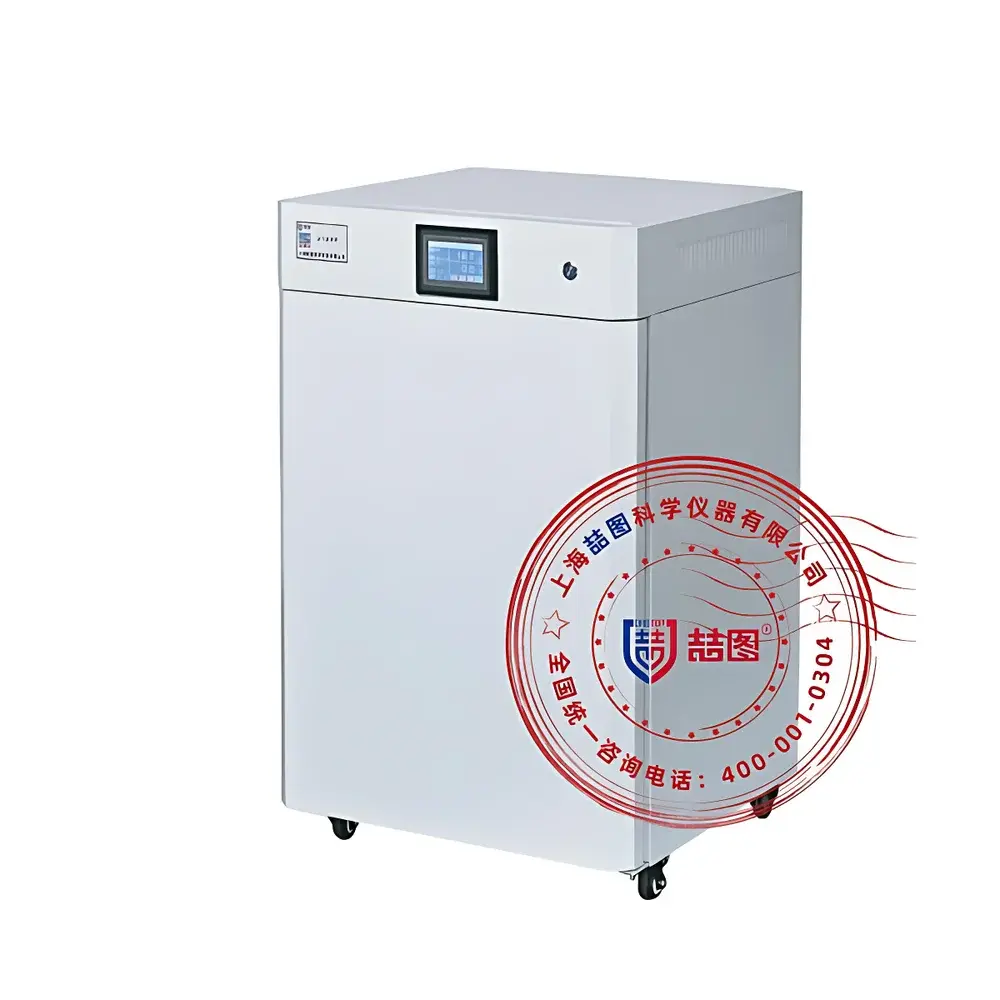
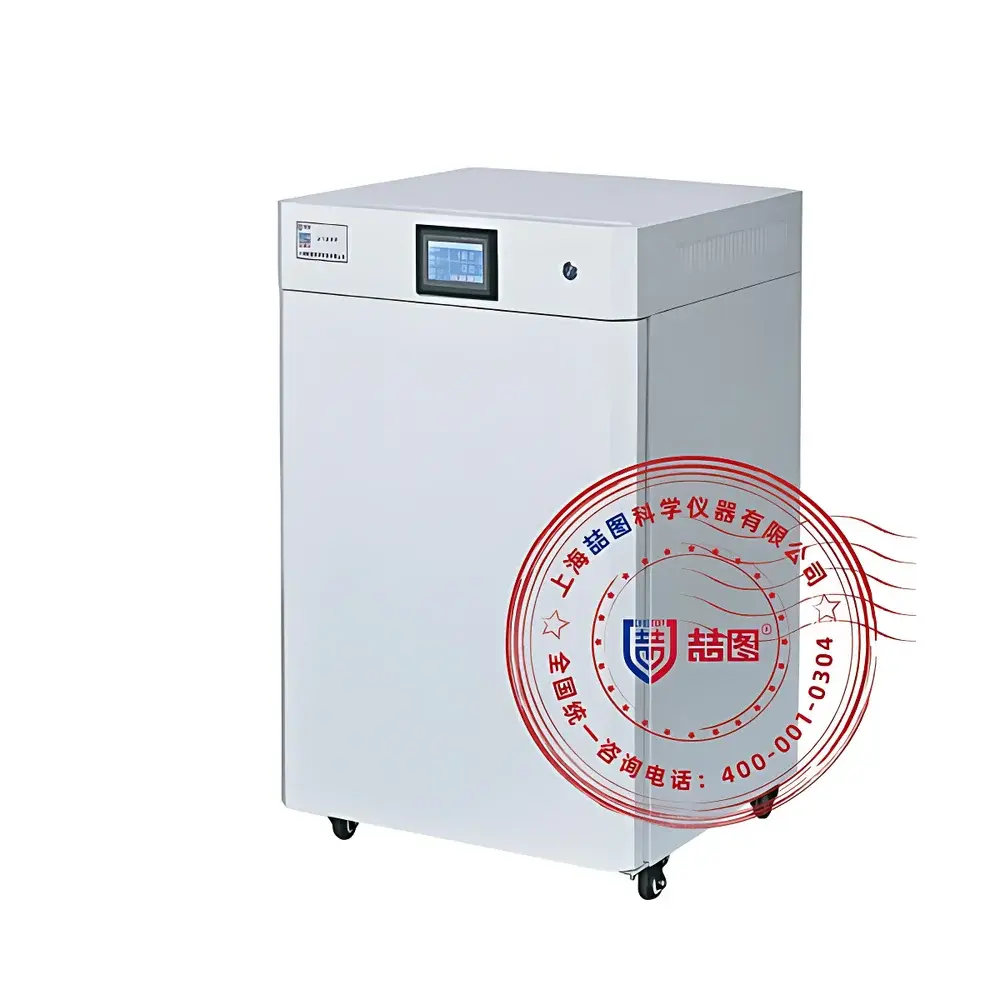
DRETOP TGC-160 Tri-Gas Incubator
| Brand | DRETOP |
|---|---|
| Origin | Shanghai, China |
| Manufacturer Type | Direct Manufacturer |
| Instrument Type | Air-Jacketed Tri-Gas Incubator |
| Temperature Range & Accuracy | RT+5°C to 60°C, ±0.1°C |
| CO₂ Control Range & Accuracy | 0–20%, ±0.1% |
| O₂ Control Range & Accuracy | 1–95%, ±0.2% |
| Humidity Control | ≥90% RH (natural evaporation, unregulated) |
| Capacity | 160 L |
| External Dimensions (W×D×H) | 500 × 500 × 650 mm |
| Power Supply | 220 V, 50 Hz |
| Power Consumption | 550 W |
| Internal Chamber Dimensions | 500 × 500 × 650 mm |
| Standard Accessories | 2 adjustable stainless-steel shelves, HEPA filter, UV sterilization lamp, removable water pan |
Overview
The DRETOP TGC-160 is an air-jacketed tri-gas incubator engineered for precise, reproducible control of oxygen (O₂), carbon dioxide (CO₂), and nitrogen (N₂) partial pressures—alongside temperature and humidity—to replicate physiologically relevant microenvironments for mammalian cell culture, hypoxic tumor modeling, microbiological studies under defined atmospheric conditions, and stem cell expansion. Unlike standard CO₂ incubators, the TGC-160 implements independent gas regulation logic: CO₂ is monitored via a high-stability infrared (IR) sensor with negligible drift and rapid recovery (<3 min to ±0.2% of setpoint after 30-sec door opening); O₂ is measured using a zirconia-based electrochemical sensor offering linear response across 1–95% O₂; and N₂ is dynamically balanced in real time to maintain stoichiometric gas sum at 100%. This closed-loop architecture eliminates manual gas ratio calculations and mitigates cross-interference between gas channels—critical for long-term experiments requiring strict hypoxia (e.g., 1–5% O₂) or hyperoxia (e.g., 40–90% O₂) protocols.
Key Features
- Air-jacketed thermal design with six-sided uniform heating ensures rapid chamber warm-up, minimal thermal gradient (<±0.2°C stability), and suppression of condensation on interior surfaces—reducing microbial adhesion risk.
- Double-door structure: outer insulated door and inner tempered glass door enable non-invasive observation while preserving internal environment integrity during routine monitoring.
- Integrated door-heating system prevents fogging of the inner glass panel, eliminating condensate-mediated contamination and improving optical clarity for microscopy-compatible workflows.
- Micro-fan-assisted air circulation mimics natural convection patterns—accelerating equilibration of temperature, humidity, and gas concentrations following door openings or parameter adjustments.
- HEPA filtration (≥99.97% @ 0.3 µm) continuously purifies recirculated air; filter service life is tracked and displayed on the HMI for proactive maintenance scheduling.
- UV-C germicidal lamp (254 nm) provides automated or manual sterilization cycles targeting airborne microbes, surface contaminants on shelves/sensors/fans, and aerosolized pathogens in humidified vapor from the water pan.
- Comprehensive safety suite includes dual-limit temperature alarms (high/low), CO₂/O₂ deviation alerts, prolonged door-open detection, sensor fault diagnostics, and automatic fan shutoff upon door actuation to conserve gases and limit external air ingress.
Sample Compatibility & Compliance
The TGC-160 supports standard tissue culture vessels—including T-flasks, Petri dishes, multi-well plates, and roller bottles—within its 160 L stainless-steel chamber (electropolished 304 SS, passivated per ASTM A967). Its gas control architecture complies with requirements for Good Laboratory Practice (GLP) and ISO 13485-aligned bioprocessing environments. While not certified to FDA 21 CFR Part 11 out-of-the-box, audit-ready operation is supported through timestamped event logs (door opens, gas deviations, alarm triggers), user-accessible calibration history, and password-protected parameter modification—enabling traceability in regulated academic and contract research settings. The absence of humidification feedback control aligns with ISO 14644-1 Class 7 cleanroom-compatible incubation practices where passive RH stabilization suffices.
Software & Data Management
The 7-inch color touchscreen interface provides real-time visualization of all operational parameters: chamber temperature, CO₂ %, O₂ %, RH % (optional sensor), fan status, UV cycle progress, and HEPA usage percentage. All events—including setpoint changes, alarm activations, and door operations—are logged with date/time stamps and retained for ≥30 days onboard. Data export is available via USB port in CSV format for integration into LIMS or ELN systems. Firmware updates are performed locally via USB stick; no cloud connectivity or remote access is implemented—ensuring data sovereignty and network isolation per institutional IT security policies.
Applications
- Hypoxia research: modeling ischemic injury, tumor microenvironments, and HIF-1α signaling pathways under controlled 0.5–5% O₂.
- Microaerophilic and anaerobic microbiology: cultivation of Helicobacter pylori, Campylobacter jejuni, and oral biofilm communities requiring precise O₂/CO₂/N₂ ratios.
- Stem cell differentiation: maintaining pluripotency or directing lineage specification under low-O₂ (2–5%) conditions known to enhance genomic stability.
- Regenerative medicine: expanding primary chondrocytes, mesenchymal stromal cells (MSCs), and induced pluripotent stem cells (iPSCs) with minimized oxidative stress.
- Biomanufacturing process development: qualifying cell culture platforms under variable gas atmospheres prior to scale-up in bioreactors.
FAQ
What gas delivery infrastructure is required to operate the TGC-160?
Three independent gas lines—medical-grade CO₂, O₂, and N₂—with pressure regulators (0.1–0.3 MPa input) and particulate filters (≤5 µm) are mandatory. Gas purity must meet ISO 8573-1 Class 2:2:2 specifications.
Is humidity actively controlled or only passively maintained?
Humidity is maintained passively via a removable stainless-steel water pan; no active humidification or RH feedback loop is included. Achieved RH typically exceeds 90% at 37°C under steady-state conditions.
Can the incubator be validated for IQ/OQ/PQ compliance?
Yes—the unit supports third-party validation using calibrated reference sensors. DRETOP provides factory calibration certificates for temperature and CO₂ sensors; O₂ sensor calibration requires user-performed span adjustment using certified gas mixtures.
What is the recommended maintenance interval for the HEPA filter and UV lamp?
HEPA filter replacement is advised every 6–12 months depending on usage frequency and ambient lab air quality; UV lamp lifespan is rated at ≥5,000 hours of cumulative operation.
Does the TGC-160 support serial communication protocols such as RS-232 or Modbus?
No—only local USB data export is supported. For enterprise integration, external data loggers with analog/digital I/O may be deployed via the incubator’s dry-contact alarm outputs.
Related Products




