
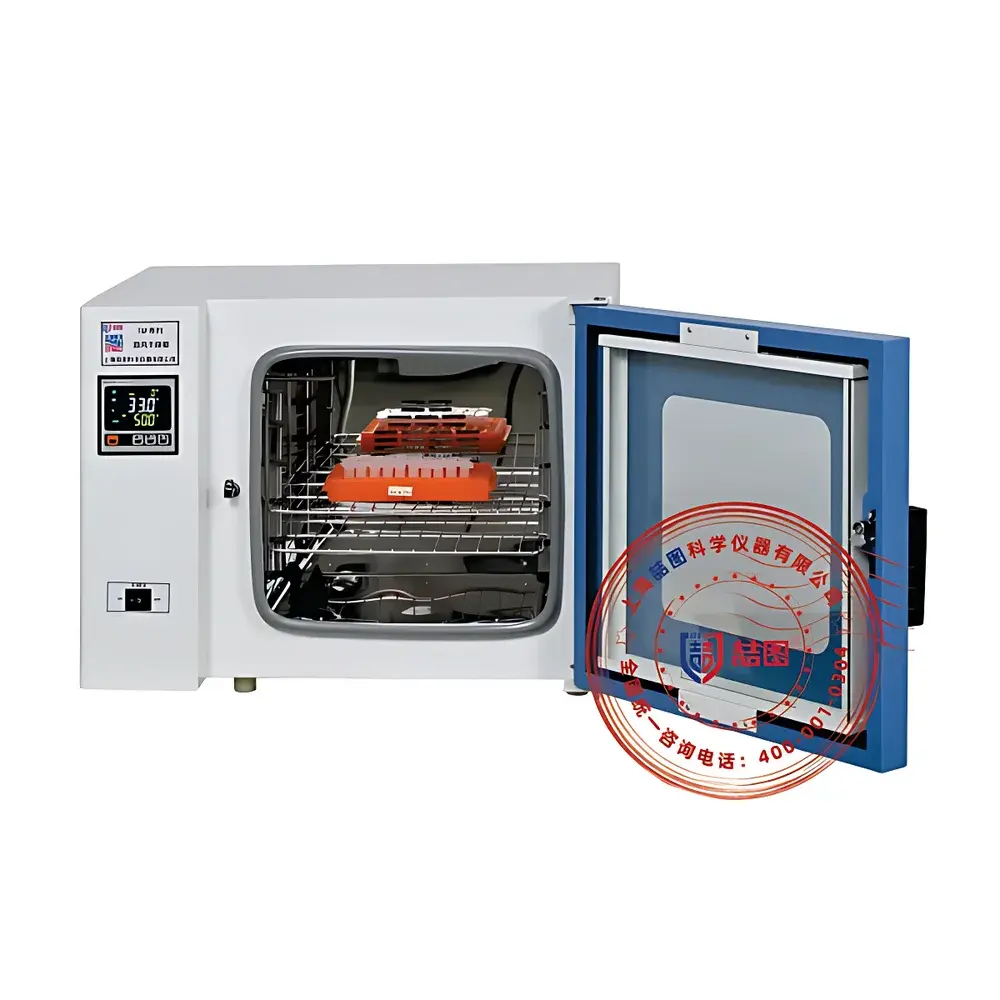
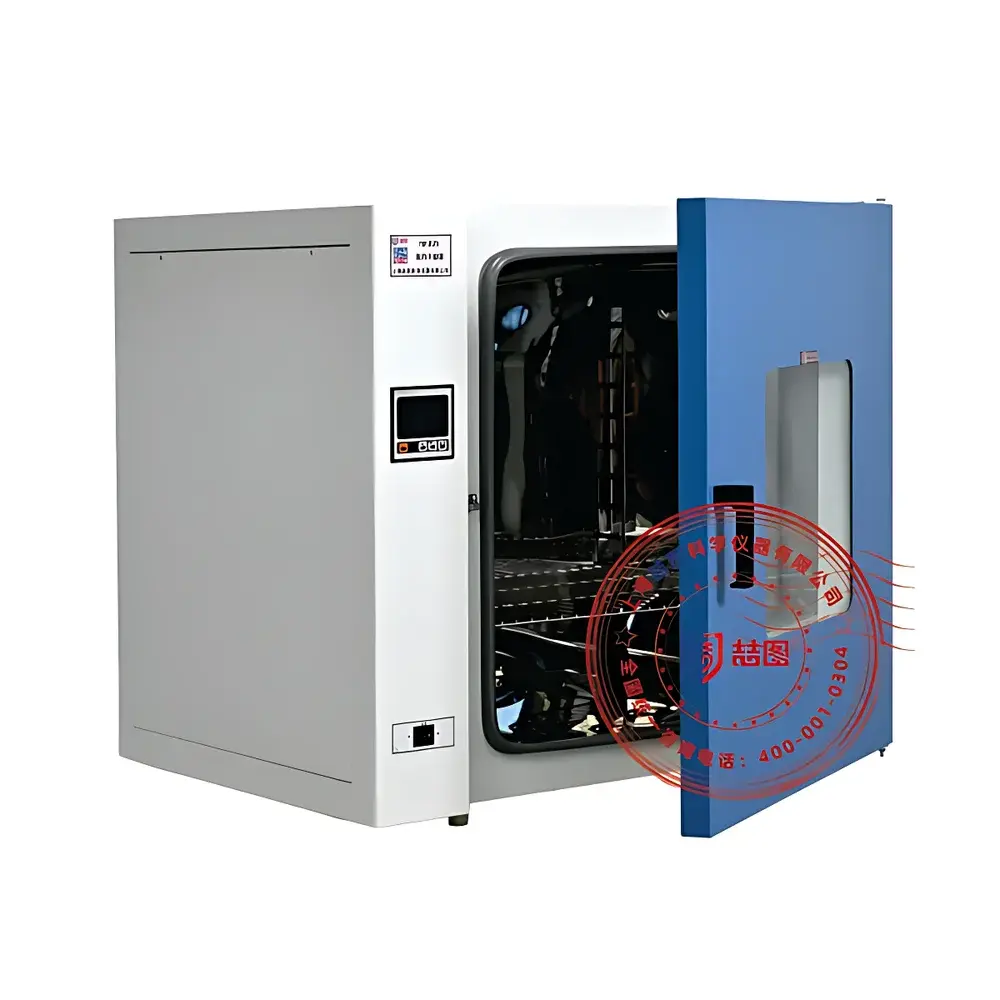
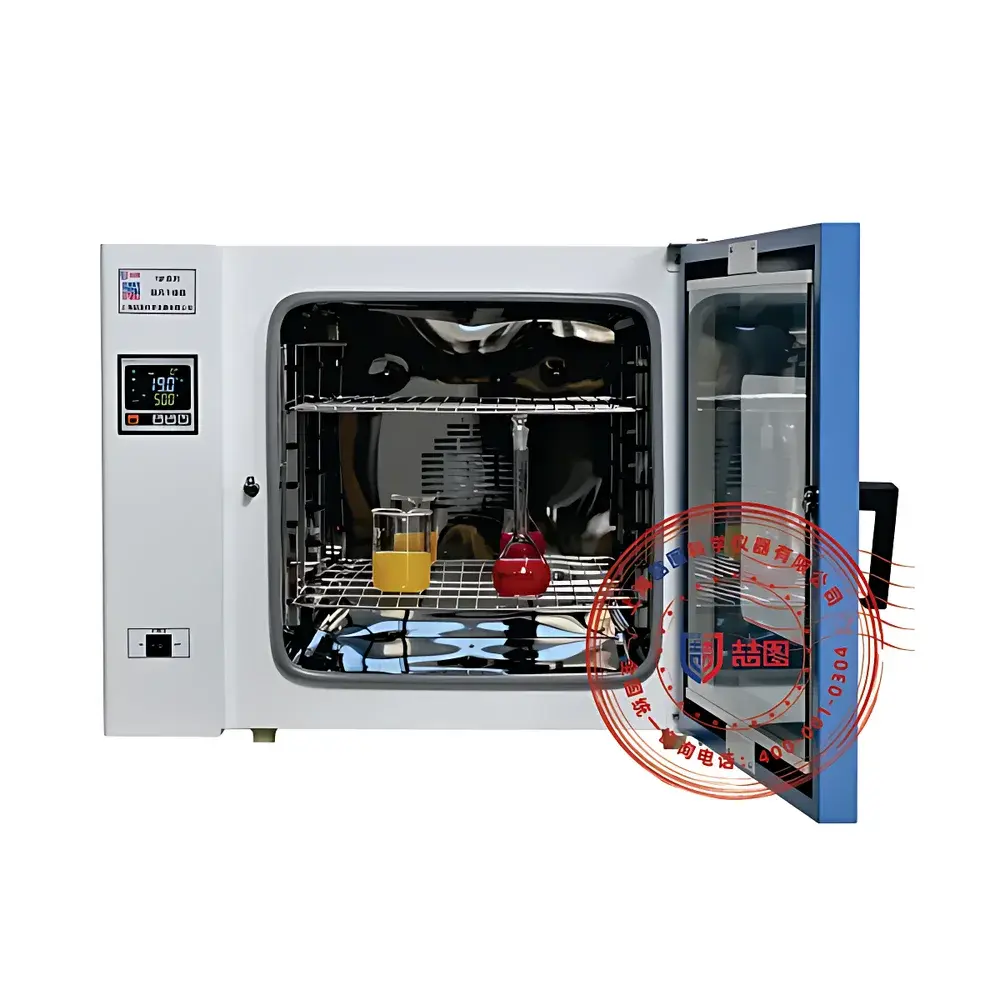
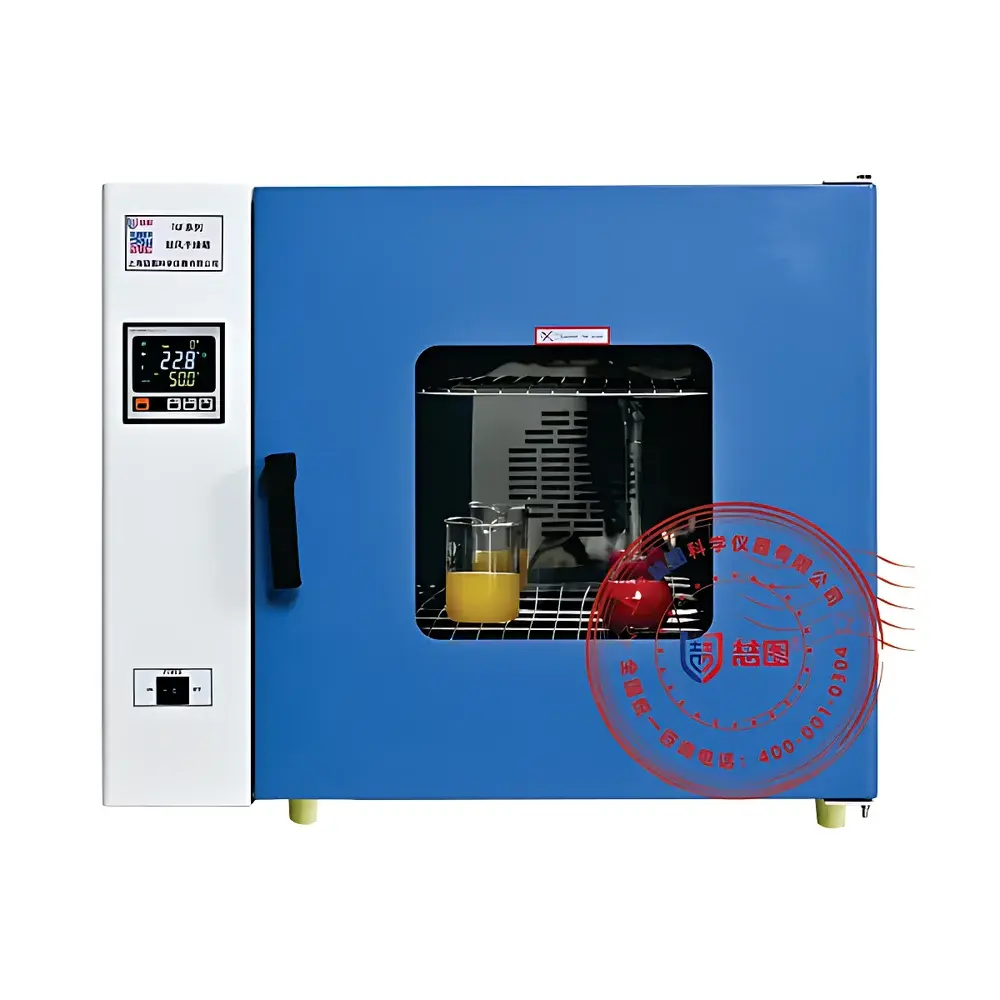
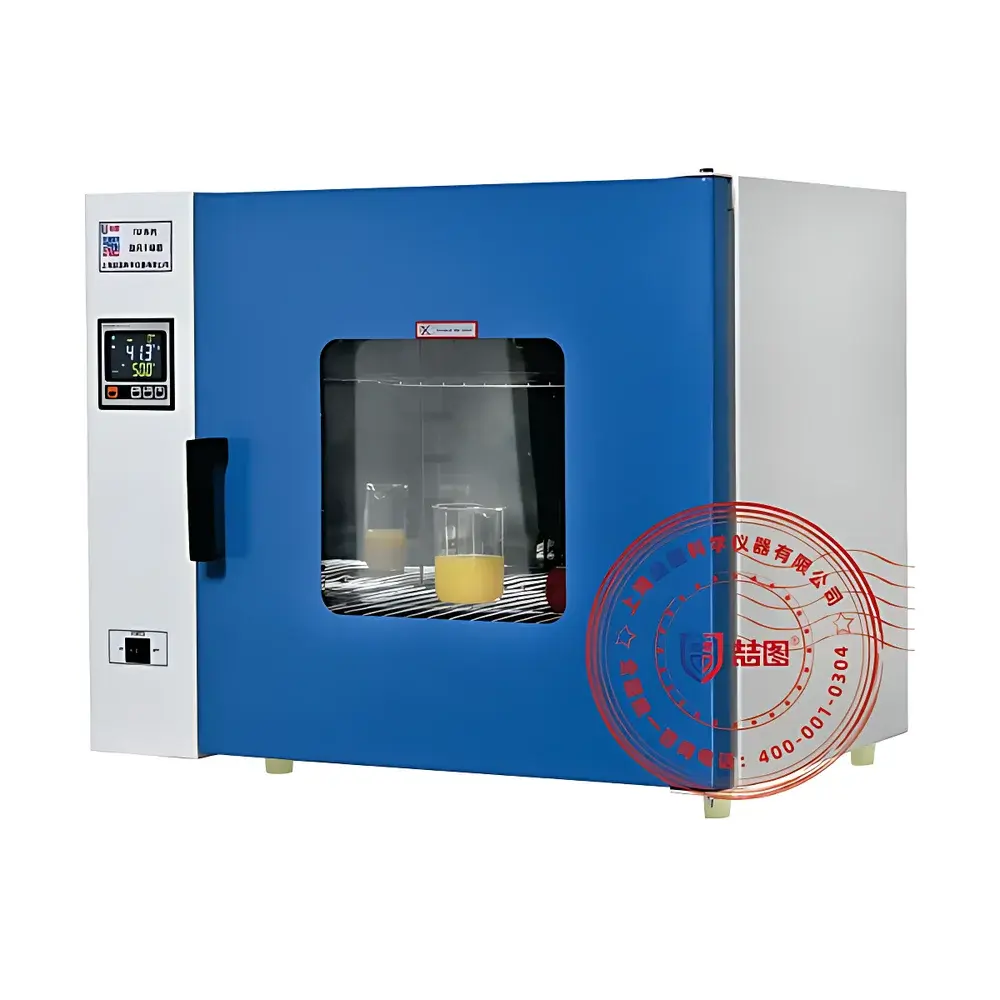
DRETOP TGF-9055A Forced-Air Drying Oven
| Brand | DRETOP |
|---|---|
| Origin | Shanghai, China |
| Manufacturer Type | Direct Manufacturer |
| Product Category | Domestic |
| Model | TGF-9055A |
| Instrument Type | Standard Forced-Air Oven |
| Temperature Range | RT+10°C to 300°C |
| Temperature Uniformity | ±2.5°C (at 100°C, empty chamber) |
| Temperature Fluctuation | ±1°C |
| Temperature Resolution | 0.1°C |
| Internal Dimensions (W×D×H) | 420×350×350 mm |
| External Dimensions (W×D×H) | 705×615×530 mm |
| Control Range | RT+10°C to 300°C |
| Operating Ambient Temperature | +5°C to +40°C |
| Chamber Material | Stainless Steel (Mirror-Finished) |
| Heating Method | Forced Convection with High-Temperature Fan and Optimized Airflow Duct Design |
| Power Input | 2050 W / 2500 W (dual-range configuration) |
Overview
The DRETOP TGF-9055A Forced-Air Drying Oven is an engineered solution for precise, repeatable thermal processing in research laboratories, quality control environments, and industrial R&D settings. It operates on the principle of forced convection—using a high-temperature-rated centrifugal fan and a thermally optimized airflow duct system—to ensure uniform heat distribution across the working chamber. Unlike natural convection ovens, this design eliminates cold spots and reduces thermal gradients, making it suitable for applications demanding consistent drying, baking, sterilization, or thermal aging where spatial temperature deviation must remain within tight tolerances. The oven is designed for non-volatile, non-flammable materials only, and complies with general safety standards for laboratory-grade electric heating equipment used in academic, pharmaceutical, food science, and materials testing contexts.
Key Features
- Microprocessor-based P.I.D. temperature controller with 0.1°C resolution and real-time digital display; supports programmable ramp-hold profiles when equipped with optional multi-segment controller.
- Self-diagnostic system with fault code display for rapid troubleshooting—e.g., sensor open-circuit, overtemperature event, or fan failure.
- Dual-stage rotary door lock mechanism with high-elasticity, high-temperature silicone rubber gasket (rated to 350°C), ensuring long-term sealing integrity and minimal heat loss.
- Double-layer tempered glass observation window with anti-fog coating, enabling continuous visual monitoring without compromising thermal stability.
- Three adjustable, removable stainless steel shelves with tool-free height adjustment; drawer-style tray design facilitates easy loading/unloading and cleaning.
- Automatic moisture exhaust function via integrated venting path, preventing condensation buildup during extended low-temperature drying cycles.
- Power-loss recovery mode retains set parameters and resumes operation upon power restoration—critical for unattended overnight runs.
Sample Compatibility & Compliance
The TGF-9055A is validated for use with glassware, metal components, polymer substrates, ceramic samples, biological containers (e.g., Petri dishes, vials), and inert chemical reagents. It is not intended for solvents, volatile organic compounds (VOCs), or explosive substances. While not certified to IEC 61010-1 Annex BB (Explosion-Proof), its construction meets general requirements for Class II, Division 1 laboratory environments per UL/CSA standards. For GxP-regulated workflows—including GLP and GMP—the optional RS485 interface enables integration into audit-trail-capable data acquisition systems compliant with FDA 21 CFR Part 11 when paired with validated software. All stainless-steel internal surfaces conform to ASTM A240/A240M for corrosion resistance and cleanability.
Software & Data Management
Standard configuration includes local parameter logging with time-stamped setpoint and actual temperature values stored in non-volatile memory (up to 30 days at 1-min intervals). Optional upgrades support expanded functionality: USB data export (CSV format) for post-processing in Excel or MATLAB; RS485 Modbus RTU communication for SCADA or LIMS integration; and a full-color 7-inch capacitive touchscreen with embedded recipe management and alarm history (up to 1000 events). When configured with the independent overtemperature cut-off module (optional), the system provides hardware-level redundancy that triggers audible/visual alerts and cuts heater power independently of the main controller—meeting dual-redundancy requirements outlined in ISO 13485:2016 Clause 7.5.2.
Applications
- Drying of analytical glassware and precision instrumentation parts prior to calibration or assembly.
- Moisture content determination in coal, soil, pharmaceutical excipients, and food matrices per ASTM D3173 and ISO 540.
- Thermal aging of electronic components (PCBs, capacitors, encapsulants) under controlled dwell conditions per IPC-TM-650 2.6.25.
- Dry-heat sterilization of stainless steel tools and glass containers at ≥160°C for ≥2 hours, aligned with USP sterility assurance principles.
- Curing of powder coatings, adhesives, and composite pre-pregs where uniform thermal exposure is critical to cross-link density.
- Pre-conditioning of reference standards and calibration artifacts in metrology labs operating under ISO/IEC 17025:2017 environmental control clauses.
FAQ
What is the maximum safe operating temperature for continuous use?
The chamber is rated for continuous operation up to 300°C; however, sustained use above 250°C may accelerate gasket aging and requires verification of material compatibility for specific samples.
Does the oven support validation protocols such as IQ/OQ/PQ?
Yes—when equipped with calibrated PT100 sensors (optional), RS485 output, and traceable calibration certificates, the unit supports full qualification documentation per GAMP5 guidelines.
Can the airflow rate be adjusted manually?
No—air velocity is fixed by fan speed and duct geometry to maintain optimal uniformity; however, optional variable-speed fan kits are available for specialized applications requiring dynamic airflow modulation.
Is the stainless-steel interior electropolished?
The inner chamber uses mirror-finish AISI 304 stainless steel (2B surface finish), offering superior cleanability and resistance to acidic residue compared to brushed alternatives.
What is the typical warm-up time to reach 100°C from ambient?
Approximately 12–15 minutes under no-load conditions, verified per ISO 8573-1 Annex C methodology using three-point probe mapping.



