

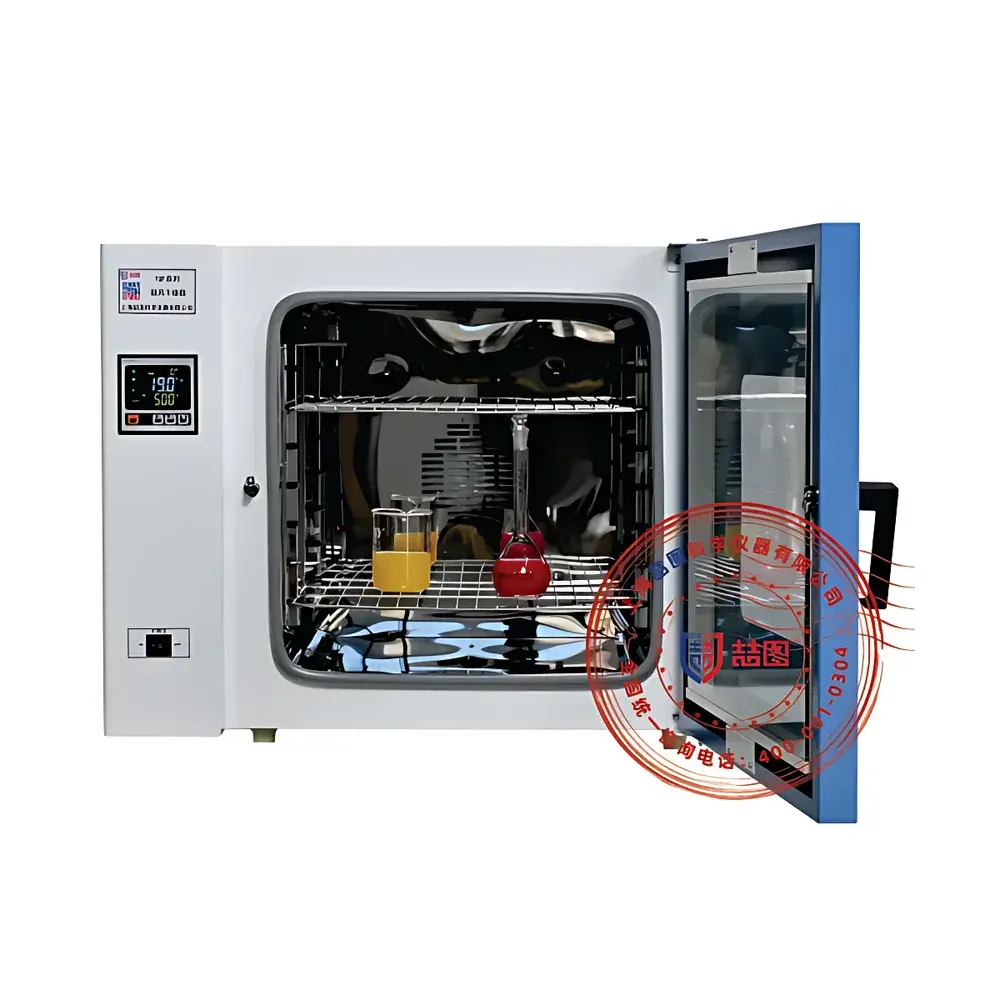
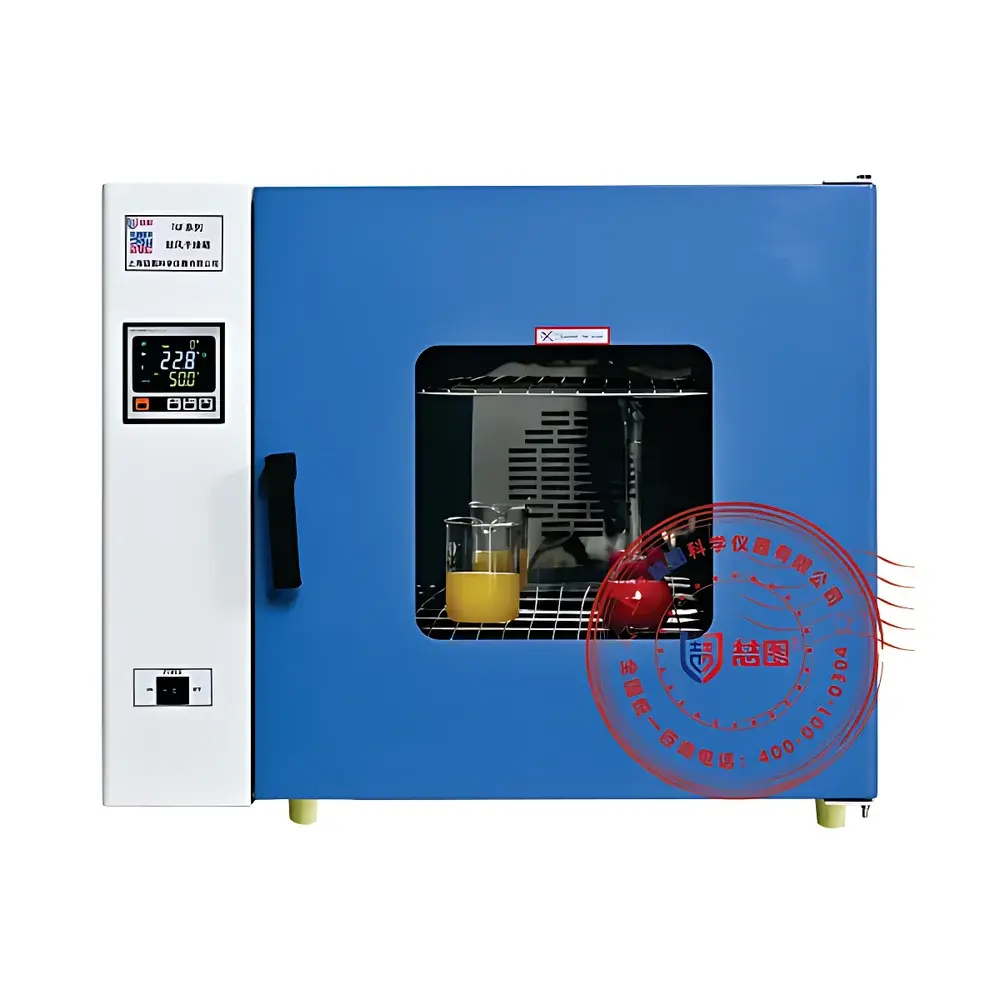
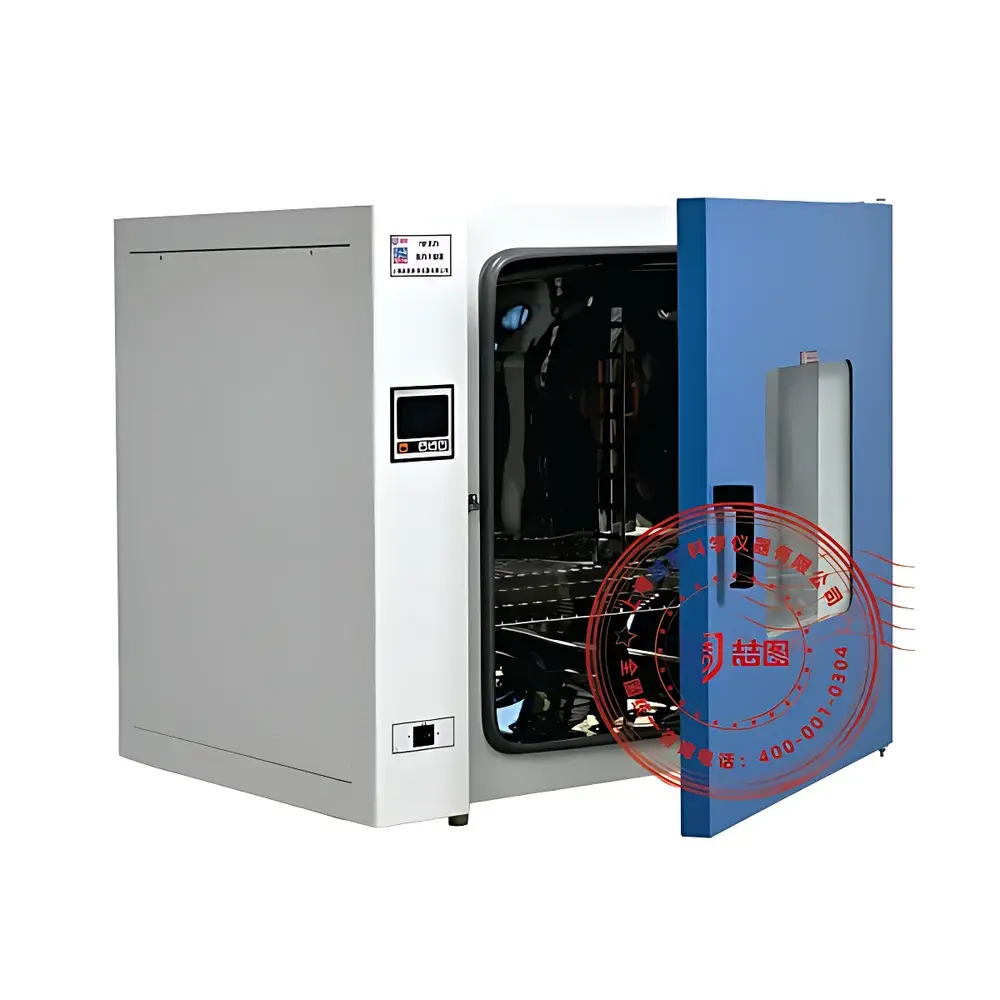
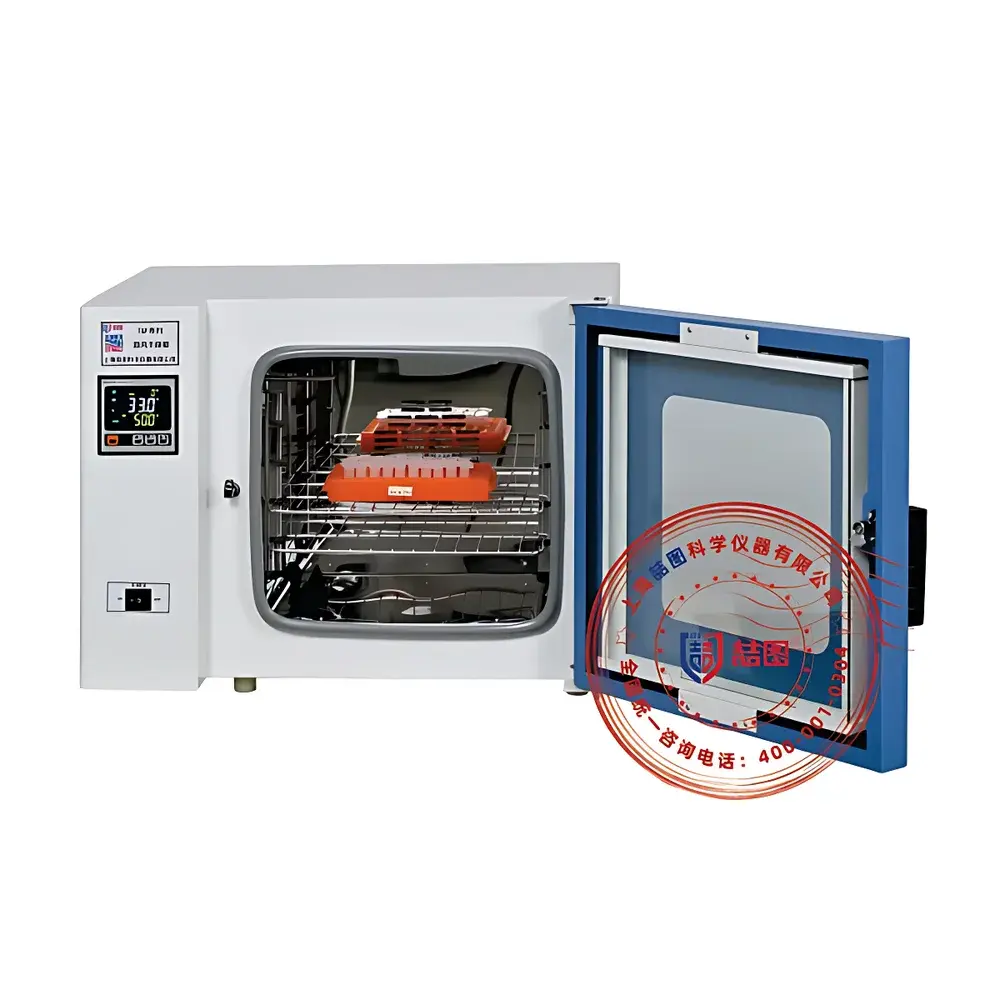
DRETOP TGF-9075A Forced-Air Drying Oven
| Brand | DRETOP |
|---|---|
| Origin | Shanghai, China |
| Manufacturer Type | Direct Manufacturer |
| Product Category | Domestic |
| Model | TGF-9075A |
| Instrument Type | General-Purpose Forced-Air Oven |
| Temperature Range | RT+10°C to 300°C |
| Temperature Uniformity | ±2.5°C (empty chamber, at 100°C) |
| Temperature Fluctuation | ±1°C |
| Temperature Resolution | 0.1°C |
| External Dimensions | 735 × 615 × 630 mm |
| Internal Chamber Dimensions | 450 × 400 × 450 mm |
| Operating Ambient Temperature | +5°C to +40°C |
| Interior Material | Stainless Steel (mirror-finished) |
| Heating Method | Forced-Air Circulation with High-Temperature Fan |
Overview
The DRETOP TGF-9075A Forced-Air Drying Oven is an engineered solution for precise, repeatable thermal processing in academic, industrial, and quality control laboratories. Based on convection-driven heat transfer principles, it utilizes a high-efficiency axial fan and optimized internal air duct geometry to maintain uniform temperature distribution across the working chamber—critical for applications requiring consistent thermal exposure without localized hot or cold zones. Designed for non-volatile, non-flammable materials, the oven supports drying, baking, sterilization, moisture determination, polymer curing, and dry-heat depyrogenation of glassware and stainless-steel instruments. Its robust construction, intuitive microprocessor-based control system, and compliance-ready architecture make it suitable for environments operating under GLP, ISO/IEC 17025, or internal SOP frameworks where traceability and operational consistency are mandatory.
Key Features
- Microprocessor-controlled P.I.D. temperature regulation with real-time deviation compensation, delivering stable setpoint maintenance and minimal overshoot (<0.5°C typical).
- Large backlit LCD display showing simultaneous readouts of set temperature, actual chamber temperature, elapsed time, and error codes—enabling rapid diagnostics and operator response.
- Dual-stage mechanical door lock with high-elasticity silicone gasket ensures tight sealing across the full operating range (up to 300°C), minimizing thermal leakage and improving energy efficiency.
- Double-layer tempered glass observation window with anti-fog coating permits unobstructed visual monitoring while maintaining thermal insulation integrity.
- Three adjustable, removable stainless-steel shelves with smooth slide rails allow flexible sample loading configurations and simplify cleaning between batches.
- Self-recovering power-loss protocol retains all active parameters—including setpoint, timer, and alarm thresholds—upon grid restoration, eliminating manual reconfiguration.
- Independent overtemperature cut-off circuit (hardware-based) triggers audible/visual alarms and terminates heating if chamber temperature exceeds user-defined safety limits.
Sample Compatibility & Compliance
The TGF-9075A accommodates standard laboratory containers including Petri dishes, weighing boats, crucibles, glass vials, and stainless-steel trays up to 450 mm wide × 400 mm deep × 450 mm high. Its stainless-steel interior (AISI 304 grade) resists corrosion from saline residues, organic solvents, and repeated autoclave-grade cleaning agents. The unit meets CE marking requirements for electrical safety (EN 61010-1) and electromagnetic compatibility (EN 61326-1). While not certified for Class I Div 1 hazardous locations, it complies with general-purpose lab equipment standards referenced in ASTM E145 (Standard Specification for Gravity-Convection and Forced-Ventilation Ovens) and supports validation protocols aligned with USP , ISO 17025 Clause 5.5.2 (Equipment Verification), and FDA 21 CFR Part 11 when paired with optional data logging accessories.
Software & Data Management
The base configuration includes embedded firmware supporting programmable timers (1–9999 minutes) and dual-point temperature alarms. Optional upgrades expand functionality: a USB data export interface enables direct transfer of time-stamped temperature logs to external storage devices; an RS-485 communication port allows integration into centralized Lab Information Management Systems (LIMS) or SCADA networks via Modbus RTU protocol; and a color TFT touchscreen controller (optional) provides multi-segment ramp-soak programming, real-time curve plotting, and audit-trail-enabled user authentication. All data outputs are timestamped and formatted as CSV files compatible with Excel, MATLAB, or statistical process control (SPC) software.
Applications
- Drying of moisture-sensitive samples prior to gravimetric analysis (e.g., ASTM D2231 for coal moisture content).
- Thermal conditioning of polymers and composites during material characterization studies.
- Dry-heat sterilization of surgical instruments and glassware per ISO 17665-1 guidelines (160°C for 120 min or 170°C for 60 min).
- Baking of ceramic substrates and printed circuit boards during electronics manufacturing QA.
- Accelerated aging tests for pharmaceutical packaging materials under ICH Q1A(R2) conditions.
- Preheating of calibration standards and reference materials in metrology labs.
- Removal of residual solvents from thin-film coatings in R&D settings.
FAQ
What is the maximum safe operating temperature for continuous use?
The TGF-9075A is rated for continuous operation up to 300°C. For extended dwell times above 250°C, periodic verification of door seal integrity and fan performance is recommended.
Can this oven be used for sterilization of biological media?
No—it is not designed for steam sterilization or microbiological decontamination of liquid media. It supports dry-heat sterilization of heat-stable, non-porous items only.
Is the temperature uniformity specification validated per ASTM E145?
Yes; uniformity testing follows ASTM E145 Annex A3 methodology using nine calibrated thermocouples placed in a 3×3 grid pattern at the center plane of the empty chamber.
Does the oven support GLP-compliant data archiving?
When equipped with the optional USB logger or RS-485 interface, raw temperature/time data can be exported with timestamps, user IDs, and instrument serial numbers—satisfying basic GLP record-keeping requirements.
What maintenance intervals are recommended?
Fan lubrication and gasket inspection should occur every 6 months; calibration of the main temperature sensor is advised annually using a NIST-traceable reference thermometer.



