
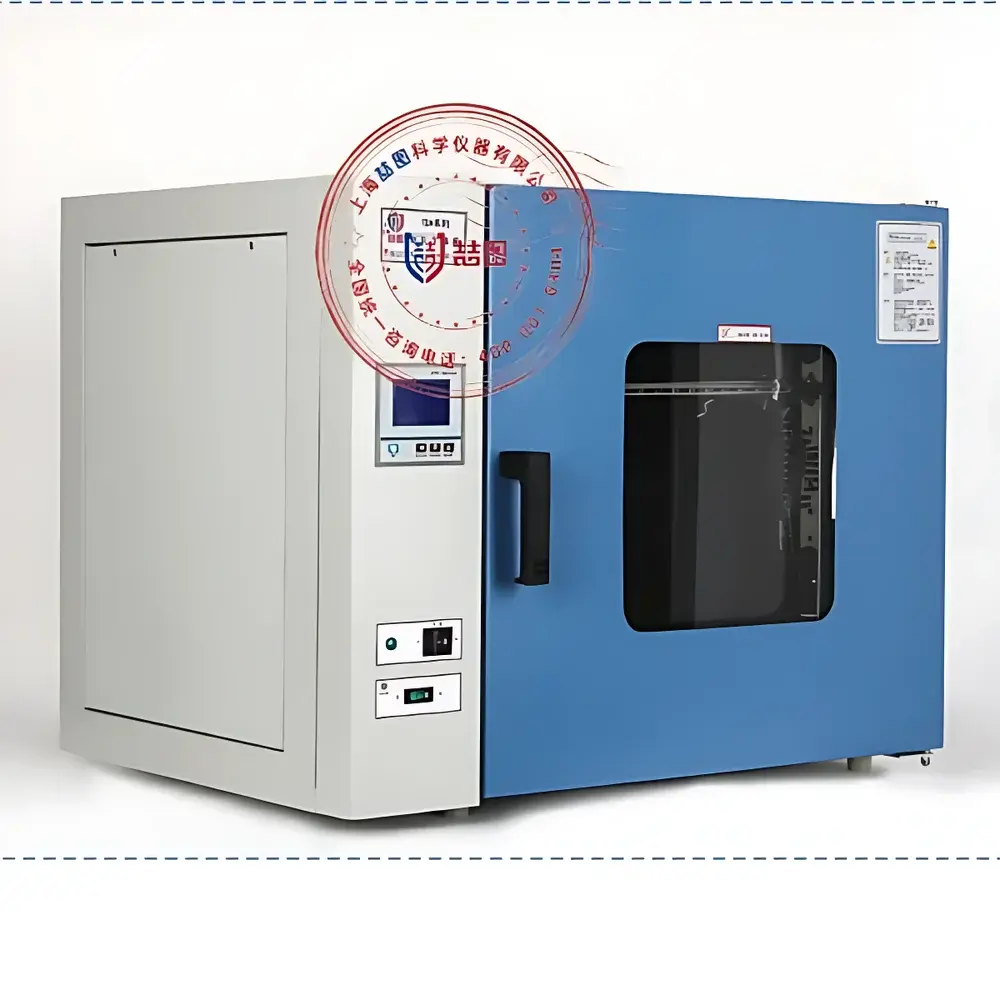
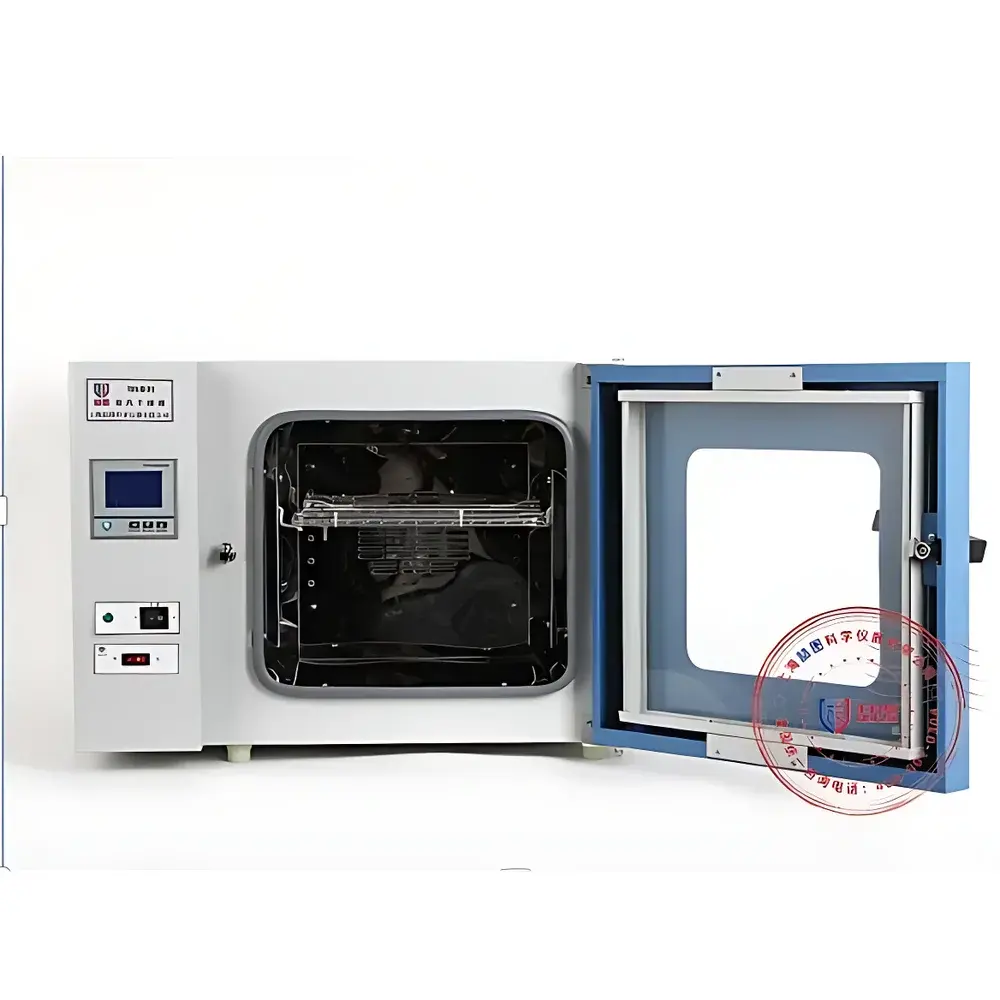
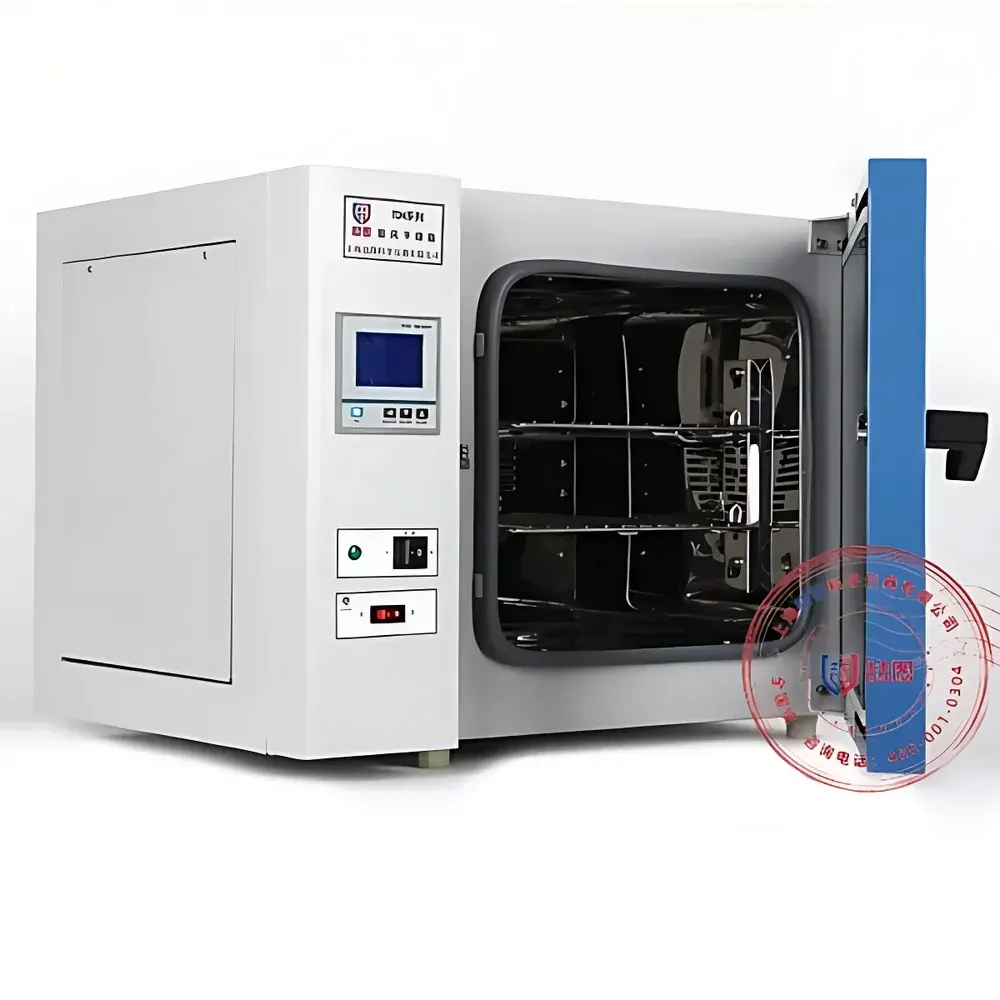
DRETOP TGF-9203A Forced-Air Constant-Temperature Drying Oven
| Brand | DRETOP |
|---|---|
| Origin | Shanghai, China |
| Manufacturer Type | Direct Manufacturer |
| Product Category | Domestic Laboratory Equipment |
| Model | TGF-9203A |
| Instrument Type | General-Purpose Forced-Air Oven |
| Temperature Range | RT+10°C to 250°C |
| Temperature Uniformity | ±2.5°C (at 100°C, empty chamber) |
| Temperature Fluctuation | ±1°C |
| Temperature Resolution | 0.1°C |
| External Dimensions | 880 × 800 × 830 mm |
| Internal Chamber Dimensions | 600 × 595 × 650 mm |
| Working Ambient Temperature | 5–45°C |
| Interior Material | Stainless Steel (Mirror-Finished) |
| Heating Method | Forced-Air Circulation |
| Vacuum Capability | Not Applicable (Standard Atmospheric Operation) |
Overview
The DRETOP TGF-9203A Forced-Air Constant-Temperature Drying Oven is an engineered solution for precise thermal processing in research laboratories, quality control environments, and industrial R&D settings. Designed around the principle of forced convection heating, this oven utilizes a high-reliability centrifugal blower and optimized airflow ducting to ensure uniform heat distribution across the entire working chamber. Unlike natural convection ovens, the TGF-9203A actively circulates heated air at controlled velocity—minimizing thermal stratification and enabling reproducible drying, baking, sterilization, and moisture removal protocols. Its operational range spans from ambient +10°C to 250°C, with microprocessor-based PID temperature control delivering stability within ±1°C fluctuation and resolution down to 0.1°C. The chamber’s mirror-finish stainless steel construction resists corrosion, facilitates cleaning, and maintains integrity under repeated thermal cycling—critical for GLP-compliant sample preparation and ISO 17025-aligned calibration workflows.
Key Features
- Microprocessor-controlled PID temperature regulation with real-time digital display and intuitive menu navigation
- Self-diagnostic system providing immediate fault code readout on the LCD interface for rapid troubleshooting
- Dual-stage mechanical door lock with high-temperature silicone gasket ensuring consistent thermal sealing and energy efficiency
- Double-layer tempered glass observation window with anti-fog coating for continuous visual monitoring without thermal loss
- Adjustable and removable stainless steel shelving (standard configuration: 2 shelves) supporting flexible load arrangement
- Automatic internal steam exhaust function integrated into the forced-air circulation path
- Power failure recovery mode retaining set parameters and timer status after interruption
- Independent over-temperature cut-off circuit with audible/visual alarm—compliant with IEC 61010-1 safety requirements
- Electrostatically coated exterior housing and seamless welded inner chamber for long-term structural durability
- Optional RS485 communication port, USB data export interface, and programmable multi-segment temperature controller (available upon request)
Sample Compatibility & Compliance
The TGF-9203A accommodates non-volatile, non-explosive, and non-hazardous materials including glassware, ceramic substrates, polymer films, pharmaceutical excipients, food samples, soil aggregates, and inert chemical reagents. It is routinely deployed for ASTM E145-22 (Standard Specification for Gravity-Convection and Forced-Ventilation Ovens), USP (Sterilization and Sterility Assurance), and ISO 5725-2 (Accuracy of Measurement Methods) validation procedures. While not rated for vacuum or inert-atmosphere operation, its design meets Class II laboratory equipment classification per EN 61326-1 (EMC requirements for measurement and testing equipment). All electrical components conform to CE marking directives, and the unit supports audit-ready documentation for FDA 21 CFR Part 11 compliance when paired with optional data logging accessories.
Software & Data Management
The standard controller includes built-in timer functionality (1–9999 minutes), adjustable alarm thresholds, and parameter memory retention. For traceable process recording, optional add-ons include: (1) USB data export module enabling direct transfer of time-stamped temperature logs to external storage; (2) RS485 serial interface compatible with LabVIEW™, SCADA systems, or custom LIMS integration; (3) optional color touchscreen controller supporting up to 30 programmable segments with ramp-soak profiles. When configured with certified firmware and audit trail-enabled logging, the system satisfies ALCOA+ principles (Attributable, Legible, Contemporaneous, Original, Accurate, Complete, Consistent, Enduring, Available) required by GMP and GLP regulatory frameworks.
Applications
- Drying of analytical samples prior to gravimetric analysis (e.g., moisture content determination per AOAC 950.46)
- Heat treatment of metal oxide precursors in materials science research
- Pre-conditioning of filter membranes and chromatography media
- Dry-heat sterilization of reusable labware (validated at ≥160°C for ≥2 hours per ISO 15883-1)
- Thermal aging tests for electronic components and encapsulants
- Baking of electrode coatings in battery R&D
- Dehydration of botanical specimens and tissue sections in histology labs
- Curing of adhesives and composite resins under controlled thermal profiles
FAQ
Is the TGF-9203A suitable for sterilization applications?
Yes—when operated at ≥160°C for minimum dwell times validated per ISO 15883-1 or equivalent institutional SOPs, it delivers dry-heat sterilization efficacy for heat-stable instruments and glassware.
Can the oven be used under inert gas or vacuum conditions?
No—this model operates exclusively at atmospheric pressure and lacks gas inlet/outlet ports or vacuum-rated seals.
What is the maximum recommended load volume for optimal temperature uniformity?
For adherence to the stated ±2.5°C uniformity specification at 100°C, loading should not exceed 70% of internal chamber volume and must allow ≥50 mm clearance from all chamber walls and the rear air baffle.
Does the unit support remote monitoring via Ethernet or Wi-Fi?
Not natively—but the optional RS485 interface enables connection to industrial gateways for protocol translation (e.g., Modbus TCP) in networked lab infrastructure.
Are calibration certificates and IQ/OQ documentation available?
Factory calibration reports are included; full IQ/OQ protocol packages and third-party certification (e.g., NIST-traceable thermocouple verification) can be arranged as value-added services.



