
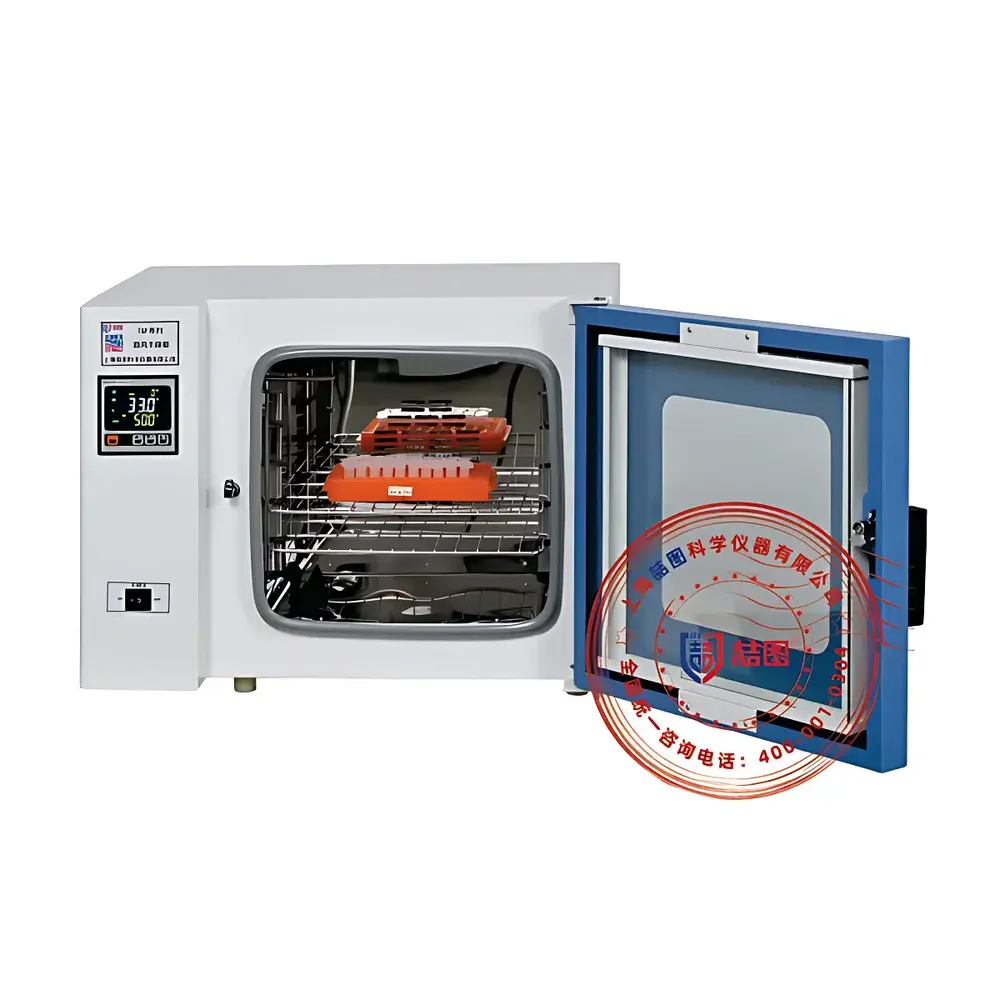
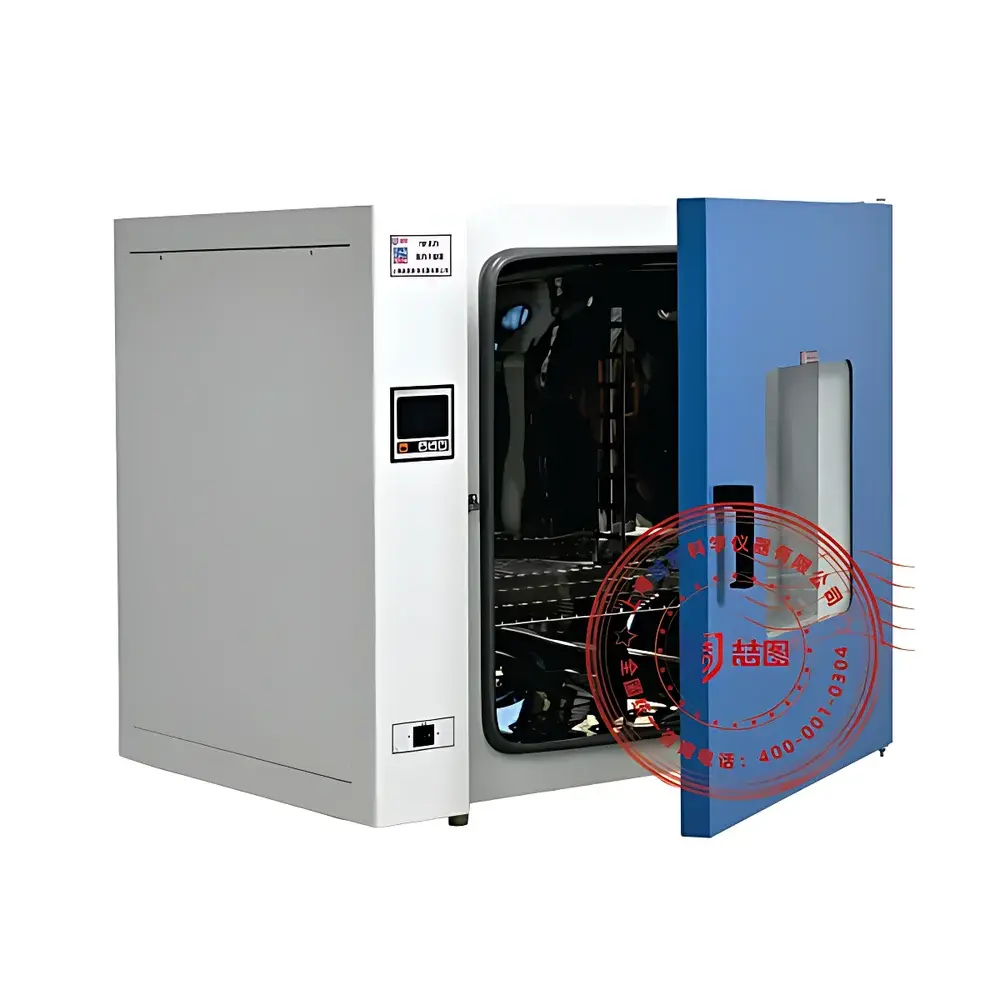
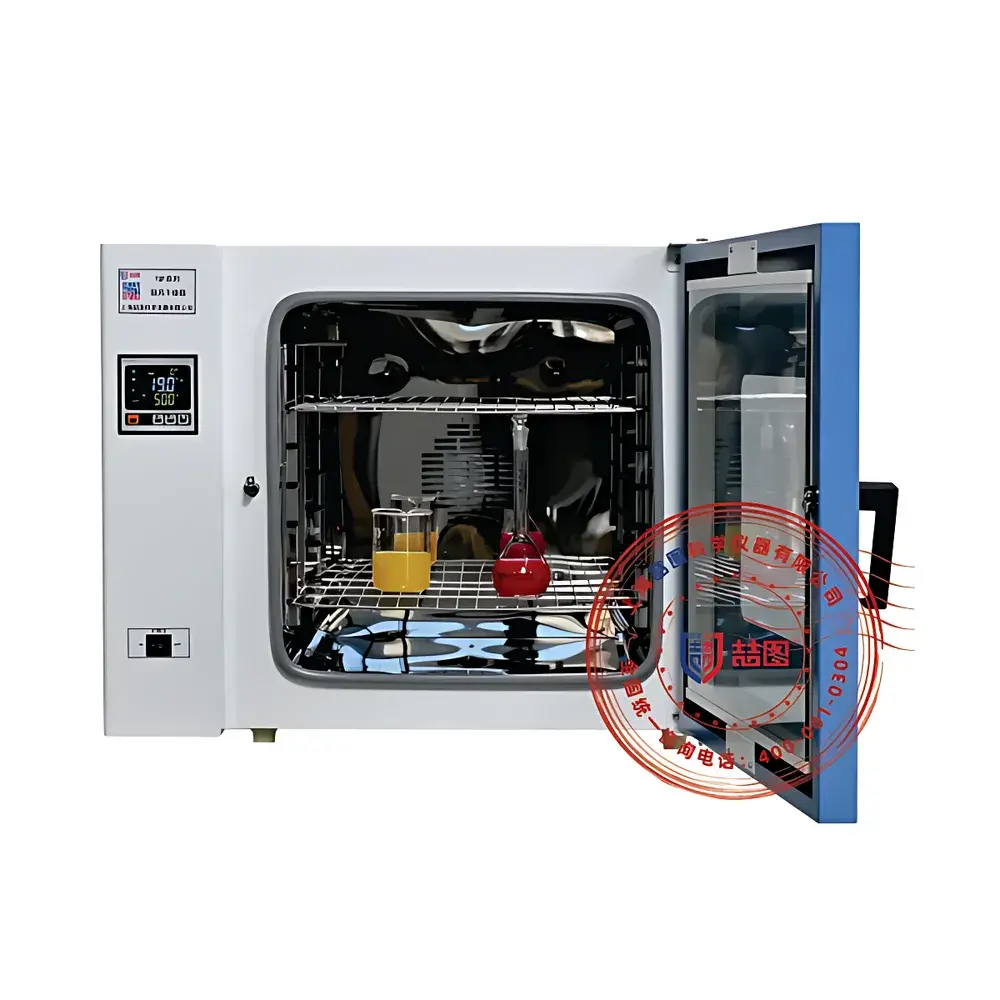
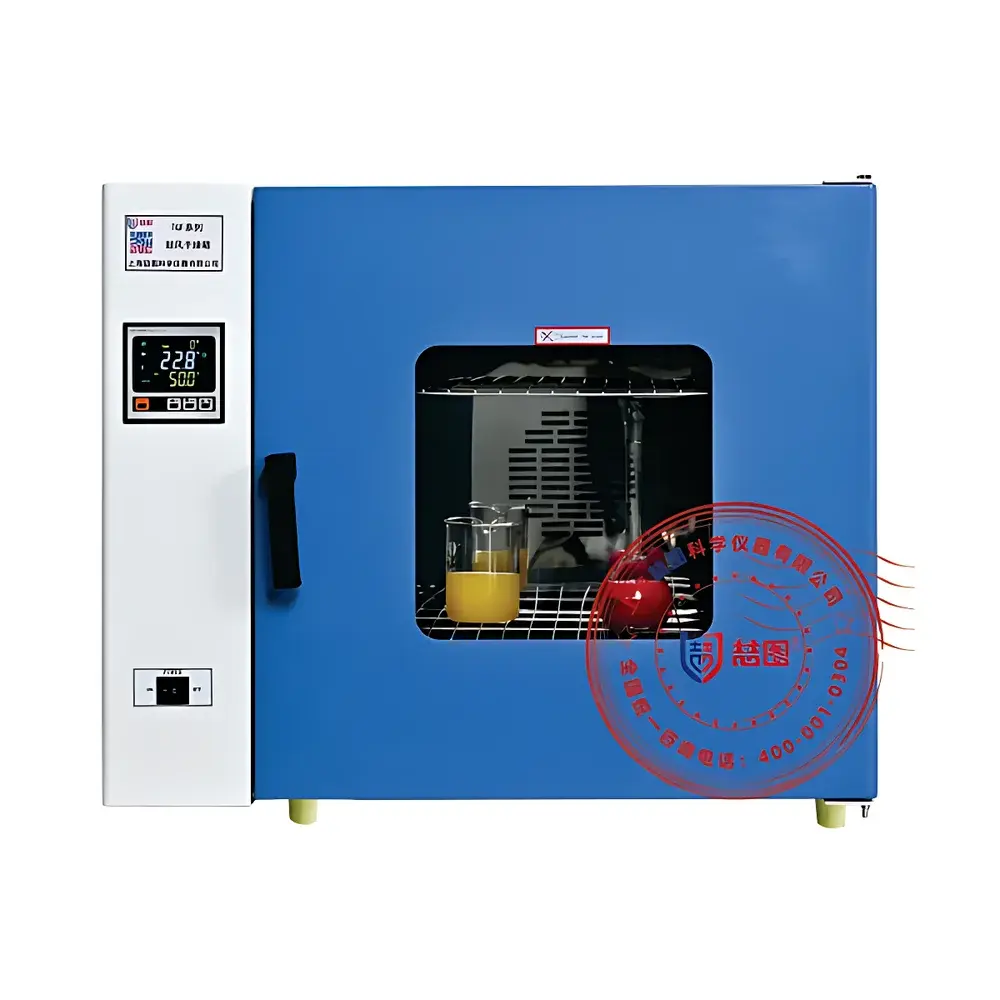
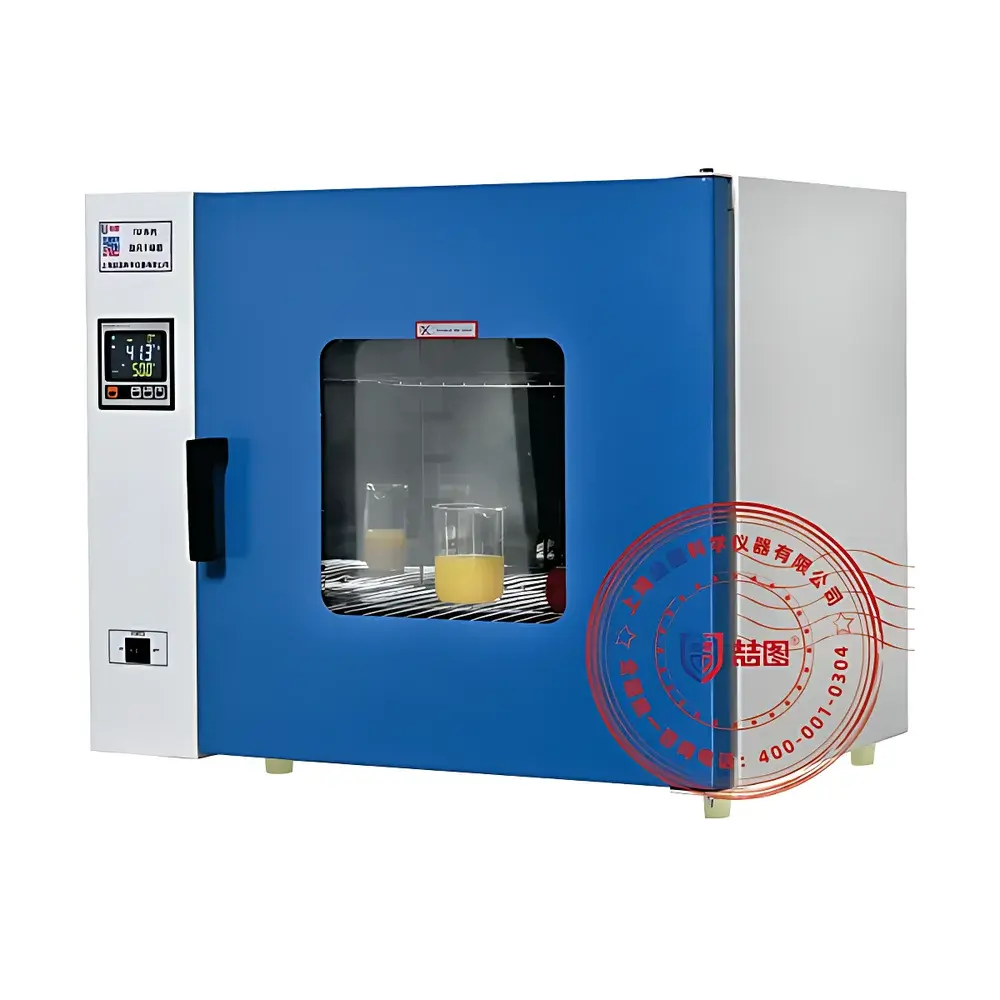
DRETOP TGF-9240A Forced-Air Drying Oven
| Brand | DRETOP |
|---|---|
| Origin | Shanghai, China |
| Manufacturer Type | Direct Manufacturer |
| Product Category | Domestic |
| Model | TGF-9240A |
| Instrument Type | Standard Forced-Air Oven |
| Temperature Range | RT+10 °C to 250 °C |
| Temperature Uniformity | ±2.5 °C (at 100 °C, empty chamber) |
| Temperature Fluctuation | ±1 °C |
| Temperature Resolution | 0.1 °C |
| External Dimensions | 890 × 780 × 835 mm |
| Internal Chamber Dimensions | 600 × 595 × 650 mm |
| Control Range | RT+10 °C to 250 °C |
| Operating Ambient Temperature | +5 °C to 40 °C |
| Interior Material | Stainless Steel (Brushed Finish) |
| Heating Method | Forced Convection with High-Temperature Fan and Optimized Airflow Duct Design |
Overview
The DRETOP TGF-9240A Forced-Air Drying Oven is an engineered solution for precise, repeatable thermal processing in laboratory and industrial quality control environments. Designed according to fundamental principles of convective heat transfer, it employs a high-efficiency axial fan and a symmetrically distributed airflow duct system to ensure uniform temperature distribution across the entire working chamber. Unlike natural convection ovens, this model actively circulates heated air—minimizing thermal stratification and reducing drying time variability. Its operational envelope spans from ambient +10 °C to 250 °C, making it suitable for applications ranging from moisture removal and sterilization to thermal aging, polymer curing, and residual solvent evaporation. The unit complies with general design expectations for Class I, Group A laboratory ovens per IEC 61010-1:2010 (Safety Requirements for Electrical Equipment for Measurement, Control, and Laboratory Use), and supports routine validation protocols under GLP and ISO/IEC 17025 frameworks.
Key Features
- Microprocessor-based P.I.D. temperature controller with 0.1 °C resolution and real-time deviation compensation, delivering stable setpoint maintenance and minimal overshoot.
- Triple-color LCD display showing simultaneous readouts of set temperature, actual chamber temperature, and elapsed time—enabling rapid status assessment without menu navigation.
- Self-diagnostic firmware that displays standardized fault codes (e.g., E01 for sensor open circuit, E02 for overtemperature) directly on the interface for accelerated troubleshooting.
- Dual-stage mechanical door lock with zinc-alloy handle and high-temperature silicone gasket (rated to 300 °C), ensuring long-term sealing integrity and minimizing heat loss during operation.
- Double-layer tempered glass observation window with anti-fog coating, permitting unobstructed visual monitoring while maintaining thermal insulation performance.
- Adjustable, removable stainless-steel shelving system with tool-free height positioning—facilitating flexible load configuration and simplified cleaning between batches.
- Automatic condensate exhaust function integrated into the forced-air circuit, mitigating internal humidity buildup during low-temperature drying cycles.
Sample Compatibility & Compliance
The TGF-9240A is intended for non-volatile, non-flammable, and non-explosive materials only. It is routinely deployed for drying glassware, pre-conditioning reference standards, desiccating pharmaceutical excipients, thermal stabilization of ceramic substrates, and dry-heat sterilization of stainless-steel instruments per ISO 17665-1 Annex C guidelines. Chamber geometry (600 × 595 × 650 mm) accommodates standard ISO trays (e.g., 400 × 300 mm), Petri dish stacks, and multi-tier sample racks. All internal surfaces are fabricated from brushed AISI 304 stainless steel—resistant to oxidation up to 250 °C and compatible with common laboratory cleaning agents (e.g., 70% ethanol, diluted sodium hypochlorite). The unit does not carry ATEX or UL listing for hazardous locations; users must confirm material compatibility prior to exposure to organic solvents or reactive compounds.
Software & Data Management
While the base configuration operates via embedded firmware, optional digital interfaces extend traceability and audit readiness. The RS-485 port enables integration with SCADA or LIMS platforms using Modbus RTU protocol, supporting remote parameter setting, real-time temperature logging, and alarm event reporting. The USB data export module allows direct download of time-stamped temperature logs (CSV format) onto standard USB flash drives—facilitating offline analysis and report generation. Optional programmable controllers support up to 30 segment ramp-soak profiles, with independent dwell times and rate limits—critical for thermal validation studies requiring controlled heating/cooling gradients. All digital modules comply with FDA 21 CFR Part 11 requirements when configured with user authentication, electronic signatures, and immutable audit trails.
Applications
- Moisture content determination in coal, soil, and agricultural feedstocks per ASTM D3173 and ISO 589.
- Dry-heat depyrogenation of glass vials and syringes at ≥250 °C for 45 minutes, aligned with USP recommendations.
- Thermal aging of polymer films and elastomers per ASTM D573 and ISO 188.
- Baking of printed circuit board (PCB) assemblies post-soldering to remove flux residues and entrapped moisture.
- Pre-drying of filter papers, crucibles, and weighing boats prior to gravimetric analysis.
- Conditioning of hygroscopic reference materials (e.g., potassium hydrogen phthalate) in metrology laboratories.
FAQ
What is the maximum validated operating temperature for dry-heat sterilization?
The TGF-9240A is rated for continuous operation up to 250 °C. For dry-heat sterilization of medical devices, validation must be performed per ISO 17665-1 using biological indicators (e.g., Geobacillus stearothermophilus spores) at the target load configuration.
Does the oven support temperature mapping per ISO 14644-3?
Yes—the uniform airflow design and stable thermal profile enable reproducible temperature mapping. Users may install up to 15 calibrated thermocouples (Type K, Class 1) via optional external ports to document spatial variation across the chamber volume.
Can the unit be integrated into a centralized lab automation system?
With the RS-485 interface and Modbus-compatible firmware, the oven supports bidirectional communication with building management systems (BMS) or laboratory information systems (LIS), including status polling, setpoint adjustment, and alarm forwarding.
Is the stainless-steel interior electropolished?
No—the interior uses mechanically brushed AISI 304 stainless steel, optimized for durability and cleanability. Electropolishing is available as a custom fabrication option upon request.
What is the typical recovery time after door opening?
At 150 °C, full temperature recovery to within ±1 °C of setpoint requires approximately 4–6 minutes following a 10-second door opening—dependent on ambient conditions and chamber loading.



