

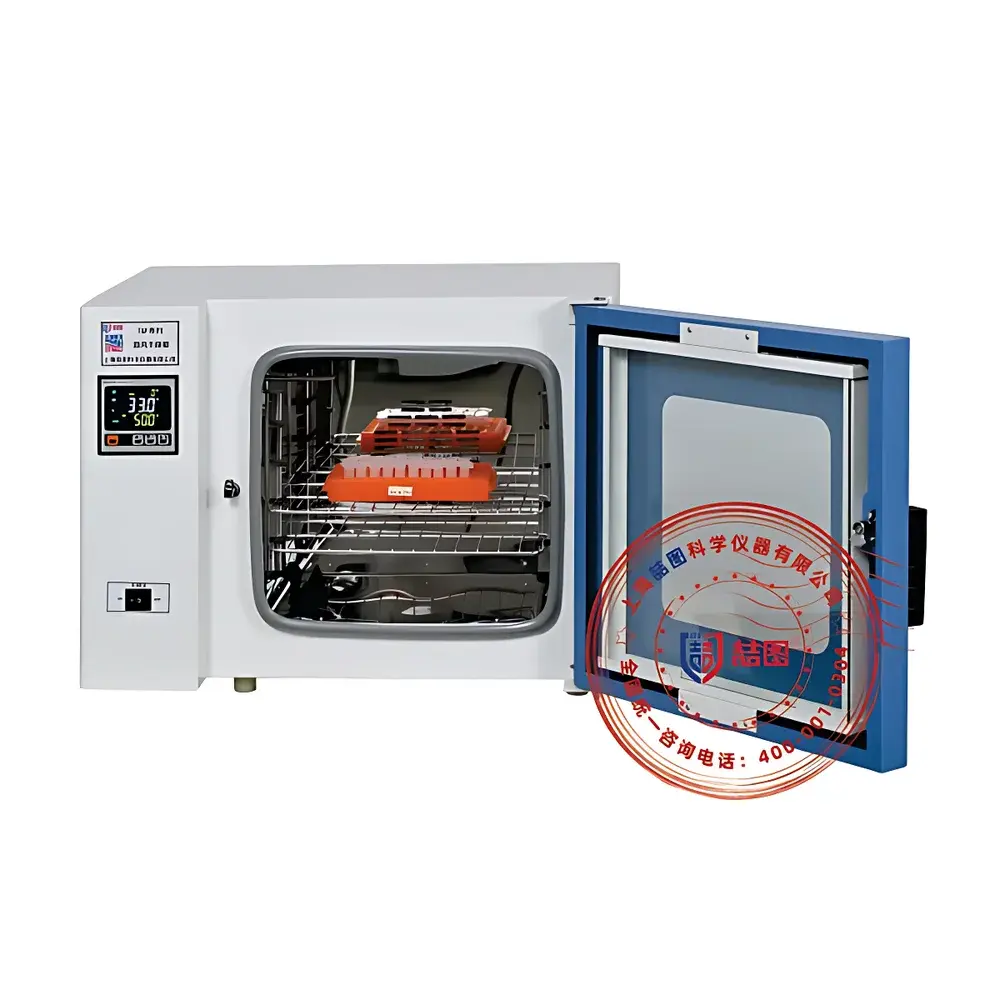
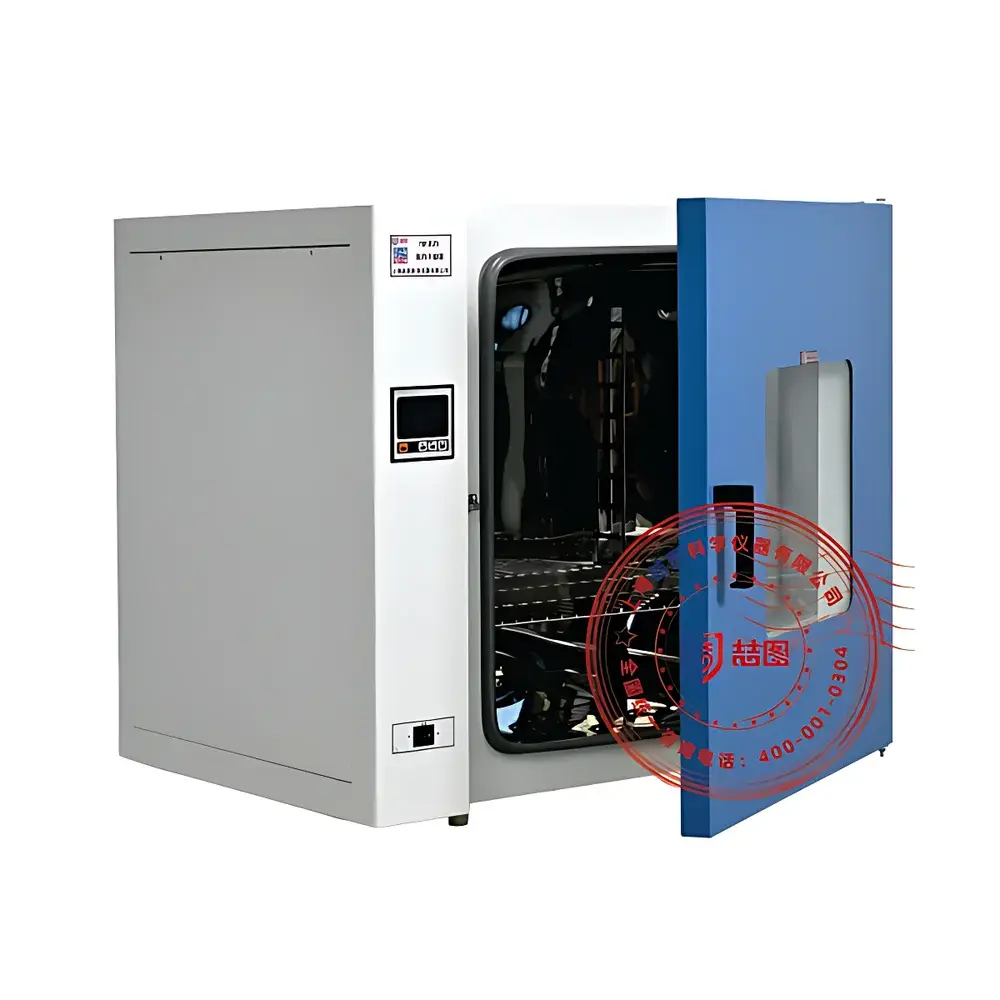
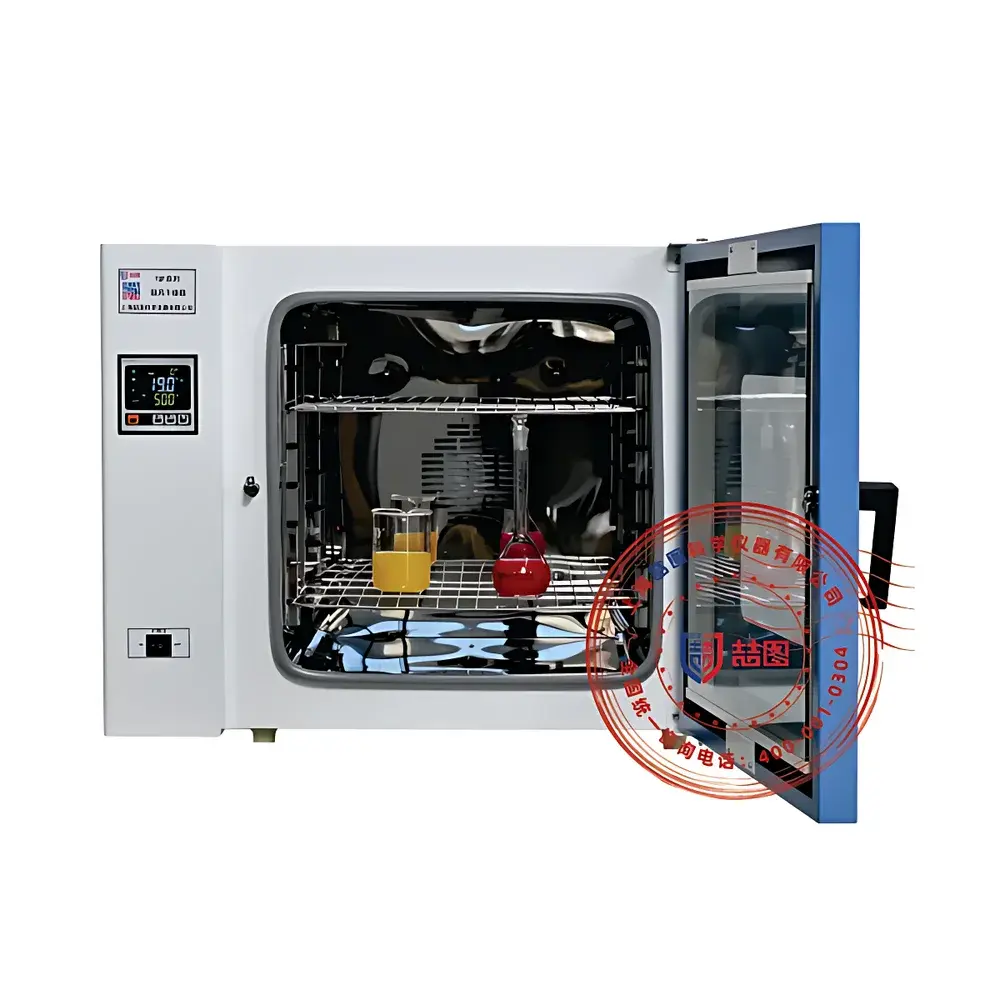
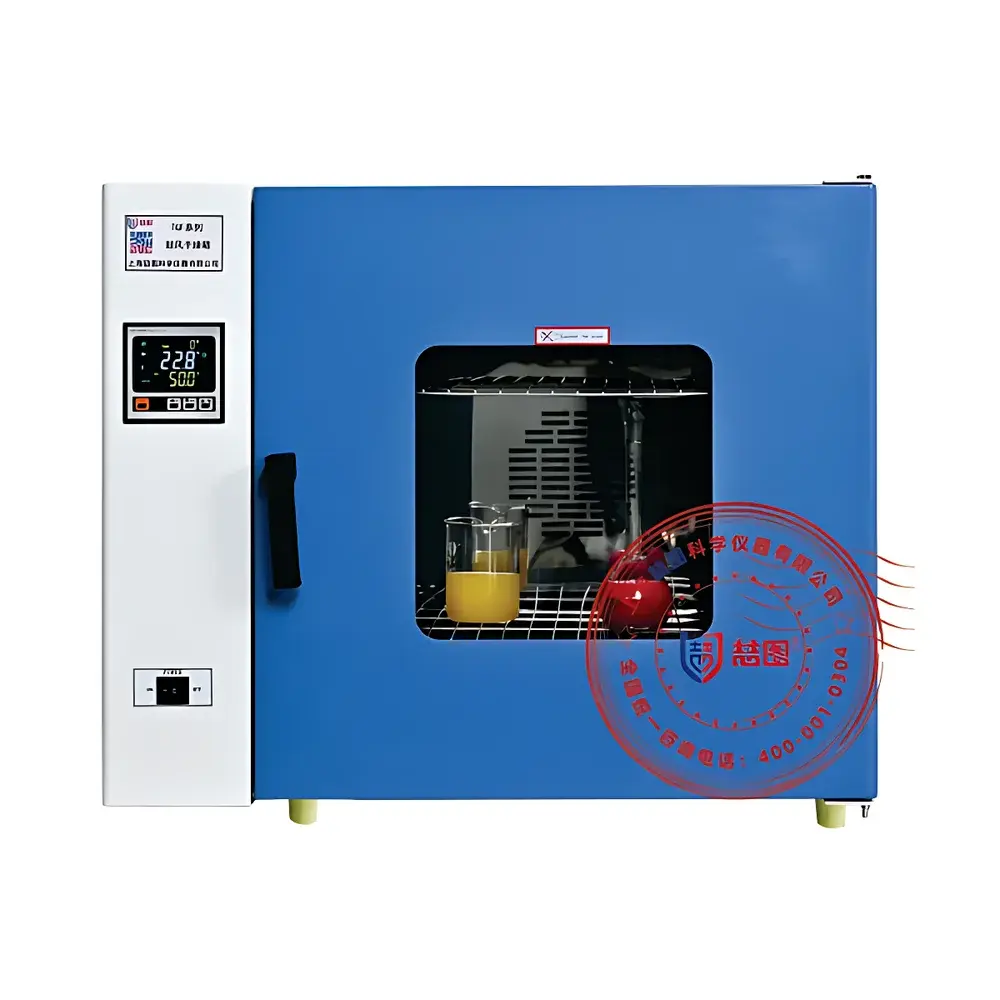
DRETOP TGF-9240AH Forced-Air Laboratory Drying Oven
| Brand | DRETOP |
|---|---|
| Origin | Shanghai, China |
| Manufacturer Type | Direct Manufacturer |
| Model | TGF-9240AH |
| Instrument Type | General-Purpose Forced-Air Oven |
| Temperature Range | RT+10°C to 250°C |
| Temperature Uniformity | ±2.5°C (at 100°C, empty chamber) |
| Temperature Fluctuation | ±1°C |
| Temperature Resolution | 0.1°C |
| Chamber Dimensions (W×D×H) | 600×595×750 mm |
| External Dimensions (W×D×H) | 890×780×935 mm |
| Heating Method | Forced Convection with High-Temperature Fan & Optimized Airflow Duct Design |
| Inner Chamber Material | Stainless Steel (Brushed Finish) |
| Operating Ambient Temperature | +5°C to +40°C |
| Power Supply | AC 220 V, 50 Hz |
| Rated Power | 2500 W |
Overview
The DRETOP TGF-9240AH is a precision-engineered forced-air laboratory drying oven designed for consistent thermal processing of non-volatile, non-flammable samples in research, quality control, and production environments. It operates on the principle of controlled convective heat transfer: a high-reliability centrifugal fan circulates heated air through a precisely engineered duct system, ensuring uniform thermal distribution across the entire working chamber. This architecture eliminates cold spots and minimizes vertical/horizontal temperature gradients—critical for applications requiring reproducible drying kinetics, moisture loss quantification, or dry-heat sterilization. Unlike natural convection ovens, the TGF-9240AH maintains stable thermal conditions even during frequent door openings or load changes, making it suitable for GLP-compliant workflows where process consistency is mandated.
Key Features
- Microprocessor-based P.I.D. temperature controller with 0.1°C resolution and ±1°C fluctuation tolerance, supporting programmable ramp-hold profiles via optional multi-segment controller;
- Dual-layer tempered glass observation window with integrated silicone gasket seal, enabling real-time sample monitoring without compromising thermal integrity;
- Adjustable, removable stainless-steel shelving system (standard configuration: 2 shelves) with tool-free height positioning for flexible sample arrangement;
- Robust dual-stage rotary latch mechanism with zinc-alloy handle, ensuring positive door compression against high-temperature silicone rubber gasket (rated to 300°C), minimizing heat leakage;
- Self-diagnostic firmware with alphanumeric fault-code display (e.g., E01 = sensor open circuit, E02 = overtemperature alarm) for rapid troubleshooting;
- Auto-recovery function that retains setpoint, timer, and PID parameters after power interruption, preventing experimental discontinuity;
- Independent mechanical overtemperature cut-off (adjustable up to 280°C) with audible/visual alarm, compliant with IEC 61010-1 safety requirements for laboratory equipment.
Sample Compatibility & Compliance
The TGF-9240AH accommodates a broad spectrum of inert and thermally stable materials—including glassware, ceramic crucibles, polymer substrates, metal components, and biological instrument sets—within its 268 L stainless-steel chamber. Its validated temperature uniformity (±2.5°C at 100°C per ASTM E145-22 Annex A3) supports applications aligned with ISO 17025 calibration traceability frameworks. The oven meets CE marking requirements under the Low Voltage Directive (2014/35/EU) and Electromagnetic Compatibility Directive (2014/30/EU). For pharmaceutical dry-heat sterilization validation (e.g., depyrogenation of glass vials), users may perform IQ/OQ/PQ protocols per USP and EU GMP Annex 1, leveraging its stable 160–250°C operational envelope and documented thermal mapping capability.
Software & Data Management
While the standard configuration features a front-panel LCD interface with intuitive navigation, optional digital enhancements enable full data governance. An RS-485 serial interface permits integration with LabVIEW™, SCADA, or LIMS platforms for remote parameter adjustment and real-time logging. The USB data export module allows direct download of time-stamped temperature logs (CSV format) to USB flash drives for audit-ready record retention. Optional color touchscreen controllers support 30-segment programmable profiles with slope control, dwell timing, and cycle repetition—essential for aging studies or thermal stress testing per MIL-STD-810H Method 502.5. All firmware versions comply with FDA 21 CFR Part 11 requirements when paired with appropriate electronic signature and audit trail modules.
Applications
- Moisture content determination in coal, soil, foodstuffs, and pharmaceutical excipients (per ASTM D3173, AOAC 950.46, USP );
- Dry-heat sterilization of surgical instruments, pipette tips, and glassware (validated at ≥160°C for ≥2 hours per ISO 17665-1);
- Thermal aging of electronic components and conformal coatings (IEC 60068-2-2, JEDEC JESD22-A108);
- Baking of thin-film substrates and electrode coatings in battery R&D;
- Pre-conditioning of reference standards prior to gravimetric analysis;
- Curing of adhesives, resins, and powder coatings in materials science labs;
- Residue ashing support for elemental analysis workflows (e.g., EPA Method 3050B).
FAQ
What is the maximum validated operating temperature for dry-heat sterilization?
The TGF-9240AH is rated for continuous operation up to 250°C; sterilization cycles are typically validated at 170°C for 60 minutes or 180°C for 30 minutes per ISO 17665-1.
Can the oven be calibrated to NIST-traceable standards?
Yes—three-point calibration (e.g., 50°C, 100°C, 150°C) using Class A PT100 probes is supported; calibration certificates with uncertainty budgets are available upon request.
Is the internal airflow adjustable?
A manual airflow damper is provided as standard; optional variable-frequency drive (VFD) control for the circulation fan is available for advanced humidity-sensitive processes.
Does the unit meet GMP documentation requirements?
When equipped with the optional data logger and audit trail software, the system satisfies ALCOA+ principles for data integrity in regulated environments.
What maintenance intervals are recommended?
Fan bearing inspection every 12 months; gasket integrity check before each sterilization cycle; annual verification of temperature uniformity per ASTM E145-22.



