
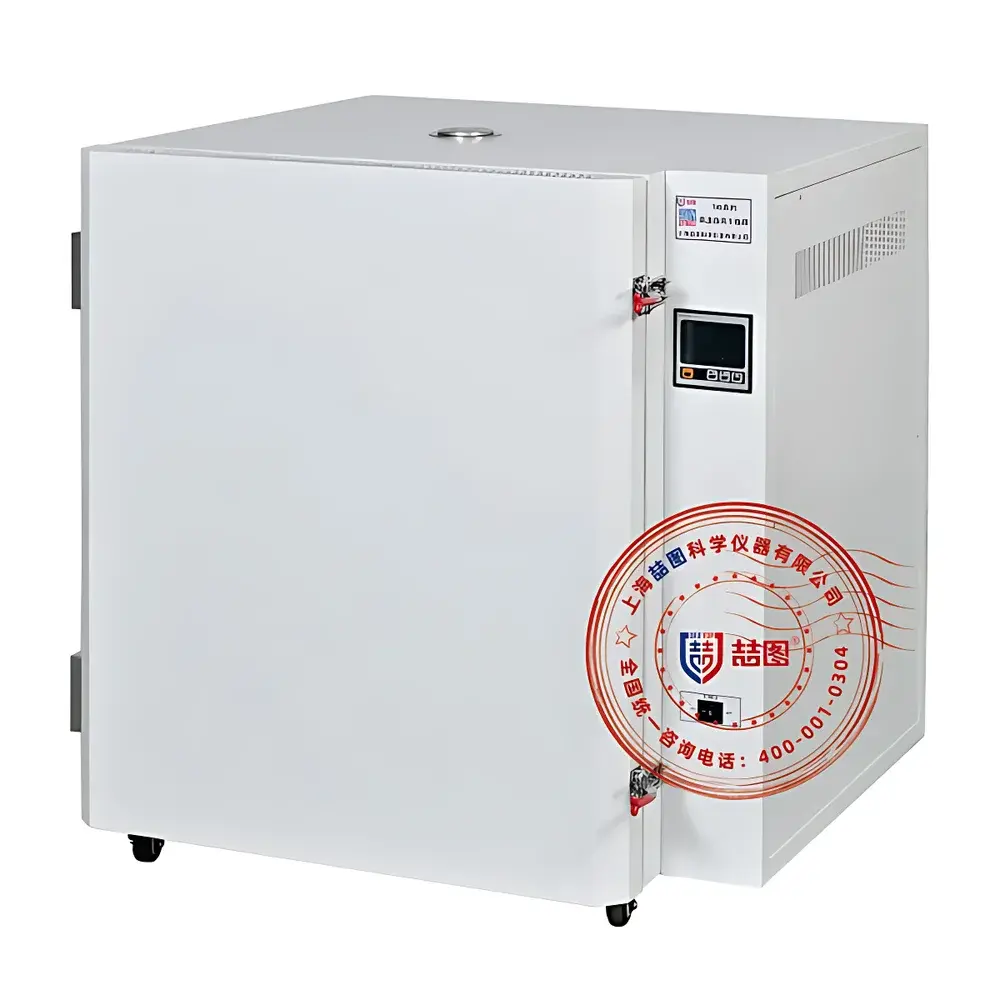
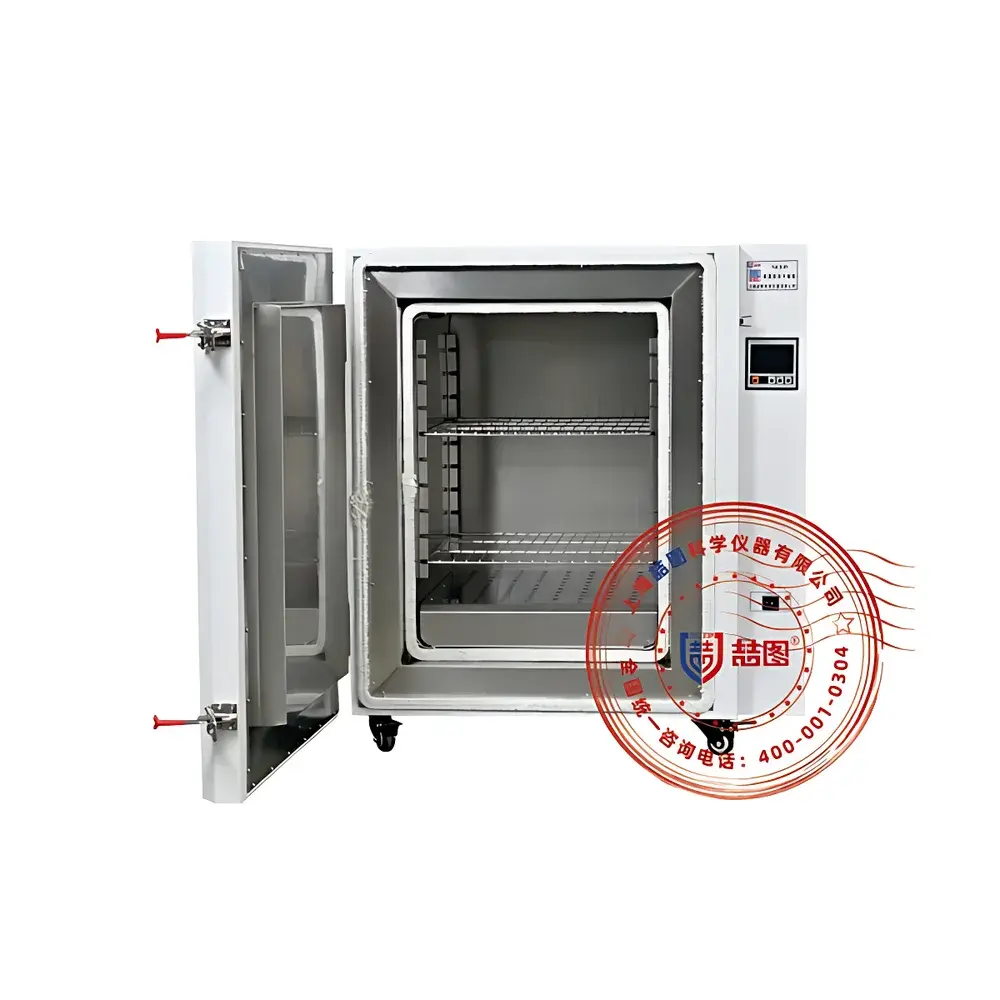
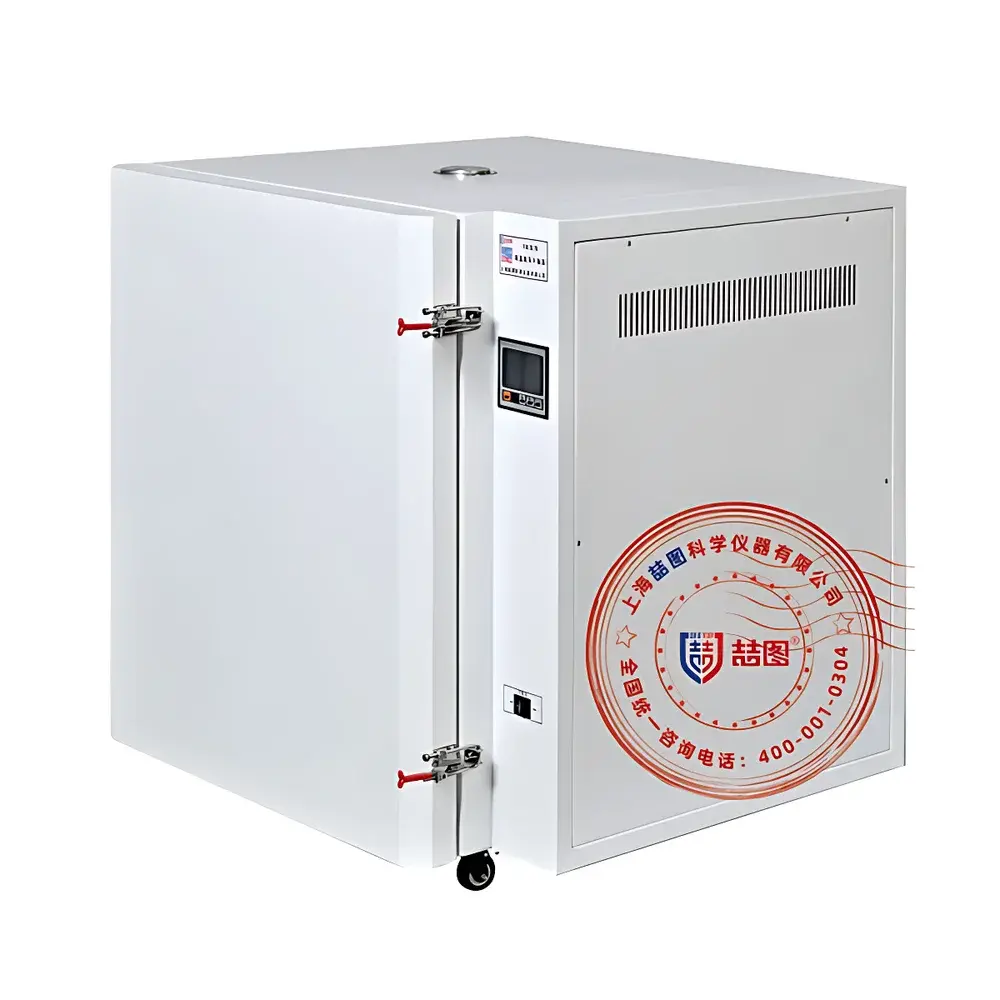
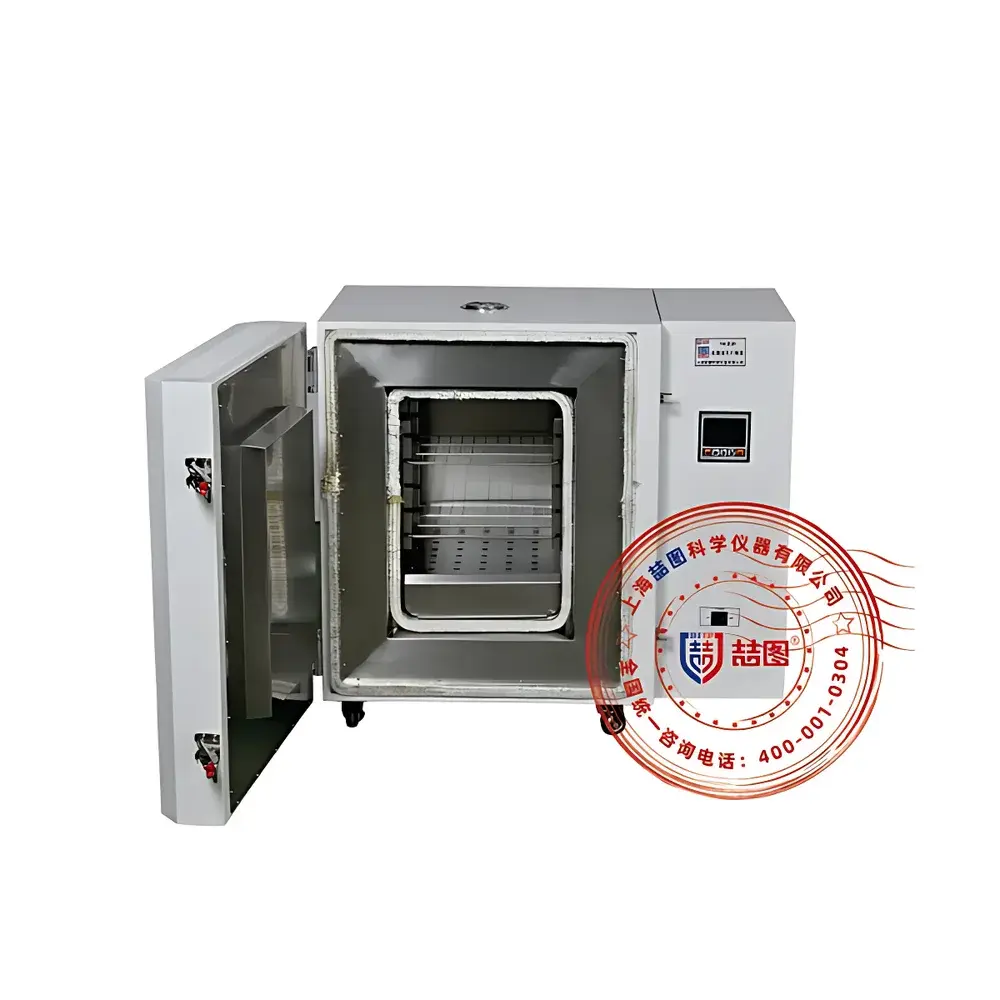
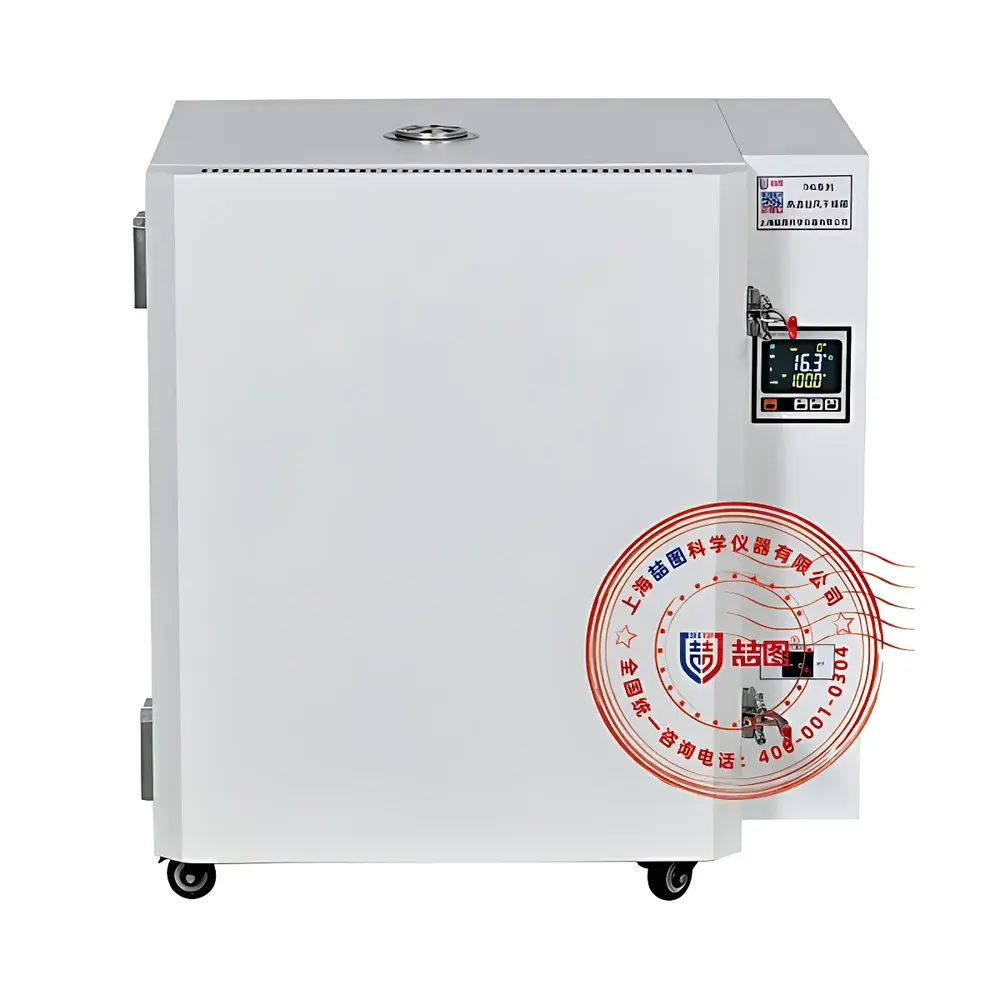
DRETOP THG-9078AP High-Temperature Forced-Air Drying Oven
| Brand | DRETOP |
|---|---|
| Origin | Shanghai, China |
| Manufacturer Type | Direct Manufacturer |
| Instrument Type | High-Temperature Oven |
| Temperature Range | RT+20 to 400 °C |
| Temperature Uniformity | ±2.5 °C |
| Temperature Fluctuation | ±0.1 °C |
| Temperature Resolution | 0.1 °C |
| Chamber Dimensions (W×D×H) | 400 × 400 × 450 mm |
| External Dimensions (W×D×H) | 815 × 665 × 850 mm |
| Working Environment | 5–45 °C |
| Interior Material | Brushed Stainless Steel (SUS304) |
| Heating Method | Forced-Air Convection with Dual Airflow Channels |
| Insulation | Fiberglass Wool |
| Sealing Material | High-Temperature Silicone Rubber |
| Safety Protections | Over-Temperature Alarm, Leakage Protection, Short-Circuit Protection, Overload Protection, Power-Failure Data Retention |
| Optional Accessories | USB Data Export Port, Programmable Controller, Color Touchscreen Interface, RS-485 Communication, Thermal Printer Interface, Independent Limit Temperature Controller |
Overview
The DRETOP THG-9078AP is a high-precision, forced-air convection drying oven engineered for laboratory and industrial applications requiring stable, uniform thermal environments up to 400 °C. It operates on the principle of controlled convective heat transfer: a high-efficiency centrifugal blower circulates heated air through dual symmetrical ducts, ensuring rapid thermal response and minimized axial/radial temperature gradients across the working chamber. Unlike natural-convection ovens, this design eliminates cold spots and supports reproducible thermal processing—critical for material conditioning, pre-baking of composites, catalyst activation, ceramic sintering aids, and high-temperature stability testing per ASTM E145, ISO 188, and USP <1211>. The unit complies with IEC 61010-1 safety standards for electrical equipment used in laboratory environments and incorporates structural features aligned with GLP-compliant workflow requirements—including audit-trail-capable parameter logging when equipped with optional data interfaces.
Key Features
- Microprocessor-based PID temperature controller with K-type thermocouple feedback, delivering ±0.1 °C fluctuation control and programmable ramp-soak profiles via optional multi-segment controllers;
- Forced-air convection system featuring a low-noise, high-temp-rated motor and multi-blade impeller, enabling ≥15 air exchanges per minute and uniformity within ±2.5 °C at 400 °C;
- Double-layer insulated chamber: outer shell coated with electrostatic epoxy powder; inner chamber fabricated from brushed 304 stainless steel with seamless welded corners and removable, height-adjustable stainless steel shelves;
- Advanced safety architecture including dual independent over-temperature protection (primary PID + secondary mechanical limiter), real-time fault code display, and automatic power cutoff upon thermal deviation;
- Ergonomic front-loading door with silicone gasket compression seal, quarter-turn metal latches, and ergonomic handle—designed for repeated use under thermal cycling conditions without seal degradation;
- Energy-efficient thermal management using high-density fiberglass insulation (≥100 mm thickness) and zero-contact SSR (Solid-State Relay) heating control—eliminating relay chatter and extending heater lifespan.
Sample Compatibility & Compliance
The THG-9078AP accommodates standard laboratory ware including porcelain crucibles, quartz boats, stainless steel trays, and aluminum sample holders. Its 70 L usable volume (400 × 400 × 450 mm) supports batch processing of substrates up to 380 mm in diagonal dimension. The chamber is compatible with inert-atmosphere purging (N₂ or Ar) when fitted with optional gas inlet/outlet ports (not standard). All materials contacting the chamber interior meet RoHS Directive 2011/65/EU and are non-outgassing at elevated temperatures. The oven satisfies key regulatory expectations for thermal validation: it supports IQ/OQ documentation protocols and provides traceable temperature mapping capability when used with calibrated external loggers. For GMP environments, optional RS-485 or USB interfaces enable integration into centralized monitoring systems compliant with FDA 21 CFR Part 11 for electronic records and signatures.
Software & Data Management
While the base model includes an integrated LCD interface with three-color status indicators (green/amber/red) and real-time display of setpoint, actual temperature, elapsed time, and error codes, advanced data handling requires optional modules. The programmable controller supports up to 30 segments with ramp rates adjustable from 0.1 to 10 °C/min and dwell times from 1 minute to 999 hours. USB export functionality allows direct transfer of time-stamped temperature logs (CSV format) to external storage for post-processing in Excel or statistical analysis tools. When connected via RS-485, the oven communicates using Modbus RTU protocol, enabling remote supervision through SCADA platforms or LIMS integration. Optional thermal printers generate hard-copy records meeting ALCOA+ data integrity criteria—time, date, operator ID, and temperature deviations are automatically annotated.
Applications
This oven serves cross-disciplinary thermal processing needs. In materials science, it performs binder burnout for green ceramics, stress-relief annealing of metallic alloys, and moisture removal from polymer precursors prior to pyrolysis. In pharmaceutical R&D, it supports residual solvent evaporation from active pharmaceutical ingredients (APIs), glass vial depyrogenation validation studies (per USP <1211>), and stability testing under accelerated conditions (ICH Q1A). Chemical laboratories utilize it for catalyst drying, zeolite activation, and gravimetric moisture analysis (ASTM D2231). Quality control labs deploy it for PCB pre-baking, adhesive curing verification, and metallographic sample preparation. Its robust construction and thermal fidelity make it suitable for ISO/IEC 17025-accredited testing facilities conducting accredited thermal validation services.
FAQ
What is the maximum continuous operating temperature?
The THG-9078AP is rated for continuous operation at 400 °C. Extended exposure above this limit may compromise sensor accuracy and insulation integrity.
Can the oven be used under inert atmosphere?
Yes—optional gas inlet and exhaust ports (M10 threaded) can be installed to enable nitrogen or argon purging; consult factory for certified gas-tight retrofit kits.
Is calibration certificate included?
A factory calibration report (traceable to NIM, China) is provided with shipment; full UKAS or NIST-traceable calibration is available as a paid service.
Does the unit support Ethernet or Wi-Fi connectivity?
No native Ethernet/Wi-Fi; however, RS-485 output can be bridged to TCP/IP networks using third-party protocol converters compliant with Modbus TCP.
What maintenance intervals are recommended?
Blower filter inspection every 200 operational hours; door gasket replacement every 18 months under daily 400 °C usage; annual verification of thermocouple drift and controller linearity.



