
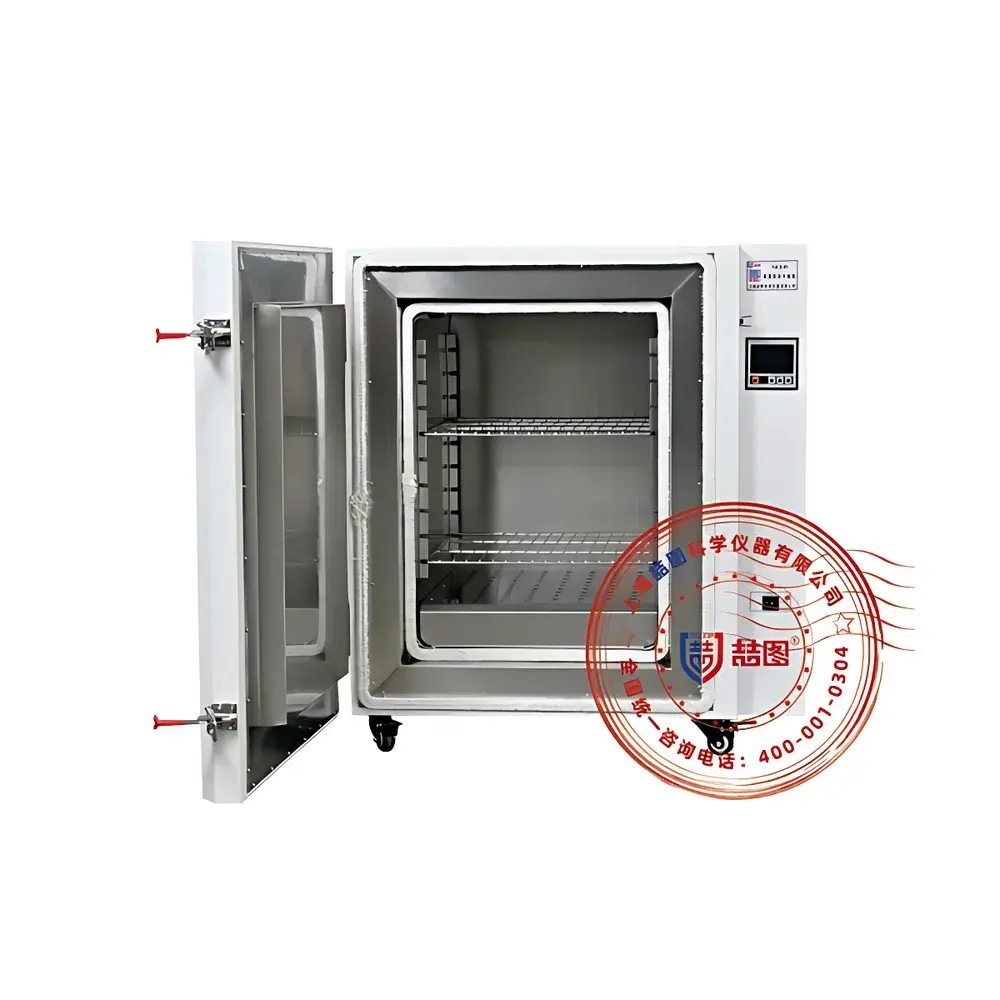
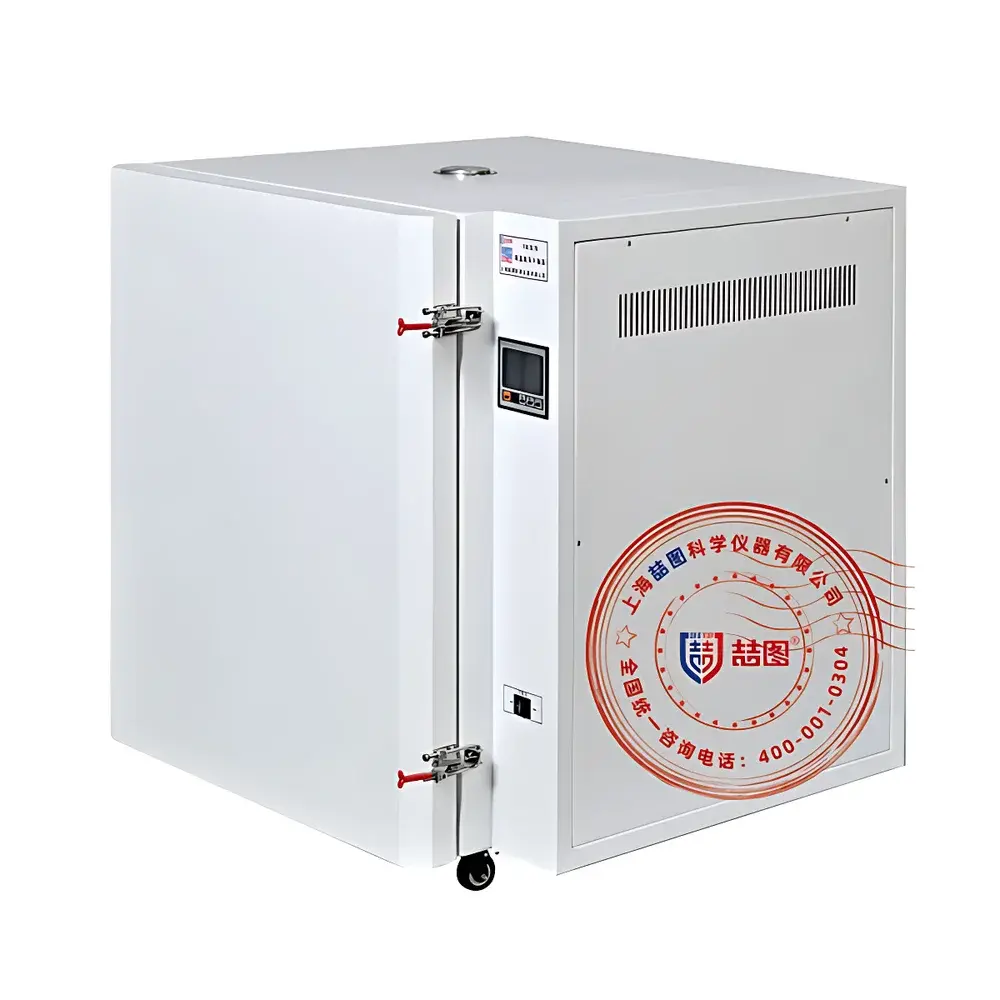
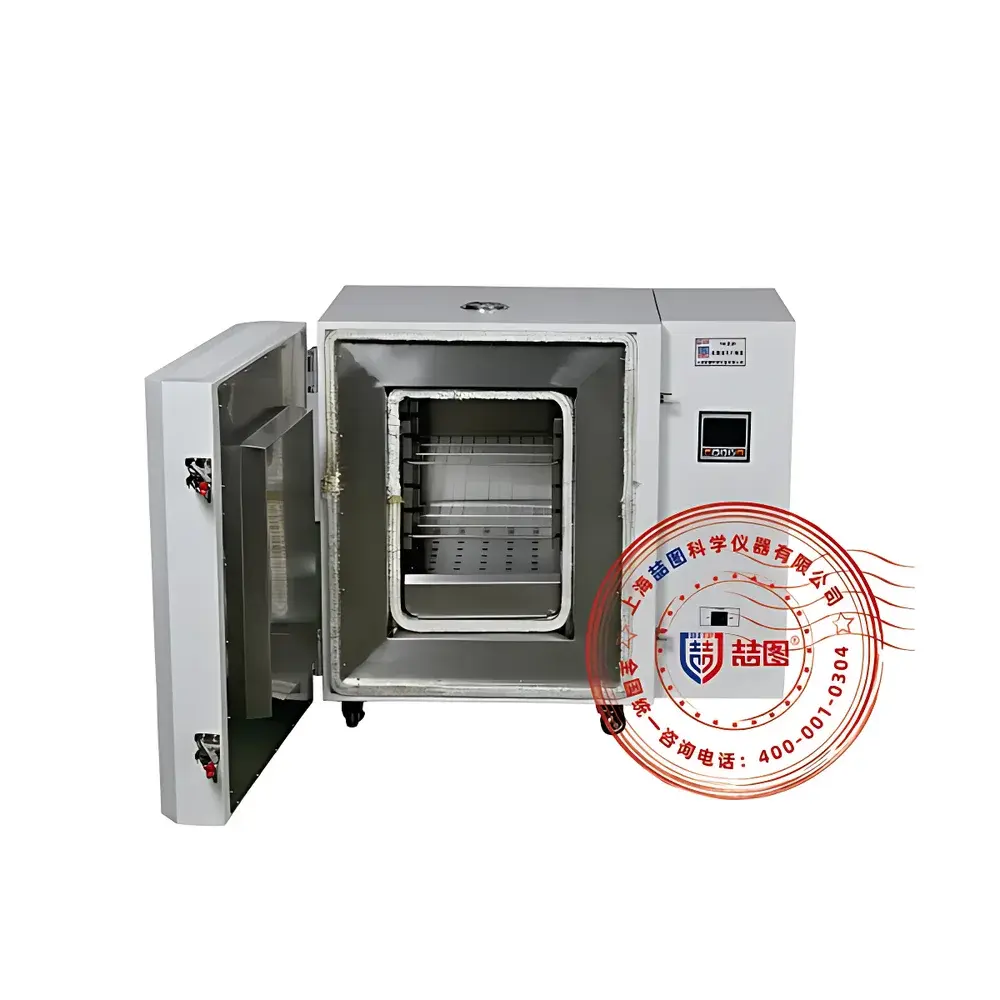
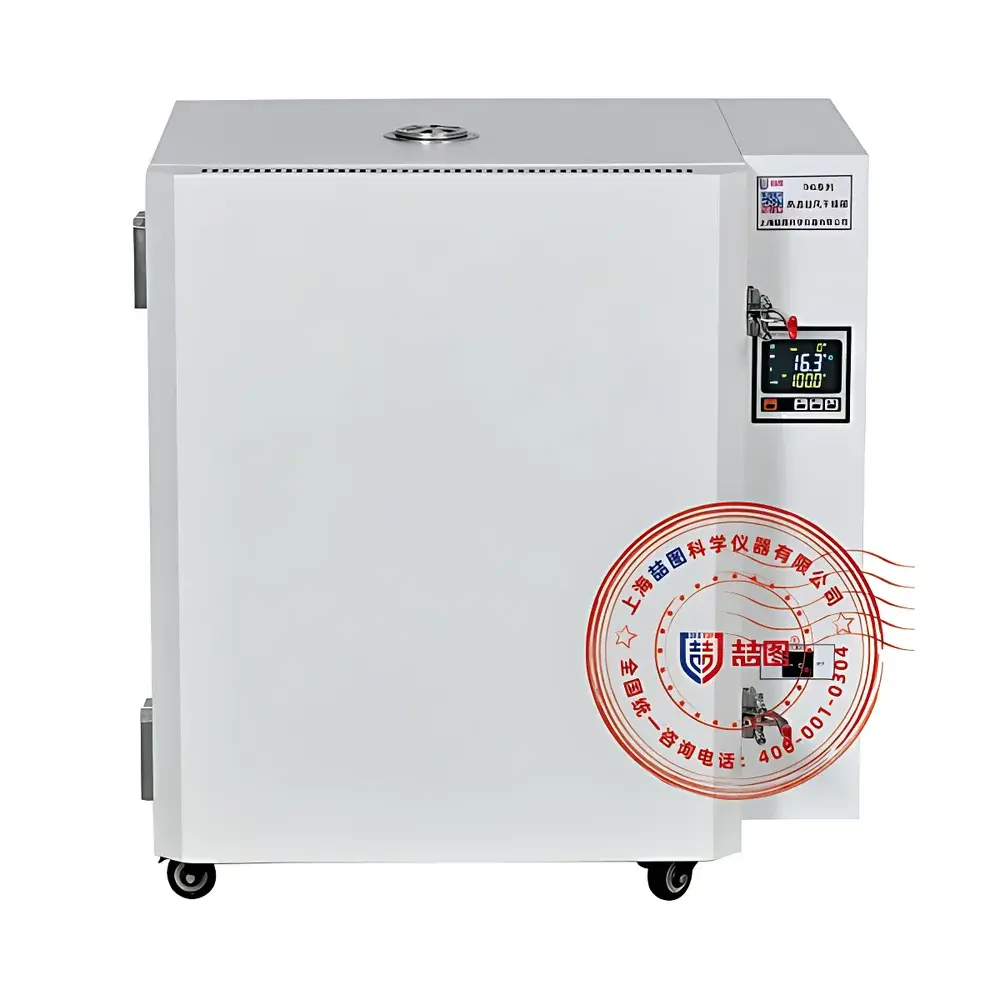
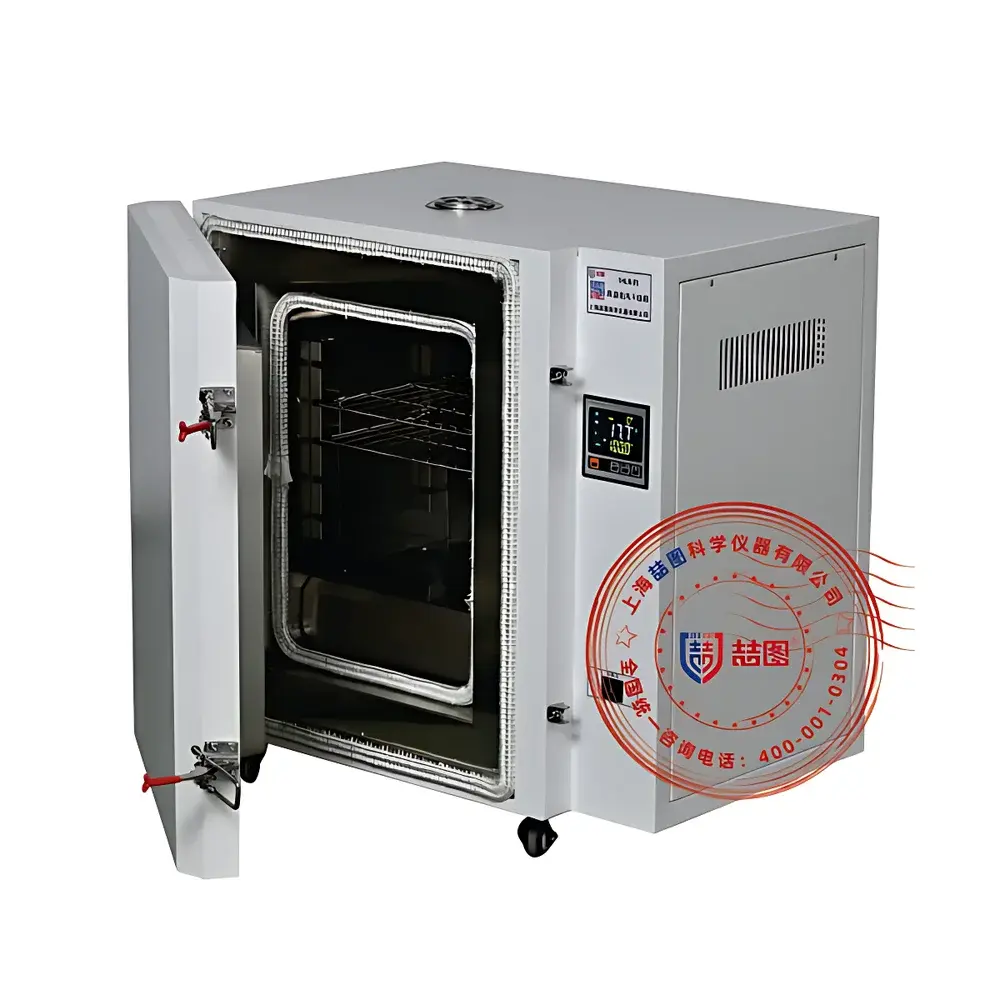
DRETOP THG-9148A High-Temperature Forced-Air Drying Oven
| Brand | DRETOP |
|---|---|
| Origin | Shanghai, China |
| Manufacturer Type | Direct Manufacturer |
| Product Category | Domestic |
| Model | THG-9148A |
| Instrument Type | High-Temperature Oven |
| Temperature Range | RT+20°C to 400°C |
| Temperature Fluctuation | ±1°C |
| External Dimensions | 865 × 820 × 960 mm |
| Control Temperature Range | RT+20°C to 400°C |
| Internal Chamber Dimensions | 450 × 550 × 550 mm |
| Temperature Resolution | 0.1°C |
| Operating Ambient Temperature | 5–45°C |
| Interior Material | Stainless Steel (Brushed Finish) |
| Heating Method | Forced-Air Convection with Dual Airflow Channels |
| Temperature Uniformity | ±2.5°C (empty chamber, at 100°C) |
| Vacuum Capability | Not Applicable (Standard Atmospheric Operation) |
Overview
The DRETOP THG-9148A is a high-performance forced-air drying oven engineered for precision thermal processing in research laboratories, quality control environments, and industrial R&D settings. It operates on the principle of forced convection—utilizing a high-power centrifugal blower and dual-path airflow architecture to ensure rapid, uniform heat distribution across the stainless-steel working chamber. Unlike natural convection ovens, this design eliminates thermal stratification and significantly reduces temperature overshoot and recovery time after door opening. The unit is calibrated for stable operation from ambient +20°C up to 400°C, making it suitable for applications requiring sustained elevated temperatures without degradation of structural integrity or control fidelity. Its construction adheres to fundamental thermal engineering standards for laboratory-grade heating equipment, including ISO 17025-aligned calibration traceability pathways and compatibility with GLP-compliant documentation workflows.
Key Features
- Microprocessor-based PID temperature controller with K-type thermocouple feedback, offering ±1°C fluctuation and 0.1°C resolution for repeatable thermal profiles.
- Dual independent air circulation channels integrated with multi-blade centrifugal fan and high-temperature low-noise motor, enabling rapid heat transfer and minimizing thermal lag.
- Brushed stainless-steel interior (SUS304) with seamless welded corners and semi-circular chamber edges for easy cleaning and resistance to oxidation at elevated temperatures.
- Electrostatically coated steel exterior with high-density glass fiber insulation, reducing external surface temperature rise and improving energy efficiency.
- Intelligent diagnostic interface with real-time fault code display (e.g., E01 for sensor open circuit, E02 for overtemperature), supporting predictive maintenance and minimizing downtime.
- Programmable timer (1–9999 minutes) with auto-shutdown and parameter retention during power interruption, ensuring data continuity per IEC 61000-4-11 compliance.
- Multi-point adjustable and removable stainless-steel shelving system with drawer-style loading mechanism for flexible sample arrangement and ergonomic access.
Sample Compatibility & Compliance
The THG-9148A accommodates a broad range of sample types—including ceramic green bodies, metal alloys, polymer composites, pharmaceutical excipients, and sterilizable labware—within its 140 L working volume. Its chamber geometry and airflow dynamics are optimized to minimize edge effects and support homogeneous thermal exposure across heterogeneous loads. The unit meets general safety requirements outlined in IEC 61010-1 (Safety Requirements for Electrical Equipment for Measurement, Control, and Laboratory Use) and incorporates redundant safeguards: independent overtemperature cutoff (mechanical backup limiter), earth leakage protection, thermal fuse monitoring, and short-circuit/overload circuit interruption. While not certified for Class I Div 1 hazardous locations, it is routinely deployed in ISO 13485-certified medical device manufacturing cleanrooms and USP -aligned sterile processing validation studies when operated under documented SOPs.
Software & Data Management
The standard configuration includes an RS485 serial interface (Modbus RTU protocol) for integration into centralized laboratory information management systems (LIMS) or SCADA platforms. Optional upgrades include a USB data export module (FAT32-formatted .CSV logging), color TFT touchscreen with multi-segment programmable ramp-soak profiles, and optional IEEE 1394-compatible printer interface for hardcopy traceability. All digital interfaces comply with FDA 21 CFR Part 11 requirements when paired with validated third-party software—supporting electronic signatures, audit trails, and role-based user access control. Raw temperature logs are timestamped with millisecond precision and retain metadata such as setpoint, actual reading, deviation, and alarm status for retrospective analysis.
Applications
- Materials Science: Pre-sintering of advanced ceramics, stress-relief annealing of aerospace alloys, binder burnout in MIM components, and thermal aging studies per ASTM E1823.
- Pharmaceutical Development: Residual solvent removal from active pharmaceutical ingredients (APIs), depyrogenation of glass vials (validated per USP ), and stability testing per ICH Q1A(R2).
- Food & Agriculture Research: Moisture content determination (AOAC 950.46), enzyme inactivation kinetics, and accelerated shelf-life modeling under controlled thermal stress.
- Electronics Manufacturing: PCB pre-baking prior to conformal coating, solder paste moisture removal, and thermal cycling preconditioning per IPC-TM-650 2.6.25.
- Environmental Testing Labs: Conditioning of filter media, gravimetric analysis of particulate matter, and preparation of reference standards for EPA Method 200.7 and 200.8.
FAQ
What is the maximum continuous operating temperature of the THG-9148A?
The unit is rated for uninterrupted operation at 400°C; extended use above 350°C requires periodic verification of seal integrity and thermocouple calibration.
Does the oven support vacuum operation?
No—this model is designed exclusively for atmospheric-pressure forced-air convection. Vacuum-capable variants (e.g., THV series) are available separately.
Can the internal chamber be cleaned with ethanol or acetone?
Yes—stainless-steel surfaces tolerate common organic solvents; however, prolonged exposure to chlorinated solvents is discouraged due to potential pitting corrosion.
Is the temperature uniformity specification validated per ASTM E2207?
While not supplied with full ASTM E2207 certification out-of-box, the ±2.5°C uniformity at 100°C aligns with the standard’s Class B tolerance band; users may perform in-house mapping using NIST-traceable probes.
What electrical supply is required for installation?
Single-phase AC 220 V ±10%, 50 Hz, 30 A dedicated circuit with proper grounding per IEC 60364-5-54 recommendations.
Related Products



