
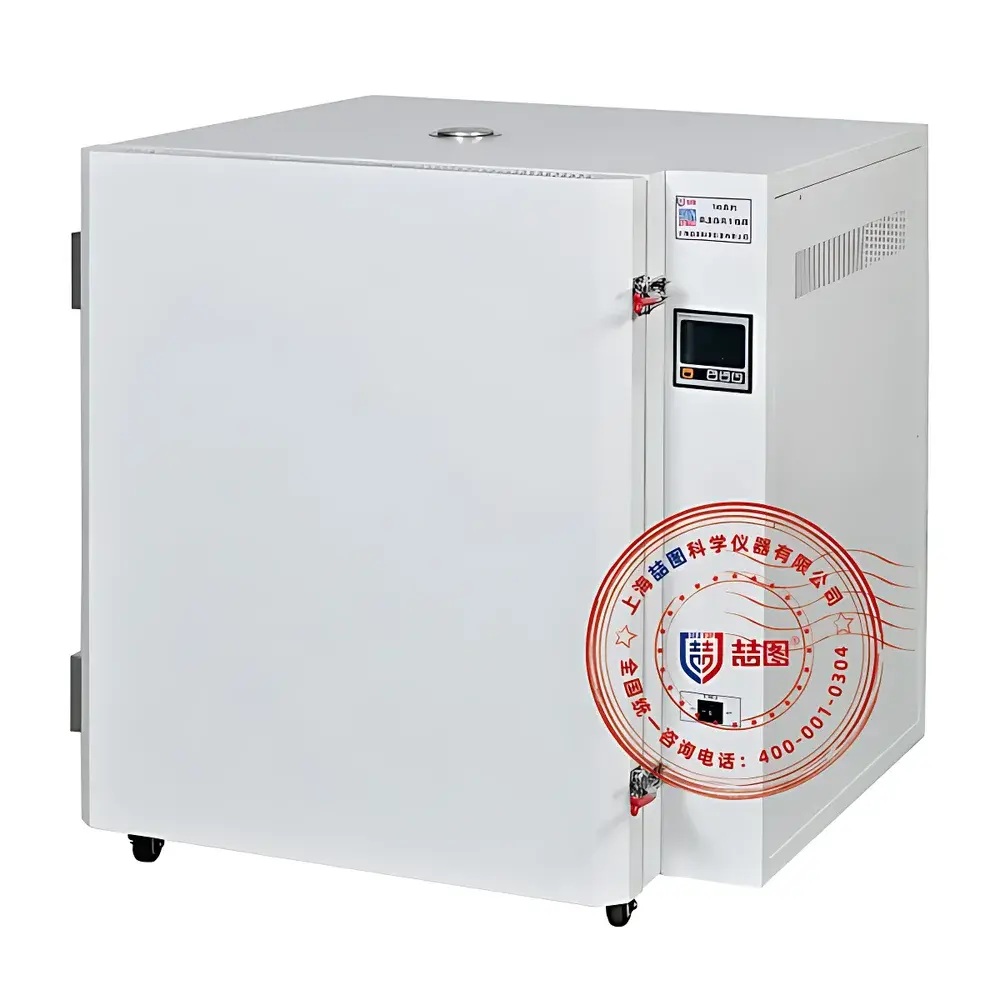
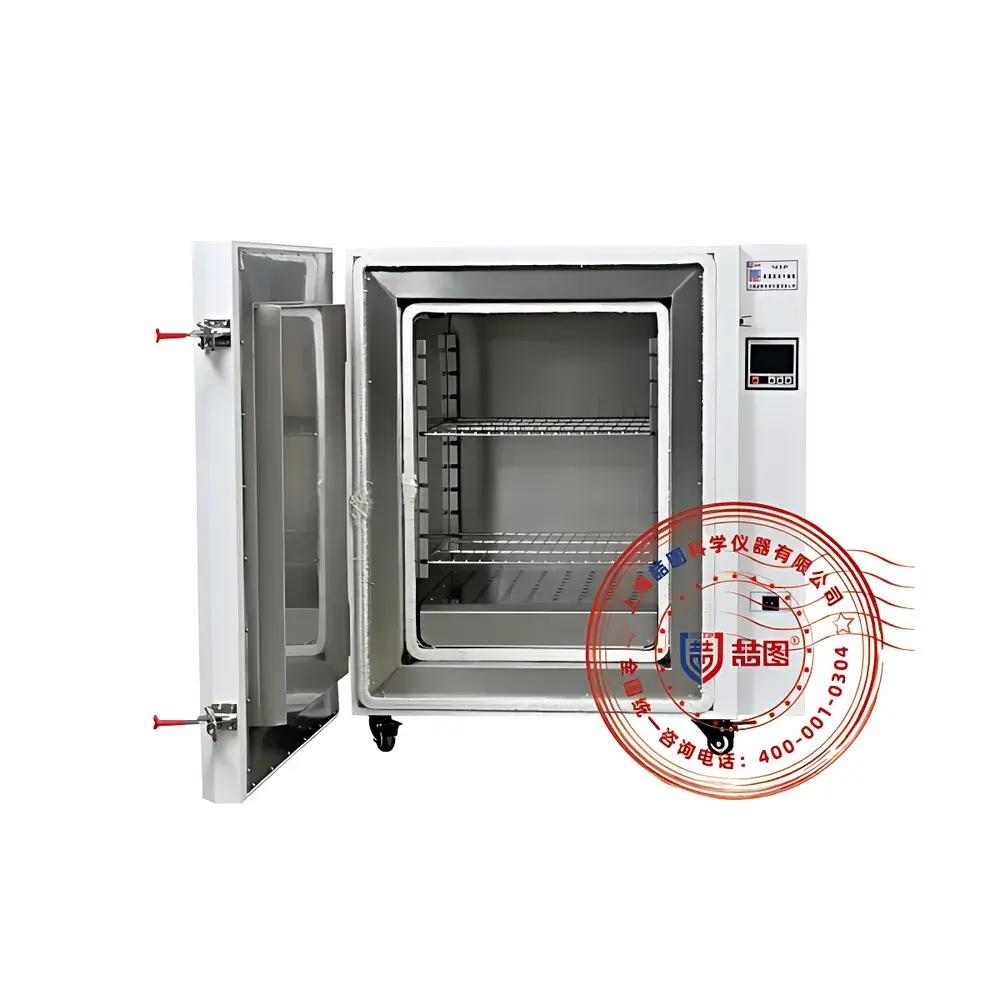
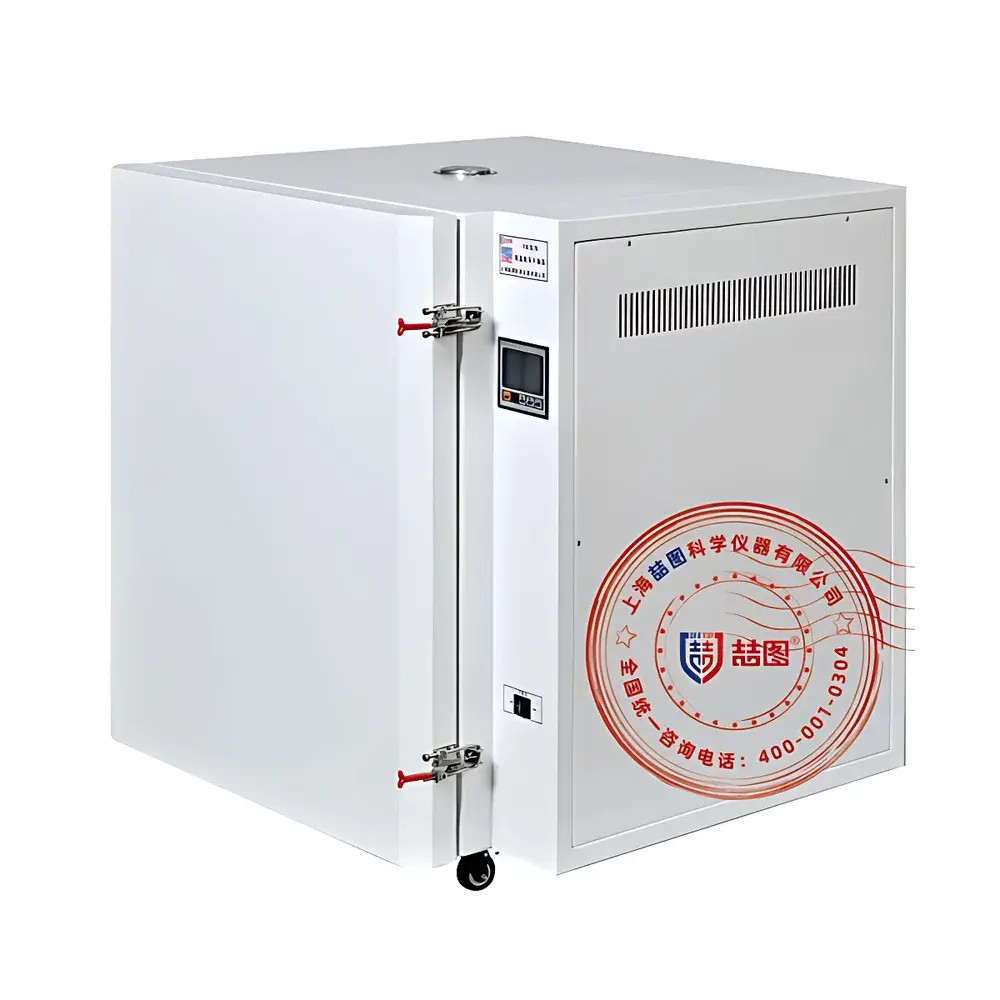
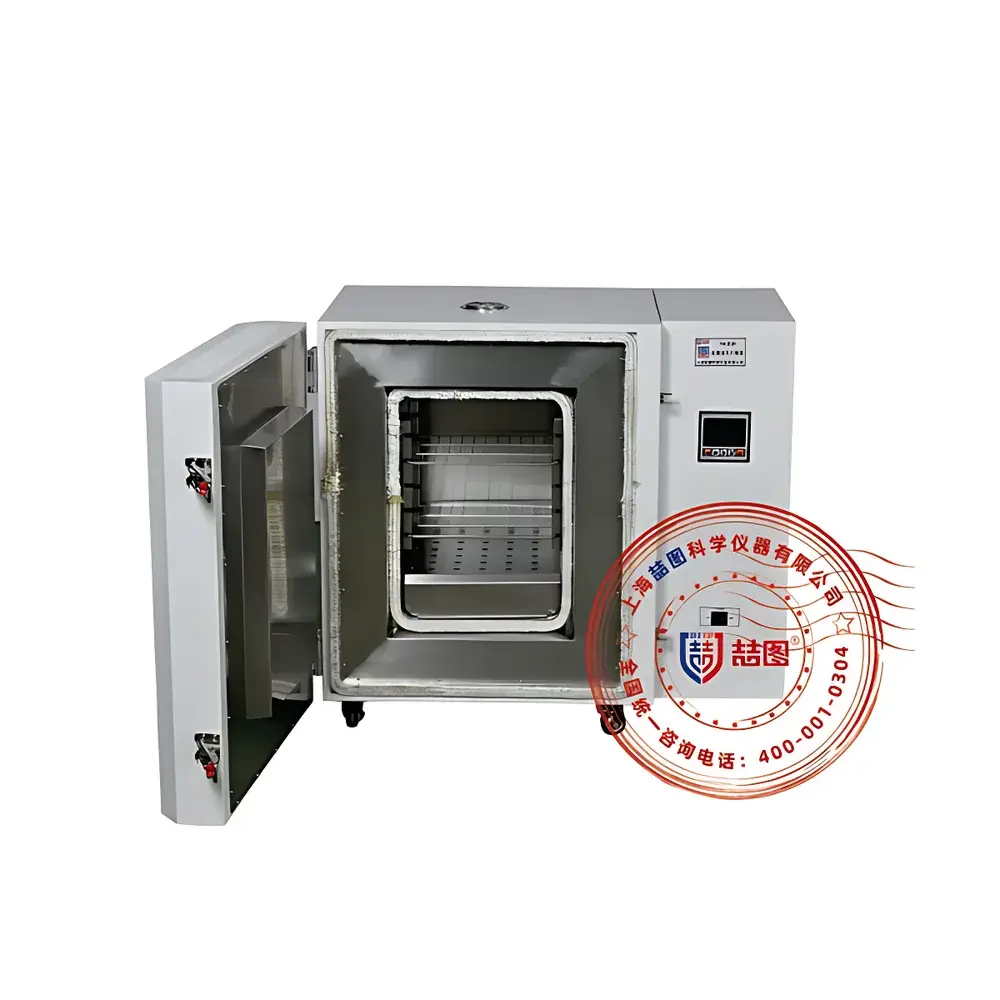
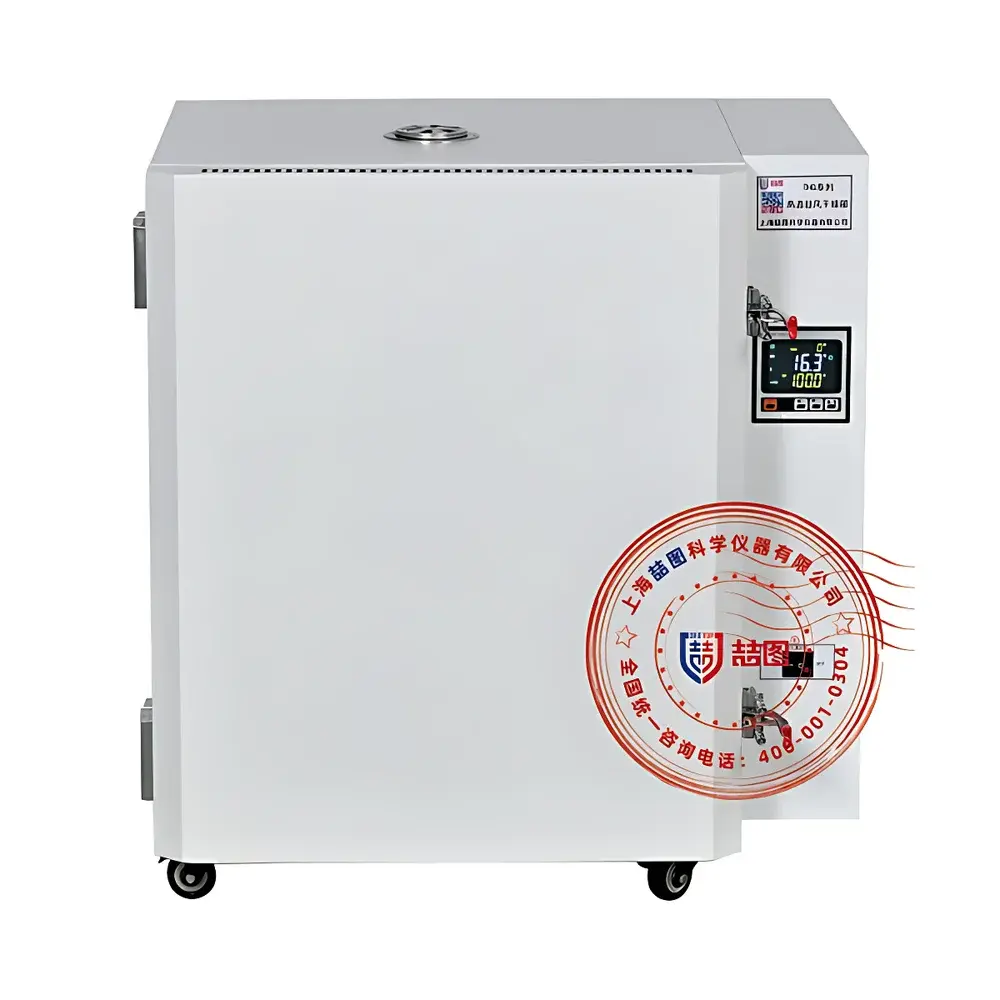
DRETOP THG-9248A High-Temperature Forced-Air Drying Oven
| Brand | DRETOP |
|---|---|
| Origin | Shanghai, China |
| Manufacturer Type | Direct Manufacturer |
| Instrument Type | High-Temperature Oven |
| Temperature Range | RT+20°C to 400°C |
| Temperature Uniformity | ±2.5°C (at 100°C, empty chamber) |
| Temperature Fluctuation | ±1°C |
| Temperature Resolution | 0.1°C |
| Chamber Dimensions (W×D×H) | 500×600×750 mm |
| External Dimensions (W×D×H) | 920×860×1150 mm |
| Operating Ambient Temperature | 5–45°C |
| Interior Material | Brushed Stainless Steel (SUS304) |
| Heating Method | Forced-Air Convection with Dual Airflow Channels |
| Insulation | High-Density Glass Fiber |
| Sealing Material | High-Temp Silicone Rubber Gasket |
| Safety Protections | Over-Temperature Alarm, Leakage Protection, Short-Circuit Protection, Overload Protection, Power-Fail Data Retention |
| Optional Accessories | USB Data Export Interface, Programmable Touchscreen Controller, RS485 Communication Port, Thermal Printer, Independent Limit Temperature Controller |
Overview
The DRETOP THG-9248A is a precision-engineered high-temperature forced-air drying oven designed for demanding thermal processing applications in research laboratories, quality control environments, and industrial R&D facilities. It operates on the principle of controlled convective heat transfer—utilizing a dual-channel air circulation system driven by a high-efficiency, low-noise centrifugal blower and stainless-steel heating elements—to achieve rapid, uniform heating across the entire working chamber. With a maximum operating temperature of 400°C and a calibrated temperature resolution of 0.1°C, the THG-9248A meets the thermal stability requirements for material conditioning, pre-treatment of components prior to assembly, accelerated aging tests, and high-temperature reaction support. Its robust construction—including a brushed stainless-steel interior, reinforced door sealing, and fiberglass insulation—ensures long-term dimensional stability, minimal thermal loss, and compliance with standard laboratory safety and energy efficiency expectations.
Key Features
- Microprocessor-based PID temperature controller with real-time deviation compensation, enabling precise setpoint tracking and minimal overshoot (<0.5°C typical at 300°C)
- Large-format backlit LCD display showing simultaneous readings of set temperature, actual chamber temperature, elapsed time, and error codes for intuitive diagnostics
- Adjustable and removable stainless-steel shelving system with drawer-style trays; shelf spacing optimized for flexibility in sample loading and airflow optimization
- Dual independent airflow ducts with tangential inlet design ensure laminar, non-turbulent recirculation—critical for maintaining ±2.5°C uniformity at 100°C (empty) per ISO 17025-aligned validation protocols
- Triple-layer safety architecture: primary PID control loop, secondary independent over-temperature limiter (hardware-based), and configurable alarm thresholds with audible/visual alerts
- Electromechanical protection suite including grounded leakage current detection, thermal cut-off fuses, and SSR-controlled heating without contactor chatter or EMI interference
Sample Compatibility & Compliance
The THG-9248A accommodates a wide range of sample types—from ceramic green bodies and metal alloys to pharmaceutical excipients and polymer composites—within its 240 L chamber volume. Its stainless-steel interior (SUS304) resists oxidation up to 400°C and permits repeated cleaning with mild alkaline or ethanol-based agents without surface degradation. The unit conforms to general-purpose laboratory equipment safety standards (IEC 61010-1), and its thermal performance is validated under conditions aligned with ASTM E145 (Standard Specification for Gravity-Convection and Forced-Ventilation Ovens) and ISO 14644-1 (cleanroom-compatible operation when used with optional HEPA-filtered air intake). While not intrinsically rated for vacuum or inert-atmosphere use, it may be integrated into controlled-environment workflows via optional process ports (e.g., 25 mm test port with silicone gasket seal).
Software & Data Management
The base configuration supports manual operation with programmable timer functionality (1–9999 minutes). For regulated environments, optional upgrades include an embedded color touchscreen controller supporting multi-segment ramp-soak profiles (up to 32 steps), real-time data logging (internal memory ≥10,000 points), and export via USB flash drive in CSV format. An RS485 interface enables integration with SCADA systems or centralized lab management software (e.g., LabVantage, STARLIMS) for audit-ready traceability. All firmware versions maintain full 21 CFR Part 11 compliance when paired with optional electronic signature modules—supporting role-based access control, audit trail generation, and immutable record retention for GLP/GMP-aligned workflows.
Applications
- Materials science: Pre-sintering of oxide ceramics, stress-relief annealing of tool steels, binder burnout in MIM parts, glass transition studies
- Pharmaceutical manufacturing: Sterilization of glassware and stainless-steel components (dry-heat depyrogenation per USP ), active pharmaceutical ingredient (API) moisture removal
- Chemical R&D: Solvent evaporation from catalyst precursors, thermal decomposition kinetics, solid-state reaction initiation
- Electronics: PCB pre-baking, conformal coating curing, solder paste drying prior to reflow
- Food & agriculture testing: Moisture content determination (AOAC 950.46), mycotoxin stability assays, botanical extract concentration
FAQ
What is the maximum continuous operating temperature?
The THG-9248A is rated for continuous operation at 400°C. Extended exposure above this threshold may compromise heater longevity and sensor calibration.
Does the oven support validation documentation (IQ/OQ/PQ)?
Yes—DRETOP provides factory-generated calibration certificates (traceable to NIST standards), as well as optional third-party IQ/OQ protocol packages compliant with ISO/IEC 17025 requirements.
Can I monitor temperature remotely via Ethernet or Wi-Fi?
Not natively; however, the RS485 interface allows connection to industrial gateways (e.g., Modbus TCP converters) for integration into facility-wide monitoring networks.
Is the interior chamber accessible for cleaning without tools?
Yes—the door opens fully (180°), all shelves are tool-free removable, and the rounded inner corners and seamless welds facilitate wipe-down maintenance per ISO 14644-1 Class 7 cleanroom practices.
What maintenance intervals are recommended?
Blower motor lubrication every 12 months, gasket inspection every 6 months, and annual recalibration of the K-type thermocouple and PID controller using certified reference standards.



