
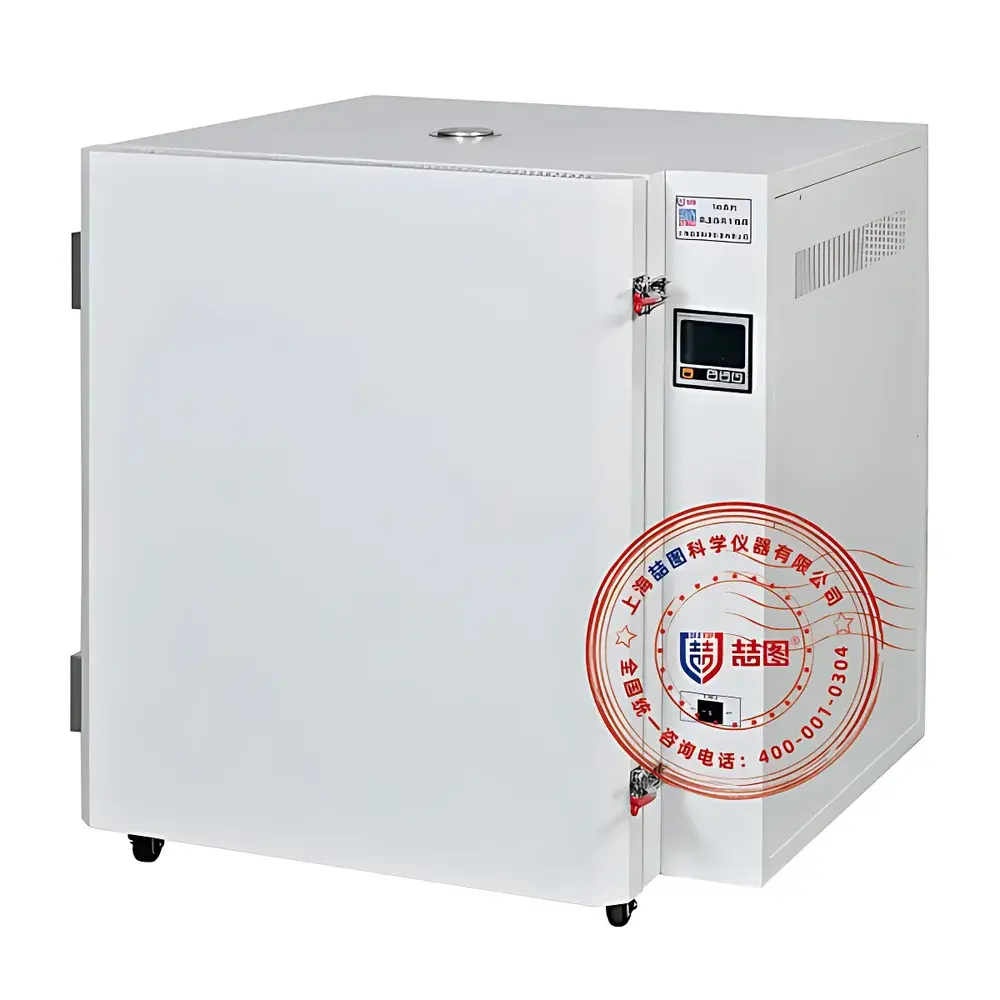
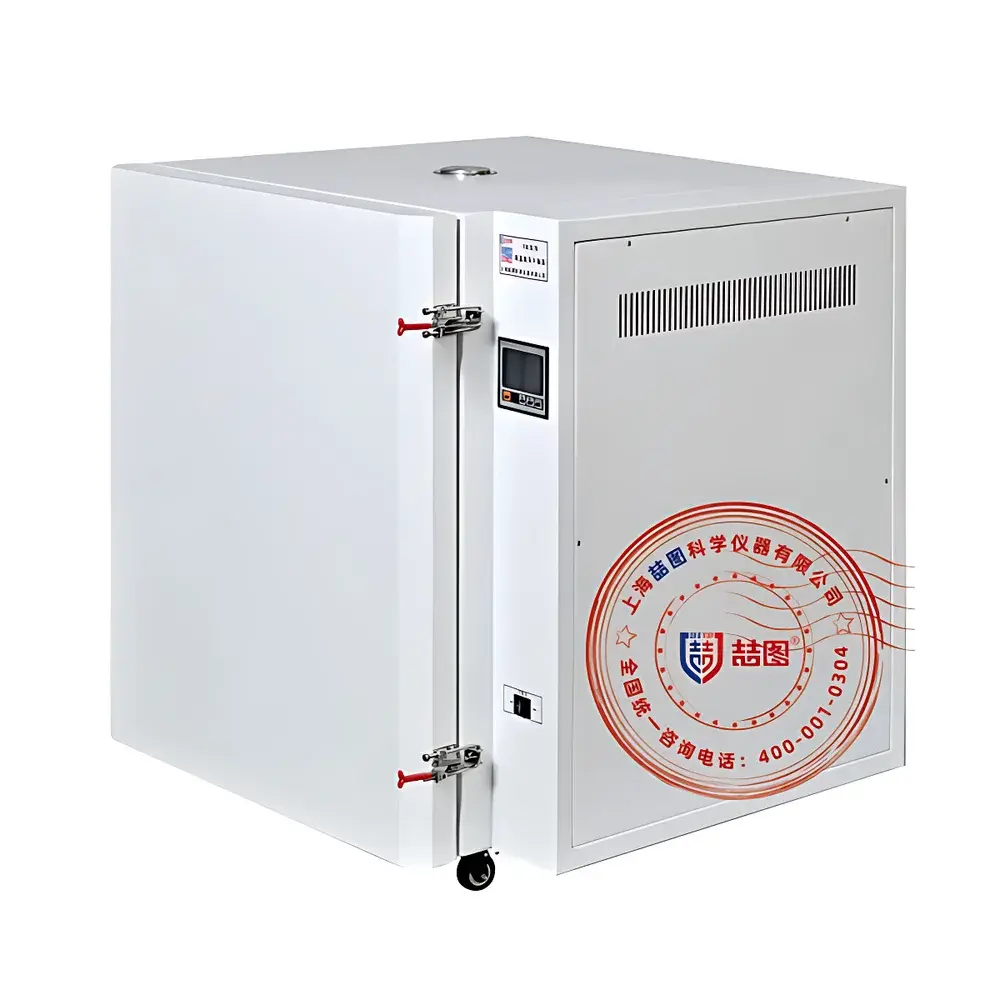
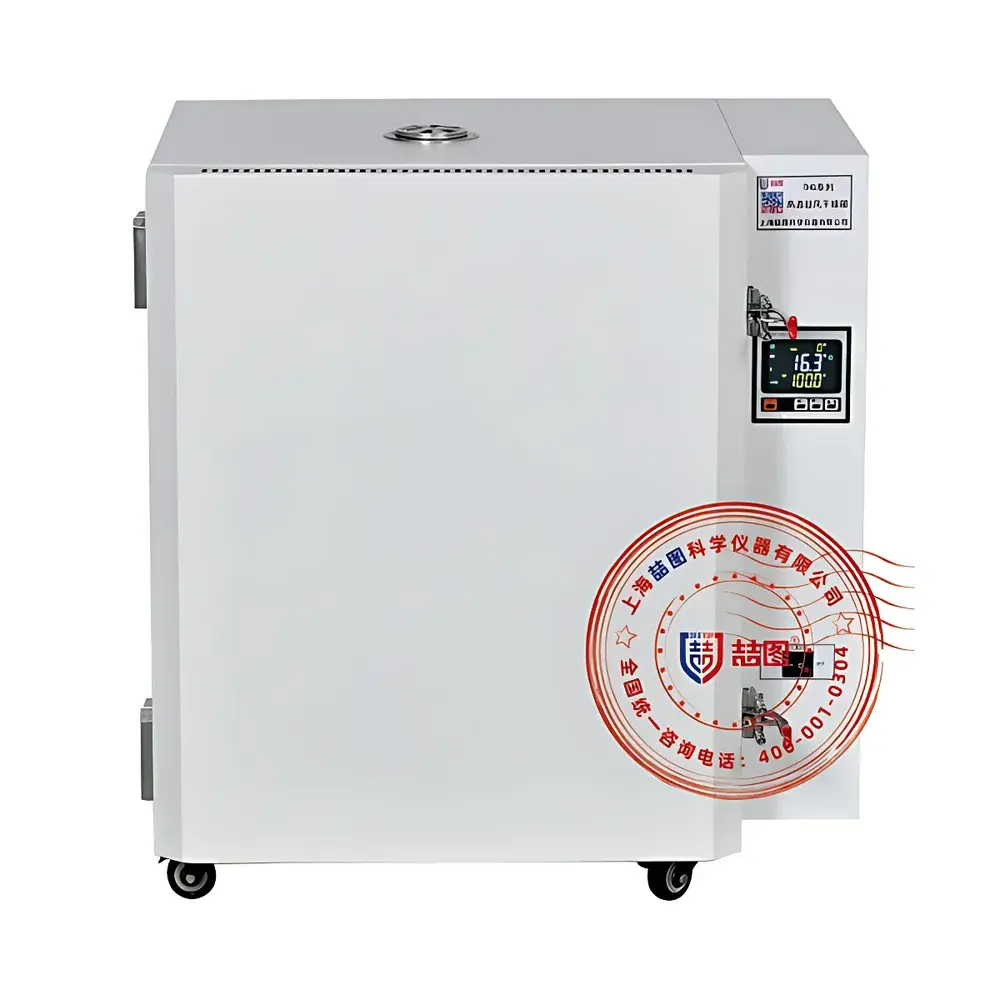
DRETOP THG-9249AP High-Temperature Forced-Air Drying Oven
| Brand | DRETOP |
|---|---|
| Origin | Shanghai, China |
| Manufacturer Type | Direct Manufacturer |
| Instrument Type | High-Temperature Oven |
| Temperature Range | RT+20°C to 500°C |
| Temperature Uniformity | ±2.5°C |
| Temperature Fluctuation | ±1°C |
| Temperature Resolution | 0.1°C |
| Chamber Dimensions (W×D×H) | 500 × 600 × 750 mm |
| External Dimensions (W×D×H) | 920 × 860 × 1150 mm |
| Inner Chamber Material | Brushed Stainless Steel (SUS304) |
| Heating Method | Forced Convection with Dual-Airflow Circulation |
| Working Ambient Temperature | 5–45°C |
| Insulation Material | High-Density Glass Fiber |
| Sealing Material | High-Temperature Silicone Rubber |
| Safety Protections | Over-Temperature Alarm, Leakage Protection, Short-Circuit Protection, Overload Protection, Power-Fail Data Retention |
| Optional Accessories | USB Data Export Interface, Programmable Controller, Color Touchscreen, RS-485 Communication Port, Thermal Printer, Independent Limit Temperature Controller |
Overview
The DRETOP THG-9249AP is a high-performance forced-air drying oven engineered for precision thermal processing in demanding laboratory and industrial environments. It operates on the principle of controlled convective heat transfer, utilizing a dual-channel forced-air circulation system driven by a high-efficiency, low-noise centrifugal blower and stainless-steel heating elements. This architecture ensures rapid thermal response, minimal temperature overshoot, and stable equilibrium across the full operating range of RT+20°C to 500°C. Designed for applications requiring rigorous thermal consistency—such as ceramic sintering, metallurgical heat treatment, pharmaceutical raw material drying, and high-temperature stability testing—the THG-9249AP meets foundational requirements for GLP-compliant workflows and supports traceable, auditable thermal protocols when configured with optional data logging and 21 CFR Part 11–capable software modules.
Key Features
- Microprocessor-based PID temperature controller with digital LCD display, offering real-time three-color status indication (green/yellow/red) for operational clarity and intuitive parameter navigation.
- Self-diagnostic system with fault-code readout directly on the display panel—enabling rapid identification of sensor anomalies, heater failures, or control loop deviations.
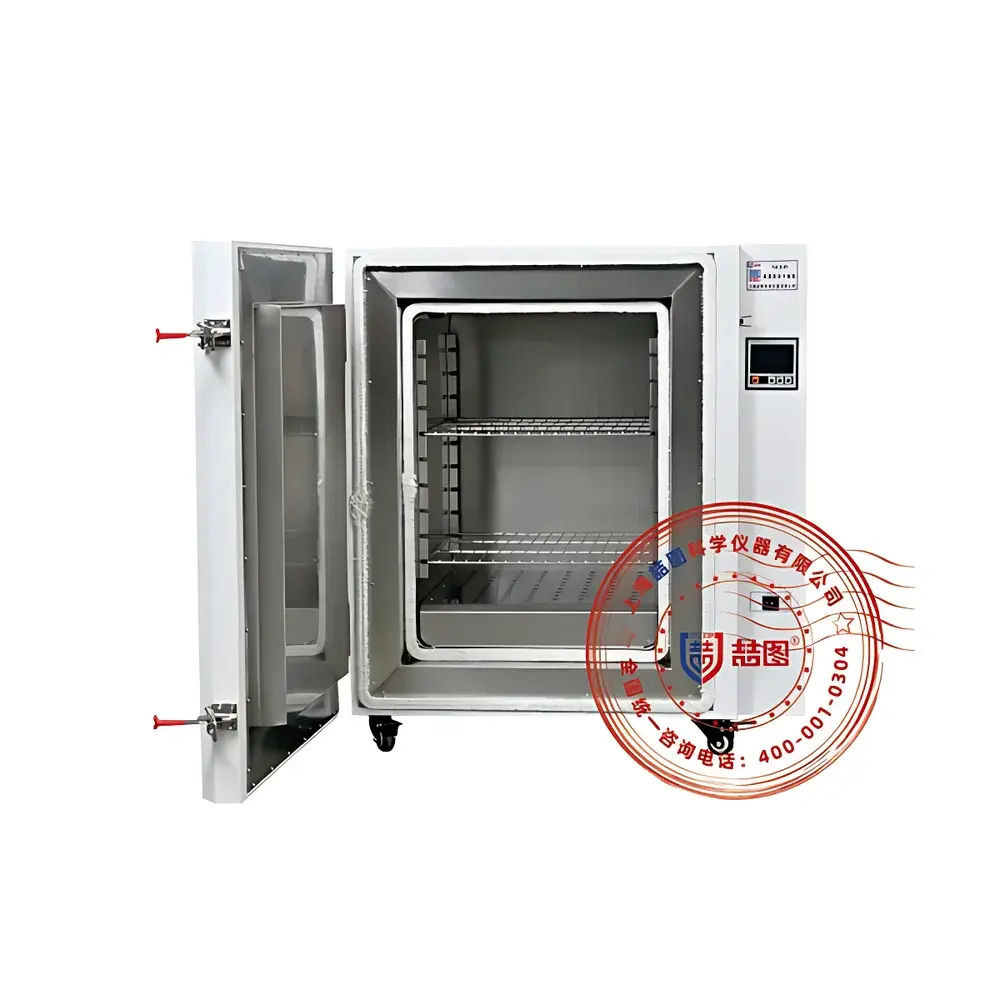
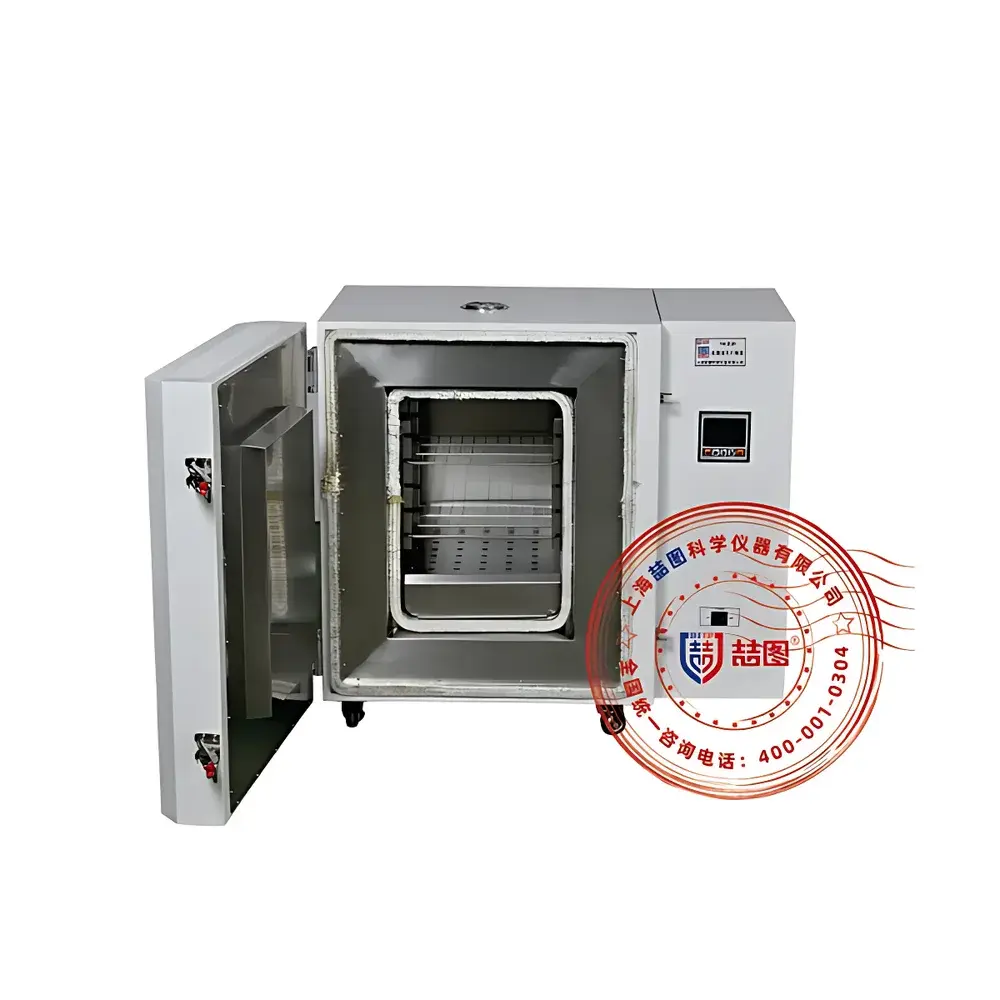
- Robust chamber construction: interior lined with brushed 304 stainless steel; exterior finished with electrostatic epoxy powder coating; high-density glass fiber insulation minimizes thermal loss and improves energy efficiency.
- Optimized airflow design featuring dual independent air ducts and multi-blade impeller ensures uniform heat distribution (±2.5°C) and fast recovery after door opening.
- Adjustable, removable drawer-style shelving with semi-circular edge profile facilitates cleaning and accommodates irregularly shaped samples or fixtures.
- Comprehensive safety architecture including over-temperature cut-off, independent mechanical limit thermostat, leakage current protection, thermal overload relay, and non-volatile memory retention for setpoints and timers during power interruption.
Sample Compatibility & Compliance
The THG-9249AP accommodates a wide variety of sample formats—including crucibles, Petri dishes, metal substrates, ceramic wafers, polymer sheets, and glass vials—within its 240 L working volume. Its stainless-steel chamber resists oxidation and corrosion under prolonged exposure to elevated temperatures and mild chemical vapors typical in solvent evaporation or catalyst activation procedures. The unit complies with IEC 61010-1:2010 for electrical safety in laboratory equipment and incorporates design elements aligned with ISO/IEC 17025 requirements for equipment qualification. When equipped with an optional independent limit controller and calibrated reference thermometer, it supports IQ/OQ documentation for GMP-regulated environments in pharmaceutical and biotech manufacturing.
Software & Data Management
Standard configuration includes a programmable timer (1–9999 minutes) and analog output for external monitoring. Optional upgrades enable advanced data integrity features: USB mass storage interface allows secure export of time-stamped temperature logs to encrypted U drives; RS-485 Modbus RTU protocol enables integration into centralized SCADA or LIMS platforms; color touchscreen models support up to 32-segment programmable ramp-soak profiles with event-triggered alarms and audit trail generation. All firmware versions maintain timestamped calibration history and user-access logs, fulfilling key elements of FDA 21 CFR Part 11 compliance when paired with appropriate access controls and electronic signature modules.
Applications
- Materials Science: Sintering of oxide ceramics, annealing of metallic alloys, devitrification studies of glasses, and thermal aging of composites.
- Pharmaceutical & Biotechnology: Sterilization of glassware, moisture content determination per USP , active pharmaceutical ingredient (API) drying, and stability testing under accelerated conditions (ICH Q1A).
- Chemical Engineering: Catalyst conditioning, solvent removal from reaction intermediates, and thermal decomposition kinetics studies.
- Food & Agriculture Research: Moisture analysis of grains and powders, enzymatic inactivation validation, and shelf-life modeling via Arrhenius-based accelerated testing.
- Electronics Manufacturing: Pre-bake of PCB substrates, outgassing of encapsulants, and thermal stress screening of solder pastes.
FAQ
What is the maximum recommended continuous operating temperature?
The THG-9249AP is rated for continuous operation at 500°C. For extended service life and optimal thermal stability, operation above 450°C should be limited to validated process cycles with documented dwell times.
Can the oven be used under inert atmosphere conditions?
The standard configuration is not gas-tight; however, optional inert-gas purge ports (N₂ or Ar) can be installed with custom flanged fittings and flow regulators upon request.
Is calibration certificate included with shipment?
A factory calibration report traceable to NIST standards is provided. On-site verification and ISO/IEC 17025-accredited calibration services are available as add-on options.
How is temperature uniformity verified across the chamber?
Uniformity is validated using a 9-point thermocouple mapping procedure per ASTM E2207, conducted at three setpoints (100°C, 300°C, and 500°C), with results documented in the performance qualification report.
What maintenance intervals are recommended for long-term reliability?
Blower motor lubrication and filter inspection every 6 months; door gasket integrity check quarterly; annual verification of PID tuning parameters and sensor linearity using certified reference standards.



