
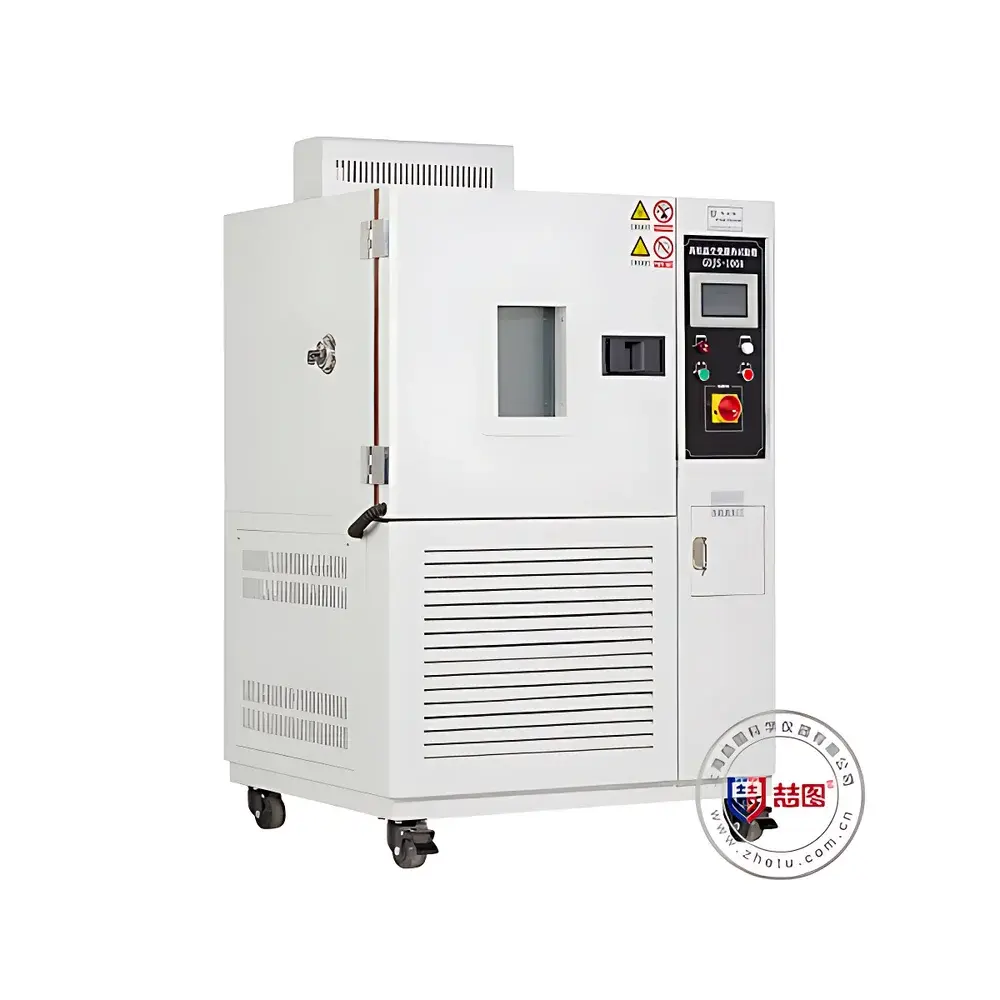
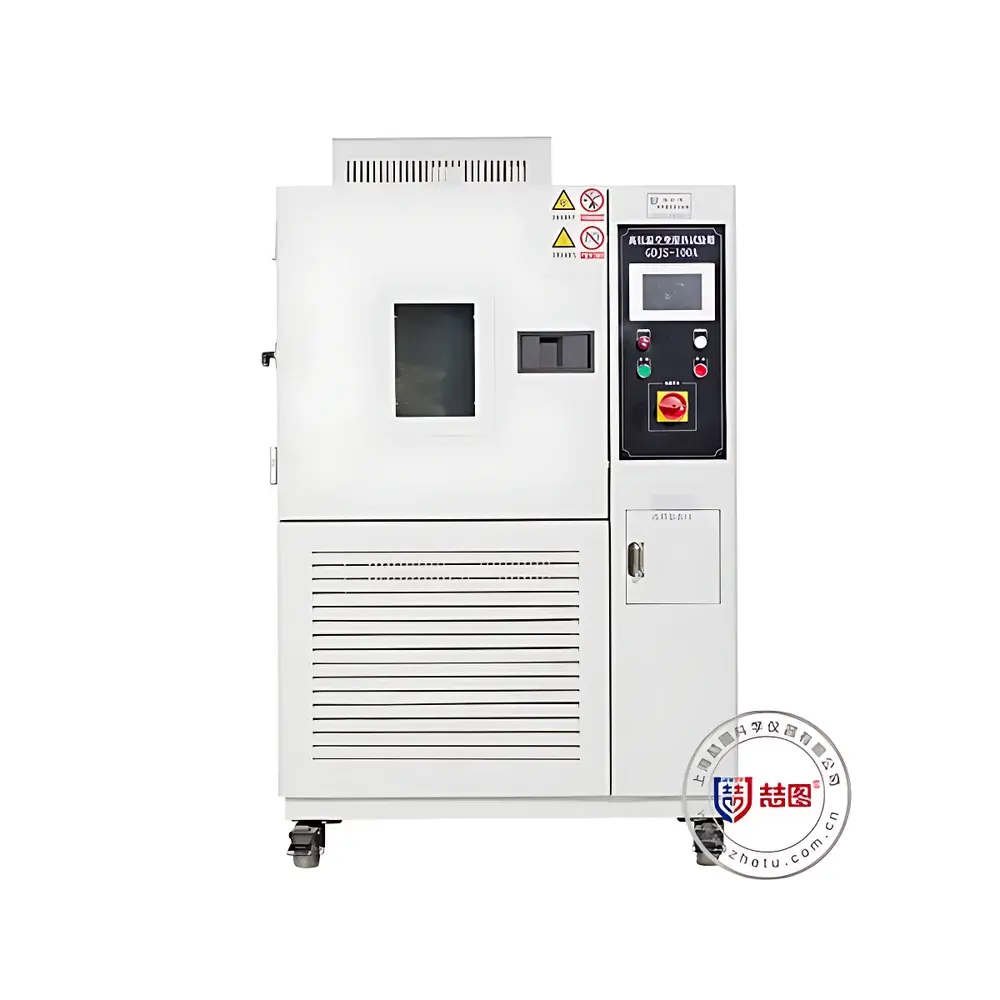
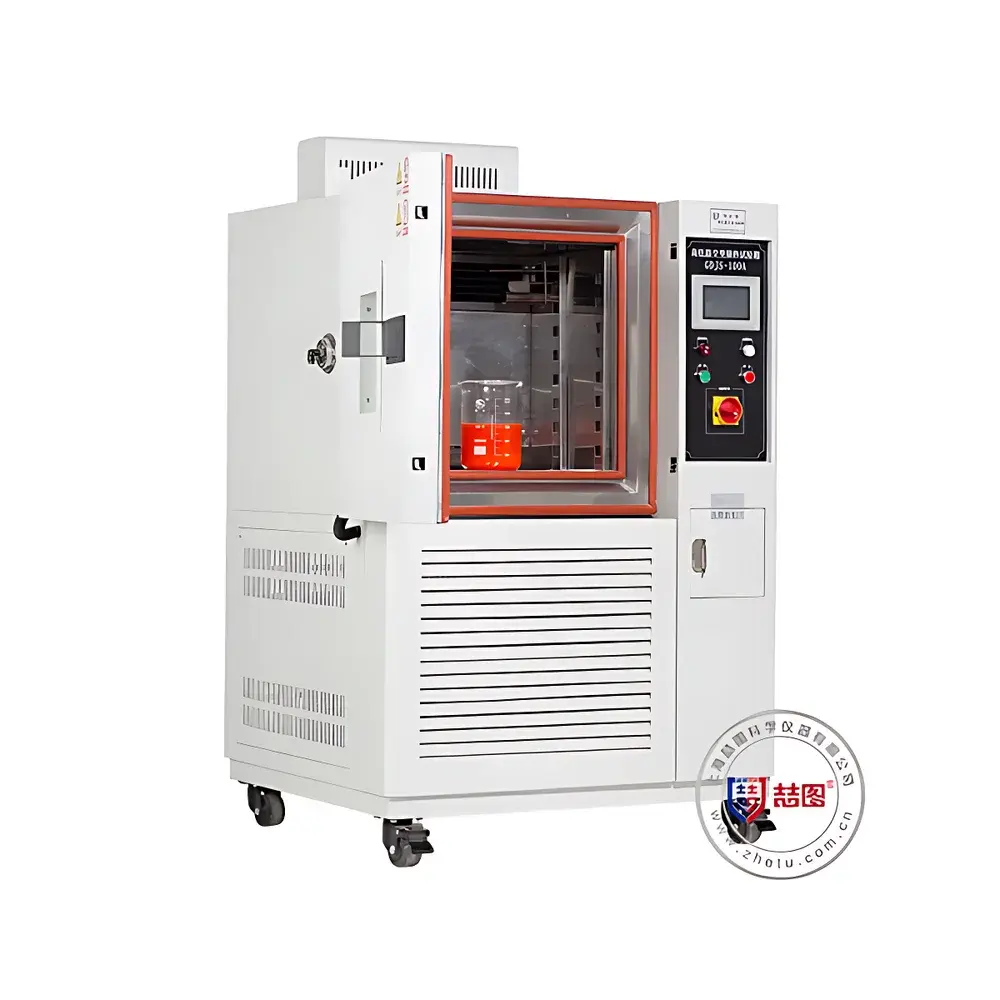
DRETOP THL-B100-II High-Low Temperature Environmental Test Chamber
| Brand | DRETOP |
|---|---|
| Origin | Shanghai, China |
| Manufacturer Type | Direct Manufacturer |
| Model | THL-B100-II |
| Temperature Range | -40 °C to +150 °C |
| Cooling Method | Hermetic Compressor-Based Refrigeration |
| Explosion-Proof Design | Standard (Non-Explosion-Proof) |
| Temperature Fluctuation | ±0.5 °C |
| Temperature Uniformity | ≤2 °C |
| Heating Rate | 1–3 °C/min (adjustable) |
| Cooling Rate | 0.7–1 °C/min (adjustable) |
| Internal Chamber Dimensions | 500 × 400 × 500 mm (W × D × H) |
Overview
The DRETOP THL-B100-II High-Low Temperature Environmental Test Chamber is an engineered precision system designed for controlled thermal stress evaluation of materials and components under dynamic temperature cycling conditions. Operating on the principle of forced-air convection with dual-stage refrigeration architecture, it replicates real-world environmental extremes—including rapid transitions between sub-zero cold soak and elevated thermal exposure—to assess thermal stability, dimensional integrity, material embrittlement, solder joint reliability, and functional performance degradation. The chamber complies with core requirements of IEC 60068-2-1 (Cold), IEC 60068-2-2 (Dry Heat), and IEC 60068-2-14 (Change of Temperature), supporting qualification testing in accordance with MIL-STD-810G, ASTM D3418, and ISO 16750-4 for automotive electronics. Its 100 L internal volume and optimized airflow path enable repeatable, traceable thermal profiles essential for R&D validation, design verification, and production lot acceptance testing.
Key Features
- Full-color 7-inch capacitive touchscreen HMI with intuitive multi-language interface (English/Chinese toggle), password-protected hierarchical access control (administrator/operator/user levels), and audit trail capability for GLP/GMP-aligned workflows.
- Advanced programmable controller supporting up to 1000 stored test programs, each comprising up to 100 segments—enabling complex ramp-soak-cycle sequences, slope-controlled transitions, and conditional branching (e.g., program jump, hold-to-value, automatic shutdown).
- Dual independent thermal control loops: separate PID-regulated heating (NiCr alloy sheathed heaters) and cooling (imported hermetic compressor with cascade evaporator-condenser configuration) ensure minimal cross-interference and improved thermal response fidelity.
- Optimized air circulation system featuring high-efficiency centrifugal blower, asymmetric wind tunnel geometry, and strategically positioned baffle plates—achieving ≤2 °C uniformity across the working zone per IEC 60068-3-5.
- Double-glazed, low-emissivity tempered observation window with integrated anti-frost heating element and LED illumination—preventing condensation-induced electrical hazards during low-temperature operation while enabling real-time visual monitoring.
- Robust mechanical construction: cold-rolled steel outer shell with powder-coated finish; SUS304 stainless steel interior chamber; silicone rubber door gasket rated for continuous operation from -40 °C to +150 °C without hardening or adhesion loss.
- Comprehensive safety architecture including over-temperature cut-off (independent mechanical backup thermostat), compressor/fan overload protection, ground fault detection, and auto-restart after power interruption with configurable delay timing.
Sample Compatibility & Compliance
The THL-B100-II accommodates standard 2-tier adjustable stainless-steel shelves (included), supporting samples up to 25 kg per shelf. A 50 mm diameter cable/port access port (standard) permits live electrical, pneumatic, or signal feedthrough for in-situ functional testing under thermal stress. The chamber meets electromagnetic compatibility (EMC) requirements per EN 61326-1 and is constructed to comply with CE marking directives (2014/30/EU, 2014/35/EU). For regulated industries, optional RS485 Modbus RTU or USB data logging interfaces support integration into centralized LIMS or MES platforms, facilitating 21 CFR Part 11-compliant electronic records when paired with validated software.
Software & Data Management
Onboard controller firmware includes built-in data logging (≥30 days at 1-minute intervals), real-time trend display, and export functionality via USB mass storage—generating timestamped CSV files compatible with Excel, MATLAB, or statistical process control (SPC) tools. Optional PC-based DRETOP LabControl Suite provides remote supervision, multi-chamber synchronization, automated report generation (PDF/Excel), and deviation alerting via email/SNMP trap. All logged parameters—including chamber setpoint, actual temperature, compressor status, and alarm history—are time-stamped with millisecond resolution and retain full traceability for internal audits or regulatory submissions.
Applications
- Electronics: Thermal cycling of PCBAs, connectors, sensors, and battery modules per JEDEC JESD22-A104.
- Automotive: Component validation per ISO 16750-4 (road vehicles—electrical disturbances) and SAE J2380.
- Aerospace: Material screening for avionics enclosures and composite layup curing simulation.
- Polymers & Elastomers: Glass transition (Tg) assessment, aging studies, and coefficient of thermal expansion (CTE) measurement support.
- Quality Assurance: In-process verification of solder paste reflow profiles, adhesive bond strength retention, and seal integrity under thermal shock.
- Academic Research: Controlled environment experimentation in material science, physics, and mechanical engineering laboratories.
FAQ
What is the maximum allowable sample load volume inside the chamber?
The internal working space measures 500 × 400 × 500 mm (W × D × H), yielding a nominal 100 L capacity. For optimal thermal uniformity and airflow, DRETOP recommends limiting total sample volume to ≤30% of chamber volume (i.e., ≤30 L net occupied space).
Can this chamber perform thermal shock testing?
The THL-B100-II is configured for gradual temperature ramping (1–3 °C/min heating; 0.7–1 °C/min cooling) and is not rated for true thermal shock (instantaneous transfer between extreme zones). For shock applications, DRETOP offers dedicated two-zone or three-zone thermal shock chambers.
Is the controller compliant with FDA 21 CFR Part 11 requirements?
The embedded controller supports electronic signatures, audit trails, and role-based permissions—core elements of Part 11. Full compliance requires validation of the entire system (hardware + software + procedural controls) by the end user per their SOPs.
What maintenance is required for long-term reliability?
Recommended quarterly tasks include cleaning the condenser coil, inspecting door gasket integrity, verifying calibration of the reference PT100 sensor against a NIST-traceable standard, and checking refrigerant charge pressure. Annual preventive maintenance by certified DRETOP service engineers is advised.
Does the chamber support custom test standards beyond IEC/ISO?
Yes—the programmable logic allows users to define non-standard profiles (e.g., custom dwell times, variable ramp rates, conditional triggers) to meet proprietary OEM specifications or internal test protocols.



