
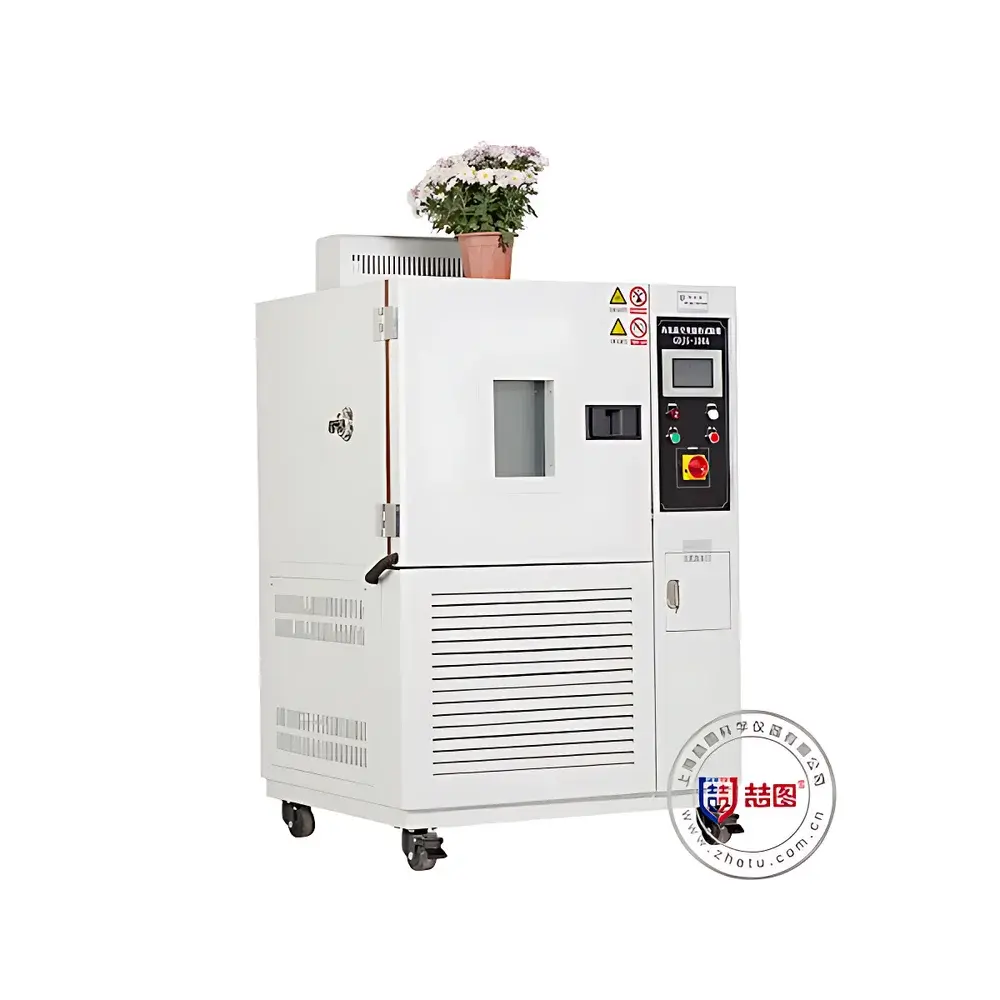
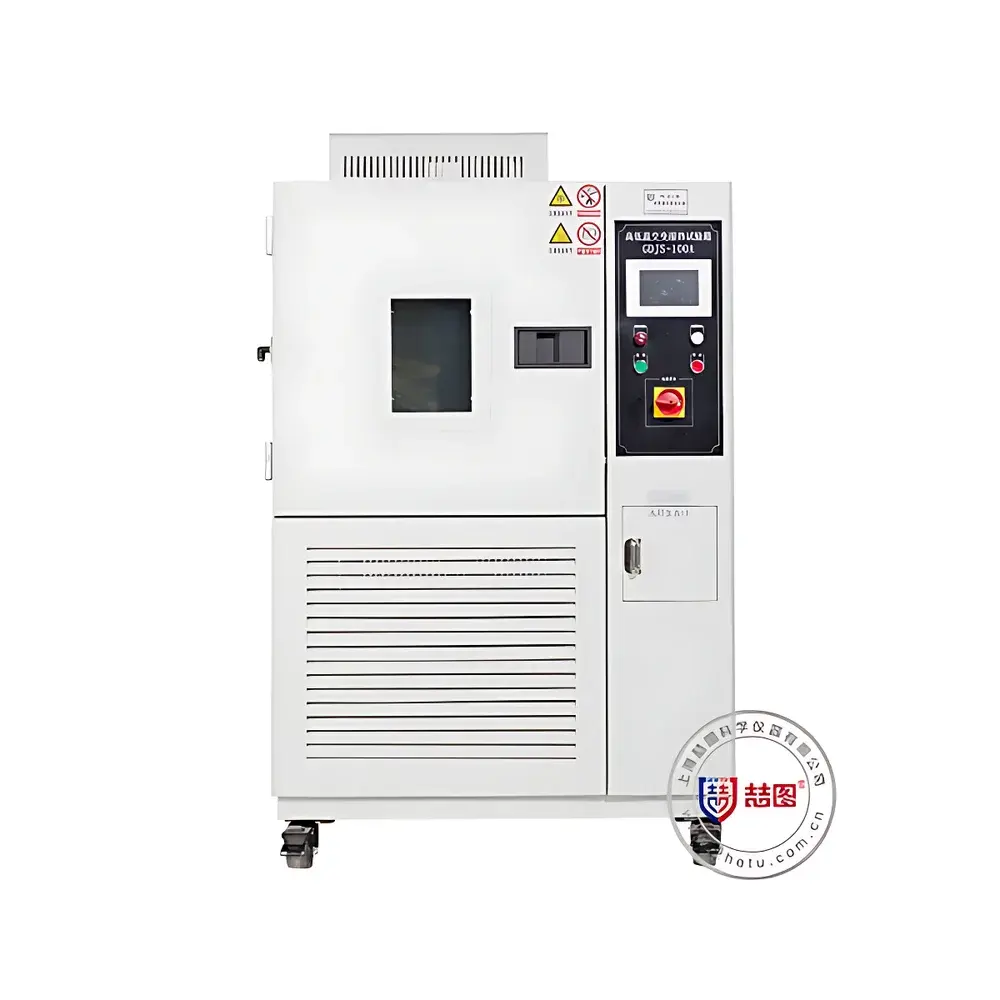
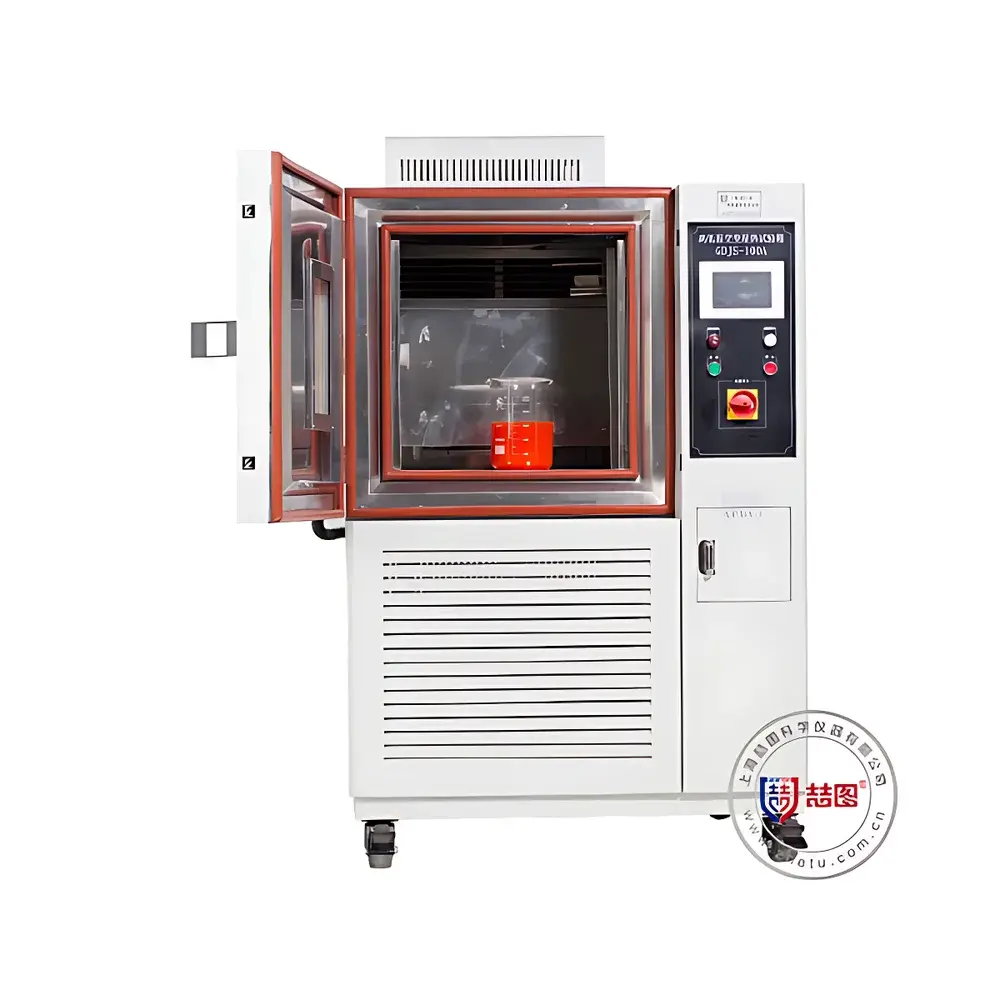
DRETOP THL-B400-I High-Low Temperature Environmental Test Chamber
| Brand | DRETOP |
|---|---|
| Origin | Shanghai, China |
| Manufacturer Type | Direct Manufacturer |
| Model | THL-B400-I |
| Temperature Range | -20 °C to +120 °C |
| Cooling Method | Hermetic Compressor-Based Refrigeration |
| Explosion-Proof Design | Standard (Non-Explosion-Proof) |
| Temperature Fluctuation | ±0.5 °C |
| Temperature Uniformity | ≤2 °C |
| Heating Rate | 1–3 °C/min (Adjustable) |
| Cooling Rate | 0.7–1 °C/min (Adjustable) |
| Interior Dimensions (W×D×H) | 800 mm × 600 mm × 850 mm |
| Power Supply | AC 220 V / 50 Hz or AC 380 V / 50 Hz |
| Input Power | 8000 W / 8000 W |
Overview
The DRETOP THL-B400-I High-Low Temperature Environmental Test Chamber is a precision-engineered climatic simulation system designed for rigorous thermal stress evaluation of industrial components and materials under controlled, repeatable, and traceable conditions. Operating on the principle of forced-air convection with dual-stage refrigeration and PID-controlled resistive heating, the chamber replicates real-world temperature cycling profiles—including rapid transitions between extreme cold and elevated heat—to assess product reliability, material integrity, and functional stability. It complies with core environmental testing standards including IEC 60068-2-1 (Cold), IEC 60068-2-2 (Dry Heat), and GB/T 2423.1–2423.2 (Chinese national equivalents). Its architecture supports both steady-state exposure and programmable thermal cycling—enabling qualification testing per MIL-STD-810H, automotive OEM specifications (e.g., GM W3177, Ford CETP), and aerospace component validation protocols.
Key Features
- Industrial-grade 7-inch full-color TFT touch interface with multi-language support (English/Chinese), password-protected hierarchical access control (administrator/operator/user levels), and audit-ready operation logging.
- Advanced programmable controller supporting up to 1000 stored test programs, each comprising up to 100 segments; enables ramp-soak-hold profiles, slope-controlled transitions, and conditional branching (e.g., program jump, hold-to-setpoint, automatic shutdown).
- Dual-stage hermetic compressor refrigeration system with shared evaporator-condenser configuration—optimized for stable low-temperature performance down to –20 °C while minimizing energy consumption and refrigerant charge.
- Nichrome alloy heating elements combined with high-efficiency centrifugal circulation fans ensure uniform thermal distribution (≤2 °C deviation across workspace) and rapid thermal response (heating: 1–3 °C/min; cooling: 0.7–1 °C/min).
- Double-glazed, heated observation window with anti-frost coating prevents condensation and maintains optical clarity during sub-zero operation—critical for in-situ visual monitoring without thermal disturbance.
- Robust stainless steel interior (SUS304), silicone rubber door gasket (rated for –60 °C to +150 °C), and optimized air duct design deliver superior chamber sealing and long-term dimensional stability under thermal cycling.
- Comprehensive safety architecture: independent over-temperature cut-off (dual-limit thermostat), compressor/fan overload protection, ground-fault circuit interruption (GFCI), and automatic power recovery after mains interruption.
- Standard 50 mm diameter test port (with silicone plug) supports live electrical, pneumatic, or signal feedthroughs—enabling in-chamber device operation during thermal stress testing.
Sample Compatibility & Compliance
The THL-B400-I accommodates samples up to 400 L volume (800 × 600 × 850 mm internal dimensions) with two adjustable stainless-steel shelves. Its airflow dynamics meet ISO 16750-4 (road vehicles), ASTM D3574 (flexible cellular materials), and IPC-TM-650 (electronic assemblies) requirements for thermal uniformity and stability. The chamber is suitable for non-hazardous solid and packaged specimens—including PCBAs, sensors, battery modules, polymer housings, and mechanical assemblies. It is not rated for Class I, II, or III hazardous locations; optional explosion-proof modifications are not available in this standard configuration. All thermal control algorithms and hardware configurations adhere to GLP-compliant operational principles, supporting traceability through timestamped event logs and parameter change records.
Software & Data Management
Data acquisition and remote supervision are enabled via optional RS485 (Modbus RTU) or USB interfaces, compatible with Windows-based DRETOP LabView-compatible software. Real-time temperature curves, alarm status, and runtime statistics are logged at user-defined intervals (1–60 s resolution) and exported natively to CSV or Excel formats. The system supports FDA 21 CFR Part 11–aligned features—including electronic signatures, audit trail activation, and role-based data export permissions—when deployed in regulated QC/QA environments. Local storage retains ≥30 days of continuous 1-second-resolution data without external PC connection.
Applications
- Electronics reliability screening: solder joint fatigue, capacitor derating, connector contact resistance drift under thermal cycling.
- Automotive component validation: ECU thermal shock endurance, lighting module condensation resistance, brake fluid compatibility at low temperatures.
- Aerospace material qualification: composite resin glass transition behavior, sealant adhesion retention, optical window thermal distortion analysis.
- Quality assurance for rubber, plastic, and elastomer products per ASTM D1349, ISO 188, and GB/T 7762.
- Academic research in polymer science, battery electrochemistry, and MEMS packaging thermomechanical modeling.
FAQ
What is the maximum sample weight the THL-B400-I can accommodate without compromising temperature uniformity?
The chamber is engineered for optimal airflow with loads up to 30 kg distributed evenly across both shelves. Exceeding this may impede convective heat transfer and affect uniformity compliance.
Does the unit support validation documentation (IQ/OQ/PQ) packages?
Yes—DRETOP provides standardized IQ/OQ templates aligned with ISO/IEC 17025 and GMP Annex 15 requirements. PQ execution requires third-party metrology verification using NIST-traceable PT100 probes.
Can the THL-B400-I operate continuously for extended durations (e.g., 1000-hour tests)?
Yes—the system includes automatic compressor duty-cycle management, thermal overload safeguards, and continuous runtime logging. Mean time between failures (MTBF) exceeds 12,000 hours under nominal operating conditions.
Is remote monitoring possible without proprietary software?
Yes—Modbus RTU protocol support allows integration into existing SCADA or building management systems (BMS) using standard industrial gateways.
What maintenance intervals are recommended for compressor and filter servicing?
Compressor oil and refrigerant pressure checks every 24 months; intake air filter cleaning every 3 months; door gasket inspection and calibration verification annually.



