
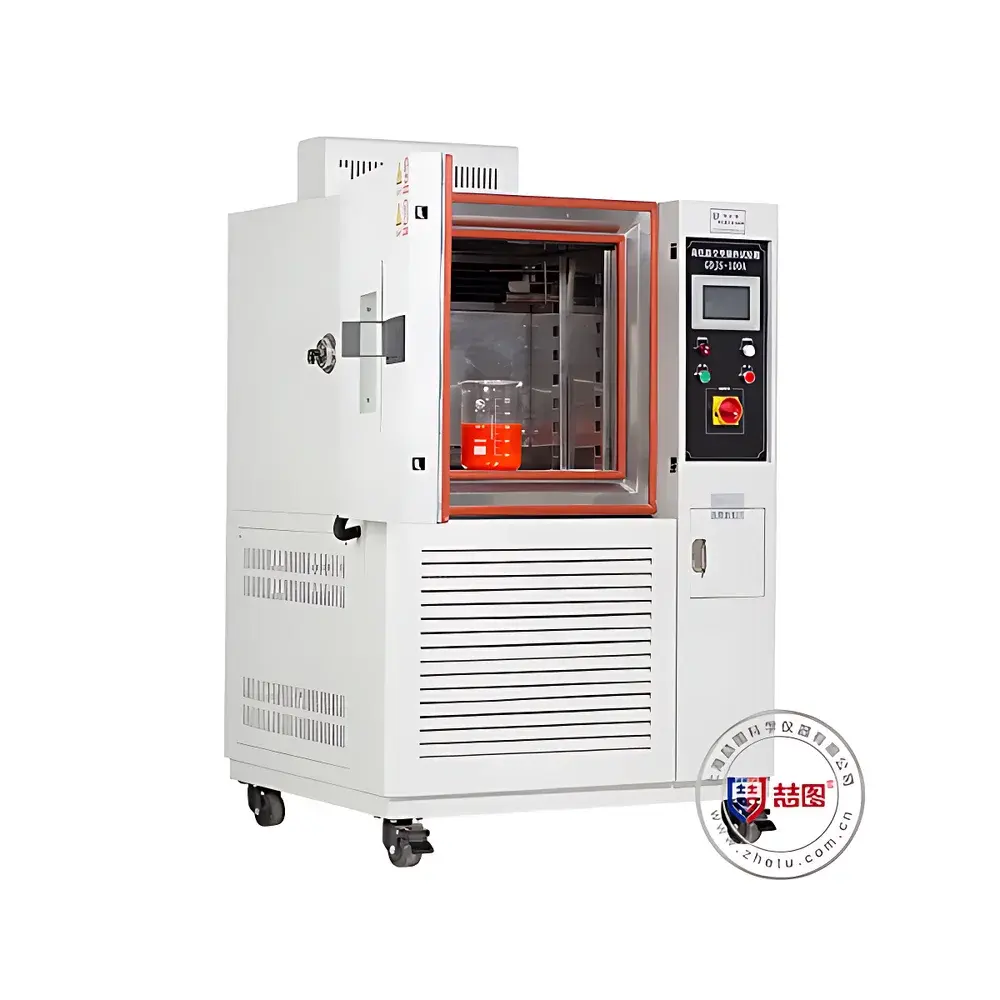
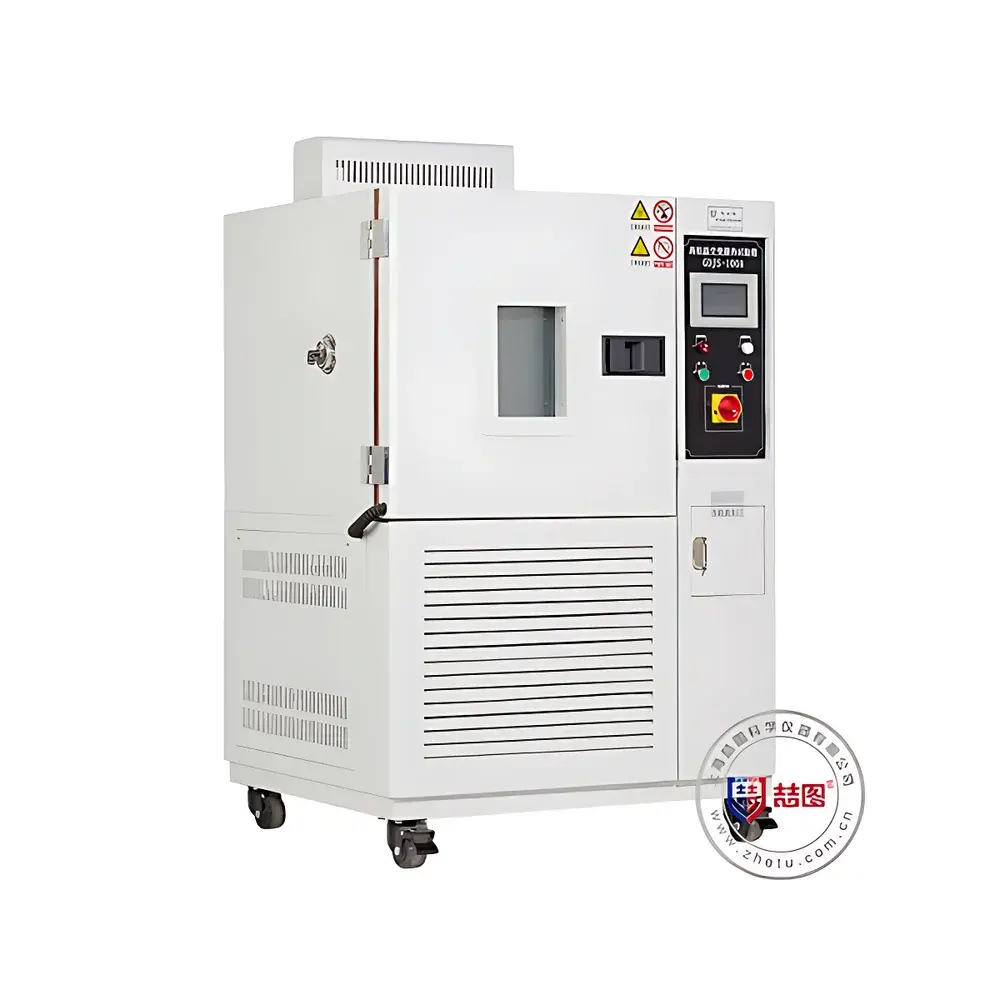
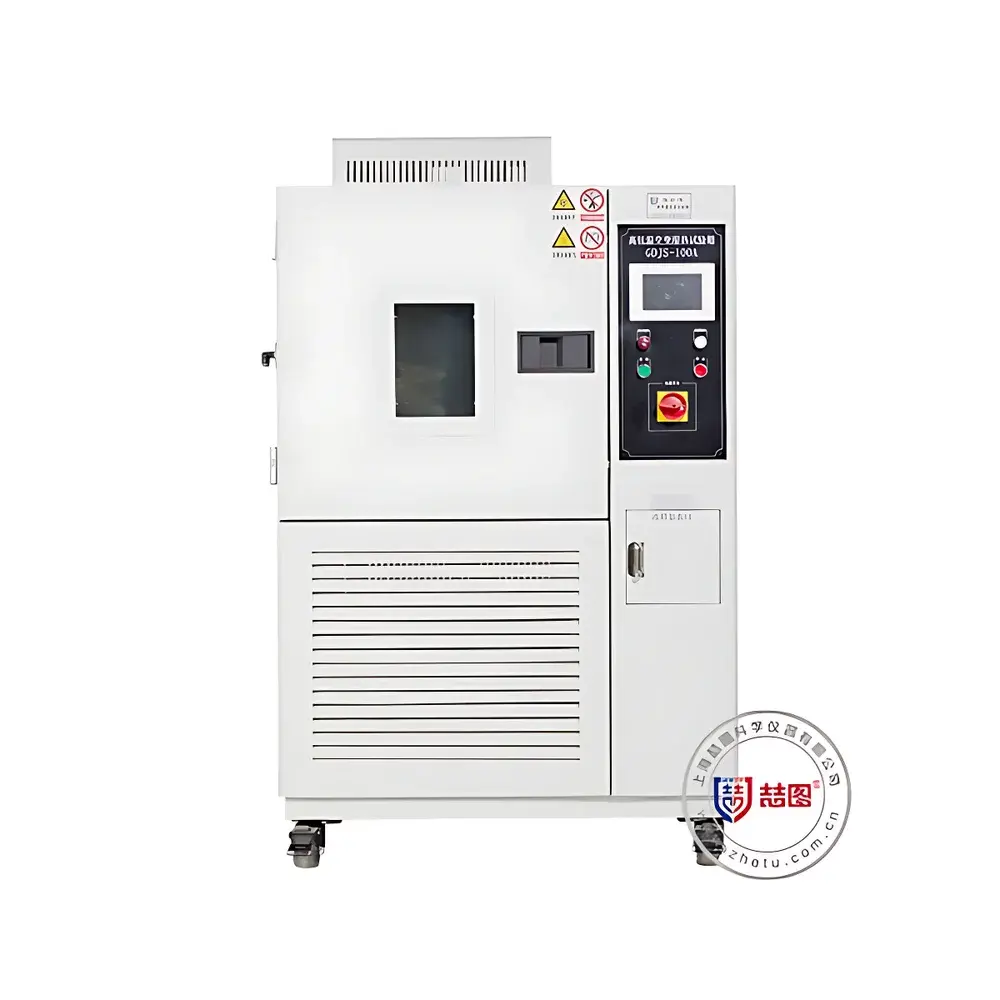
DRETOP THL-D100-I Color Touchscreen High-Low Temperature Environmental Test Chamber
| Brand | DRETOP |
|---|---|
| Origin | Shanghai, China |
| Manufacturer Type | Direct Manufacturer |
| Model | THL-D100-I |
| Temperature Range | -80 °C to +120 °C |
| Cooling Method | Hermetic Compressor-Based Refrigeration |
| Explosion-Proof | Standard (Non-Explosion-Proof) |
| Temperature Fluctuation | ±0.5 °C |
| Temperature Uniformity | ≤2 °C |
| Heating Rate | 1–3 °C/min (adjustable) |
| Cooling Rate | 0.7–1 °C/min (adjustable) |
| Interior Dimensions (W×D×H) | 500 × 400 × 500 mm |
| Interior Volume | 100 L |
| Control Interface | 7-inch Full-Color TFT Touchscreen |
Overview
The DRETOP THL-D100-I is a precision-engineered high-low temperature environmental test chamber designed for rigorous thermal stress evaluation of materials and components under controlled, programmable temperature cycling conditions. Operating across an extended range of −80 °C to +120 °C, it enables simulation of real-world thermal environments encountered during storage, transportation, and operational use—particularly in aerospace, automotive electronics, polymer development, and electronic component qualification. The chamber employs dual-stage refrigeration architecture: a cascade system wherein the evaporator of the high-temperature stage serves concurrently as the condenser for the low-temperature stage, enabling stable sub-zero performance without cryogenic fluids. Temperature control is realized via PID auto-tuning algorithms with real-time compensation, ensuring traceable thermal stability compliant with international environmental testing standards including IEC 60068-2-1 (Cold), IEC 60068-2-2 (Dry Heat), and MIL-STD-810G Method 502.5.
Key Features
- 7-inch full-color TFT touchscreen interface supporting bilingual (English/Chinese) operation, hierarchical password-protected access levels, and up to 1000 programmable test profiles—with each profile accommodating up to 100 individual segments.
- Independent proportional-integral-derivative (PID) control loops for heating, cooling, and fan systems—minimizing thermal cross-coupling and improving response fidelity during rapid transitions.
- Optimized forced-air convection system featuring high-efficiency centrifugal fans and aerodynamically refined wind ducts, delivering uniform airflow distribution and achieving ≤2 °C spatial temperature uniformity per IEC 60068-3-5.
- Double-layer tempered glass observation window with integrated anti-frost heating element and LED interior lighting—enabling continuous visual monitoring without thermal disturbance or condensation-related sample contamination.
- Dual-wall insulated construction using high-density polyurethane foam (≥100 mm thickness) and vacuum-sealed door gaskets made from high-purity silicone rubber—maintaining integrity across −80 °C to +120 °C without hardening, cracking, or adhesion loss.
- Compressor-based refrigeration system utilizing environmentally compliant R404A/R23 cascade refrigerants, paired with nickel-chromium alloy heating elements rated for >10,000 hours of continuous operation.
- Comprehensive safety architecture including over-temperature cut-off, compressor/fan overload protection, leakage current detection, and automatic power recovery after grid interruption.
Sample Compatibility & Compliance
The THL-D100-I accommodates samples up to 100 L volume with standardized 2 removable stainless-steel shelves (load capacity: 15 kg/shelf). Its 50 mm-diameter standard test port (with silicone plug) supports powered, signal-fed, or pneumatic device-under-test configurations—including live data acquisition during thermal cycling. The chamber meets structural and performance requirements for ISO/IEC 17025-accredited laboratories when operated within specified ambient conditions (15–30 °C, ≤85% RH). It supports audit-ready documentation per GLP and GMP frameworks through optional RS485/USB connectivity, enabling time-stamped event logging, alarm history export, and remote supervision compatible with LIMS integration.
Software & Data Management
Embedded firmware supports real-time data acquisition at configurable intervals (1–60 s), storing temperature readings, setpoint deviations, and system status events internally for ≥30 days. Export formats include CSV and Excel-compatible .xls files; graphical trend analysis (time vs. temperature, deviation plots) is generated automatically. Optional PC software provides remote control, multi-chamber synchronization, and compliance reporting templates aligned with ASTM E145-22 Annex A1 (thermal validation procedures). All data logs include digital signatures, timestamping, and immutable audit trails satisfying FDA 21 CFR Part 11 requirements when deployed with validated user authentication protocols.
Applications
- Thermal cycling reliability assessment of PCB assemblies, semiconductor packages, and battery modules per JEDEC JESD22-A104E.
- Material property characterization—including coefficient of thermal expansion (CTE), glass transition (Tg), and embrittlement onset—in polymers, composites, and elastomers.
- Environmental stress screening (ESS) of avionics hardware per RTCA DO-160 Section 4 (Temperature Variation).
- Pre-conditioning of calibration standards and reference materials prior to metrological evaluation.
- Accelerated aging studies for automotive lighting systems, EV power electronics, and medical device enclosures.
- Validation of packaging integrity under extreme thermal gradients (e.g., cold chain logistics simulation).
FAQ
What is the maximum allowable ambient temperature for stable operation?
The chamber requires ambient conditions between 15 °C and 30 °C with relative humidity ≤85% non-condensing for rated performance.
Can the THL-D100-I perform ramp-soak cycles with variable rates?
Yes—each program segment supports independent ramp rate (1–3 °C/min heating; 0.7–1 °C/min cooling) and soak duration, with seamless transitions between segments.
Is external data logging supported without optional interfaces?
Internal memory stores all operational data; USB export is standard—no additional hardware required for manual retrieval.
Does the unit comply with energy efficiency regulations?
It meets China’s GB 12021.2-2015 Class B efficiency rating and incorporates compressor auto-stop/start logic to minimize idle power consumption.
What maintenance intervals are recommended for long-term calibration stability?
Annual verification of temperature sensors (per ISO/IEC 17025) and biannual inspection of refrigerant charge and seal integrity are advised for sustained metrological confidence.



