
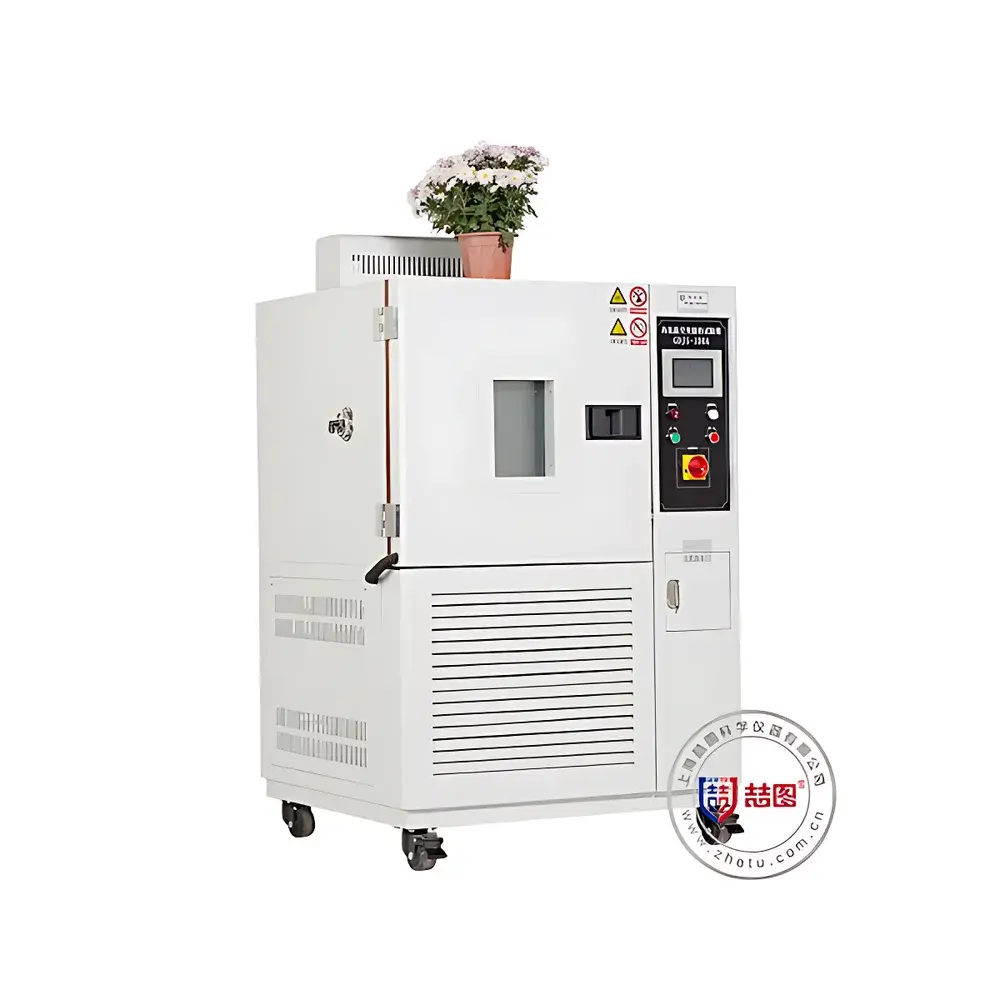
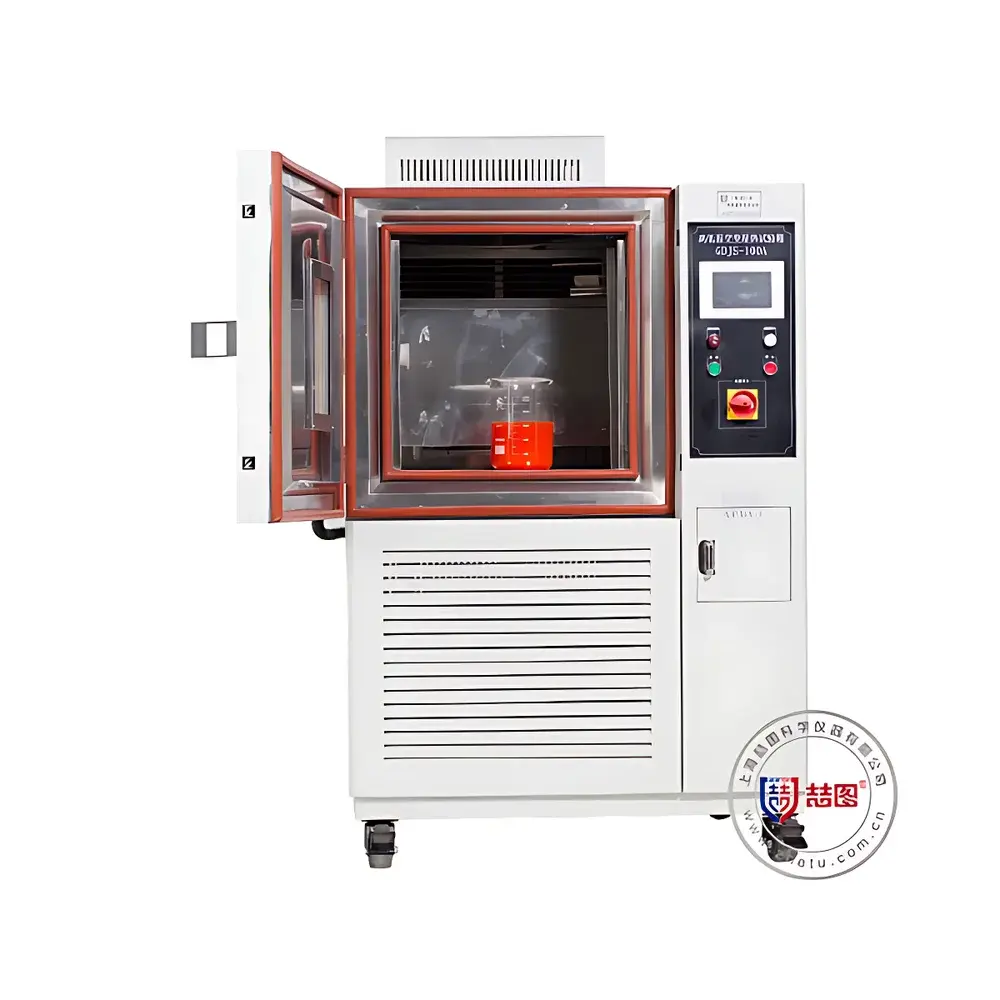
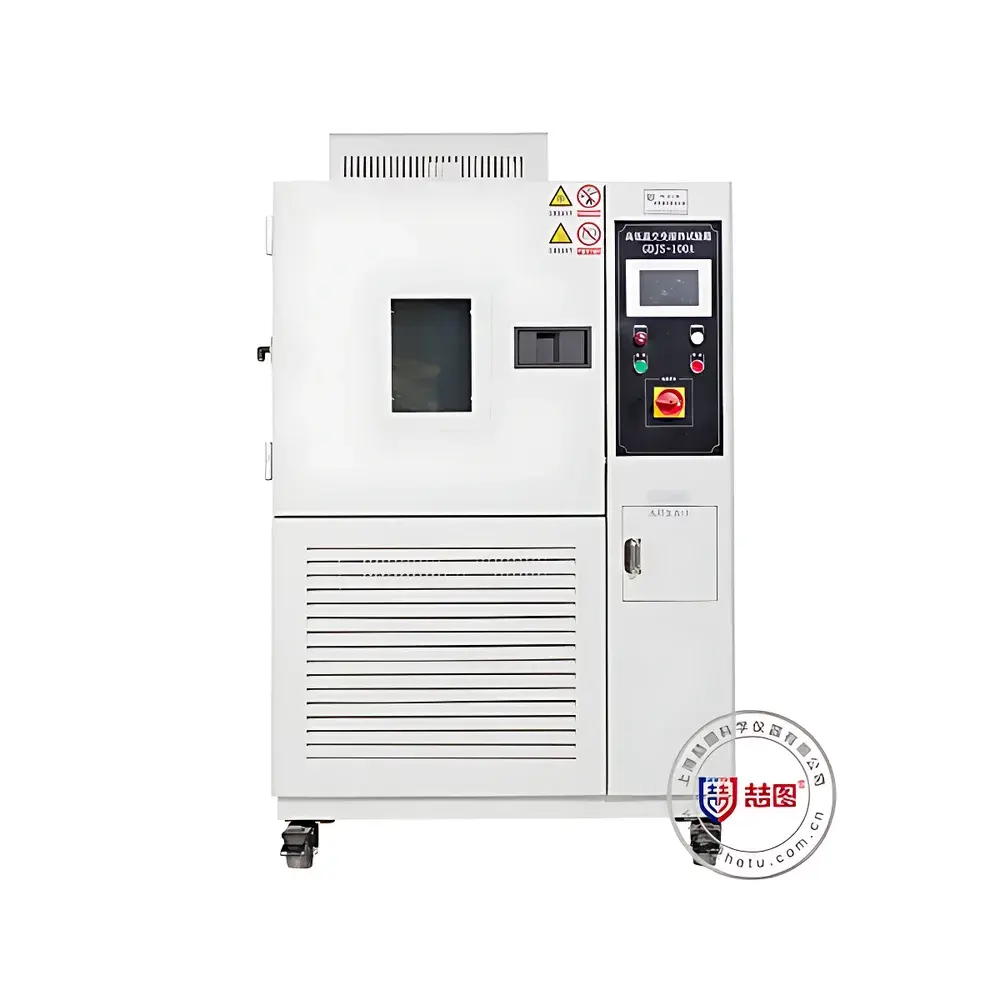
DRETOP THS-C400-II High-Low Temperature & Humidity Environmental Test Chamber
| Brand | DRETOP |
|---|---|
| Origin | Shanghai, China |
| Manufacturer Type | Direct Manufacturer |
| Model | THS-C400-II |
| Temperature Range | -60 °C to +150 °C |
| Refrigeration Method | Compressor-Based Cooling |
| Explosion-Proof | Standard (Non-Explosion-Proof) |
| Temperature Fluctuation | ±0.5 °C |
| Temperature Uniformity | ≤2.0 °C |
| Temperature Deviation | ±2.0 °C |
| Heating Rate | 1–3 °C/min (adjustable) |
| Cooling Rate | 0.7–1 °C/min (adjustable) |
| Internal Chamber Dimensions (W×D×H) | 800 × 600 × 850 mm |
Overview
The DRETOP THS-C400-II High-Low Temperature & Humidity Environmental Test Chamber is an engineered precision system designed for accelerated environmental stress testing of industrial components and finished products under controlled thermal and hygrothermal conditions. Based on the principle of forced-air convection with independent dual-loop control of temperature and humidity, the chamber replicates real-world climatic exposure profiles—including steady-state high/low temperature, constant humidity, cyclic temperature-humidity transitions, and combined thermal-humidity stress sequences—per ASTM D4332, IEC 60068-2-1, IEC 60068-2-2, IEC 60068-2-30, and ISO 16750-4. Its operational envelope spans -60 °C to +150 °C with humidity control from 30% to 95% RH (optional 20–95% RH), enabling compliance-driven validation across automotive electronics, consumer devices, LED modules, aerospace subsystems, and medical-grade instrumentation.
Key Features
- Industrial-grade 10.1-inch full-color capacitive touchscreen HMI with multilingual UI (English/Chinese), password-protected hierarchical access control (up to 10 user accounts with customizable permission levels), and audit-trail-capable operation logging.
- Advanced programmable logic controller supporting up to 1000 stored test programs, each comprising up to 100 segments; enables precise ramp-soak-hold profiles with variable heating/cooling rates and humidity slope control.
- Dual independent control loops for temperature and humidity—eliminating cross-coupling effects and improving repeatability in complex cycling tests such as HALT/HASS pre-screening or MIL-STD-810G Method 502.6 conditioning.
- Optimized air circulation architecture featuring high-efficiency centrifugal blower, nickel-chromium alloy heating elements, and a hermetically sealed scroll-type compressor (imported, R404A/R134a-free refrigerant system) for stable low-energy operation.
- Double-layer heated anti-fog tempered glass observation window with integrated LED lighting—prevents condensation-induced sample contamination and supports real-time visual monitoring without thermal disturbance.
- Robust stainless-steel interior (304 grade, radius-rounded corners), electrostatically coated steel exterior, silicone rubber door gasket rated for -60 °C to +150 °C service life, and adjustable heavy-duty casters with locking mechanism for lab mobility and stability.
- Comprehensive safety architecture including over-temperature cut-off, compressor/fan overload protection, leakage current interruption, automatic power recovery after grid outage, and audible/visual alarm escalation.
Sample Compatibility & Compliance
The THS-C400-II accommodates samples up to 400 L internal volume (800 × 600 × 850 mm usable chamber space) with two removable stainless-steel shelves. Standard 50 mm diameter test port (with sealing plug) allows concurrent electrical signal, pneumatic, or data-line feedthrough during active conditioning. The chamber meets structural and performance requirements for GLP-compliant laboratories and supports 21 CFR Part 11-ready data integrity when paired with optional RS485/USB interface and validated software. It is routinely deployed in QC labs performing qualification per IPC-9701, AEC-Q200, JEDEC JESD22-A104, and GB/T 2423 series standards.
Software & Data Management
Embedded firmware supports local data logging at user-defined intervals (minimum 1-second resolution), with built-in storage for ≥30 days of continuous timestamped temperature/humidity records. Export formats include CSV and Excel-compatible .xlsx files, plus graphical trend reports viewable directly on the HMI or via remote client. Optional cloud integration enables secure multi-user remote supervision through web browsers or native iOS/Android apps—fully synchronized with the chamber’s native interface. All remote sessions are authenticated, encrypted (TLS 1.2+), and support configurable audit trails for regulatory review.
Applications
- Thermal cycling validation of PCBAs, sensors, and battery packs under extreme ambient gradients.
- Humidity resistance evaluation of conformal coatings, encapsulants, and MEMS packaging.
- Pre-conditioning of materials prior to mechanical or electrical reliability testing (e.g., solder joint fatigue, adhesion strength).
- Accelerated aging studies for polymers, elastomers, and optical components exposed to combined thermal-hygric stress.
- Environmental screening of automotive ECUs, infotainment systems, and ADAS modules per ISO 16750-4 and LV-124.
- Stability testing of non-sterile medical devices and diagnostic hardware under IEC 60601-1 Clause 11 conditions.
FAQ
What is the maximum allowable sample load mass for thermal stability?
The chamber maintains specified uniformity and fluctuation tolerances with up to 25 kg of thermally inert mass; heavier or high-thermal-mass loads require derating verification per IEC 60068-3-5.
Does the system support validation documentation packages (IQ/OQ/PQ)?
Yes—DRETOP provides traceable calibration certificates for temperature/humidity sensors and offers optional third-party IQ/OQ protocol execution with documented test scripts and acceptance criteria.
Can humidity be maintained at sub-zero temperatures?
No—humidification is disabled below +5 °C to prevent ice formation on humidifier elements; low-temperature operation is dry-cold only.
Is the controller compliant with FDA 21 CFR Part 11 for electronic records?
The embedded controller supports ALCOA+ principles; full Part 11 compliance requires deployment with validated external software (e.g., LabArchives or DRETOP’s optional GxP Edition Suite).
What maintenance intervals are recommended for long-term reliability?
Compressor oil and refrigerant pressure verification every 24 months; HEPA-filtered air intake cleaning every 3 months; sensor recalibration annually or per ISO/IEC 17025-accredited schedule.



