
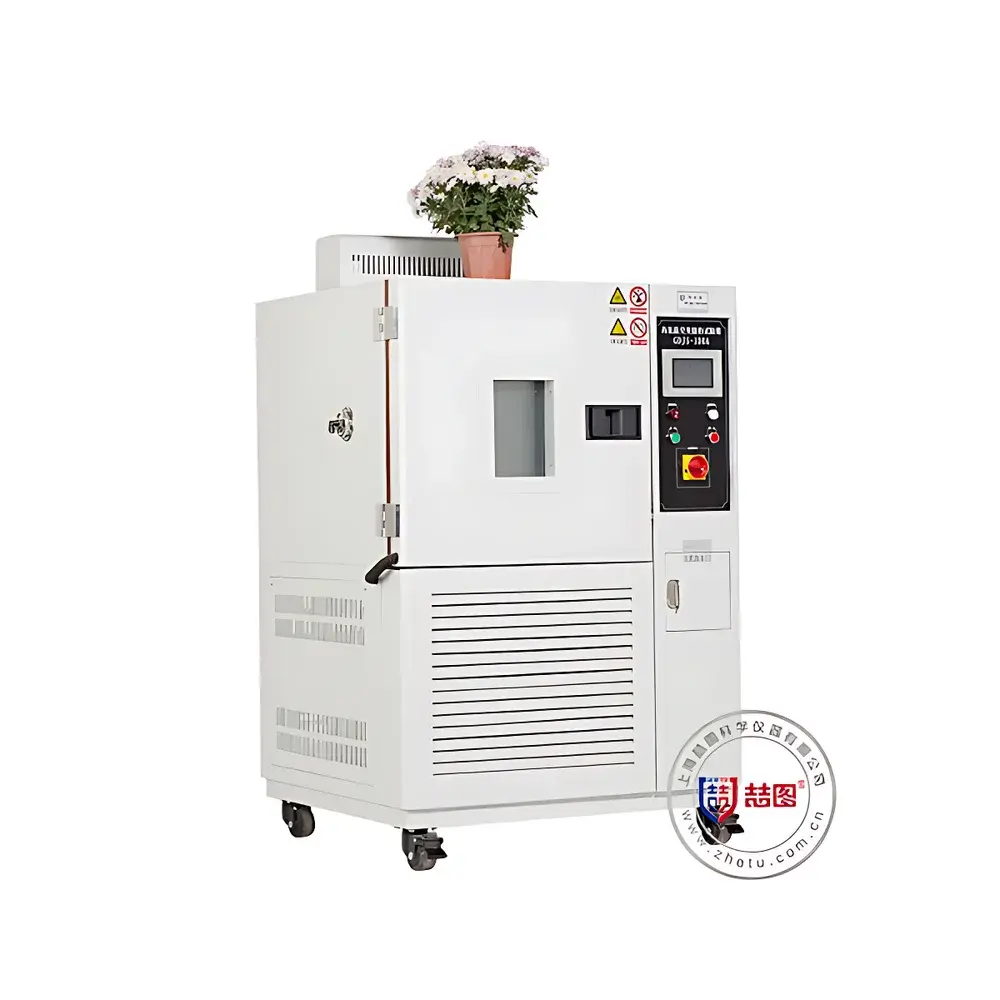
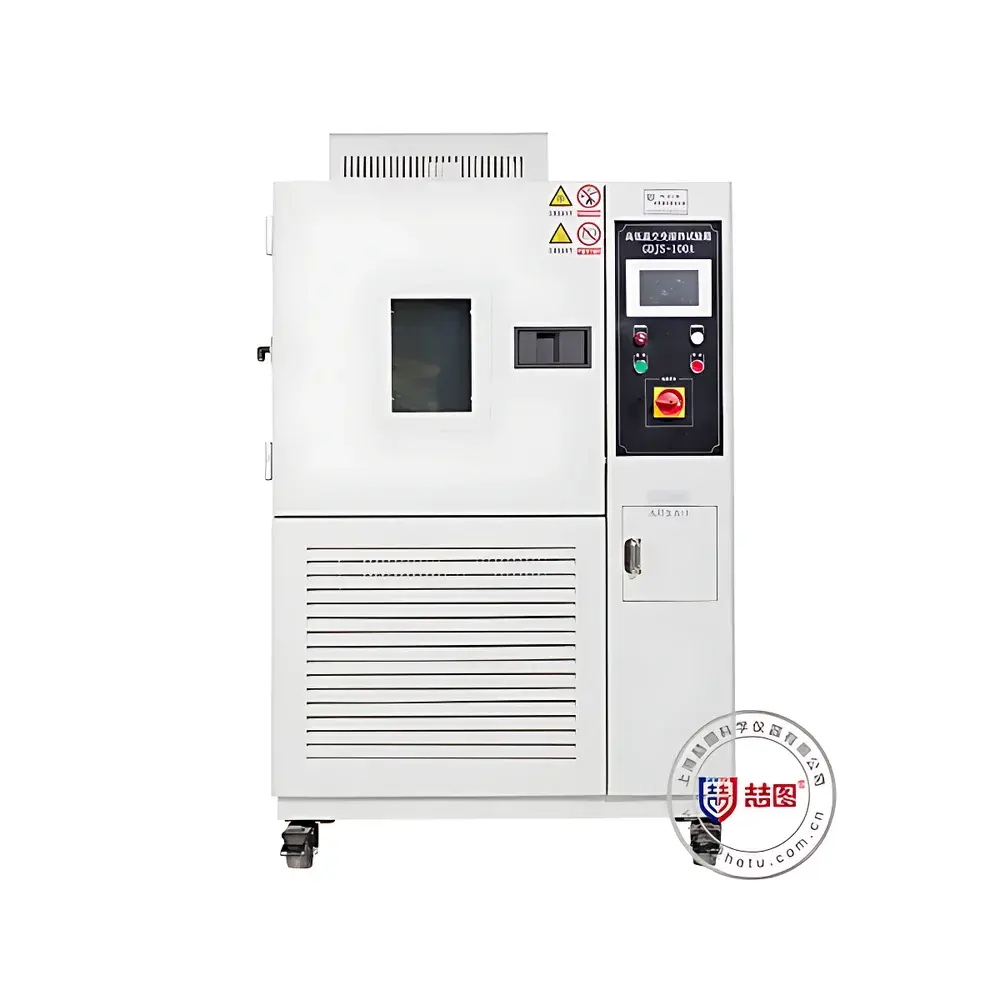
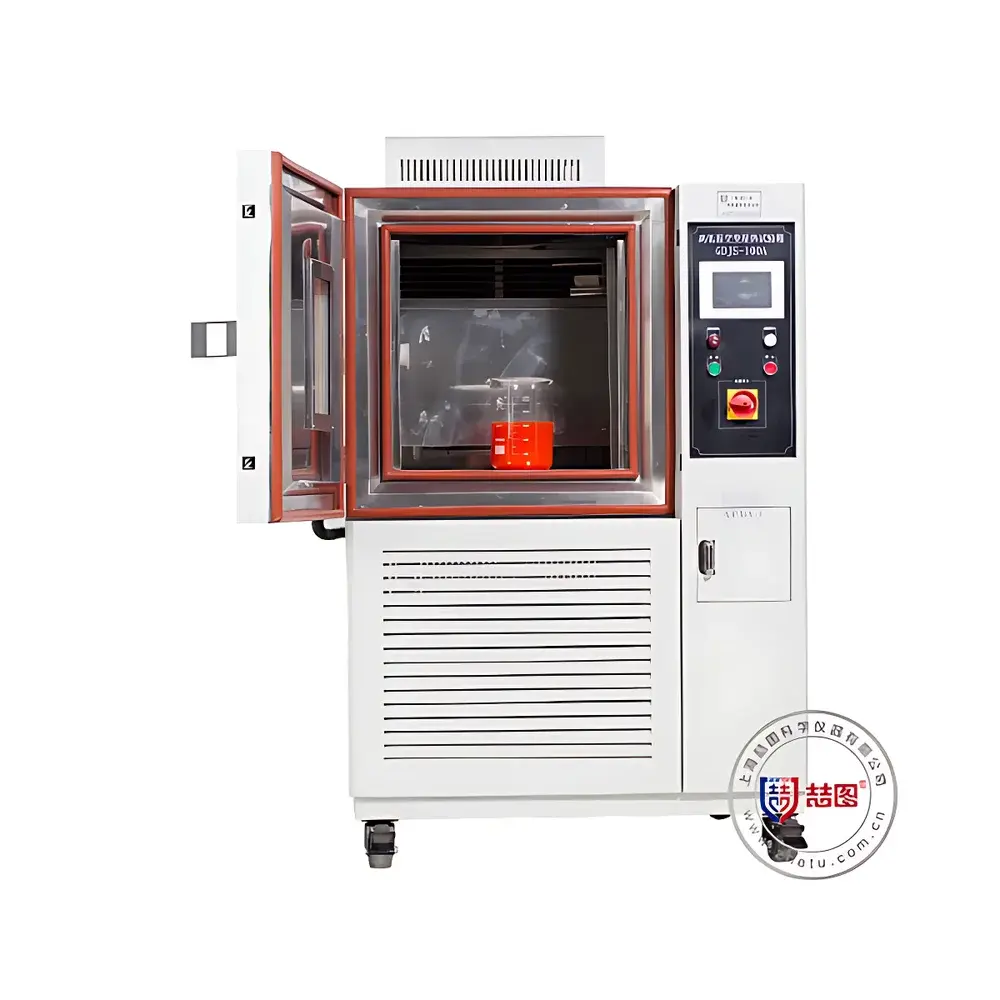
DRETOP THS-D100-II High-Low Temperature & Humidity Environmental Test Chamber
| Brand | DRETOP |
|---|---|
| Origin | Shanghai, China |
| Manufacturer Type | Direct Manufacturer |
| Model | THS-D100-II |
| Temperature Range | -80 °C to +150 °C |
| Cooling Method | Compressor-based Refrigeration |
| Explosion-Proof | Standard (Non-Explosion-Proof) |
| Temperature Fluctuation | ±0.5 °C |
| Temperature Uniformity | ≤2.0 °C |
| Temperature Deviation | ±2.0 °C |
| Heating Rate | 1–3 °C/min (adjustable) |
| Cooling Rate | 0.7–1 °C/min (adjustable) |
| Internal Chamber Dimensions | 500 × 400 × 500 mm (W × D × H) |
| Chamber Volume | 100 L |
| Humidity Range | 30–95 %RH (standard) |
| Humidity Deviation | ±3–5 %RH |
| Power Supply | AC 220 V / 50 Hz or AC 380 V / 50 Hz |
| Input Power | 5500 W (typical) |
| Control System | Full-color TFT touchscreen with programmable logic controller (PLC) architecture |
Overview
The DRETOP THS-D100-II High-Low Temperature & Humidity Environmental Test Chamber is an engineered environmental simulation system designed for rigorous reliability validation of industrial components and finished products under controlled thermal and hygrothermal stress conditions. Based on the principle of forced-air convection combined with precision refrigeration, resistive heating, and steam-based humidification, the chamber replicates real-world climatic extremes—including sustained high/low temperature exposure, cyclic thermal transitions, and combined temperature-humidity profiles per IEC 60068-2, MIL-STD-810H, and GB/T 2423 series standards. Its operational envelope spans from -80 °C to +150 °C with humidity control from 30 %RH to 95 %RH (optionally extendable to 20 %RH), enabling compliance testing for electronic assemblies, automotive ECUs, LED modules, aerospace avionics housings, medical device enclosures, and polymer-based consumer electronics. The chamber’s dual independent control loops—separate for temperature and humidity—ensure minimal cross-interference during dynamic profile execution, supporting reproducible test outcomes required in ISO/IEC 17025-accredited laboratories.
Key Features
- Full-color 7-inch TFT touchscreen interface with multilingual support (English/Chinese), hierarchical password-protected access levels (up to 10 user accounts), and audit-trail-capable operation logging.
- Advanced programmable controller supporting up to 1000 stored test programs, each comprising up to 100 segments with customizable ramp rates, dwell times, and conditional branching (e.g., jump-to-step, hold-on-alarm, program termination).
- Dual independent climate control systems: compressor-driven refrigeration (R404A/R23 cascade system), NiCr alloy heating elements, and PID-controlled steam generator for precise humidity regulation—eliminating condensation-induced measurement artifacts.
- Optimized air circulation architecture featuring centrifugal forced-convection fans, aerodynamically shaped ductwork, and uniform airflow distribution to achieve ≤2.0 °C temperature uniformity across the 100 L working volume (per IEC 60068-3-5).
- Double-layer heated anti-fog tempered glass observation window with integrated defrosting circuitry and LED interior lighting—enabling uninterrupted visual monitoring without thermal disturbance or sample contamination.
- Robust mechanical construction: electrostatically powder-coated steel outer shell; 304 stainless-steel seamless inner chamber with radius-rounded corners; silicone rubber door gasket maintaining integrity from -80 °C to +150 °C.
- Comprehensive safety architecture including over-temperature cut-off, compressor/fan overload protection, phase-loss detection, leakage current interruption, and automatic power recovery after grid interruption.
- Standard 50 mm diameter test port with EPDM sealing collar for live signal, power, or pneumatic feedthroughs—compatible with external data acquisition and stimulus equipment.
Sample Compatibility & Compliance
The THS-D100-II accommodates samples up to 400 mm × 300 mm × 400 mm (W × D × H) on two adjustable 304 stainless-steel shelves. Its chamber geometry and airflow design comply with ASTM E145 Class II requirements for gravity- and forced-convection ovens. The system meets essential regulatory expectations for environmental qualification testing under ISO 9001, IATF 16949, and IPC-J-STD-020 for moisture sensitivity level (MSL) preconditioning. Optional calibration certificates traceable to NIM (National Institute of Metrology, China) and third-party verification reports are available upon request. While not intrinsically explosion-proof, the chamber may be operated in non-hazardous classified areas per NEC Article 500 and IEC 60079-0.
Software & Data Management
Embedded firmware supports local data logging at user-defined intervals (1 s to 60 min), with internal storage capacity exceeding 30 days of continuous 1-second sampling. Export formats include CSV and Excel-compatible .xlsx files. Remote connectivity is enabled via Ethernet (TCP/IP), RS485 Modbus RTU, or USB host interface. The optional DRETOP CloudConnect platform provides browser-based (HTML5-compliant) remote supervision, multi-user concurrent access (up to 5 simultaneous sessions), real-time graphing, alarm notification via email/SMS, and secure firmware updates. Audit trails record all parameter changes, user logins, and alarm events—supporting GLP/GMP documentation requirements and FDA 21 CFR Part 11 compliance when deployed with electronic signature modules.
Applications
- Accelerated life testing of PCBAs under thermal cycling (e.g., JEDEC JESD22-A104)
- Preconditioning of moisture-sensitive devices prior to reflow soldering (IPC/JEDEC J-STD-033)
- Environmental stress screening (ESS) of automotive electronics per AEC-Q200
- Material compatibility assessment of elastomers, adhesives, and conformal coatings
- Validation of packaging integrity under transit-simulated humidity gradients
- Stability testing of active pharmaceutical ingredients (APIs) and medical disposables per USP
- Qualification of battery packs for EV applications across extreme ambient conditions
FAQ
What is the standard temperature and humidity control accuracy?
Temperature fluctuation is maintained within ±0.5 °C; humidity deviation is ±3–5 %RH under steady-state conditions at 25 °C/60 %RH.
Can the chamber perform rapid thermal transients?
Yes—programmable ramp rates allow heating at 1–3 °C/min and cooling at 0.7–1 °C/min across the full operating range.
Is remote monitoring supported out-of-the-box?
Ethernet connectivity and cloud-ready firmware are standard; no additional hardware is required for web or mobile app access.
Does the system support automated compliance reporting?
Raw data export and timestamped event logs are native; integration with LIMS or MES platforms is achievable via Modbus or RESTful API extensions.
What maintenance intervals are recommended?
Compressor oil inspection every 24 months; condenser coil cleaning quarterly; humidity system descaling every 6 months—detailed procedures provided in the English-language service manual.



