
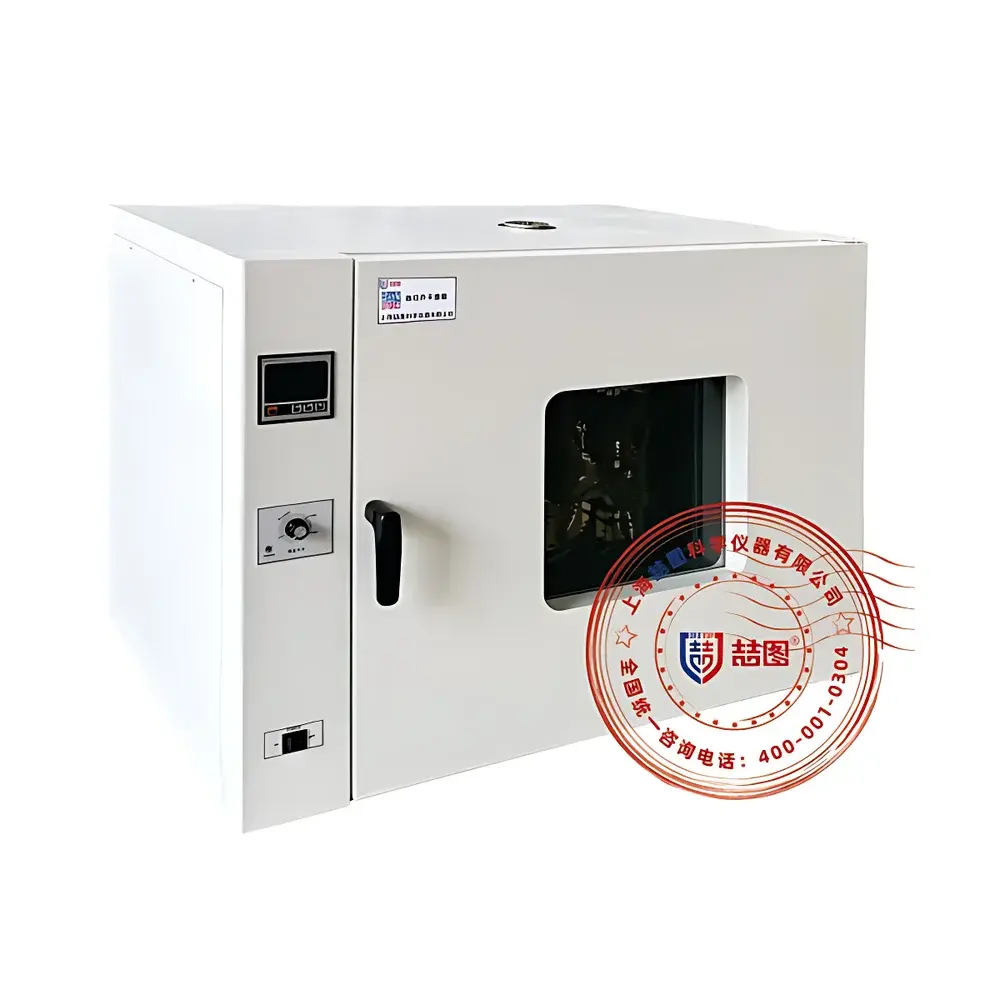
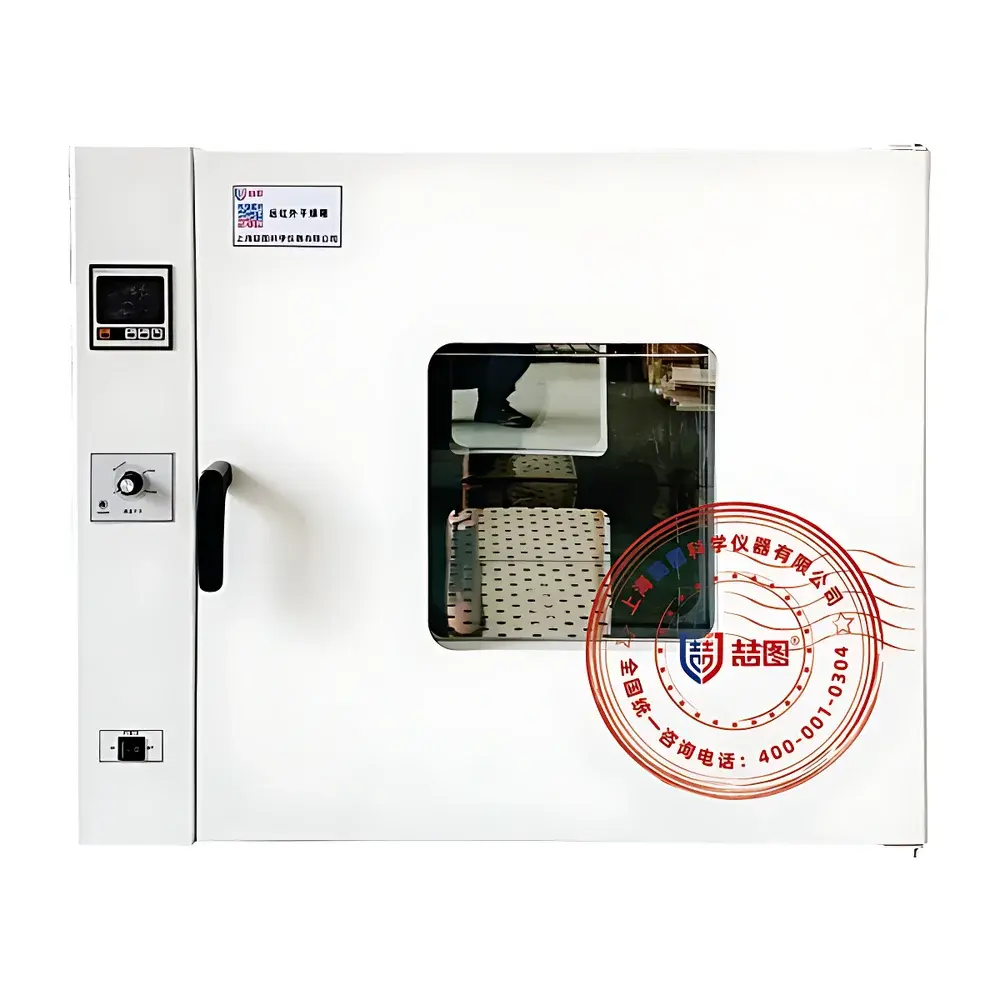
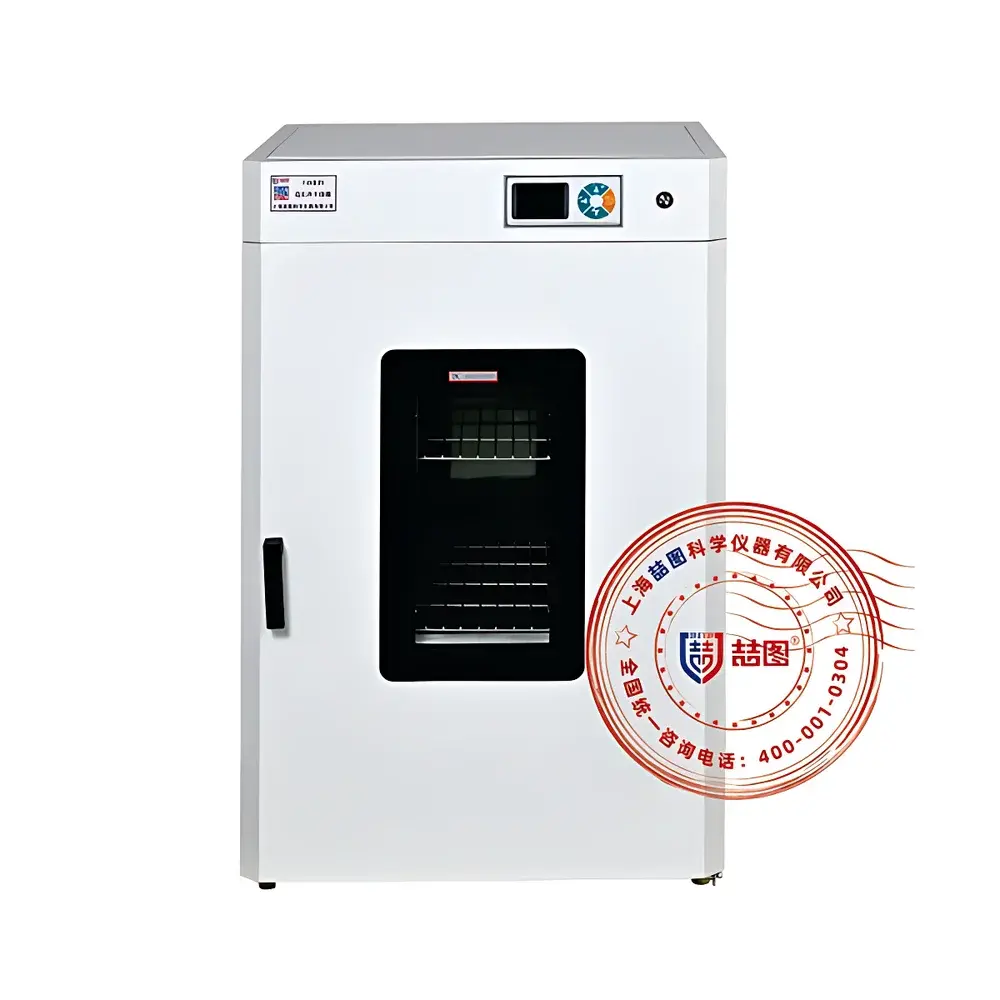
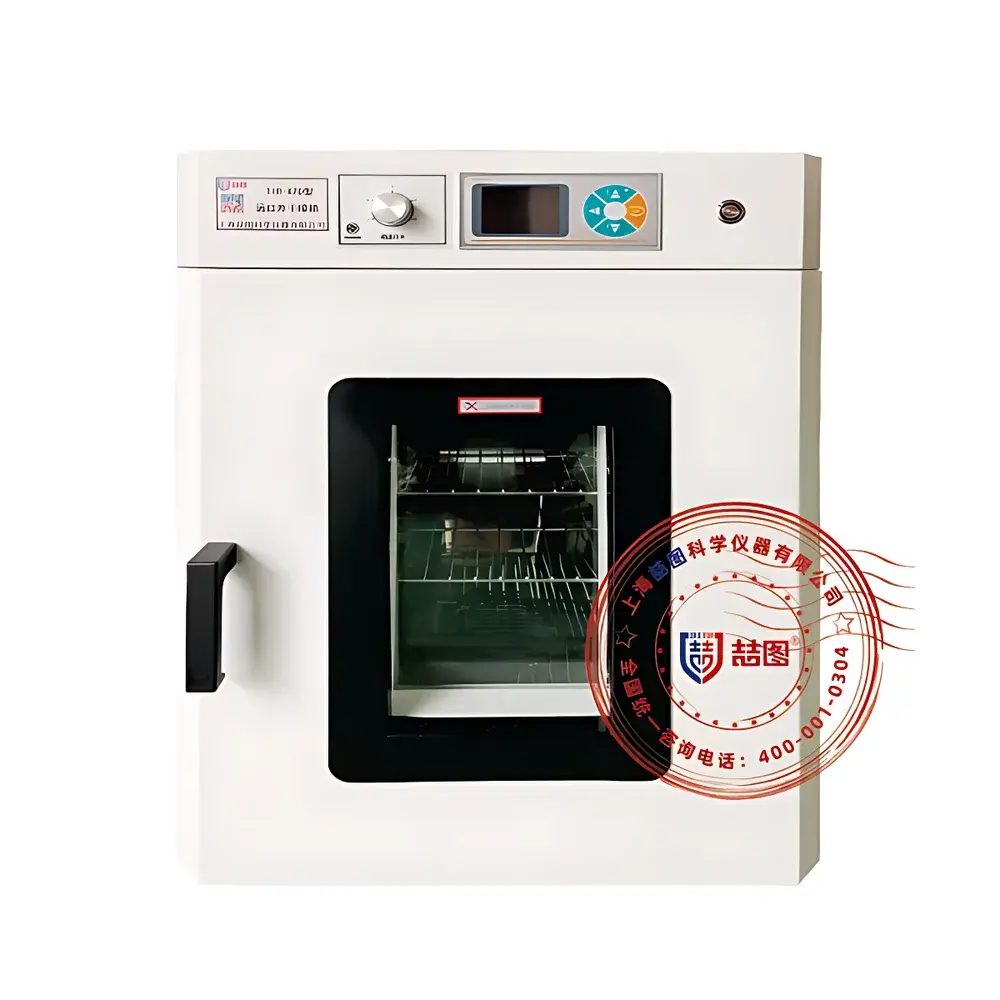
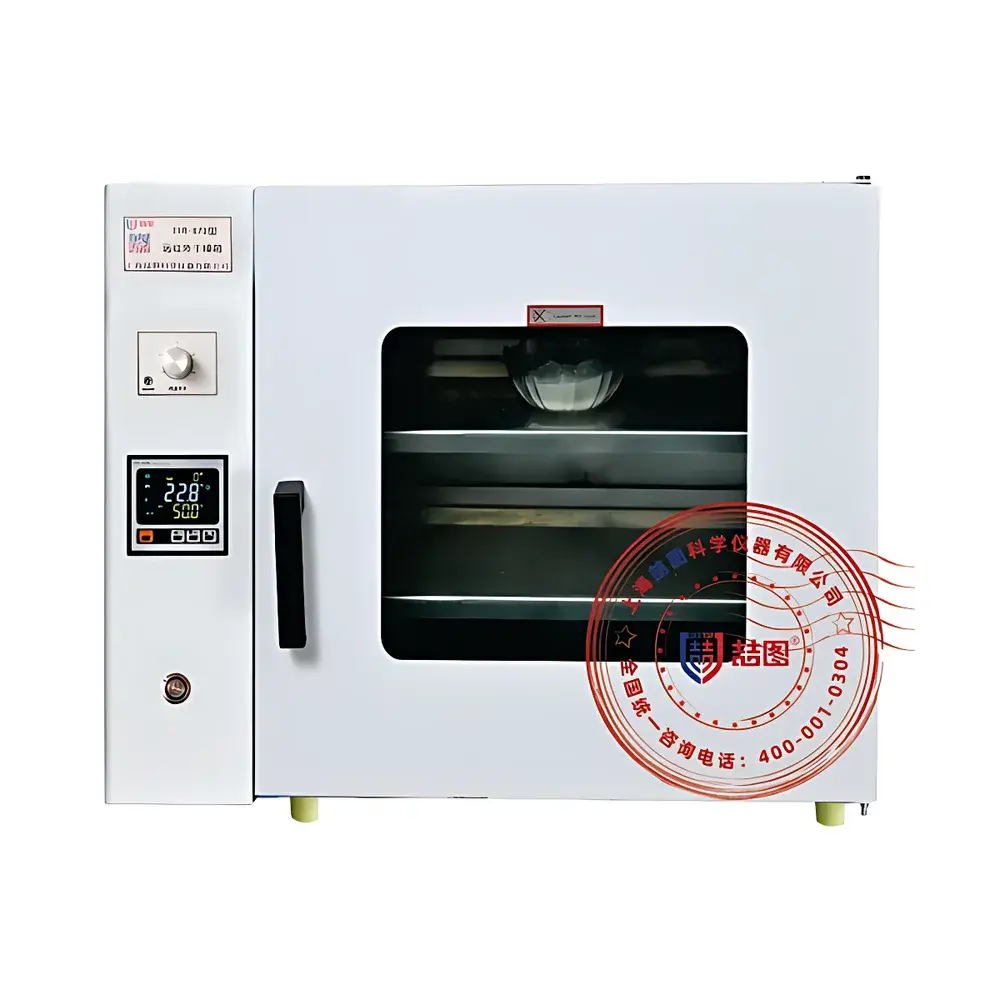
DRETOP TIR-250A Far-Infrared Drying Oven
| Brand | DRETOP |
|---|---|
| Origin | Shanghai, China |
| Manufacturer Type | Direct Manufacturer |
| Model | TIR-250A |
| Oven Type | General-Purpose Forced-Air Drying Oven |
| Temperature Range | RT +10°C to 250°C |
| Temperature Uniformity | ±2.5°C (at 100°C, with fan enabled) |
| Temperature Fluctuation | ±1°C |
| Temperature Resolution | 0.1°C |
| Internal Chamber Dimensions (W×D×H) | 700 × 550 × 650 mm |
| Internal Volume | 250 L |
| Chamber Material | Stainless Steel (SUS304) |
| Heating Method | Far-Infrared Radiant Heating with Adjustable Forced-Air Circulation |
| Power Supply | AC 220 V, 50 Hz |
| Rated Power | 3000 W |
| Operating Ambient Temperature | 5–45°C |
| Safety Features | Overtemperature Cut-off, Leakage Protection, Short-Circuit Protection, Thermal Overload Protection, Parameter Memory Function |
| Optional Accessories | USB Data Export Interface, Programmable Temperature Controller, RS-485 Communication Port, Thermal Printer Interface, Color Touchscreen Upgrade, Calibration Test Port |
Overview
The DRETOP TIR-250A Far-Infrared Drying Oven is an engineered solution for precision thermal processing in research laboratories, quality control environments, and industrial R&D settings. Unlike conventional convection ovens relying solely on hot-air circulation, the TIR-250A integrates far-infrared radiant heating elements—emitting wavelengths in the 3–10 µm range—to achieve rapid, volumetric energy transfer directly into sample mass with minimal thermal inertia. This dual-mode architecture (radiant + adjustable forced-air) enables simultaneous optimization of drying kinetics and sample integrity: infrared energy penetrates particulate or porous materials efficiently, while the variable-speed fan—capable of full airflow modulation from zero to maximum—eliminates turbulence-induced displacement of powders, granules, or fragile biological specimens. The oven complies with fundamental thermal validation requirements outlined in ISO 17025:2017 (clause 6.4.4 on environmental condition control) and supports GLP-aligned documentation workflows through optional data logging interfaces.
Key Features
- Far-infrared heating system with high-emissivity ceramic elements ensures fast ramp-up (typical time to 100°C: <12 min), low thermal overshoot, and reduced power consumption versus resistive coil-based ovens.
- Microprocessor-controlled PID temperature regulation with real-time deviation compensation; display shows setpoint, actual chamber temperature, and elapsed time simultaneously in tri-color LCD format.
- Intelligent self-diagnostic function outputs standardized fault codes (e.g., E01 = sensor open circuit, E02 = overtemperature alarm) directly on screen for rapid troubleshooting.
- 3D-refractive thermal field design—achieved via strategically angled internal reflectors and optimized air duct geometry—enhances spatial temperature homogeneity across the full 250 L working volume.
- Double-layer door with tempered glass viewport (heated edge to prevent condensation) and high-temperature silicone gasket (rated to 300°C) ensures visual monitoring without thermal leakage or moisture ingress.
- Four-tier adjustable stainless steel shelves (SUS304, 1.2 mm thickness) support load distribution up to 25 kg per shelf; drawer-style insertion minimizes operator exposure during loading/unloading.
Sample Compatibility & Compliance
The TIR-250A accommodates a broad spectrum of thermally stable samples including pharmaceutical excipients, polymer pellets, soil aggregates, botanical extracts, ceramic precursors, and metal oxide powders. Its non-turbulent airflow mode (fan speed = 0%) is particularly suited for ASTM D2240-compliant Shore hardness sample conditioning, USP residual solvent drying protocols, and ISO 5725-2 interlaboratory precision studies requiring minimal mechanical disturbance. Chamber uniformity of ±2.5°C at 100°C meets IEC 60068-2-2 (Test B: Dry Heat) acceptance criteria for Class 2 equipment. All electrical components conform to IEC 61010-1:2010 safety standards for laboratory equipment, including reinforced insulation, double-pole switching, and earth-leakage current ≤0.75 mA.
Software & Data Management
While the base configuration features standalone microcontroller operation, optional digital upgrades extend traceability and regulatory readiness. The USB data export interface logs timestamped temperature readings (sampled every 10 s) to FAT32-formatted USB drives—compatible with Excel, MATLAB, and LIMS import tools. The RS-485 port supports Modbus RTU protocol for integration into centralized SCADA systems or LabVIEW-based monitoring platforms. Optional programmable controllers enable up to 32-segment thermal profiles with ramp/soak logic, adhering to FDA 21 CFR Part 11 requirements when paired with audit-trail-enabled software (e.g., DRETOP LogMaster v3.1). All firmware versions retain calibration constants and user-defined alarm thresholds in non-volatile memory—even after power loss.
Applications
- Moisture content determination per AOAC 950.46 (air oven method) and ISO 11465:1993 for food, feed, and agricultural commodities.
- Pre-conditioning of test specimens prior to tensile, impact, or dielectric testing (ASTM D638, D256, D149).
- Thermal aging studies of elastomers and composites under controlled oxidative environments (ASTM D573, D865).
- Drying of HPLC vials, filter membranes, and glassware in QC labs where residue-free surfaces are critical.
- Curing of conductive inks and low-Tg polymer coatings in materials science prototyping.
- Stabilization of reference standards and certified reference materials (CRMs) in metrology labs.
FAQ
What is the difference between far-infrared heating and conventional convection heating?
Far-infrared radiation transfers thermal energy directly to molecular bonds via resonant absorption—especially effective for water, cellulose, and organic functional groups—resulting in faster, more energy-efficient drying with less surface case-hardening.
Can the TIR-250A be used for sterilization or depyrogenation?
No. It is not designed for microbiological sterilization (which requires validated steam or dry-heat cycles per ISO 17665 or USP ) nor for endotoxin removal (requiring ≥250°C for ≥45 min per USP ).
Is the temperature uniformity verified at multiple setpoints?
Yes. Factory calibration includes uniformity mapping at 60°C, 100°C, 150°C, and 200°C using nine calibrated PT100 probes per IEC 60068-3-5, with reports available upon request.
Does the oven support external temperature probe input for sample-core monitoring?
Not standard, but a 6 mm diameter through-door test port (optional) allows insertion of external thermocouples or fiber-optic sensors for direct sample temperature feedback.
What maintenance is required for long-term accuracy?
Annual verification of sensor drift and heater output against NIST-traceable references is recommended; stainless steel chamber requires only mild detergent cleaning—no lubrication or filter replacement needed.



