
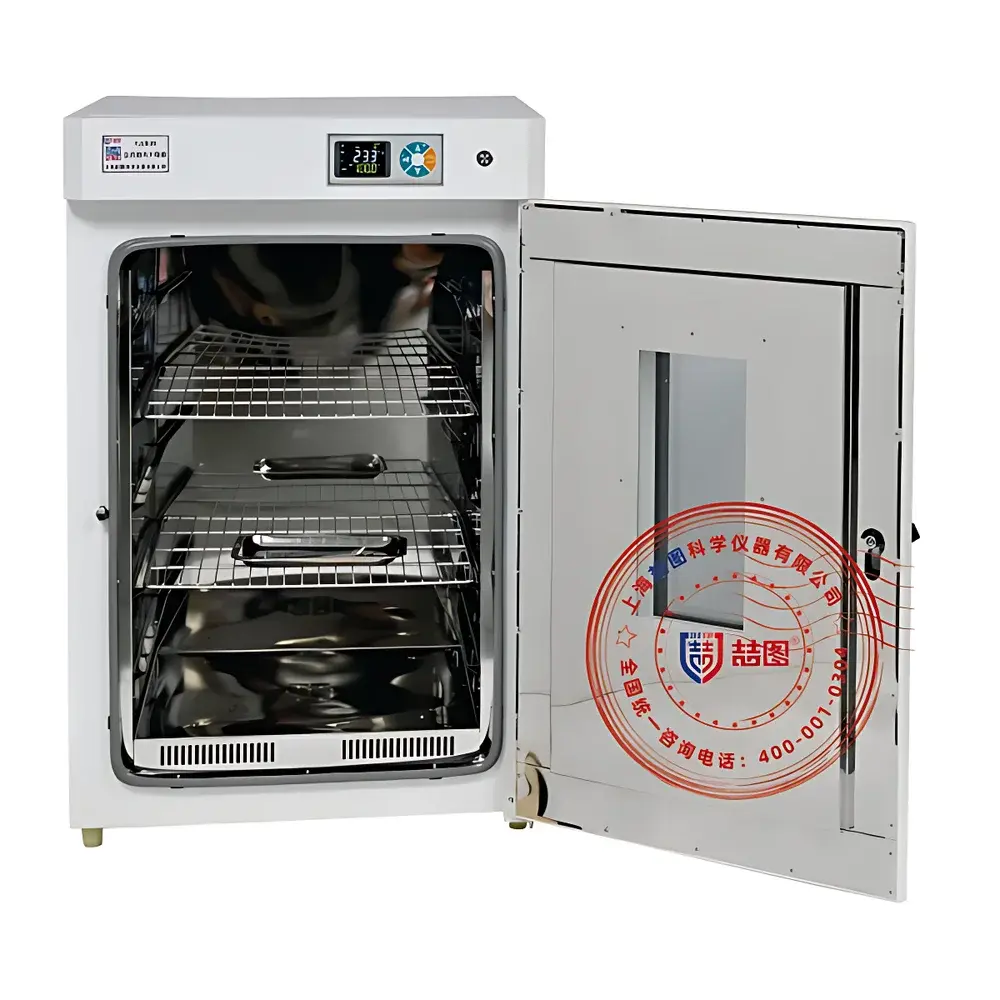
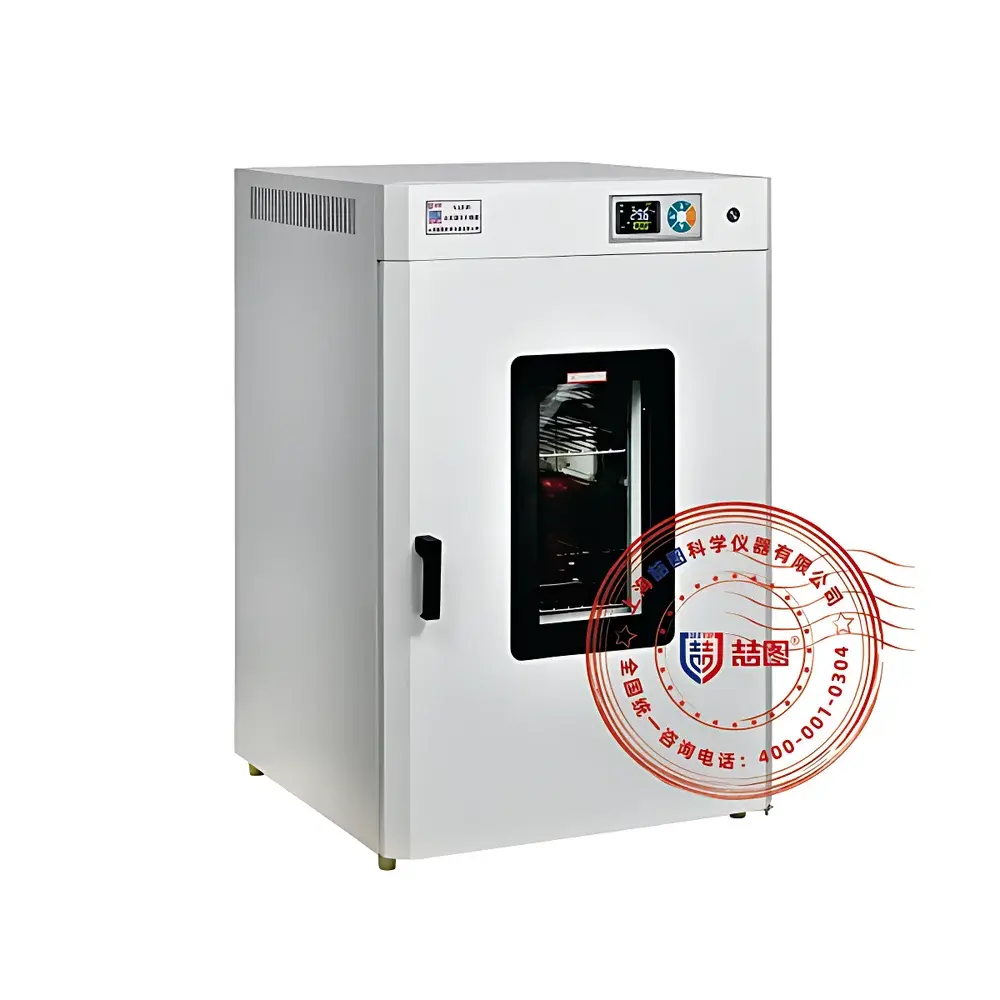
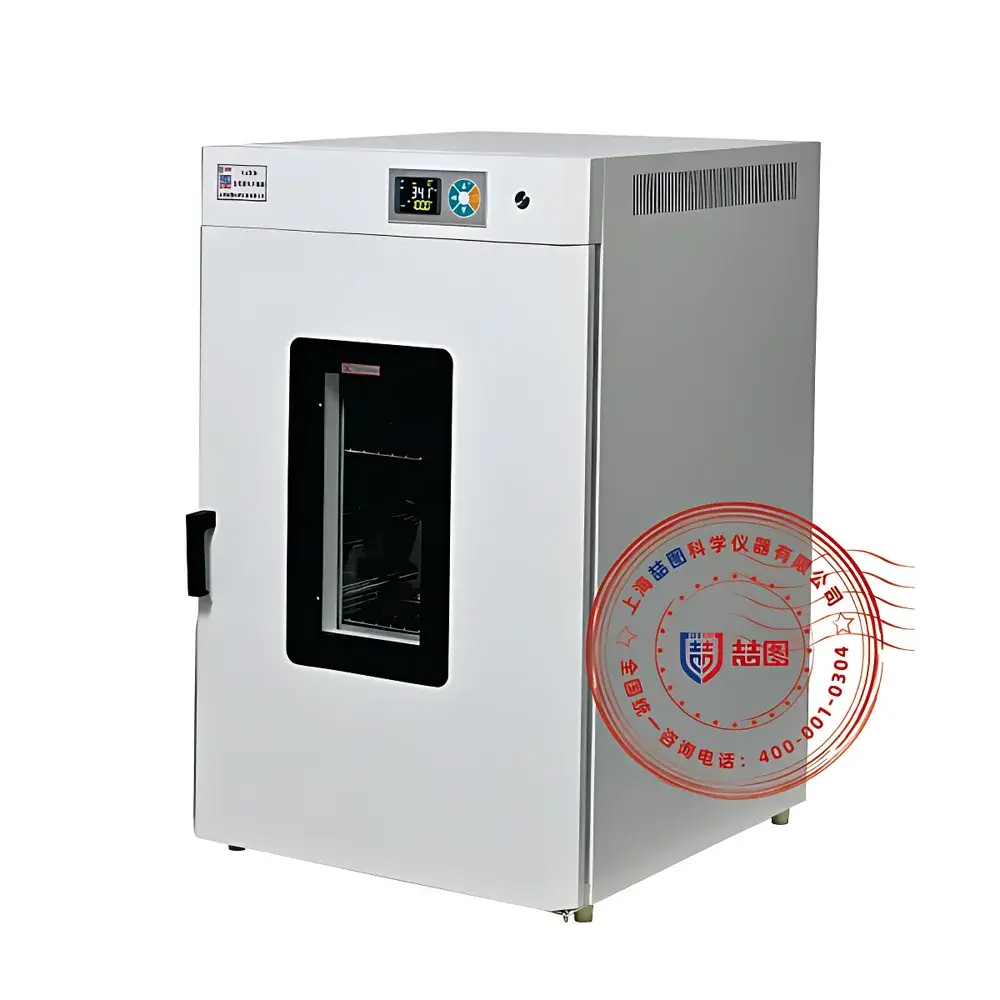
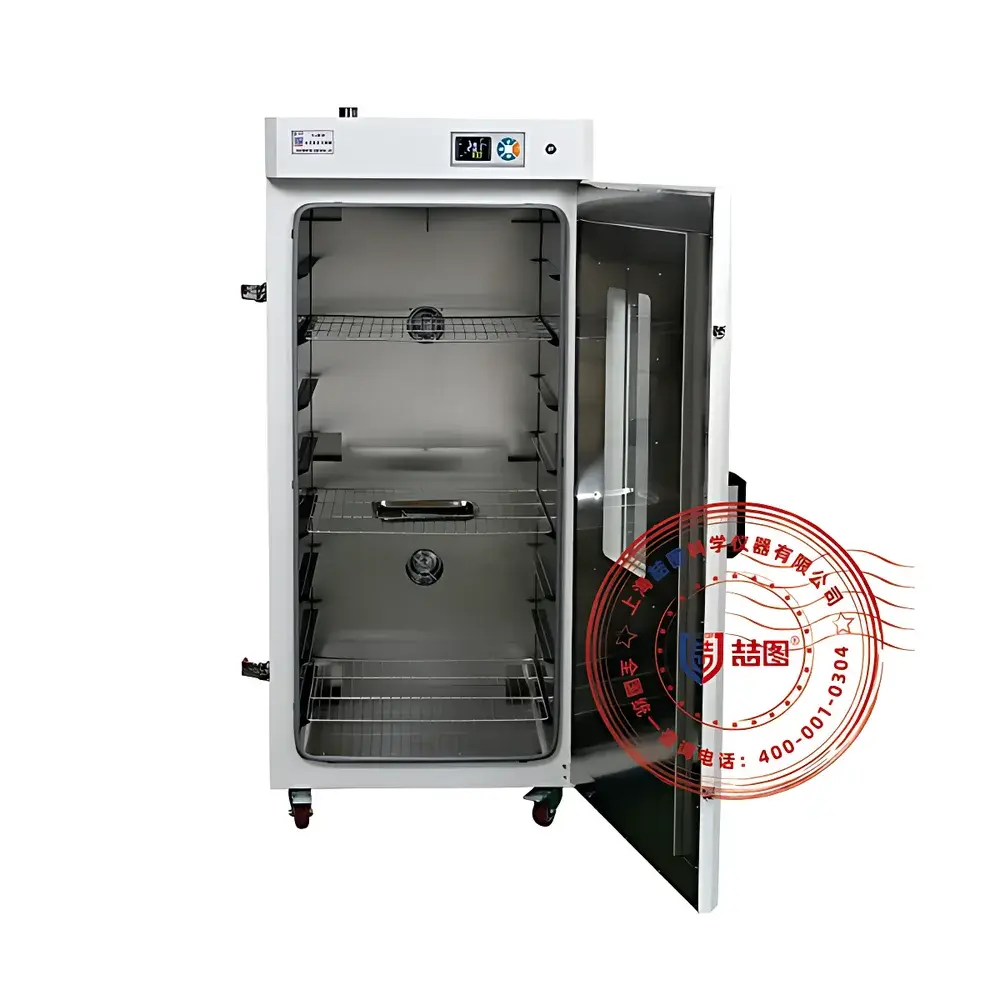
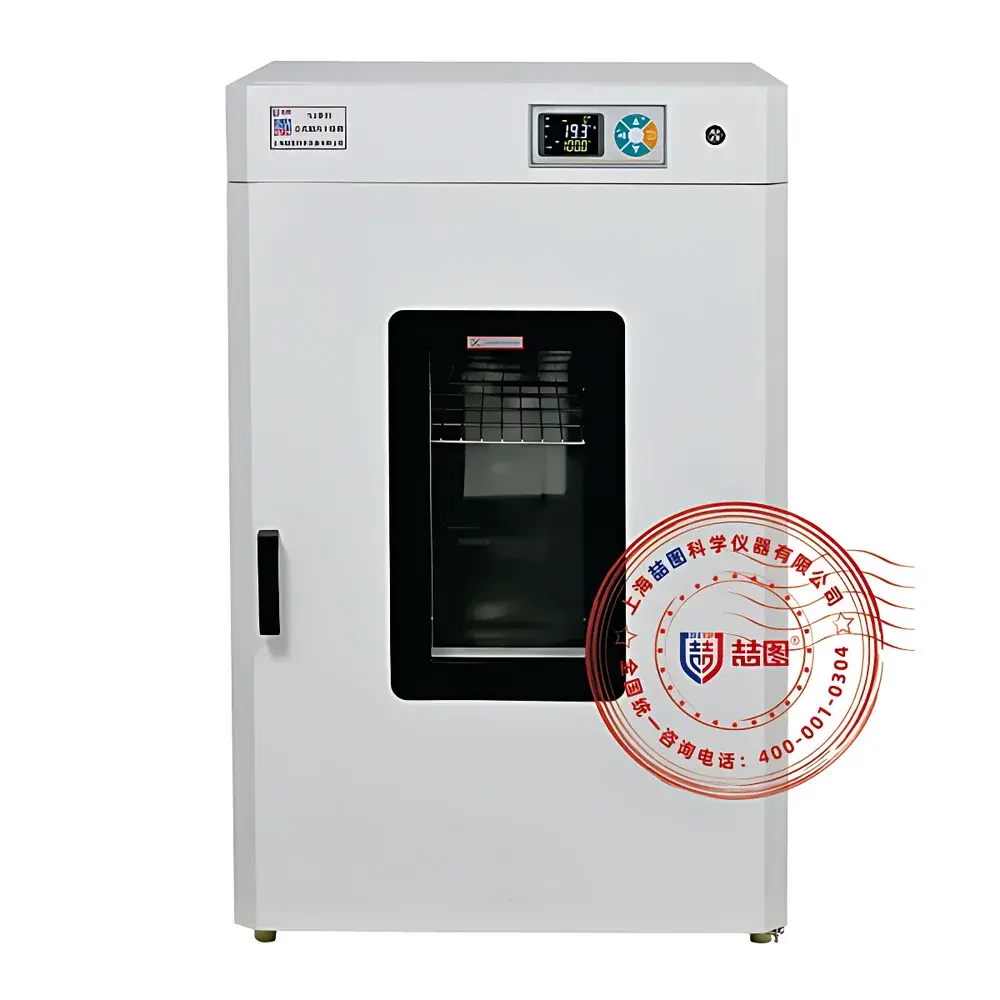
DRETOP TLG-9140A Vertical Forced-Air Drying Oven
| Brand | DRETOP |
|---|---|
| Origin | Shanghai, China |
| Manufacturer Type | Direct Manufacturer |
| Model | TLG-9140A |
| Instrument Type | General-Purpose Forced-Air Oven |
| Temperature Range | RT+10°C to 250°C |
| Temperature Uniformity | ±2.5°C (empty chamber, at 100°C) |
| Temperature Fluctuation | ±0.5°C |
| Temperature Resolution | 0.1°C |
| Chamber Dimensions (W×D×H) | 450 × 550 × 550 mm |
| External Dimensions (W×D×H) | 660 × 760 × 910 mm |
| Operating Ambient Temperature | 5–45°C |
| Interior Material | Stainless Steel (SUS304) |
| Heating Method | Forced Convection with Horizontal Rear Air Outlet |
| Power Supply | AC 220 V, 50 Hz |
| Input Power | 1550 W |
| Standard Shelving | 4 Adjustable Stainless Steel Trays |
| Timer Range | 1–9999 minutes |
Overview
The DRETOP TLG-9140A Vertical Forced-Air Drying Oven is an engineered solution for precise, repeatable thermal processing in research laboratories, quality control environments, and industrial R&D settings. Designed around a robust forced-convection architecture, the unit maintains stable thermal conditions through a horizontally oriented rear-mounted air outlet and an optimized internal airflow channel—ensuring uniform heat distribution across the entire 140 L working chamber. Unlike natural convection ovens, this model utilizes a high-temperature-rated centrifugal blower positioned outside the heating zone to deliver consistent, laminar airflow without introducing thermal gradients or localized hot spots. Its operational range of RT+10°C to 250°C supports common applications including moisture removal, polymer curing, pre-weighing sample conditioning, accelerated aging tests, and residual solvent evaporation—fully compliant with ASTM D1654 (corrosion testing), ISO 188 (heat aging of rubber), and USP (sterile processing support).
Key Features
- Microprocessor-based P.I.D. temperature controller with three-color LCD display, enabling simultaneous visualization of setpoint, real-time chamber temperature, and elapsed time
- Self-diagnostic system with alphanumeric fault code reporting (e.g., E01 = sensor open circuit; E02 = overtemperature alarm)
- Dual-stage door locking mechanism with zinc-alloy handle and high-elasticity silicone gasket (rated for continuous operation up to 250°C), ensuring long-term sealing integrity and energy efficiency
- Double-layer tempered glass observation window with anti-fog coating, offering unobstructed visual monitoring while minimizing radiant heat loss
- Four independently adjustable, slide-out stainless steel trays (SUS304, 1.2 mm thick), each rated for 15 kg load capacity and compatible with autoclaving
- Horizontal rear air exhaust port with standardized 60 mm diameter interface for optional ducting to fume hoods or external ventilation systems
- Power-loss recovery function retaining all user-defined parameters—including setpoint, timer value, and alarm thresholds—upon re-energization
Sample Compatibility & Compliance
The TLG-9140A accommodates a broad spectrum of sample types—from small electronic components and pharmaceutical excipients to bulk polymer pellets and ceramic green bodies—without risk of cross-contamination or surface oxidation. Its stainless steel interior (electropolished finish, Ra ≤ 0.8 µm) resists corrosion from weak acids, saline solutions, and organic solvents commonly encountered during drying protocols. All electrical components conform to IEC 61010-1:2010 safety standards for laboratory equipment. The oven supports GLP/GMP documentation workflows via optional RS485 Modbus RTU communication (addressable slave mode), enabling integration into centralized lab management systems. When equipped with the optional independent overtemperature cut-off controller (DIN-rail mounted, Class II protection), the system satisfies FDA 21 CFR Part 11 requirements for critical thermal process validation.
Software & Data Management
While the base configuration operates via standalone front-panel controls, the TLG-9140A supports two scalable digital enhancement paths. First, the optional USB data export module allows direct logging of temperature/time profiles to FAT32-formatted USB drives—generating CSV files timestamped with millisecond precision for post-processing in Excel or MATLAB. Second, the programmable color touchscreen controller (7-inch TFT, 800×480 resolution) enables multi-segment ramp-soak profiles (up to 30 segments), real-time graphing, and password-protected parameter editing—ideal for ASTM E1530 or ISO 291-compliant conditioning sequences. Both interfaces retain full audit trail functionality, recording operator ID, modification timestamps, and calibration event logs—essential for ISO/IEC 17025-accredited testing laboratories.
Applications
- Pre-test conditioning of test specimens per ASTM D618 and ISO 291 prior to tensile, impact, or hardness evaluation
- Moisture content determination in foodstuffs, soils, and pharmaceutical raw materials using gravimetric methods (AOAC 950.46, USP )
- Thermal stabilization of reference standards and calibration weights in metrology labs
- Curing of epoxy-coated PCBs and encapsulated semiconductor assemblies under controlled ramp rates
- Drying of filter papers, crucibles, and volumetric glassware in analytical chemistry workflows
- Accelerated stability studies for medical device packaging per ISO 11607-1
FAQ
What is the maximum recommended load volume for optimal temperature uniformity?
For compliance with the stated ±2.5°C uniformity specification (measured per ISO 15502 Annex B), loading should not exceed 60% of chamber volume—i.e., ≤84 L of solid material or equivalent thermal mass.
Can the unit be validated for IQ/OQ/PQ protocols?
Yes. DRETOP provides a factory-issued calibration certificate traceable to NIM (China National Institute of Metrology), and the oven’s P.I.D. controller supports third-party validation using standard PT100 probes and data loggers compliant with EURAMET cg-18.
Is the rear exhaust port suitable for connection to active fume extraction?
Yes—the 60 mm diameter port features a flanged mounting interface and is rated for continuous operation at 250°C; compatibility with standard laboratory ducting (e.g., PVC or aluminum flex hose) is confirmed.
Does the stainless steel interior meet FDA or USP requirements for pharmaceutical use?
The SUS304 chamber meets USP criteria for non-reactive surfaces and has been tested per USP for extractables under simulated drying conditions (120°C, 24 h, deionized water rinse).
What maintenance intervals are recommended for the blower assembly?
Under continuous operation, the sealed-bearing centrifugal fan requires inspection every 6 months and lubrication-free replacement every 24,000 operating hours—documented in the included maintenance logbook.



